





 Portuguese
  English
  Spanish
  3 min of reading
  1 comment





Survey Shows Advancement of Remote Work in Companies, but Reveals High Incidence of Psychological Symptoms and Low Availability of Corporate Therapeutic Support, Creating a Contrast Between Perception of Quality of Life and Structural Challenges of Mental Health in the Workplace.
Remote work has solidified as a permanent practice in many companies and, by 2025, began to play a direct role in both the decision to accept a job offer and in job retention, according to a survey by HUG with professionals in the communications sector.
According to the study, 67.7% of respondents said that working from home improved their quality of life over the year, while 23.1% reported mixed effects and 9.2% assessed the impacts as predominantly negative, in a picture that combines daily gains with new sources of pressure.
Although positive perception predominates, the data show a relevant contrast for people management: 83.6% reported experiencing at least one psychological symptom in the past year, and the corporate benefit of therapy reached only 11.9% of respondents.
-
Friends have been building a small “town” for 30 years to grow old together, with compact houses, a common area, nature surrounding it, and a collective life project designed for friendship, coexistence, and simplicity.

-
This small town in Germany created its own currency 24 years ago, today it circulates millions per year, is accepted in over 300 stores, and the German government allowed all of this to happen under one condition.

-
Curitiba is shrinking and is expected to lose 97,000 residents by 2050, while inland cities in Paraná such as Sarandi, Araucária, and Toledo are experiencing accelerated growth that is changing the entire state’s map.

-
Tourists were poisoned on Everest in a million-dollar fraud scheme involving helicopters that diverted over $19 million and shocked international authorities.


Remote Work Enters Human Resources Strategy
As remote work evolved from an emergency solution into a stable policy, it began to integrate the Human Resources strategy, influencing everything from candidate attraction to day-to-day engagement, with perceived effects on hiring costs and time to fill positions.
Gustavo Loureiro Gomes, founder and CEO of HUG, describes this shift as a change in the hiring logic and states that the topic is not limited to salary, as the competition for talent also involves flexibility, autonomy, and balance.
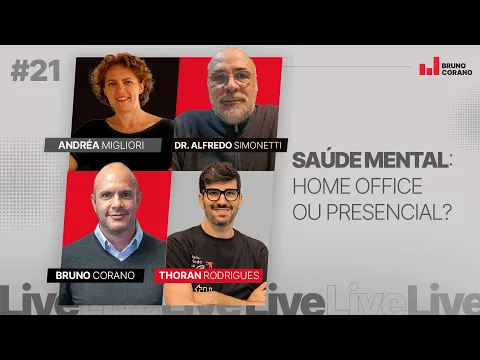

In the executive’s assessment, “the pain of hiring today increasingly involves the quality of life that the company can offer,” and working from home, according to him, has become a competitive differentiator in attracting and retaining professionals.
Consequently, decisions regarding in-person, hybrid, or remote models are likely to carry weight in employer branding, as the work format becomes part of what the company promises to employees, and this commitment arises already in the recruitment stage.
Mental Health in Home Office Raises Alarm in Companies
Although many respondents associate working from home with practical benefits, such as more time and less commuting, the survey indicates that the experience is not uniform and may include unwanted effects, such as isolation and extended working hours.
In the mental health aspect, the research indicates that anxiety was the most cited symptom, at 51.5%, followed by difficulty concentrating, at 47%, and feelings of exhaustion or burnout, mentioned by 39.6%, in a scenario of high recurrence.
The study suggests an operational challenge for companies: while remote work is seen as a factor for well-being by a significant portion of professionals, the routine tends to require clear support mechanisms to avoid overload.
Raquel Nunes, a Human Resources specialist at HUG, attributes part of the problem to the absence of corporate structures adapted to the new format and states that, without emotional support, flexibility can lead to exhausted, isolated, and less productive professionals.
Corporate Therapeutic Support is Still Limited
Regarding access to care, the survey shows that half of the professionals pay for psychological support out of pocket, while only 11.9% report having therapy provided by their company, indicating that formal support is still restricted.
Another 26.1% stated that they had undergone therapy but had discontinued the process, and 11.9% said they have never sought support, numbers that help to highlight the gap between perceived demand and what is actually available.
The combination of high prevalence of symptoms and low coverage of therapeutic benefits reinforces that the topic is no longer peripheral, as mental health emerges as a variable linked to productivity, retention, and ultimately, the sustainability of the model.
In this context, remote work is likely to remain a sought-after differentiator for many professionals, but the research indicates that without consistent care policies, the promise of quality of life may coexist with a daily reality of emotional pressure.
If remote work has already become part of the value package offered to employees, what concrete measures are companies willing to adopt to expand psychological support beyond mere rhetoric and reduce the mismatch highlighted by the survey?









Indiscutivelmente home office é qualidade de vida. É comer a comida de qualidade de casa, é poder tirar um cochilo de 20 minutos pós almoço, é não se estressar com trânsito, a roupa nao separada, ter mais tempo para si e para a família (tempo que seria perdido em deslocamento), é energia e dinheiro poupados, é ter um sono melhor (ao invés de acordar 5:30 para ir ao trabalho, dá para acordar 7:30 tranquilo!!!)
No entanto, exige disciplina, exige saber separar e exige ter boa estrutura de trabalho em casa.
No meu caso, não largo o home de jeito nenhum. Teria que ter um diferencial muito grande, pois o home office dá um ganho absurdo em qualidade de vida. Você toma de volta muito tempo de vida que perderia anualmente se tivesse que ir até o trabalho! Essa é a verdade. É ter mais tempo para viver.
Mas como disse, tem uns pré-requisitos ai .