





 Portuguese
  English
  Spanish
  4 min of reading
  0 comments


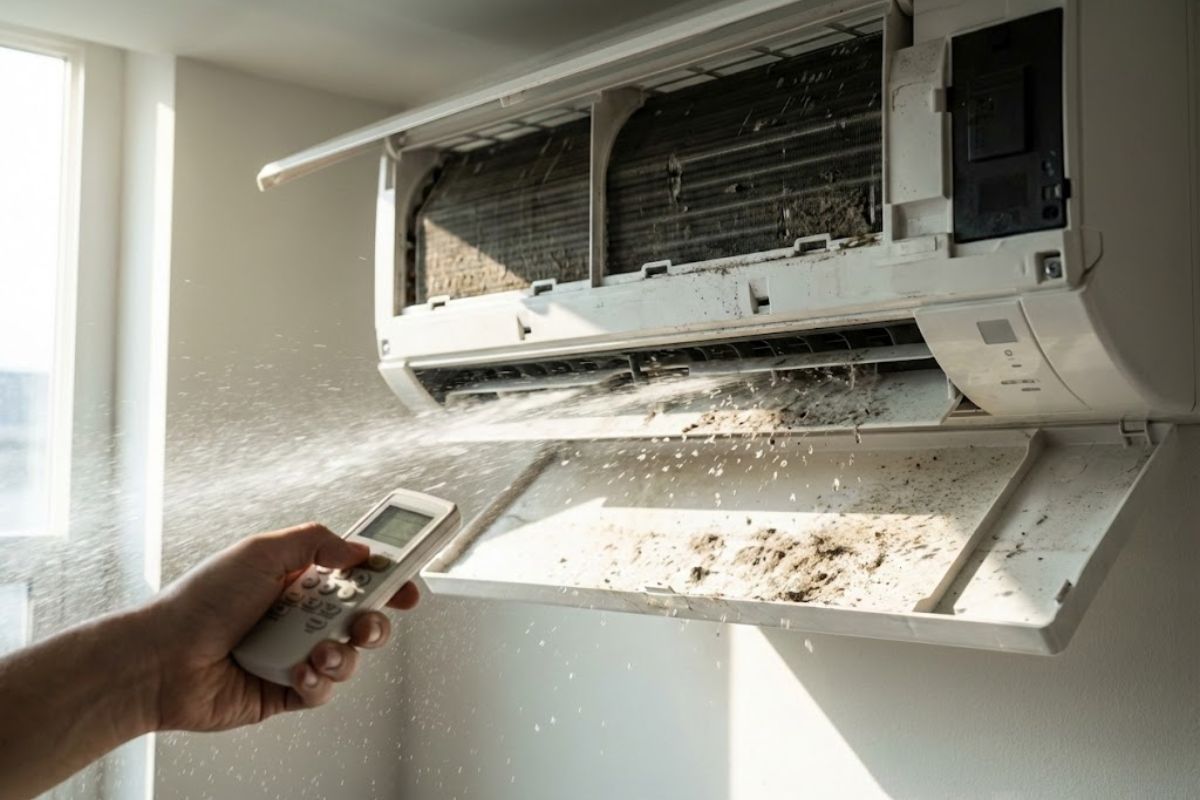
In Many Homes, Air Conditioning Has a Little Explored Function: After Turning It Off, It Keeps Operating for a Few Minutes to Dry Internal Components. This Automatic Process Helps to Contain Mold, Odor, and Bacteria, Improves Equipment Hygiene, and Reduces Frequent Interventions in Day-to-Day with More Home Comfort.
With continuous use, the air conditioner may seem completely off when you press the off button, but in various models, the story doesn’t end there. There is a self-cleaning function that keeps the device active for about 30 minutes to dry the interior and reduce accumulated moisture.
This logic is simple and technical at the same time: normal operation generates condensation, and this moisture, when retained, opens the door to unpleasant odors, mold, and proliferation of bacteria. With the right function on the remote, internal drying becomes an automatic routine, without disassembly and without the use of chemicals.
What the Air Conditioner’s Self-Cleaning Does When No One Is Watching
During cooling, the air conditioner condenses the moisture present in the environment. Part of this moisture concentrates in internal components, especially in areas where air circulates and exchanges heat. When the device is conventionally turned off, residual water can remain there, creating favorable conditions for bad smells and microorganisms over time.
-
Motorola launched the Signature with a gold seal from DxOMark, tying with the iPhone 17 Pro in camera performance, Snapdragon 8 Gen 5 that surpassed 3 million in benchmarks, and a zoom that impresses even at night.

-
Satellites reveal beneath the Sahara a giant river buried for thousands of kilometers: study shows that the largest hot desert on the planet was once traversed by a river system comparable to the largest on Earth.

-
Scientists have captured something never seen in space: newly born stars are creating gigantic rings of light a thousand times larger than the distance between the Earth and the Sun, and this changes everything we knew about stellar birth.

-
Geologists find traces of a continent that disappeared 155 million years ago after separating from Australia and reveal that it did not sink, but broke into fragments scattered across Southeast Asia.

This is where self-cleaning comes in: after the off command, the system continues to work for a few minutes to dry the interior. It is not a defect or a “delay” in turning it off: it is an internal protection step.
For those who use the equipment every day, this detail significantly alters the care routine, as it reduces the chance of the air conditioner turning back on with an unpleasant odor.
How to Activate on the Remote Control Without Opening the Appliance
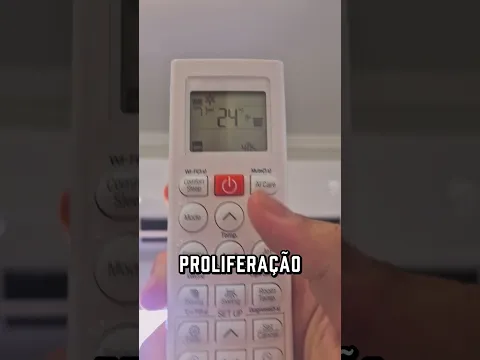

In practice, the process starts on the remote control. In many models, you access the function button usually identified as “Func” and observe the icons displayed on the screen. Among them, the symbol of an air conditioner with arrows around it, which represents automatic internal cleaning, often appears.
After selecting this icon, just confirm with the “Set” button to keep the configuration active. From there, whenever the air conditioner is turned off, it automatically carries out the internal drying cycle for about 30 minutes.
What benefits this is the user who wants daily maintenance without complication, especially in busy routines or in homes with frequent use of the device.
Why 30 Minutes Make a Difference Against Mold, Odor, and Bacteria
Internal moisture is the central link of the problem. When it accumulates, the internal environment of the air conditioner becomes more conducive to bad smells and mold formation. The self-cleaning cycle acts precisely in this “post-use,” removing a significant part of this moisture before it remains in the system for long periods.
This extra time of operation is usually sufficient to improve the hygiene scenario of the device in day-to-day use.
The more consistent the use of the function, the more stable the air quality is likely to be when the device is turned on. It is a continuous preventive measure, not an emergency repair, and thus works better as a habit than as a sporadic action.
Which Models Usually Have the Feature and Where to Locate the Command
The function is more commonly found in recent generation split units and inverter models. In many remotes, it can appear under different names, such as “Clean,” “Self Clean,” or in icon form. This variation in nomenclature is common and can lead many people to overlook a feature that is already available on the device itself.
In actual use, the best way is to observe the display of the remote after pressing the function button and identify the correct symbol before confirming on “Set”. Where to look? In the function menu of the remote itself, without the need to open panels, remove parts, or disassemble the air conditioner. This detail reduces usage barriers and facilitates adoption even for those who are not technically savvy.
When to Keep the Self-Cleaning Active for Continuous Results
The practical recommendation is to keep the function activated at all times, especially in three scenarios: daily use of the air conditioner, more humid environments, and devices that remain turned off for long intervals between uses. In these cases, automatic internal drying tends to provide more noticeable benefits over the weeks.
In terms of routine, the effort cost is low: you activate it once, and the system operates automatically upon shutdown. Those seeking a balance between thermal comfort and preventive care find here a simple, silent, and recurring solution. And, although user reports indicate perceived improvements in consumption, this point should be interpreted as individual experience, not as a universal rule.
The self-cleaning function of the air conditioner is a discreet but strategic resource: it keeps the device active for about 30 minutes after turning off to dry inside, reducing moisture and diminishing conditions for mold, odor, and bacteria. Instead of just treating the symptom, it addresses the most common cause of the problem.
Now it’s worth comparing with your real experience: in your air conditioner, have you ever noticed an odor when turning it on after being off for hours? Does the feature appear as “Func,” “Clean,” “Self Clean,” or icon on your remote? And in which room of your house has this automatic drying made the most difference: bedroom, living room, or office?








-

2 pessoas reagiram a isso.