





 Portuguese
  English
  Spanish
  6 min of reading
  3 comments


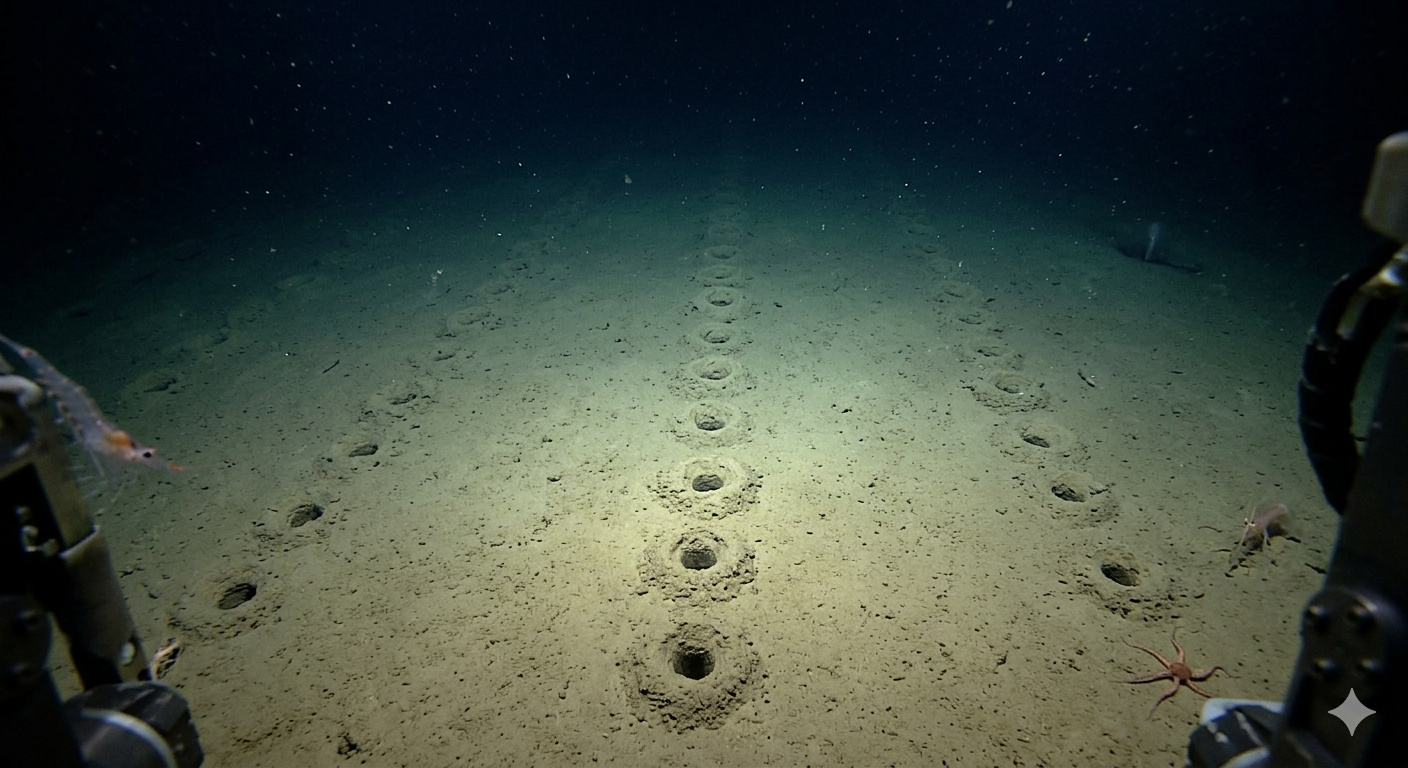


NOAA Scientists Found Rows Of Perfectly Aligned Holes At 2,540 Meters Deep In The Atlantic. The Intriguing Pattern At The Bottom Of The Sea Remains Unexplained.
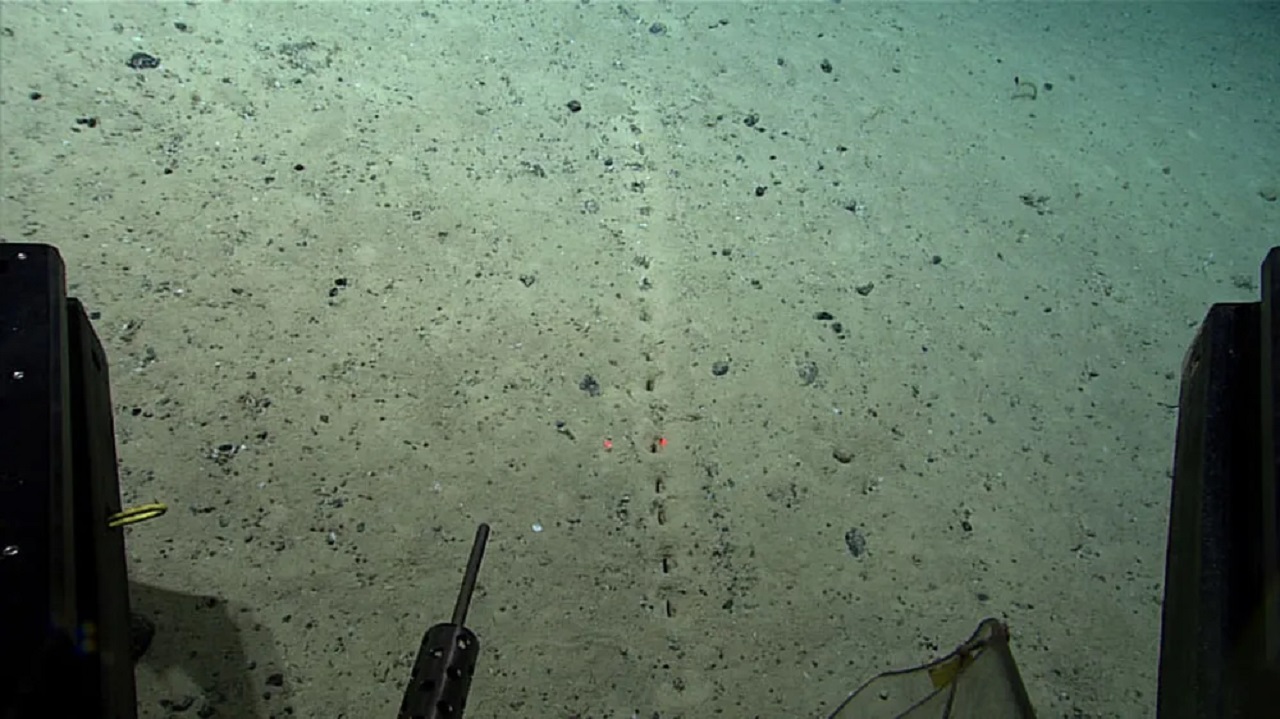
The ocean floor still holds some of the greatest mysteries of the planet. Even with modern underwater exploration technologies, much of the ocean bed remains poorly studied, especially in the deeper regions. It was precisely in one of these remote areas that scientists from NOAA (National Oceanic and Atmospheric Administration) found an unexpected phenomenon. During a scientific expedition conducted in 2022 at the Mesoatlantic Ridge, researchers observed something unusual at the bottom of the Atlantic: rows of small holes perfectly aligned in the sediment of the seabed. The pattern immediately drew attention because the holes appeared to have been excavated systematically.
Each hole had a few centimeters in diameter and was surrounded by a small mound of sediment, as if something had removed the material from inside. Even more intriguing was the fact that the holes appeared organized in nearly straight lines, separated by relatively regular intervals. Even after initial investigation, scientists were still unable to determine which organism or geological process could have created these formations at the bottom of the ocean.
Where The Holes Were Found In The Atlantic Ocean
The discovery occurred during the Voyage to the Ridge expedition, conducted by the NOAA Ocean Exploration program. The goal of the mission was to study poorly explored areas of the Mesoatlantic Ridge, a gigantic underwater mountain range that stretches across the Atlantic from north to south.
-
A “silent skill” is allowing Brazilians to earn up to R$ 22,000 per month without a degree and become indispensable for companies that rely on millions of data to survive.

-
Researchers at the Toyota Research Institute found that if a human uses robotic arms to flip a pancake 300 times in an afternoon, the robot learns to do it on its own the next morning, and this is currently the most promising method to solve the biggest bottleneck in modern robotics.

-
Goodbye iron: a common item in households is starting to lose space to technology that smooths clothes in minutes without an ironing board and with less energy consumption.

-
Antarctica reveals an unusual clue high in the Hudson Mountains, and what appeared to be just an isolated rock began to expose a secret hidden under the ice for ages.

This geological structure is considered the longest continuous mountain range on the planet, with about 65,000 kilometers in length. Along it, important geological processes occur, such as the formation of new oceanic crust through underwater volcanic activity.
During the exploration of an area near the Azores, the team used a remotely operated vehicle (ROV) to examine the seabed at about 2,540 meters deep. It was at this point that the robot’s cameras recorded the rows of aligned holes in the sediment.
The Geometric Pattern That Caught The Researchers’ Attention
What made the discovery particularly intriguing was the regularity of the observed pattern. The holes were not randomly scattered across the seabed, as is normally the case with natural structures.
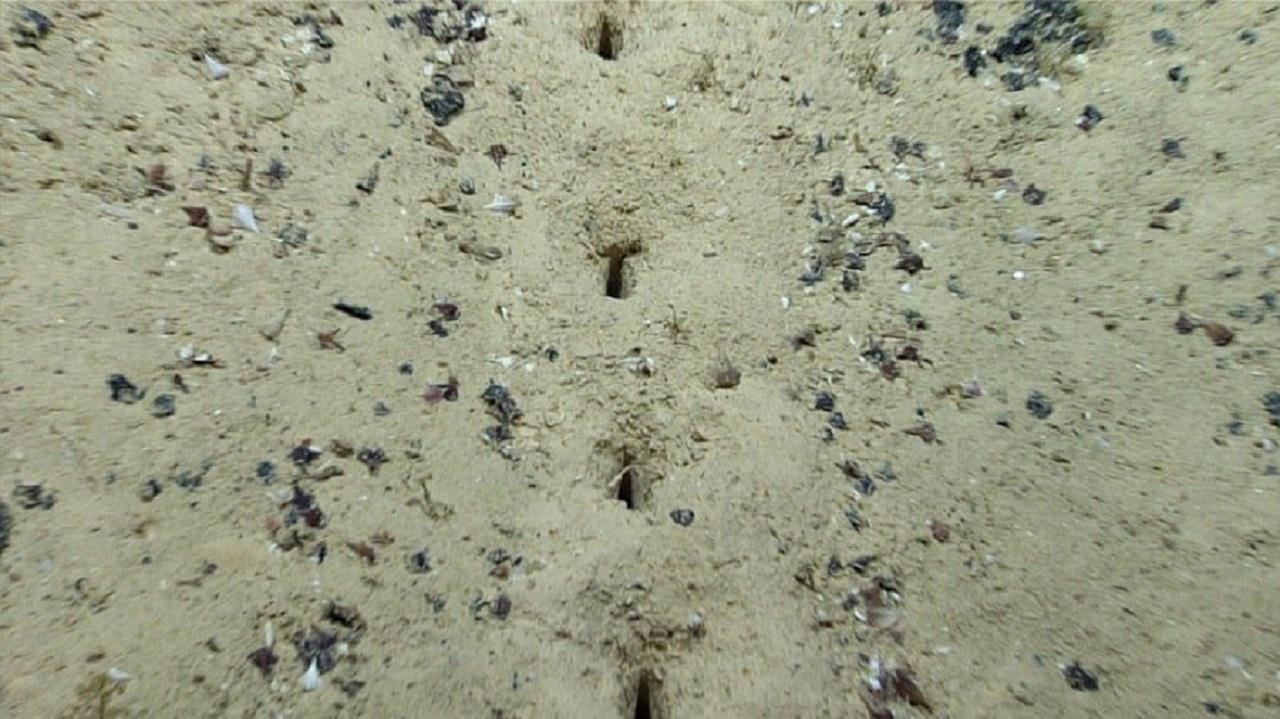
Instead, they appeared organized in almost perfectly straight lines, something extremely uncommon in natural geological formations.
Moreover, each hole exhibited similar characteristics:
- diameter of a few centimeters
- well-defined edges in the sediment
- small mounds of material around
- relatively uniform spacing between the holes
This set of characteristics suggested that the holes could have been excavated by some organism or specific process, rather than being the result of natural erosion. According to NOAA researchers, the pattern seemed to indicate some type of biological activity or feeding behavior of deep-sea organisms.
The Role Of Submarine Robots In Investigating The Rows Of Holes In The Atlantic
The discovery was made possible thanks to the use of remotely operated vehicles, known as ROVs (Remotely Operated Vehicles). These submarine robots are equipped with high-resolution cameras, scientific sensors, and mechanical arms that allow them to manipulate objects on the seabed.
During the expedition, the ROV was used to examine the holes more closely. Scientists attempted to use the robotic arm to stir the sediment and collect samples from inside the holes, in an effort to determine whether they were connected to each other or merely superficial excavations.
However, the seabed sediment proved compact and difficult to penetrate with the available instruments. The team managed to collect sediment samples near the holes but found no clear evidence explaining their origin. This difficulty only deepened the mystery surrounding the formation.
Scientific Hypotheses To Explain The Holes
Although the exact origin remains unknown, scientists are discussing some possible hypotheses to explain the presence of the rows of holes at the bottom of the ocean.
One of the most discussed possibilities involves burrowing organisms from the seabed. Many species of animals that live in deep environments, such as marine worms, crustaceans, or benthic fish, can burrow into sediments in search of food or shelter.
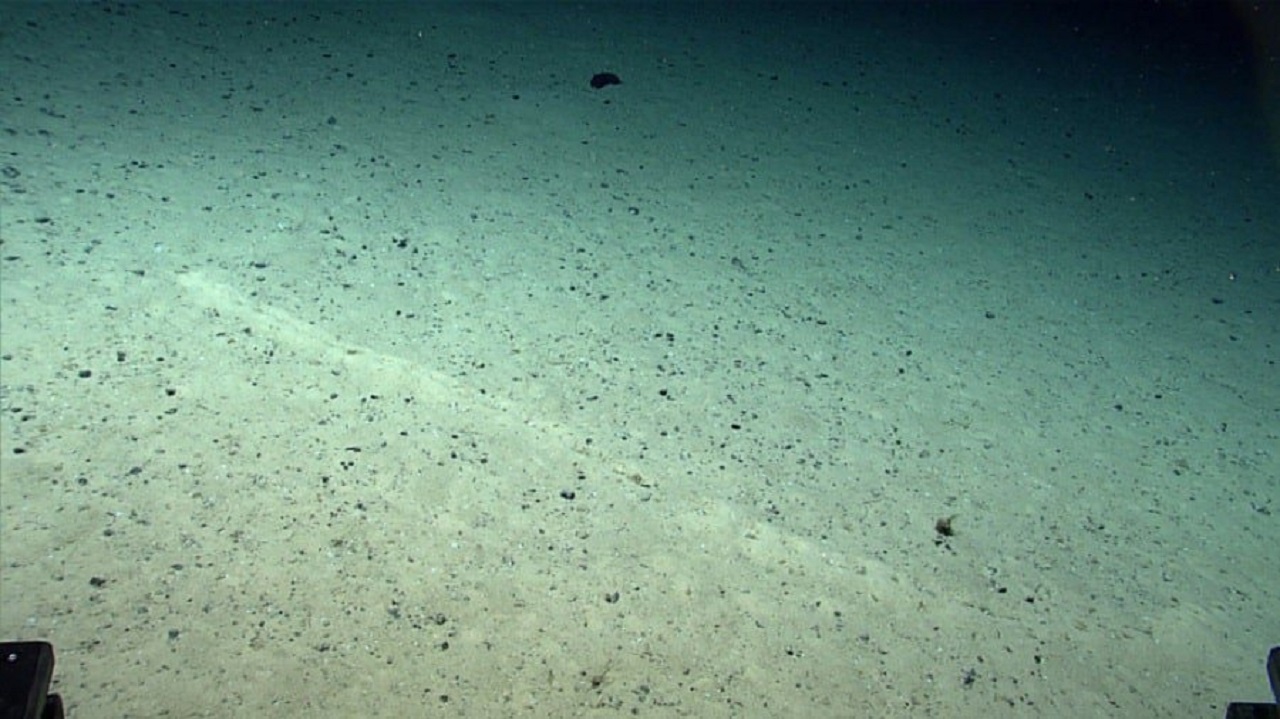
In this case, the holes could represent points where some animal has repeatedly dug into the sediment along a trajectory. Another hypothesis involves specific feeding behaviors of still poorly studied species. Some deep-sea organisms feed by filtering organic particles from the sediment and may leave similar marks on the ocean floor.
There is also the possibility that the holes are related to geological processes or the release of gases trapped in the sediment. In some regions of the ocean floor, natural gases may slowly escape, creating small cavities on the surface. However, none of these hypotheses have been confirmed so far.
Why The Ocean Floor Still Holds So Many Mysteries
Despite technological advances in recent decades, the oceans remain one of the least explored environments on Earth. Estimates indicate that more than 80% of the global seabed has still not been mapped in high resolution.
The extreme depth, high pressure, and lack of natural light make exploring these regions extremely complex and costly.


At depths greater than two thousand meters, water pressure can exceed 250 times the atmospheric pressure at sea level, which requires specialized equipment to operate in that environment. These conditions mean that scientific expeditions to the deep sea are relatively rare and limited to small areas.
As a result, unexpected phenomena continue to be regularly discovered during exploration missions.
The Scientific Importance Of Studying The Seafloor
Discoveries like the rows of holes at the bottom of the Atlantic show how much there is still to learn about deep-water ecosystems. These environments host a vast diversity of organisms adapted to extreme conditions of pressure, temperature, and absence of light. Many of these beings are still unknown to science.
In addition, the seafloor plays a fundamental role in important global processes, such as the carbon cycle, ocean circulation, and the formation of new marine habitats.
Better understanding these systems can help scientists understand climate change, the evolution of marine life, and the functioning of the planet as a whole.
Why Scientists Asked For Help From The Public
After the images of the mysterious holes were released, NOAA decided to share the record on social media and ask for suggestions from the scientific community and the public.
This type of open collaboration is not uncommon in ocean exploration projects. Often, researchers from different fields can offer interpretations or hypotheses that were not initially considered by the team responsible for the discovery.
The initiative generated significant online interest, with experts and enthusiasts discussing possible explanations for the phenomenon. Nevertheless, so far no hypothesis has definitively explained the origin of the observed formations.
A Mystery That Continues At The Bottom Of The Atlantic
The discovery of the rows of perfectly aligned holes at the bottom of the Atlantic Ocean demonstrates that even on a largely explored planet, there are still natural phenomena that challenge scientific understanding.
Although some hypotheses have been proposed, scientists have not yet been able to definitively identify which organism or natural process created these structures.
New expeditions and future studies may provide more clues about the phenomenon. Sediment samples collected during the mission are still being analyzed in the laboratory, and new underwater exploration technologies may help reveal more details about the environment where the holes were found.
Until then, the rows of holes at the Mesoatlantic Ridge remain as one of the small mysteries hidden in the depths of the ocean, reminding us that the seafloor is still one of the last poorly understood frontiers of the planet.







Na última foto do robô é possível talvez ver uma moeda algo prateado redondo
FAKE, do tipo “especialistas” q a **** exibe. kkkkkkk
Estes textos cansativos feitos os IA, conseguem até deixar chato, um fato que seria interessante e curioso de se ler!
Toma vergonha ô redator!