





 Portuguese
  English
  Spanish
  5 min of reading
  20 comments




Known as “South Germany of Brazil”, Joinville stands out for its technology industry, planned urbanism, and one of the lowest unemployment rates in the country.
Amid the economic uncertainties that permeate Brazil, some cities surprise by swimming against the tide. Joinville, in northern Santa Catarina, is one of these exceptions. Much beyond the fame of the “city of flowers” or the German cultural traditionalism, Joinville today represents a rare phenomenon of socioeconomic development in the country. Known by many as the “South Germany of Brazil”, the city gathers typical characteristics of the world’s most efficient economic centers: high-tech industry, functional urban planning, above-average income, low unemployment rates, and a business environment that grows even in adverse times.
An Industrial Hub That Has Become a Technological Reference
Joinville is not just industrial. It is highly specialized. The municipality is home to over 8 thousand industries, which accounts for about 35% of all industrial activity in Santa Catarina, according to IBGE data.
Companies like Tupy, Embraco, Tigre, Ciser, and Docol are part of an ecosystem that goes beyond traditional production: they invest in research, development, and industrial automation, making Joinville a true hub of innovation applied to industry.
-
A couple buys an old chalet, breaks the kitchen floor for renovation, and finds over a thousand coins of gold and silver hidden since the English Civil War over 4 centuries ago.

-
Rigid bags with their days numbered: new trend prioritizes comfort in 2026.

-
YouTuber creates an excavator equipped with a giant 4.5-meter sword to challenge his brother to a rematch, and the invention quickly goes viral on social media.
-
The U.S. Army surprises the world by presenting the UH-60MX Black Hawk helicopter capable of flying without pilots, controlled by a tablet, featuring the MATRIX system, smart sensors, and full autonomy in real combat and rescue missions.


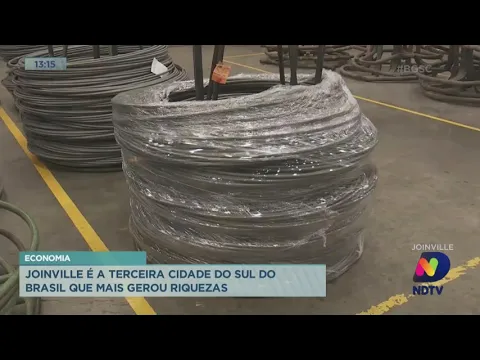

The presence of technical universities and institutions such as Senai and the Federal Institute of Santa Catarina ensures a qualified workforce to keep this machinery running at a high level. It is a structure reminiscent of the German Mittelstand — small and medium-sized enterprises that are highly specialized and sustain Germany’s industrial economy.
Salaries Above Average and Quality of Life of a Developed Country
The data is impressive: the municipal GDP is around R$ 45 billion, and the GDP per capita exceeds R$ 74,500 — a figure higher than many capitals and well above the national average. This means that the city’s residents generally have a considerably higher purchasing power than most Brazilians.
And salaries reflect this. In several sectors, especially in industry and technology, remuneration is significantly above the national average. This attracts professionals from various regions and boosts the local economy with heated consumption and growing demand for qualified services.
Furthermore, Joinville has one of the best Human Development Index (HDI) ratings in the country, with a score of 0.809, comparable to countries like Portugal and Hungary. This translates into solid education, structured health care, functional mobility, and continuous cultural offerings.
Abundant Employment: The Case of Near “Full Employment” in Southern Brazil
While several Brazilian cities still face challenges with unemployment, Joinville is going in the opposite direction. In 2024, the city achieved one of the lowest unemployment rates in the country, matching the state average of Santa Catarina, which was only 2.8% — technically considered full employment by economists.
In addition to industry, sectors such as logistics, commerce, education, and information technology have been expanding rapidly. The number of formal jobs continuously grows, and there is healthy competition for talent in technical and managerial areas.
By way of comparison, Joinville generated over 176 thousand jobs in recent years, establishing itself as the largest job generator in Santa Catarina.
Urbanism and Infrastructure: The Reflection of a City That Thinks About the Future
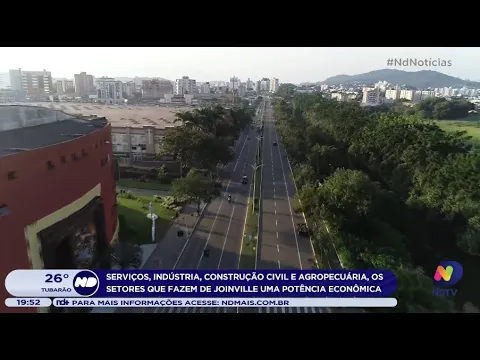
Another factor that strengthens the analogy with European centers like those in Germany is the functional and planned urbanism that characterizes Joinville. The city invests in smart mobility, green infrastructure, urban drainage, and roadway expansion.
Projects such as the expansion of BR-101 and the duplication of Santos Dumont Avenue exemplify how the municipality anticipates growth and verticalization. This has a direct impact on property appreciation and the logistical flow of industries.
Moreover, there are investments in high-end housing, planned neighborhoods, and gated communities, catering to the growing demand of the new middle class and the technical elite settling in the region.
Rising Technology and Innovation Ecosystem
In recent years, Joinville has also been standing out as one of the main technology hubs in the southern region. Companies like SoftExpert, Datasul, Totvs, Neogrid, and Ciser operate in the city and contribute to a solid innovation environment.
Additionally, there are hubs like Ágora Tech Park and the innovation space #Colmeia of Ciser, which promote startup acceleration, open innovation events, and partnerships with universities.
This ecosystem connects industry, software, and applied research, bringing Joinville closer to the model of cities like Munich or Stuttgart — places where industrial tradition and cutting-edge technology coexist efficiently.
Appreciated Properties and Urban Boom
With a stable economy, high employment, and growing quality of life, it was expected that the real estate market in Joinville would soar — and that is precisely what happened.
In the last five years, the average square meter in prime areas of the city increased by more than 50%, according to data from real estate portals. The demand for high-end residential and commercial properties grew, propelled by qualified professionals migrating to the city in search of opportunities and security.
Vertical developments, horizontal condominiums, and planned neighborhoods are emerging at a rapid pace, particularly in the regions of América, Saguaçu, Atiradores, Bom Retiro, and Costa e Silva.
Education and Human Capital: The Foundation of Economic Sustainability
Joinville also stands out in the education pillar. In addition to a well-structured public network, the city has nationally recognized universities, such as UFSC (Joinville campus), Univille, ACE/FGV, as well as renowned technical institutions like Senai, IFSC, and Senac.
This educational ecosystem is responsible for training thousands of highly qualified professionals each year, many of whom are absorbed by local industries, reducing dependency on external labor and promoting sustainable development.
A City That Generates and Retains Wealth
While many cities export their workforce and see their intellectual capital migrate to larger capitals, Joinville moves in the opposite direction. It attracts and retains talents, companies, and investments. And more than that: it generates wealth and reinvests locally.
This virtuous cycle translates into more infrastructure, better quality of life, more modern schools and hospitals, and an economy that grows with fiscal responsibility.
Joinville does not experience unplanned growth. Its expansion model is planned, articulated with industry, public power, and the population — a striking feature of cities that manage to maintain high development indexes over time.
The moniker “South Germany of Brazil” may sound exaggerated at first glance, but analyzing the numbers, urbanism, industrial culture, level of innovation, salaries, and employment rates, we see that the comparison is more than poetic — it is technical and economic.
Joinville is, today, an island of economic stability in a country marked by contrasts. With a modern industry, a promising technology ecosystem, and a heated job market, the city consolidates itself as one of the main motors of regional development in Brazil.
It is not an exaggeration to say that if Brazil seeks paths for sustainable and intelligent growth, Joinville is a model that deserves to be studied — and replicated.







Hoje alimento o sonho de participar do crescimento dessa Cidade
Não é bem assim! Nem tudo são flores! Joinville é a maior cidade do Estado e como tal com ônus e bônus das grandes cidades do país. É fato que temos um pólo industrial e educacional que podem ser referências e o problema de desemprego não é sentido aqui.
Mas a nossa urbanização e malha viária são lamentáveis. Muitas ruas ainda sem calçamento e pouca infraestrutura prejudicam, e muito, a fluidez no trânsito. Uma cidade extremamente quente e úmida poderia ser mais arborizada e ter mais parques.
Enfim, acredito que estamos trilhando um caminho melhor! E todas as boas ações serão prestigiadas!
Concordo plenamente com sua afirmação! Joinville-SC é PÉSSIMA nas suas ruas e calçadas, para não dizer LAMENTÁVEL em INFRAESTRUTURA e PLANEJAMENTO URBANO. Certa vez, falei com um prefeito em reunião, que a PREFEITURA DE JOINVILLE é ANTI-CIDADÃO, trabalha contra o cidadão e, PROVEI para ele, que ficou em silêncio. O prefeito atual é um ****, **** mandado da sua VICE. JOINVILLE NÃO MERECE SUA PÉSSIMA ADMINISTRAÇÃO!
Tudo mentira essa reportagem! Cidade ****, mal organizada, bagunçada, povo mal educado! Tudo aqui é caríssimo! NÃO VENHAM PARA JOINVILLE!