





 Português
  Inglês
  Espanhol
  6 min de leitura
  7 comentários


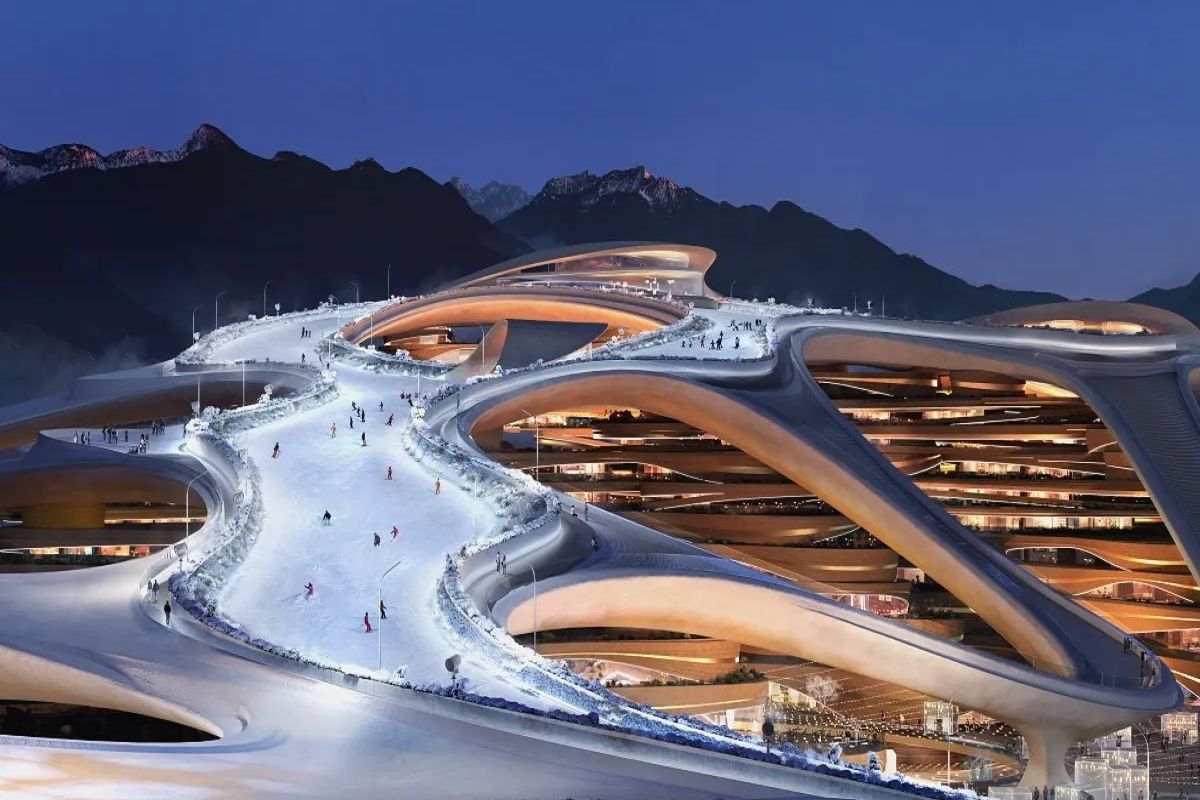


In The Heart Of The NEOM Project, Saudi Arabia Carves 60 Km² From The Sarawat Mountains To Build Trojena, Featuring Alpine Resorts, Tunnels, Retaining Walls, And Man-Made Snow. With No Rivers And Rainfall Below 100 Mm Per Year, The City Will Rely On Desalination, Pumping, And Continuous Renewable Energy At Altitude.
Saudi Arabia has decided to test a rare engineering limit: to build a winter city inside a mountain in the desert, promising artificial snow, lakes, and alpine resorts in one of the driest regions on Earth. If it works, the project changes the conversation about how cities can be designed in extreme environments.
If it fails, Trojena may go down in history as one of the most expensive engineering mistakes ever attempted, as the bet is made against three adversaries at once: the climate, the geology, and time, with hundreds of billions at stake under the NEOM umbrella.
Trojena Within NEOM And The Size Of The Bet

Trojena is a high-altitude mountain venture within the NEOM project, part of a national transformation plan valued at over US$ 500 billion.
-
A megaproject worth R$ 89 billion is advancing in Iraq and promises to change the game in global trade by creating a new corridor between Asia and Europe, reducing traditional routes and repositioning the country as a logistics powerhouse.
-
Goodbye bedside table: floating shelves become a trend in 2026 by freeing up space in the bedroom, improving circulation, bringing visual lightness, and integrating technology without taking up floor space.

-
Israel, Greece, and Cyprus signed an agreement in 2020 to transport gas from the Mediterranean to Europe via a 1,872 km pipeline, but Turkey claimed sovereignty over part of the maritime route, and the project never materialized.
-
Israel, Greece, and Cyprus signed an agreement in 2020 to transport gas from the Mediterranean to Europe via a 1,872 km pipeline, but Turkey claimed sovereignty over part of the maritime route, and the project never materialized.

Trojena alone occupies approximately 60 square kilometers of rugged terrain, sculpted directly from the Sarawat Mountains.
Parts of the site rise to over 2600 meters above sea level, allowing winter temperatures to drop below zero, but only for brief periods throughout the year.
Even with this limitation, Saudi Arabia is committed to hosting the 2029 Asian Winter Games in Trojena.
The Mountain Is Not “Soil,” It Is A Complex Geological System
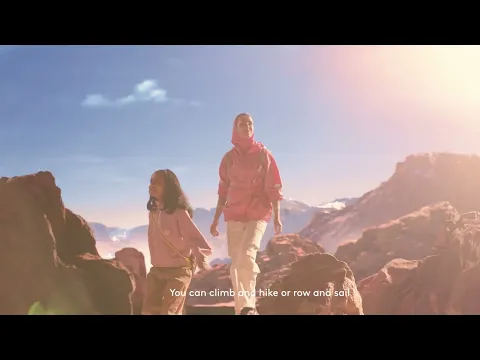

Trojena is not being built on flat desert. It’s being sculpted into the Sarawat mountain range, a system formed by millions of years of tectonic uplift, faults, and erosion.
The rock below the site is not uniform: there are fractured igneous layers, metamorphic formations, and shear zones that are naturally vulnerable to landslides.
In some areas, the gradients exceed 30 degrees, creating constant gravitational pressure on any structure.
Additionally, projects need to contend with sudden rockfalls, erosion in rare but intense rains, and thermal expansion variations that can exceed 30 degrees Celsius per year.
Reshaping The Mountain Comes Before Raising The City
Before buildings can be erected, the mountain itself needs to be reshaped. Old satellite images indicate millions of cubic meters already excavated to form artificial plateaus, terraces, and platforms.
For scale comparison, Palm Jumeirah required around 94 million cubic meters of sand dredged at sea level.
In Trojena, Saudi Arabia seeks comparable volume and impact, but in hard rock, at high altitudes, and within a fragile mountain system.
Tunnels, Platforms, And The Invisible Cost Of Stability
Tens of kilometers of tunnels are being excavated below the surface to transport utilities, stabilize slopes, and embed structures into the rock face.
In an environment like this, excavating is not just “breaking ground”: each tunnel alters the stability of what is above and below.
Here, the margins of error are measured in millimeters, because any slow displacement of the slope or uneven settlement can transform into cracks, misalignments, and cumulative failures over time.
Extreme Anchoring On Unstable Slopes
To prevent the city from sliding slowly downhill, Trojena relies on aggressive structural solutions. Buildings are anchored to the bedrock with deep piles drilled far below the surface.
Retaining walls, some over 50 meters high, hold entire sections of reshaped slope. Multi-level terraces are reinforced with prestressed concrete to counteract constant lateral forces.
Engineers still need to consider differential settlement, when parts of the same structure move at different rates over the years.
Infrastructure That Needs To “Yield” Without Breaking
Roadways, railway systems, and ski infrastructure cannot be rigid. They need to be flexible without cracking, because the mountain is not static.
In a mountain city, maintenance is not a future step: it is a permanent condition of survival.
This point defines the difference between Trojena and cities built on more predictable terrain. In the case of Saudi Arabia, the challenge does not end with the inauguration; it begins.
Artificial Snow In The Desert As An Industrial Product
Even at altitude, Trojena does not receive natural snow consistently. To meet international competition standards, winter needs to be produced.
Large-scale artificial snow requires hundreds of thousands of liters of water per hectare of slope each season, combined with consistently below freezing wet bulb temperatures.
High-pressure pumps force water through snow guns, while cooling systems ensure crystal formation before hitting the ground.
The electrical demand can rival that of small cities, and this occurs in a region with no rivers, minimal groundwater, and annual precipitation often below 100 millimeters.
Every Drop Starts In The Red Sea And Climbs The Mountain
The water used in Trojena needs to be desalinated, pumped inland, and lifted thousands of meters to reach the mountain’s summit.
This transforms the water network into a permanent industrial operation, rather than a supporting service.
In addition to bringing water, it must also be held. Evaporation increases at altitude, fractured rocks may favor leaks, and freezing and thawing cycles strain pipelines and storage systems.
In Trojena, retaining water is as difficult as transporting it.
100% Renewable Energy And The Continuity Problem
Saudi Arabia claims that Trojena will operate on 100% renewable energy, based on solar, wind, and green hydrogen. In theory, generating energy is not the most sensitive point.
The challenge lies in maintaining continuous supply during extreme demand spikes, precisely when solar production is low and demand is high.
Snow production, desalination, cooling, and transport in a mountainous environment stress the system.
Sustaining this pace requires large storage, whether through large-scale batteries, hydrogen, or grid alternatives, because interruption in artificial winter is a city failure, not equipment failure.
Environmental Impacts That Arise Slowly But Linger
The Sarawat mountains are home to endemic plant species, animal migration routes, and traditional land use patterns.
Large-scale land clearing alters drainage systems. Artificial snow may change soil chemistry over time. Constant water extraction could reshape aquifers beyond the project’s perimeter.
These impacts do not appear immediately. They accumulate slowly and often become visible decades later.
Engineering stabilizes structures, but does not fully control ecosystems, and mountainous environments rarely return to their original state after major alterations.
Luxury, Events, And The Ongoing Maintenance Bill
Trojena was designed as a luxury destination, supported by international tourism, premium real estate, and global sporting events.
However, alpine infrastructure is among the most expensive to maintain anywhere: snow production, slope stabilization, pipelines, and transport networks at altitude require ongoing investment.
As global temperatures rise, operational costs tend to increase, not decrease.
The question shifts from simply inaugurating: it’s about remaining viable for 20 or 30 years, with climate pressures and maintenance demands intensifying.
What Already Exists And What Still Needs To Prove Value
Today, Trojena has already left the concept stage. Satellite images indicate large earthmoving works, terraced platforms sculpted into the slope, and access roads expanding across the terrain.
But the most critical systems still need to prove their value at maximum capacity: long-term water flow, large-scale energy storage, and reliable snow conditions.
Trojena is under construction, but it is not yet an operational city.
The Mountain As The Final Judge
The opening is scheduled for late 2026, aiming to host the 2029 Asian Winter Games.
Despite real progress, the project faces critical challenges in 2026, including the complexity of pumping water to high altitudes and financial pressures that have led to resizing other parts of NEOM, such as the linear city The Line.
Trojena takes engineering beyond calculations and schedules, entering the realm of civilization choice: adapting cities to the environment or trying to mold the environment to human ambition.
If successful, Saudi Arabia transforms Trojena into a global showcase of what coordinated engineering can achieve under extreme constraints.
If it fails, Trojena may become one of the most expensive lessons ever learned on an unstable slope, because the verdict does not come from a render, it comes from the rock, the water, and time.
Would you bet that Saudi Arabia can keep Trojena viable for decades, or will the mountain collect the bill first?









It looks absolutely gorgeous. I wish them the very best of luck. Mother Nature is a hard one to overcome.
I don’t think so. Everybody being let go this week. Project CANCELED like everything else in KSA.
Yes is very very am a worker there now Saudi Arabia Tabuk