





 Portuguese
  English
  Spanish
  5 min of reading
  0 comments


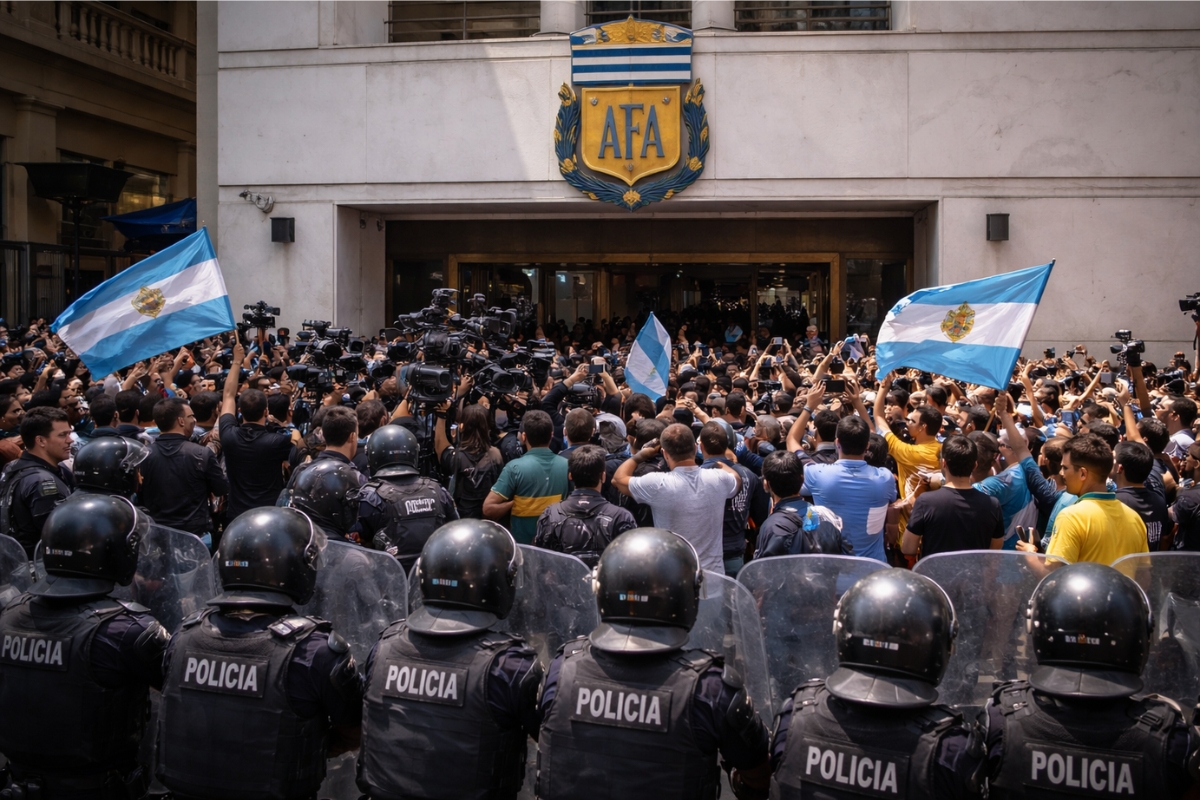
The Tax Complaint Against the Argentine Football Leadership Sparks a Fuse: Matches Are Suspended, Backstage Is Boiling, and the Country Debates Whether It’s Defense of Autonomy or an Attempt at Shielding
Argentine football, one of the cultural pillars of the country and global football, is experiencing one of the most turbulent moments in its recent history, with developments that go far beyond the fields and threaten even the national team’s participation in the 2026 World Cup. In recent months, the Argentine Football Association (AFA) — the entity that organizes and regulates football in the country since 1893 — has been embroiled in a series of legal complaints, tax investigations, and legal measures that have exposed an unprecedented institutional crisis.
At the center of the storm is the AFA president, Claudio “Chiqui” Tapia, who has been targeted by accusations of tax evasion, improper withholding of taxes and social security contributions, use of shell companies to justify payments, and even alleged links to suspicious financial operations.
The investigations, led by the Revenue and Customs Control Agency (ARCA) — a new regulatory body created as part of the Argentine government’s reforms — gained momentum throughout 2025 and exploded into sports and political news at the beginning of 2026.
-
Friends have been building a small “town” for 30 years to grow old together, with compact houses, a common area, nature surrounding it, and a collective life project designed for friendship, coexistence, and simplicity.

-
This small town in Germany created its own currency 24 years ago, today it circulates millions per year, is accepted in over 300 stores, and the German government allowed all of this to happen under one condition.

-
Curitiba is shrinking and is expected to lose 97,000 residents by 2050, while inland cities in Paraná such as Sarandi, Araucária, and Toledo are experiencing accelerated growth that is changing the entire state’s map.

-
Tourists were poisoned on Everest in a million-dollar fraud scheme involving helicopters that diverted over $19 million and shocked international authorities.


In recent months, ARCA filed a series of complaints against the AFA and its top executives, claiming that between March 2024 and September 2025 there was improper withholding of amounts that should have been paid to the treasury and social security, totaling an amount that, according to the authorities, would exceed 19 billion Argentine pesos.
The accusation states that these amounts were irregularly used to finance the entity itself and its activities, in a kind of “forced loan” to the state, which characterizes, in the view of the regulatory body, tax evasion and tax fraud.
As part of the legal measures, the AFA president was banned from leaving the country until he provides clarifications in court, and several board members were also summoned to testify about the complaints. This decision, announced in February 2026, marks a critical moment in the crisis and reflects the seriousness with which Argentine courts have been treating the case.

The Paralysis of the Championship and Reactions from Football
Amid this scenario of uncertainties and accusations, the AFA announced a forceful measure that practically paralyzed professional and amateur football in Argentina. In a historic decision, the entity chose to completely suspend the 9th round of the Professional League, scheduled to take place between March 5 and 8, 2026, and extend this suspension to other divisions and local competitions.
The decision was made by the League Executive Committee, with unanimous support from the clubs present, as a form of protest against the complaint presented by ARCA and in defense of the institutional autonomy of Argentine football.
The official statement released by the AFA reaffirmed that it does not have any outstanding debts related to the tax obligations mentioned in the complaint, stating that payments were made before their respective due dates and that, therefore, there would be no basis for characterizing tax crime. The entity also criticized the judicial framing of the situation, calling it unjust and premature, and vehemently rejected the accusations as an attempt to criminalize sports management.
This paralysis interrupted the national football calendar at a time when fans, clubs, and the media were expecting a lively competitive season, with classic matches between traditional teams and the preparation of talents for the youth and senior national teams. The suspension brought an atmosphere of tension and frustration among players, fans, and managers, who find themselves divided between defending the entity and worrying about the country’s sporting future.
Implications Beyond Borders and the Future of Argentine Football
The impact of this crisis is not confined to the internal scene. The sum of complaints, investigations, and the paralysis of the local calendar raised international concerns, including from FIFA and CONMEBOL, about possible political interference in Argentine football and the implications this could have on international competition regulations.
In extreme situations, government intervention in a national football entity can lead to severe sanctions, ranging from fines to exclusion from official competitions, such as the 2026 World Cup itself.
In recent months, Argentine justice ordered searches and seizures at AFA’s headquarters and dozens of clubs, as well as the seizure of documents, luxury vehicles, and electronic equipment that could be related to money laundering investigations and other irregularities. These actions further expanded the scope of the investigations and deepened the sense of institutional crisis in local football.
Argentine fans, passionate about a sport that is an essential part of national identity, are experiencing a mix of outrage and anxiety regarding the developments. On one side, there are those who defend AFA’s autonomy and support the paralysis as a form of resistance to the accusations; on the other, many are calling for transparency, accountability, and a deep reform in how football is managed in the country.
At a moment when the national team is the reigning world champion, this crisis serves as a warning about the institutional fragility and the need to strengthen ethical and legal mechanisms within the sport.
As the judicial process advances and new evidence and decisions emerge, Argentine football enters a decisive phase that could redefine not only its administration but also the relationship between sport, politics, and society in the country. The hope of millions of fans is that, despite the scandals and obstacles, football continues to be a source of pride and unity for Argentina.










Seja o primeiro a reagir!