





 Portuguese
  English
  Spanish
  3 min of reading
  0 comments


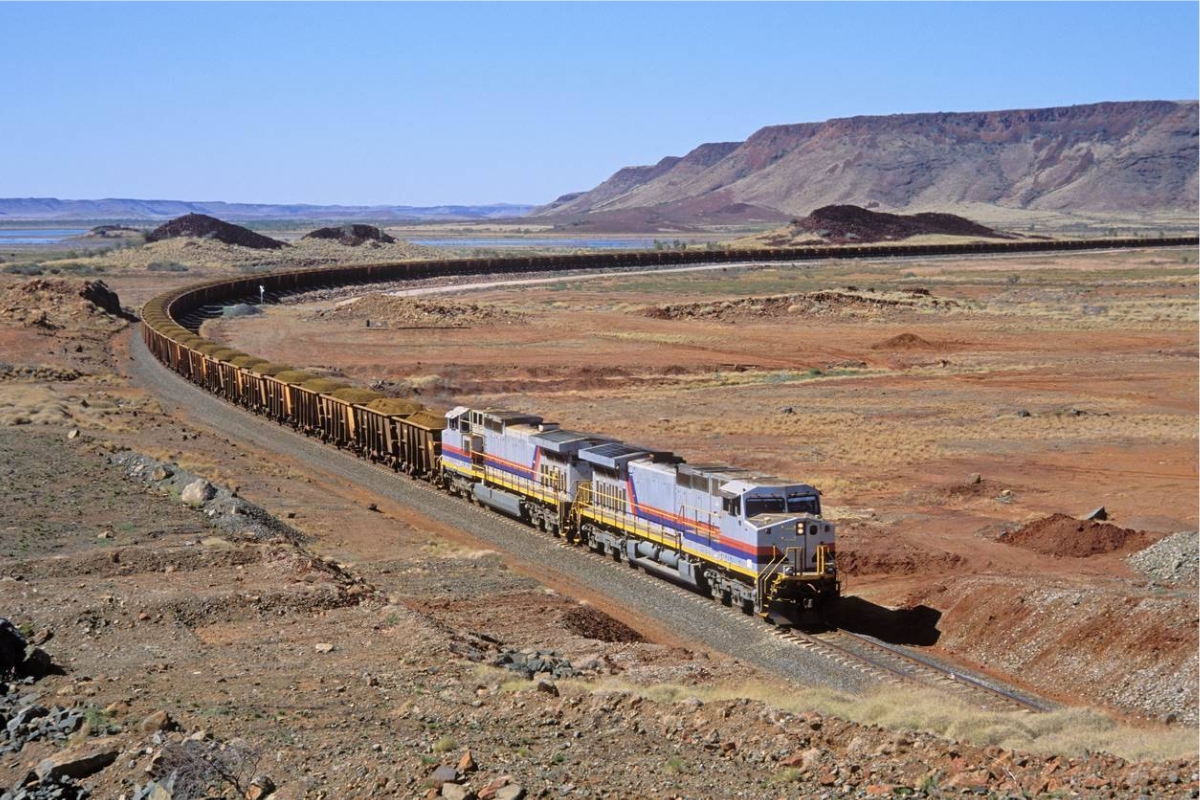
With AutoHaul, Rio Tinto Has Reorganized Iron Ore Logistics in Pilbara, Removed Human Variability from the Cycle, Increased Trip Consistency, and Paved the Way for Predictive Maintenance, Energy Efficiency, and a New Era of Autonomous Industrial Transport
Australia is experiencing a quiet revolution in the heavy freight rail sector. In the remote Pilbara Desert in the northwest of the country, mining giant Rio Tinto has launched a world-first autonomous railway network, where iron ore trains travel long distances without drivers on board, under remote supervision and sophisticated control. This system, called AutoHaul, represents one of the most impressive milestones in industrial automation applied to heavy logistics, driving efficiency and safety gains previously thought unachievable.
What Is AutoHaul and Why Is It So Innovative
Rio Tinto’s AutoHaul project is the world’s first fully automated long-distance heavy freight railway network. It consists of hundreds of locomotives monitored and controlled from an operations center in Perth, located more than 1,500 km from the railway corridor itself in Pilbara. The operation was designed to transport iron ore continuously from the mines to the export ports, without the need for drivers inside the train cabins.
Thanks to this system, gigantic trains, over 2 km long and capable of carrying tens of thousands of tons on each trip, are now managed by advanced technologies that perform functions that were previously reliant solely on human operators. The complete transition to autonomous operation was completed in mid-2019, and today AutoHaul coordinates dozens of trains simultaneously across its railway network of hundreds of kilometers.
-
Friends have been building a small “town” for 30 years to grow old together, with compact houses, a common area, nature surrounding it, and a collective life project designed for friendship, coexistence, and simplicity.

-
This small town in Germany created its own currency 24 years ago, today it circulates millions per year, is accepted in over 300 stores, and the German government allowed all of this to happen under one condition.

-
Curitiba is shrinking and is expected to lose 97,000 residents by 2050, while inland cities in Paraná such as Sarandi, Araucária, and Toledo are experiencing accelerated growth that is changing the entire state’s map.

-
Tourists were poisoned on Everest in a million-dollar fraud scheme involving helicopters that diverted over $19 million and shocked international authorities.



How Automation Is Changing Mining in Pilbara
The automation promoted by AutoHaul is not limited to removing the driver from the cabin. It involves a series of integrated systems that ensure safe, efficient, and optimized real-time operation. The infrastructure includes embedded sensors, speed control systems, continuous monitoring of locomotive conditions, and automatic responses to any anomalies.
Through cameras, detection systems, and protection algorithms, the trains adjust their speed, avoid collisions, and respond to obstacles on the track without direct intervention. This entire technological ecosystem functions as a large, high-precision, and reliable “railway robot.”
This level of autonomy has significant practical impacts. Rio Tinto records more consistent trajectories, reduced stops caused by crew changes, decreased logistical bottlenecks, and greater predictability in delivering ore to the ports. For a company operating in such a remote area as Pilbara, these gains translate into lower operating costs and greater competitive capability in the global market.
The Future of Autonomous Transportation in Industrial Railways
In addition to logistical efficiency, the adoption of autonomous trains in the mining sector also paves the way for even more integrated solutions with other technologies, such as predictive maintenance, artificial intelligence applied to railways, and greater environmental sustainability. Rio Tinto’s experience with AutoHaul serves as an example and inspiration for other sectors that depend on heavy transport, from port operations to industrial supply chains.
By combining expertise in automation with robust infrastructure and extreme geographical challenges, Australia – through Rio Tinto – demonstrates that the future of freight transport can be smarter, safer, and more efficient than ever before. Meanwhile, engineers and planners around the world are closely watching how this quiet revolution in Pilbara can be adapted and scaled to other regions and sectors.
Source of cited information: International Railway Journal — analysis of the implementation and operation of Rio Tinto’s AutoHaul system.










-

-

-

-

8 pessoas reagiram a isso.