





 Portuguese
  English
  Spanish
  8 min of reading
  0 comments


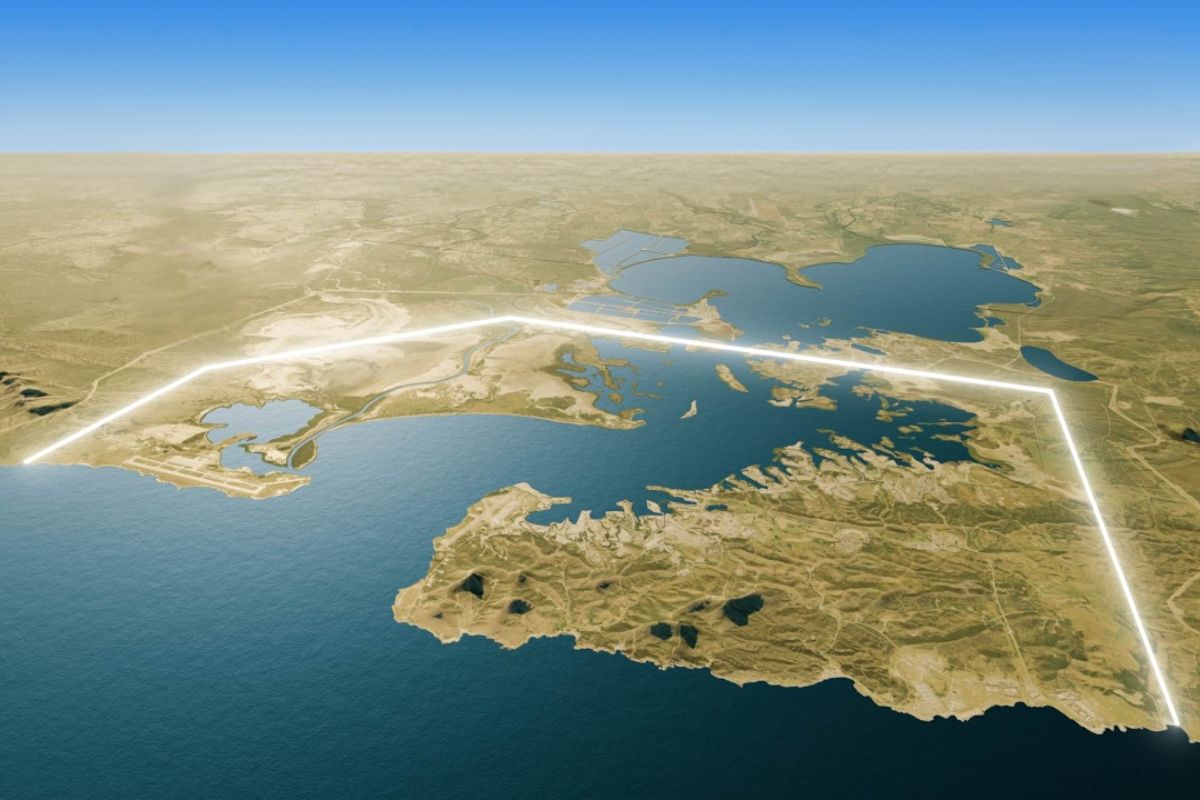
Installed in Cuban Territory Since the Early 20th Century, the U.S. Base at Guantánamo Bay Operates as an Autonomous American City and, Alongside, Maintains Detention Centers. Between Refugee Crises from 1991 to 1995 and Post-2001 Incarcerations, It Became a Symbol of Extreme Costs and Contestable Rights.
In 1492, Cuba was claimed by Spain, but by the end of the 19th century, the struggle for independence paved the way for the American military presence that would result in the U.S. base at Guantánamo, solidified by an indefinite lease. Starting in 1959, with the Cuban Revolution, the political legality of the enclave began to be contested by Havana.
Between 1991 and 1995, the U.S. base became a screening and confinement platform for Haitian and Cuban refugees; after 2001, it was repositioned as a hub of the War on Terror, with camps like X-Ray and Delta. In 2015, official figures cited in the foundational material estimate an annual cost far exceeding that of federal prisons; in 2022, initial photos of the prison came to light through a FOIA request.
What Makes the U.S. Base at Guantánamo Different from Others

The United States maintains a military presence in dozens of countries, but Guantánamo stands out for a structural reason: it is a U.S. base on the territory of a country with which Washington has a political conflict and considers the American presence illegal.
-
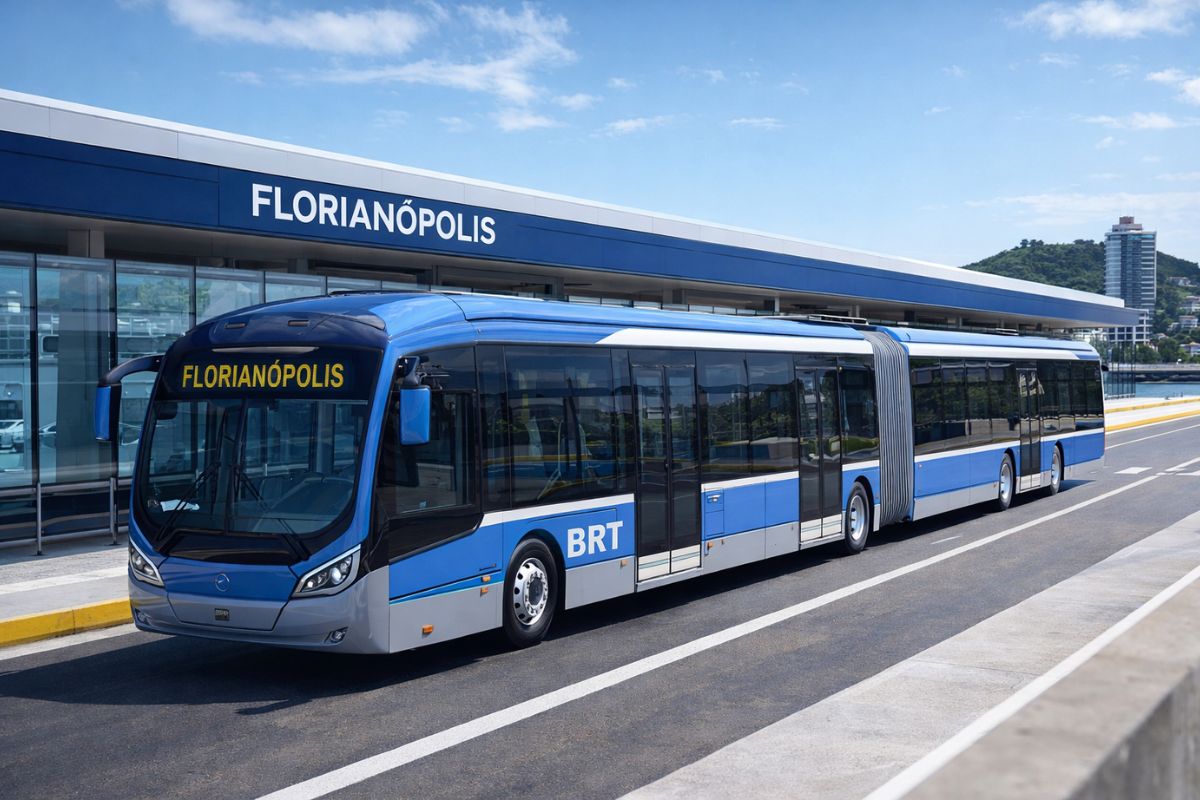
Florianópolis will receive a million-dollar BRT that will begin construction in 2026 with nearly 400 million in funding from the federal government and the Inter-American Development Bank, and the map already shows the routes for the exclusive bus corridors.
-
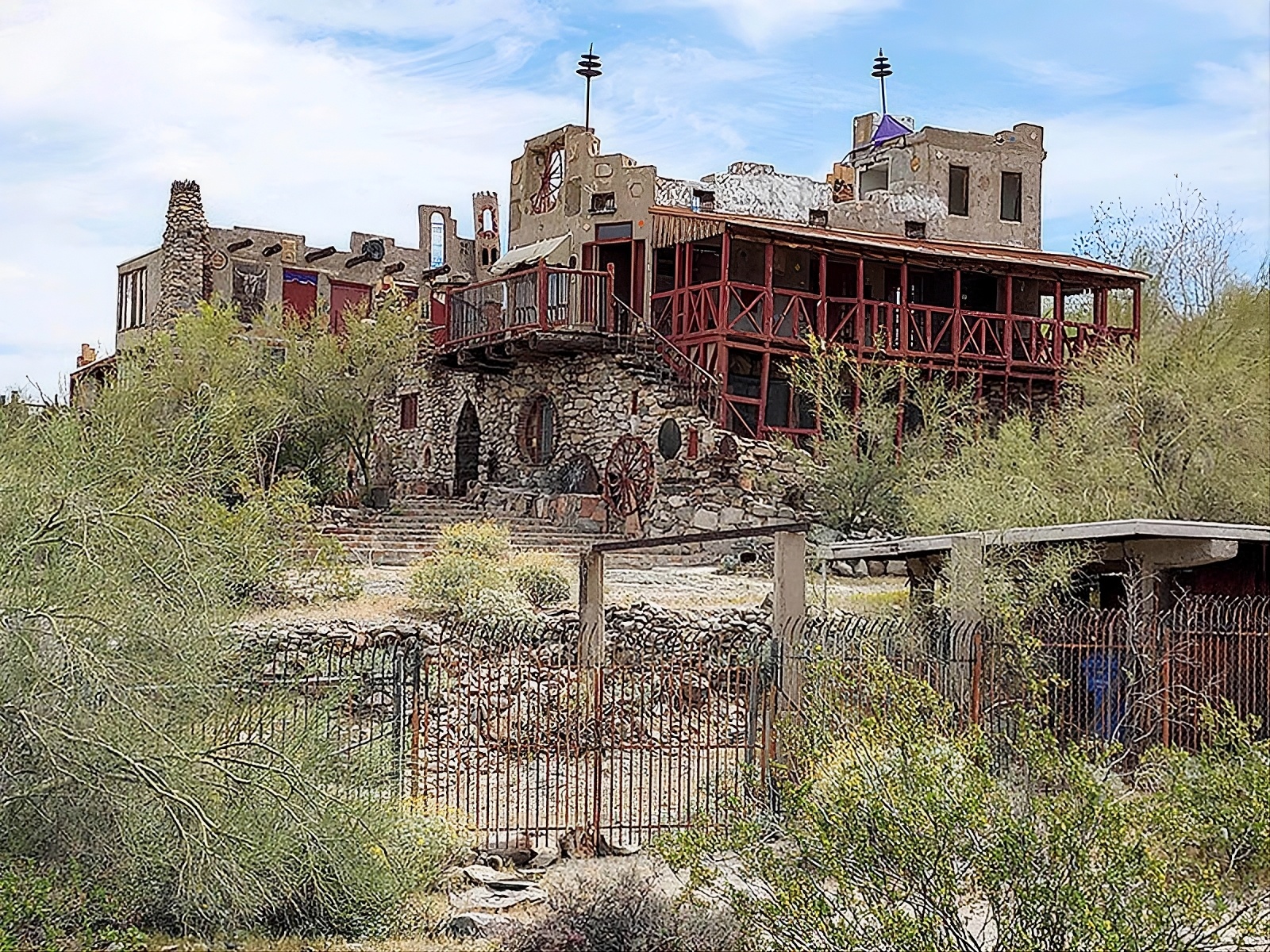
Without a blueprint, without an engineer, and using scrap from the dump, a father spends 15 years building an 18-room castle for his daughter, featuring tram tracks, 13 fireplaces, and over 700 m², which may now be demolished.
-
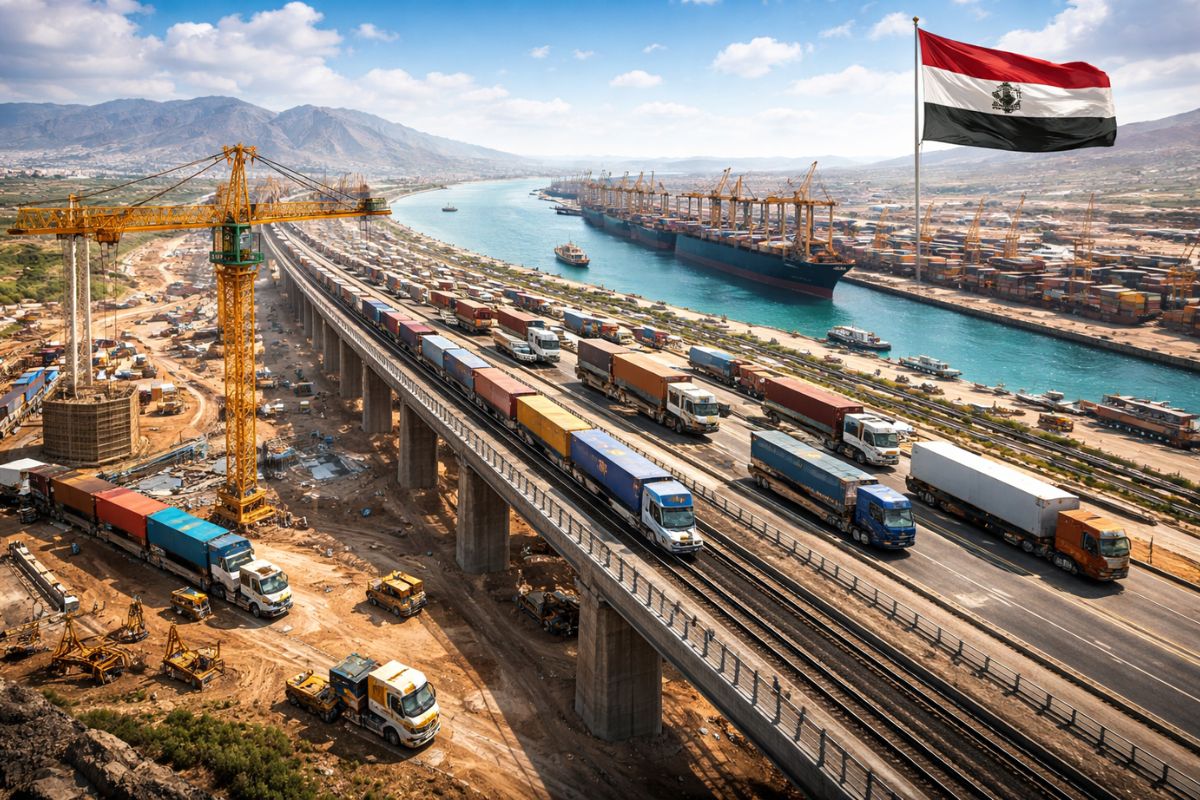
A megaproject worth R$ 89 billion is advancing in Iraq and promises to change the game in global trade by creating a new corridor between Asia and Europe, reducing traditional routes and repositioning the country as a logistics powerhouse.
-
Goodbye bedside table: floating shelves become a trend in 2026 by freeing up space in the bedroom, improving circulation, bringing visual lightness, and integrating technology without taking up floor space.


This uniqueness creates a permanent contrast. On one side, the base operates as a small “American city,” with suburban-style housing, schools, and sports areas.
On the other, it concentrates detention facilities that, for decades, have fueled controversies related to human rights, due to the nature of confinement, the legal framework applied, and international criticisms.
McDonald’s, Golf Course, and the Symbol of Contradictions
The foundational material describes the coexistence of civil and military structures in a limited space: there is a McDonald’s and an improvised nine-hole golf course, with greens described as small islands surrounded by land.
The public image that derives from this is inevitable: standardized leisure, base routine, and alongside, detention centers.
This contrast gained an icon in the 1990s, when immigration made Guantánamo a laboratory for screening policies outside the continental territory.
The presence of the McDonald’s in a zone surrounded by barbed wire became a symbolic photograph, associated with the idea that the U.S. base combines “administrative normalcy” with extreme containment.
How the U.S. Base Was Obtained and Why the Contract Has No Expiration Date
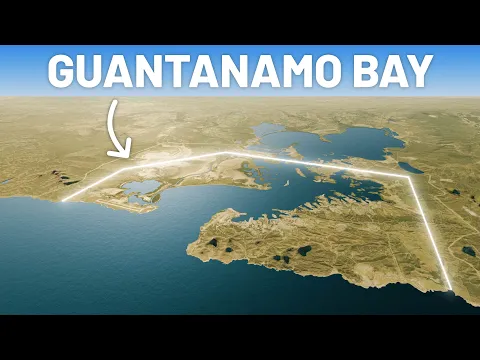

The historical chain presented in the foundational material begins with the war against Spain and the subsequent American occupation.
Cuba obtains formal independence, but without real negotiation leverage, accepts a bilateral treaty that includes the leasing of land to the United States for a naval base.
The technical point is the permanence clause.
The lease is described as indefinite, terminable only with the consent of both parties.
To reinforce the institutional character, the foundational material reports annual payments of US$ 2,000 in gold coins, a mechanism that, later, was rejected by Cuba after the Castro family came to power, turning the “payment” into yet another element of political dispute.
Cold War: Cacti, Mines, and the Armed Border
In 1959, the Cuban Revolution alters the balance.
The new government demands the return of the territory, but without a plausible force option, the dispute shifts to a war of attrition and symbolism at the U.S. base border.
The foundational material describes the construction of a “hedge of cacti” 23 meters wide on the Cuban side and then the installation of a minefield.
The cited figure is around 55,000 mines, making it one of the largest minefields of its time, in an environment where the Cold War became perceived only 145 kilometers from Florida.
The tension peaks during the missile crisis: alarms, evacuation of civilians, and subsequent return.
Even with the de-escalation, normalcy does not return to the pre-1959 pattern.
The foundational material describes Cuban actions such as rejecting the lease checks and shutting down a potable water pipeline, pushing the base towards self-sufficiency.
An Autonomous Base: Water, Energy, and Logistics as Political Infrastructure
The daily operation of the U.S. base is described as dependent on operational autonomy. With the cutoff of supplies, desalination plants were installed to convert seawater into drinking water.
Energy is cited as coming from a diesel power station, complemented by wind turbines installed in 2002.
This logistical framework is not a detail.
It materializes permanence: supplies sent from the United States, independent supply chains, and an ecosystem that reinforces the capacity to sustain the base even when politically undesirable to the host country.
Immigration: 1991 to 1995 and the Use of the Base as Screening Without “American Soil”
The Haitian crisis of 1991, with a coup and instability, appears as an operational turning point.
The foundational material describes thousands of Haitians fleeing in improvised vessels, intercepted by the Coast Guard and sent to Guantánamo.
The declared logic was to process requests and screenings without bringing people to the continental territory.
The camp grows rapidly, with an old airstrip converted into a tent city.
The golf course is also repurposed as a temporary tent area, and the foundational text describes pressure on garbage, water, and electricity, with insufficient logistics for the volume of people.
The political response evolves to a “maximum capacity” decision: people found at sea could be forcibly returned, while those already at the U.S. base entered a waiting limbo, with no clarity about the next step.
The base then begins to function as a symbol of immigration and of domestic disputes in the United States over borders and asylum.
Camp Bulkeley, HIV, and the Legal Limbo in the 1990s
Still within the chapter of immigration, the foundational material describes a sanitary and legal cut: Haitians began to be tested for HIV with enhanced rigor, and if positive, were removed to a separate camp, Camp Bulkeley, using identifying wristbands.
The cited figure is 276 people placed in quarantine, in a context where a 1987 law prohibited the entry of people with HIV into the United States, creating an impasse: screened for asylum, but blocked from entry.
The foundational material reports that a federal court determined that Bulkeley effectively operated as a prisoner camp and ordered evacuation, allowing entry within six months for residents.
This episode is central to understanding why Guantánamo becomes a recurring “instrument”: when the issue is politically divisive, the U.S. base appears as a space of containment beyond the full reach of protections applicable on continental territory.
1994: Cuban Refugees, 33,000 Attempts, and the Policy Shift
After the fall of the Soviet Union, the foundational material describes economic crisis and protests in Cuba, followed by an increase in crossings toward Florida in 1994.
The text notes that, at the peak, 33,000 people began the journey.
The Clinton administration, according to the foundational material, alters the policy: instead of allowing any Cuban rescued at sea to enter, only those who effectively reached Florida could stay; the others would be returned to Cuba.
This amplifies the use of Guantánamo as a tool for managing immigration, raising tensions in already overcrowded camps.
Post-2001: War on Terror, Camp X-Ray, Camp Delta, and the Human Rights Debate
After 2001, Guantánamo is repositioned as a detention center for terrorism suspects.
The foundational material supports an operational motivation: bringing detainees to the U.S. would increase the likelihood of acquittal or demand a set of legal protections, so the U.S. base begins to be used to hold people under military custody with a regime distinct from the one applied on American soil.
The first unit described is Camp X-Ray, a re-purposed temporary structure.
Then, after about four months, detainees would be transferred to Camp Delta, described as permanent and expanded over the years, subdivided by security levels.
The foundational material also cites Camp Iguana, created to house three prisoners under 16 years old, and notes that it was later confirmed that there were other minors at Guantánamo outside of Iguana. This is sensitive information, directly connected to the human rights debate and the design of custody.
The Legal Engineering: “Enemy Combatants” and Indefinite Detention
The foundational material describes a framing dispute.
The U.S. government contends that detainees would not be protected by the U.S. Constitution because they were not on American territory.
At the same time, the foundational text reminds that international law, including the Geneva Conventions, prohibits imprisonment without formal charges or trial for an indefinite period.
The narrated response is the use of the label “enemy combatants” instead of “prisoners of war,” as a way to circumvent restrictions.
This choice concentrates international criticism: prolonged detentions, limitations on access to evidence, restricted hearings, and accusations of human rights violations, including reports of torture cited as part of the debate over the closure of Camp Delta.
Camp Justice: Improvised Court, Low Effectiveness, and Annulled Convictions
To enable trials, the foundational material points to the creation of Camp Justice, initially designed as a permanent court with around US$ 100 million in costs.
Congress, described as opposed to this level of expenditure, cuts the budget to US$ 10 million, and the project migrates to portable tents at the old airstrip, visually reminiscent of the structures used in the refugee crisis.
The practical outcome described is of low judicial output. By 2025, the foundational material states that only eight men were convicted since the creation of Camp Justice and that half of those convictions were annulled.
This data feeds the central criticism: the apparatus exists, but does not solve the dilemma of keeping detainees without conclusively resolving cases.
The Cost Per Inmate and Why Guantánamo Became an Extreme Case
The foundational material provides an objective comparison of annual costs. In maximum-security federal prisons in the U.S., the annual cost per inmate is cited as US$ 78,000.
Based on official figures from 2015 for the operational cost of the prison at Guantánamo and the current population mentioned in the material, it reaches a cost per prisoner of approximately US$ 29 million per year.
In the same context, the foundational material records that, at the time of the report, 15 men remained detained.
The combination of War on Terror, extraordinary cost, low judicial effectiveness, and human rights debate supports why the U.S. base remains a symbol, and not just a military installation.
Do you believe that the U.S. base at Guantánamo should be closed due to cost and human rights, or maintained for strategic value and immigration control?







-

-

-

-

5 pessoas reagiram a isso.