





 Português
  Inglês
  Espanhol
  5 min de leitura
  14 comentários


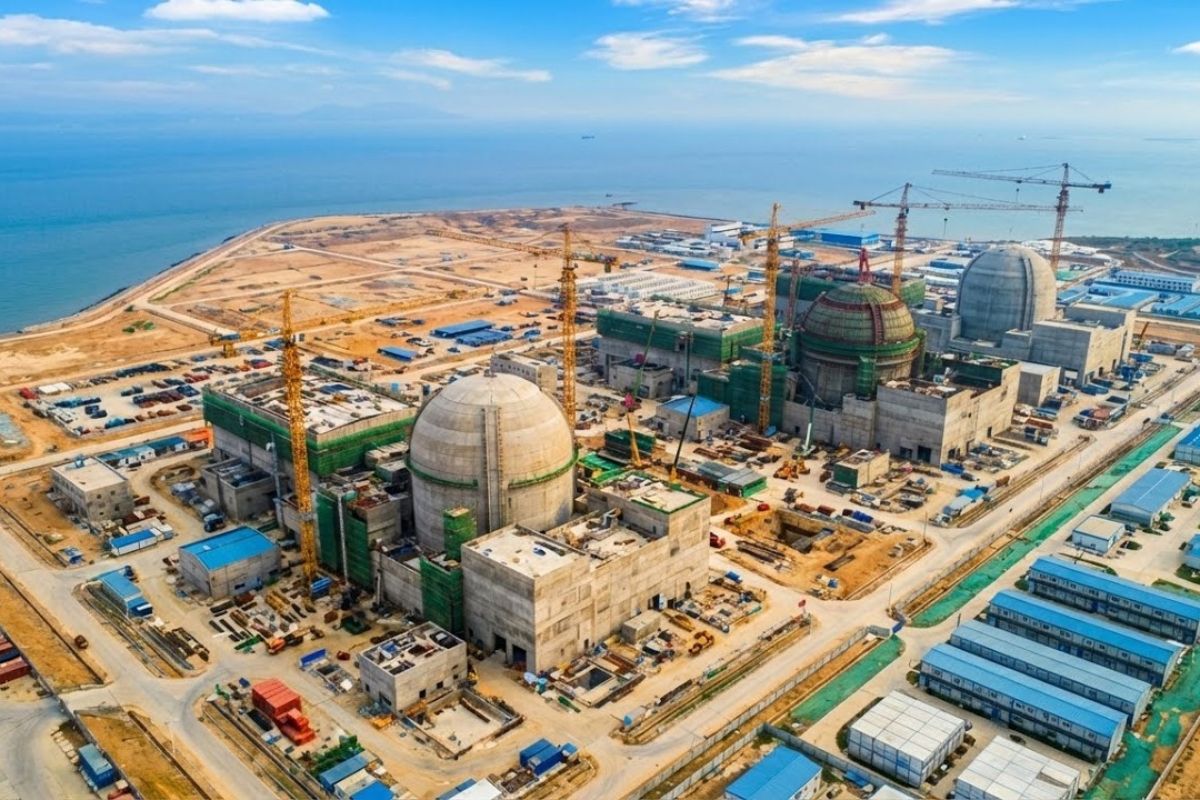


In China, the Zhangzhou nuclear power plant cost US$ 14 billion, is owned by CNNC and Guodian, uses Hualong One reactors and double steel and concrete containment, from the first concrete on 10/16/2019 to grid connection on 01/01/2025, with unit 2 commercial on 01/01/2026 on the Pacific coast.
On the southeast coast of China, the Zhangzhou nuclear power plant was built as a megaproject engineered to deliver clean energy for millions with long-term stability. The proposal was straightforward: transform heavy construction, industrial precision, and nuclear safety into continuous electricity, with operation expected to last for decades.
The project is owned by CNNC and Guodian and adopted the indigenous design Hualong One, combined with double steel and concrete containment. Behind what looks like a single building, China assembled a rigorous sequence of foundation, structural elevation, installation of colossal components, testing, and commissioning until two units were put into operation.
Where China Raised the Megaproject of Zhangzhou

The Zhangzhou nuclear power plant is located on the southeast coast of China, facing the Pacific, and the electricity connected to the grid began to supply homes in Fujian.
-
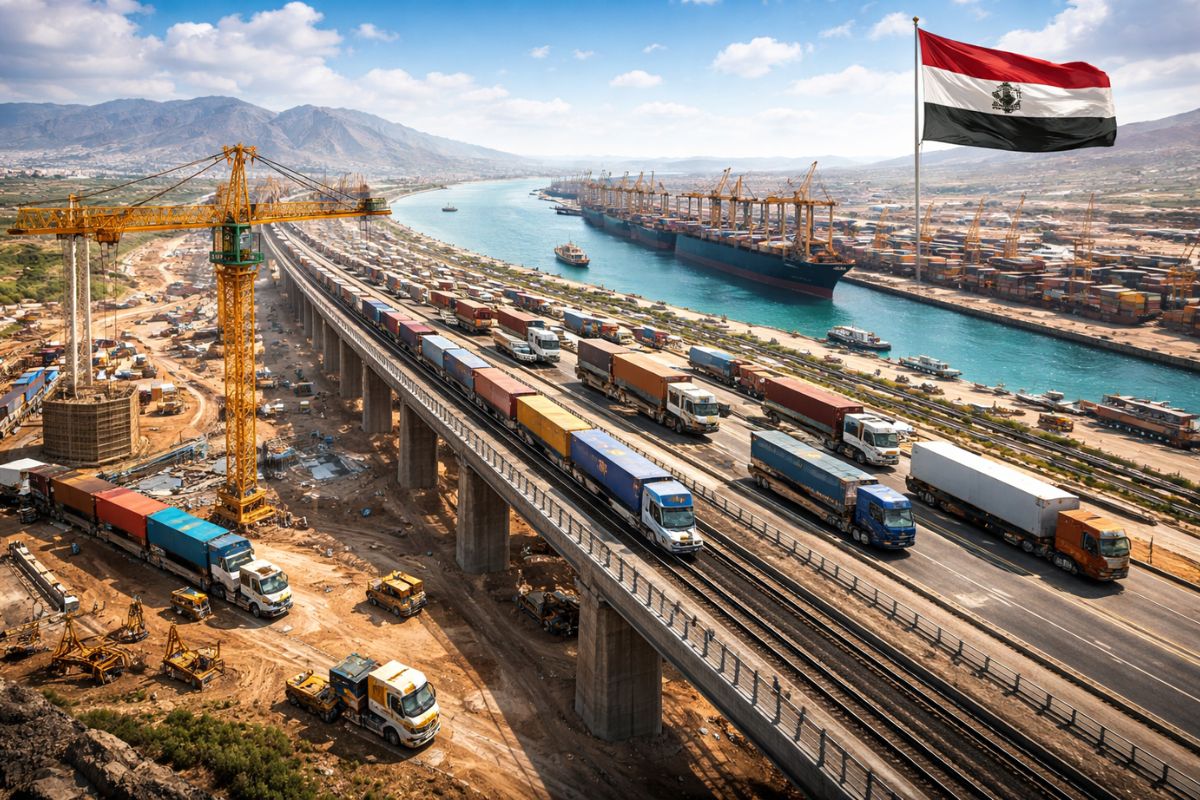
A megaproject worth R$ 89 billion is advancing in Iraq and promises to change the game in global trade by creating a new corridor between Asia and Europe, reducing traditional routes and repositioning the country as a logistics powerhouse.
-
Goodbye bedside table: floating shelves become a trend in 2026 by freeing up space in the bedroom, improving circulation, bringing visual lightness, and integrating technology without taking up floor space.

-
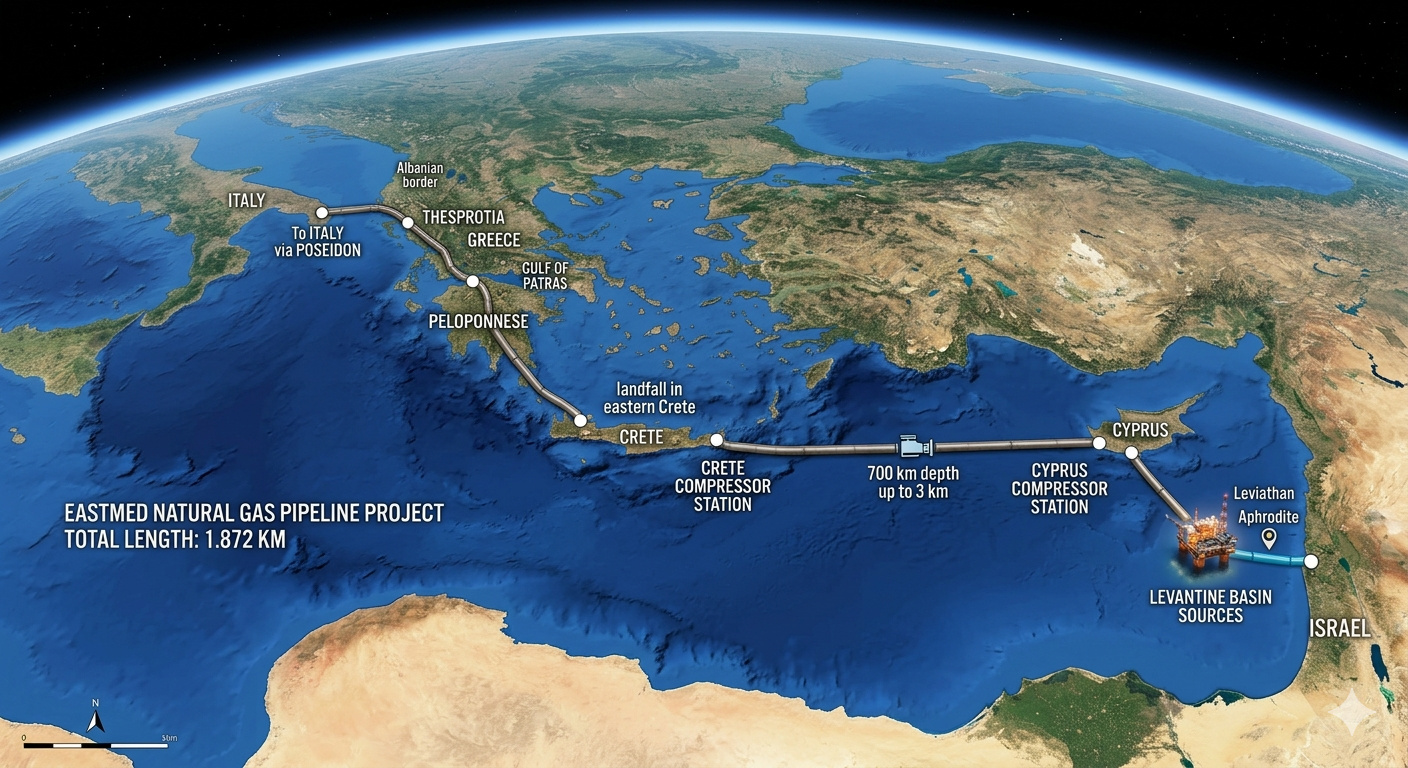
Israel, Greece, and Cyprus signed an agreement in 2020 to transport gas from the Mediterranean to Europe via a 1,872 km pipeline, but Turkey claimed sovereignty over part of the maritime route, and the project never materialized.
-
Israel, Greece, and Cyprus signed an agreement in 2020 to transport gas from the Mediterranean to Europe via a 1,872 km pipeline, but Turkey claimed sovereignty over part of the maritime route, and the project never materialized.
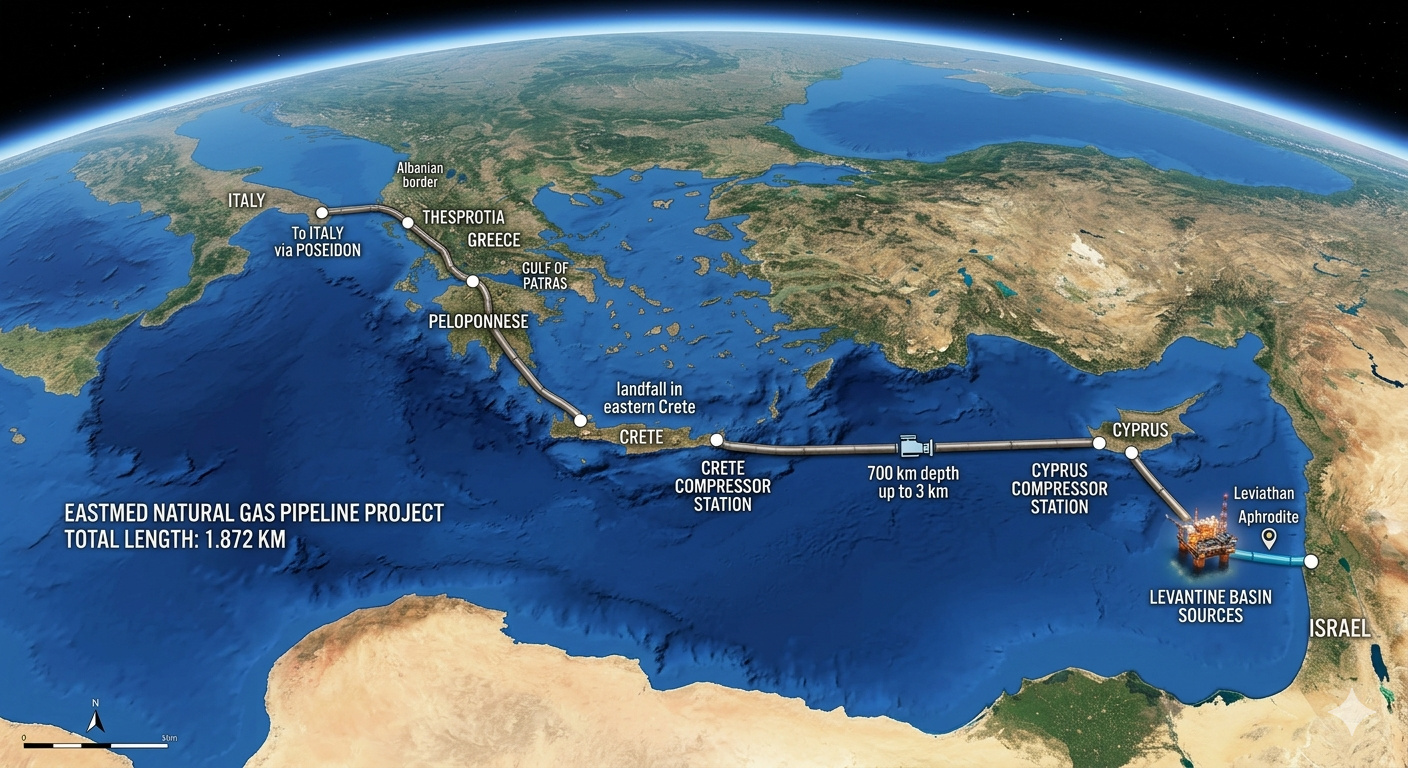

The coastal setting is no detail: the ocean enters the project as part of the cooling cycle, supporting the planned long-term operation.
From the beginning, the vision of the project was presented as a scalable response, with China betting on a complex capable of providing constant supply for factories, schools, and hospitals, while security monitoring is described as continuous.
From Earth Moved to First Concrete

Before the atom could be split, China needed to move the earth.
Thousands of tons of soil were displaced to create a solid base, under the logic that no step would advance without a stable and controlled foundation.
The project layout changed from AP 1000 to the indigenous design Hualong One, and in October 2019, the construction license was granted.
On October 16, 2019, the first concrete pour for unit 1 occurred, starting the foundation slab described as capable of supporting the weight of a mountain.
Precision was treated as a rule: no air bubbles could remain, and the curing of the concrete consolidated the base layer as a structural safety reference, even under rain and with work extending day and night.
Hualong One and the Double Containment Fortress
With the foundation established, vertical construction began, and China deployed large equipment to raise the steel cladding, presented as the first barrier against radiation.
Every weld was inspected and every seam needed to be perfect, because the cladding defines the initial integrity of the assembly.
The steel cup was positioned with cranes and guided by teams on the ground, forming the space where the reactor core would be installed.
Around it, concrete walls grew in layers, with a rebar cage described as extremely dense.
As unit 1 took shape, the base of unit 2 began to progress, and modular construction was used to accelerate the process on-site.
Then, the double containment protection was added as a second layer of defense against the outside world, completing the idea of a fortress of steel and concrete.
Colossal Components and Metric Sequence Assembly
Inside, piping galleries were prepared as the ribs that transport water and steam, and technical verification was implemented to confirm what the eye cannot see.
As the structure reached intermediate heights, the assembly was prepared to receive steam generators, with heavy components arriving from the factory and requiring the most powerful cranes available for the lifts.
The installation was described as a delicate dance between gravity and hydraulic energy, with critical lifts descending to the heart of the nuclear island.
The fit needed to be perfect, because each component defines the operation of the circuit and the behavior of the system under operation.
Dome, Seal, and Closure of the Containment Vessel
With the walls reaching their highest point, the dome entered the sequence. A steel hemisphere was assembled on the ground and, at the moment of formalization, was raised to seal the building.
The sky was replaced by steel and the structure became sealed, starting to be described as a containment vessel.
This closure marked the transition from an open construction to a system ready to withstand the next phases of connection, instrumentation, and testing, maintaining the concept of successive barriers as the basis of the design adopted by China in Zhangzhou.
Ocean Cooling, Cold Tests, and Hot Tests
In the turbine room, heat was prepared to turn into motion, with the plant connecting millions of connections like a nervous system.
The ocean was described as a constant source for cooling, with pumps capable of moving rivers of water to maintain the operational cycle.
From there, China advanced to simulations and training for various scenarios, going through cold functional testing, with pipe pressurization without heating, and hot functional testing, simulating heat without nuclear fuel.
The logic was to validate integrity and confirm that welds, pipes, and systems withstand the demands before the next step.
Fuel, Criticality, and Electricity Arriving in Fujian
With the construction phase almost completed, fuel arrived, requiring precise handling. The core was loaded and filled, in a process described as performed underwater, and the structure was sealed for operation, preparing for the chain reaction.
Criticality was presented as a milestone: control rods were withdrawn, the atom split, and the self-sustaining reaction began, transferring heat to the steam and steam to the turbine.
On 01/01/2025, the connection to the electrical grid occurred, with electricity reaching homes in Fujian.
Unit 2 came right behind, described as quicker due to the experience gained since the beginning, and on 01/01/2026 it began commercial operation, bringing the complex fully online.
Decades of Operation, 24-Hour Surveillance, and Continuous Maintenance
With the two units, China described the result as clean energy and zero carbon emissions, with technology and nature coexisting side by side.
Inside, the constant hum of power was associated with a 24/7 surveillance regime, sustaining supply for essential services and the regional economic routine.
Even with the complex operating, the work does not end: maintenance continues, and the project is presented as proof of Chinese engineering, with the Hualong One being regarded as a reference for efficiency and safety within the assembly.
Do you think China will accelerate further projects like Zhangzhou with Hualong One and double containment on other coasts of the country in the coming years?









Periodismo del s21, ni el que escribe la noticia la lee, o simplemente no sabe de que escribe. Y eso sin mencionar la falta de fuentes.
A poco que se quiera uno informar o minimamente se sepa del tema queda claro que 14 millones por una central nuclear es un chiste. La cifra real son 14.000 millones. Haceros un favor y actualizar el artículo.
María eloísa Barbosa Borges Sánchez Saavedra te especializas en palabrerío y errores, bien contratada
14 millones me parece muy poco dinero para una central nuclear.