





 Português
  Inglês
  Espanhol
  7 min de leitura
  0 comentários



In 2026, China Megaprojects Converge: The CR450 Train Targets 450 Km/h After Network Over 45,000 Km, Xiangan International Airport Rises on Reclaimed Land in the Sea, Shuangjiangkou Dam Delivers 3,000 MW, and Linglong 1 Reactor Debuts as a Land-Based Modular, Automation, Passive Safety and Scale.
China reaches 2026 with concentrated deliveries that change the routine of those who travel, work, and produce. It’s not just a speed record: China’s megaprojects unite transportation, logistics, and energy for decades, even with high costs and debates over demand.
In a single calendar, the CR450 train, an airport built on reclaimed land in the sea, a dam taller than many skyscrapers, and an unprecedented land-based modular reactor come into play. The scale is impressive and also exposes risks, from debt to environmental management.
2026 as a Convergence Point for Infrastructure
China did not wake up in 2026 and decide to build from scratch. Most projects were approved and financed years earlier, advancing in parallel until reaching the same milestone.
-
A megaproject worth R$ 89 billion is advancing in Iraq and promises to change the game in global trade by creating a new corridor between Asia and Europe, reducing traditional routes and repositioning the country as a logistics powerhouse.

-
Goodbye bedside table: floating shelves become a trend in 2026 by freeing up space in the bedroom, improving circulation, bringing visual lightness, and integrating technology without taking up floor space.

-
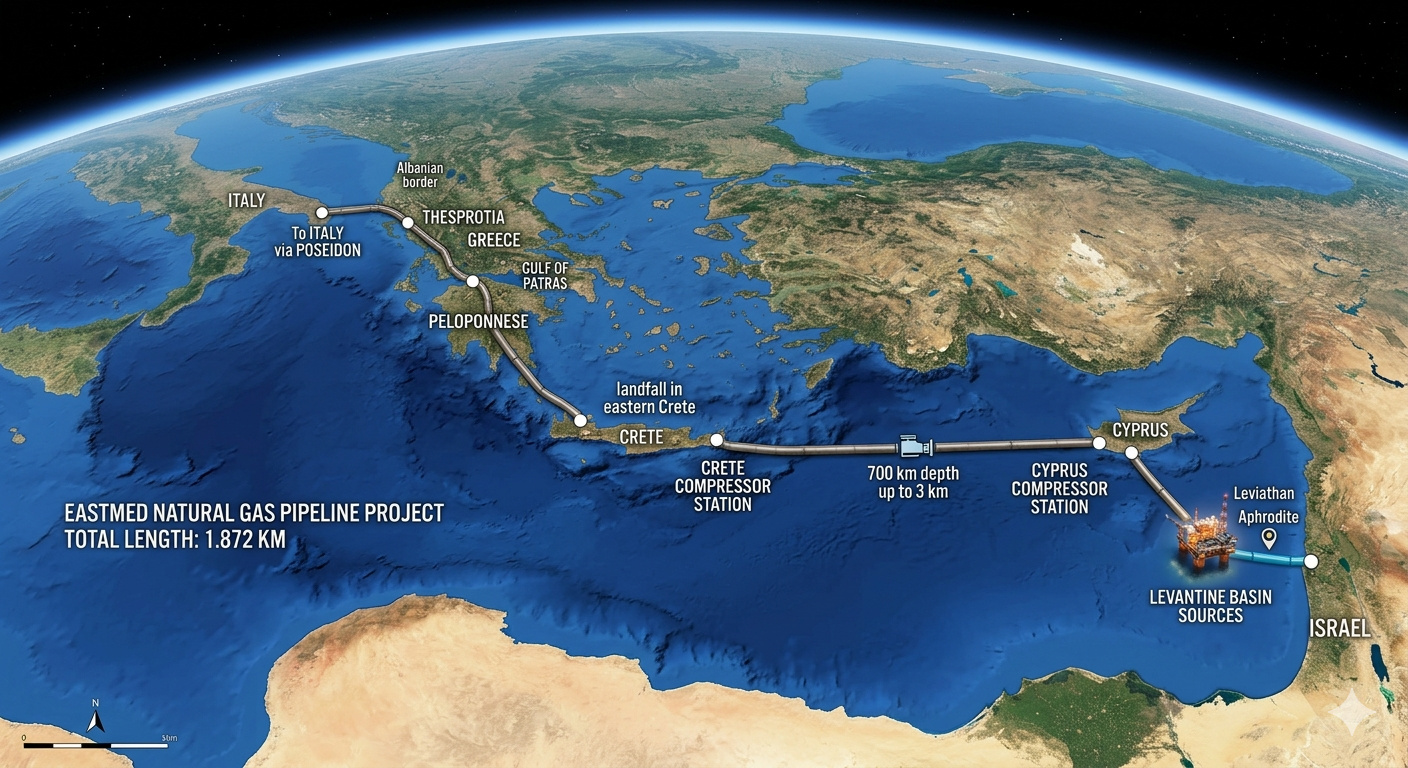
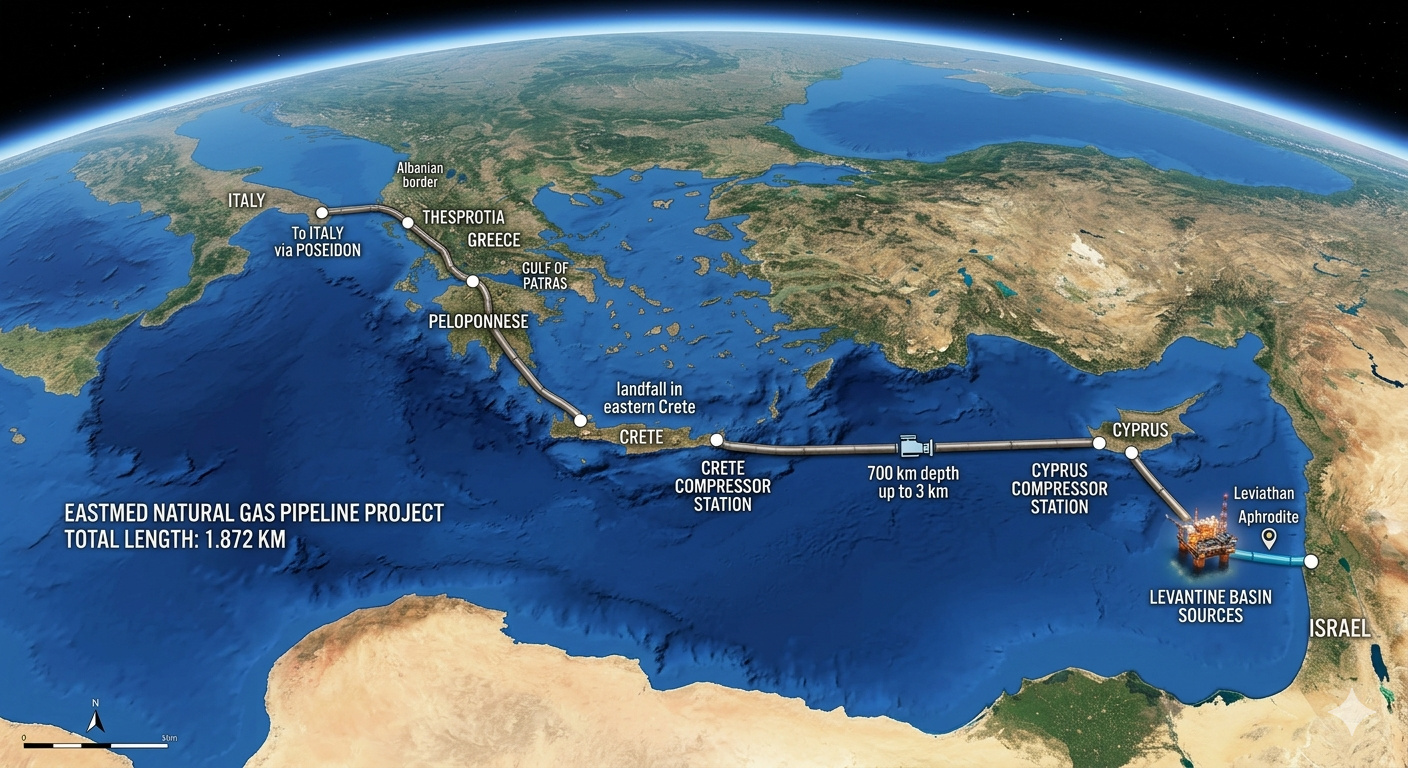
Israel, Greece, and Cyprus signed an agreement in 2020 to transport gas from the Mediterranean to Europe via a 1,872 km pipeline, but Turkey claimed sovereignty over part of the maritime route, and the project never materialized.
-
Israel, Greece, and Cyprus signed an agreement in 2020 to transport gas from the Mediterranean to Europe via a 1,872 km pipeline, but Turkey claimed sovereignty over part of the maritime route, and the project never materialized.

The practical effect is to concentrate deliveries that, in many countries, would take decades or would be halted by public opposition, processes, and delays.
Over the last 15 years, China has accelerated the construction of entire networks, not just isolated works. These China Megaprojects were designed as complete systems.
They are networks of transportation, transmission, and industrial centers planned to operate for 50 years or more. When this calendar converges, the country exchanges flexibility for execution, accepting risks of idle capacity in exchange for speed.
CR450 Train and the Promise of Same-Day Travel

The CR450 train is at the center of China’s new railway showcase for 2026. In tests, the CR450 train reached 450 km/h, above the typical ranges of 300 to 320 km/h seen in high-speed trains in Europe and Japan.
Today, China’s main lines already operate at 350 km/h, but the CR450 train was designed to go further with stability.
The engineering doesn’t rely on a single trick. Engineers redesigned the front to reduce air resistance, reduced structural weight, improved vibration control and braking, and elevated energy efficiency.
At 400 km/h, air becomes a structural issue, so noise, pressure, and stability become part of safety, not just comfort.
The impact emerges on long routes. China envisions the CR450 train for busy long-distance corridors, connecting major centers and inland cities on trips over 1,500 km.
Between 350 and 450 km/h, the difference is not marginal: it cuts hours, transforms the night train into a round-trip journey, and reorganizes labor markets and business travel.
The train starts to compete with airplanes, reducing pressure for runway expansion and enhancing connectivity without relying on airports in dense urban areas.
At the same time, there is a sensitive point. Railway corridors cost tens of billions of dollars, and some lines struggle to break even in less populated regions.
However, China treats the network as an industrial policy: replacing domestic flights, reducing fuel importation, and economic integration.
Xiangan International Airport and the Choice to Build in the Sea

If the train changes the logic on the ground, Xiangan International Airport reveals how China responds to urban saturation by air.
Xiangan International Airport was designed to accommodate 45 million passengers per year in its first complete phase and handle 750,000 tons of cargo per year, a level comparable to that of major global hubs.
The decisive detail lies in the location. Xiangan International Airport is largely being built on reclaimed land in the sea because the existing airport became trapped by urban growth.
Instead of expanding where it doesn’t fit, China built huge seawalls, stabilized the seabed, and created an artificial island capable of supporting multiple runways and a terminal complex.
Inside the terminal, the design prioritizes efficiency. Passenger flows rely more on biometric verification than on manual checks, baggage undergoes automated screening, and ground operations integrate traffic planning with AI support to reduce delays during peak times. Automation becomes a response to lack of space and also to workforce bottlenecks.
The significance of Xiangan International Airport goes beyond convenience. The region is facing Taiwan and plays a sensitive role in regional logistics and manufactured exports.
A high-capacity airport reinforces this role but also carries the classic risk: if traffic growth slows, underutilized terminals become a financial burden.
Shuangjiangkou Dam and the Energy That Needs Rain All Year Round
In the interior of Sichuan province, China plans to connect a giant hydroelectric plant in 2026, another chapter in the China Megaprojects for energy.
The Shuangjiangkou Dam will be 315 meters high, taller than 100-story skyscrapers. For comparison, the Hoover Dam is 221 meters high, and China itself already held a previous record of 305 meters.
The Shuangjiangkou Dam exists not only for prestige. The southwest of the country relies heavily on hydroelectric power, and recent droughts exposed vulnerabilities when rain fails.
When the water disappears, the energy disappears along with it, and factories reduce production, cities ration, and supply chains feel the shock.
The reservoir of the Shuangjiangkou Dam was designed to store water during rainy seasons and release it during dry periods, stabilizing generation throughout the year.
When fully operational, the plant is expected to produce around 3,000 megawatts, enough energy to power millions of homes.
But building a structure of this scale creates its own problems: the site is seismically active and earthquakes are a real concern.
To deal with this, the project adopts a concrete face with riprap, which absorbs seismic resistance better than traditional gravity dams.
The work requires excavation of massive volumes of rock, diversion tunnels, and precise control of materials. Even curing temperature matters because internal heat can compromise integrity if not controlled.
Linglong 1 Reactor and the Leap of Small Modular Reactors

In 2026, China plans to put into commercial operation a terrestrial nuclear milestone. The Linglong 1 reactor, installed on Hainan Island, is described as the first small modular nuclear reactor on land to enter commercial operation.
The Linglong 1 reactor has a capacity of about 125 megawatts, much smaller than traditional reactors of 1,000 megawatts.
The smaller size is the point of the design. Large plants can take 8 to 12 years to complete, with costs and delays.
The Linglong 1 reactor follows a modular design, with components manufactured in a factory and assembled on-site. From the start of construction in 2021 to the projected connection in 2026, the total timeline is around 5 years. Less construction site, more factory.
The goal is to meet demands that do not justify a giant plant: islands, industrial parks, smaller cities, and remote regions that need reliable base load.
The Linglong 1 reactor can operate alone or in clusters, offering electricity, heat, and even desalinated water. Safety comes in as an argument: modular reactors rely on passive safety systems, reducing dependence on external power and human intervention.
If the Linglong 1 reactor delivers the expected performance, China gains a repeatable product for the domestic market and potential export. Countries that cannot finance or politically sustain large plants may prefer standardized smaller units.
Renewable Energy on Continental Scale and the Network That Takes Everything to the Coast
China also reaches 2026 with a leap in renewables on a scale hard to compare. The country installs more solar energy in a single year than many countries have installed in their entire history, and in a recent year, added over 200 gigawatts of solar capacity. It’s not rooftop, it’s megabase.
The solar and wind energy bases are conceived as integrated systems. There are projects covering hundreds of square kilometers, and one solar base cited measures over 600 square kilometers, roughly the size of a large city.
Wind farms balance generation when the sun sets, battery storage smooths production, and high-capacity substations organize delivery.
The piece that completes the puzzle is transmission. The population and industry of China are mainly located on the coast, while many renewable resources are inland. To resolve this, the country has built an ultra-high voltage transmission network.
Some lines operate at 1,100 kilovolts and can move electricity equivalent to several combined nuclear reactors, with relatively low losses over long distances.
Planning generation and network as a block prevents the bottleneck that stalls projects elsewhere, where the network cannot deliver energy where it is needed.
What These Megaprojects Say About China’s Future
The 2026 set reveals a pattern in China’s Megaprojects. China pushes the limit of what is possible in mobility, energy, and logistics because it plans for future demand, not just the current.
This attracts factories, sustains data centers, and reduces dependence on fuel imports, but carries clear risks.
The expansion of the CR450 train requires expensive corridors and operational discipline.
Xiangan International Airport only makes sense with growing traffic. The Shuangjiangkou Dam depends on fine water management, seismic risks, and the impact of large projects.
The Linglong 1 reactor needs to prove reliability and cost to become replicable. The bet is for decades, and the return does not come from a single indicator.
In the end, 2026 seems less like a year and more like a checkpoint of a long plan. China chooses rapid execution, even when this opens debates about capacity, cost, and sustainability.
What do you consider most decisive for China in 2026: train speed, dam energy, the modular reactor, or the airport at sea?










-

-

-

-

-

-

33 pessoas reagiram a isso.