





 Portuguese
  English
  Spanish
  3 min of reading
  0 comments


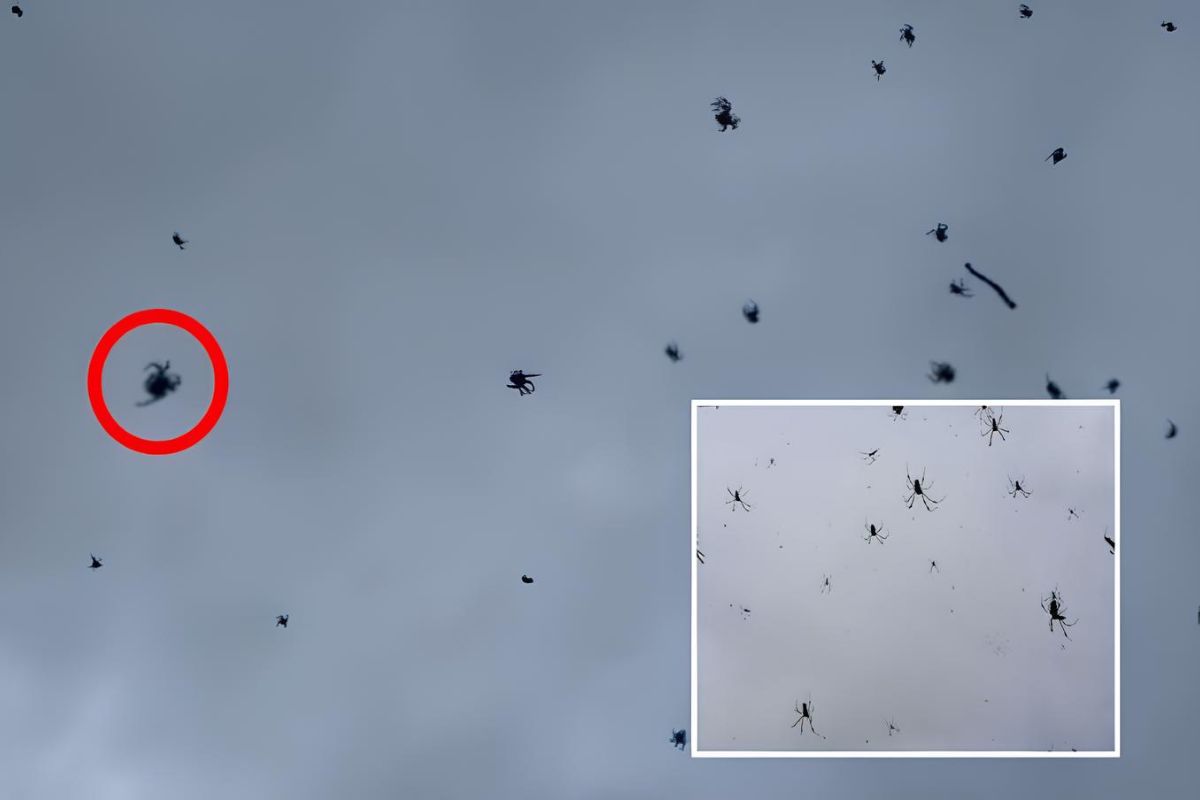
Images of an Apparent Rain of Spiders in Interior São Paulo and Minas Gerais Go Viral and Cause Astonishment. Understand the Science Behind This Impressive Natural Phenomenon and See If There Are Reasons to Fear.
Videos and news showing what appears to be a rain of spiders have circulated, especially from regions in interior São Paulo and Minas Gerais, generating a mix of fascination and alarm. But are the spiders really falling from the sky like raindrops? The short answer is no.
This spectacular phenomenon, popularly known as rain of spiders, is actually a captivating visual illusion, created by the social behavior of certain spider species, primarily Parawixia bistriata in Brazil. Let’s demystify this event and understand its true nature.
Unraveling the “Rain of Spiders”
The effect of “spiders raining” is an optical illusion. It is caused by vast and expansive communal webs, woven by a large number of spiders. These webs can be incredibly thin and span considerable distances, often suspended high in trees or between posts. Due to their fineness, the supporting threads can become almost invisible to the naked eye.
-
A couple buys an old chalet, breaks the kitchen floor for renovation, and finds over a thousand coins of gold and silver hidden since the English Civil War over 4 centuries ago.

-
Rigid bags with their days numbered: new trend prioritizes comfort in 2026.

-
YouTuber creates an excavator equipped with a giant 4.5-meter sword to challenge his brother to a rematch, and the invention quickly goes viral on social media.

-
The U.S. Army surprises the world by presenting the UH-60MX Black Hawk helicopter capable of flying without pilots, controlled by a tablet, featuring the MATRIX system, smart sensors, and full autonomy in real combat and rescue missions.

When viewed from certain angles, the spiders moving in these almost invisible silk tapestries appear to be suspended in the air or “falling”, creating the impression of a rain of spiders. It is important to distinguish this phenomenon from “ballooning”, a dispersal method where young or small spiders use silk threads to float with the wind.
Parawixia bistriata

The primary species responsible for the most dramatic events of rain of spiders in Southeast Brazil is Parawixia bistriata. This spider is relatively small, about 2 centimeters in body length, and has a wide distribution throughout South America, inhabiting various Brazilian biomes such as the Cerrado and Amazon.
Unlike most solitary spiders, Parawixia bistriata exhibits semi-social or colonial behavior, forming colonies that can have up to 500 individuals. These colonies typically form annually, and this lifestyle is fundamental for the construction of the immense webs.
Why and How Does the “Rain of Spiders” Occur?
The construction of such large communal webs by Parawixia bistriata primarily aims to increase efficiency in capturing food, such as flying insects. The immense surface area allows for intercepting a larger volume of prey. These spiders are nocturnal; web construction generally occurs after sunset, a collective effort that can be completed in about an hour.
This behavior is intrinsically linked to the reproductive period of the spiders, which typically occurs from September to March in Southeast Brazil. The phenomenon of rain of spiders is therefore seasonal, most common during warm and humid months when there is an abundance of insects. During the day, the spiders often retreat to sheltered locations, frequently aggregating in a “ball of spiders”.
Assessing the Risk of Parawixia bistriata to Humans
Like most spiders, Parawixia bistriata possesses venom to subdue its prey. However, multiple experts state that its venom is not considered medically significant or harmful to humans. Bites, if they occur, are rare and would typically result in minor local reactions, as they are generally non-aggressive spiders.
Laboratory research identifying pro-convulsant and anticonvulsant components in the venom of P. bistriata (injected in rats) does not indicate danger in everyday encounters with humans, as the experimental conditions are very different from a natural bite.
Experts’ Views on the Phenomenon
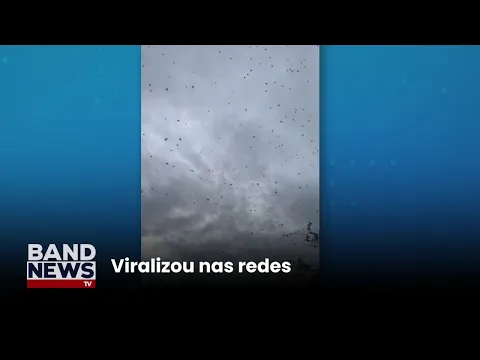

Events of rain of spiders involving Parawixia bistriata have been notably recorded in Minas Gerais, such as in São Thomé das Letras and Espírito Santo do Dourado, especially in the summer. Given the distribution of the spider, it is plausible that similar phenomena occur in interior São Paulo.
Experts such as Cláudio Maurício Vieira (Instituto Vital Brazil) and Professor Rodrigo Lopes Ferreira (UFLA) confirm that this is a natural behavior linked to feeding and reproduction. They emphasize the beneficial role of these spiders in controlling insect populations. The wide dissemination of correct information is crucial to transform the alarm of rain of spiders into fascination for this spectacle of nature.








Seja o primeiro a reagir!