





 Portuguese
  English
  Spanish
 6 min of reading
  4 comments


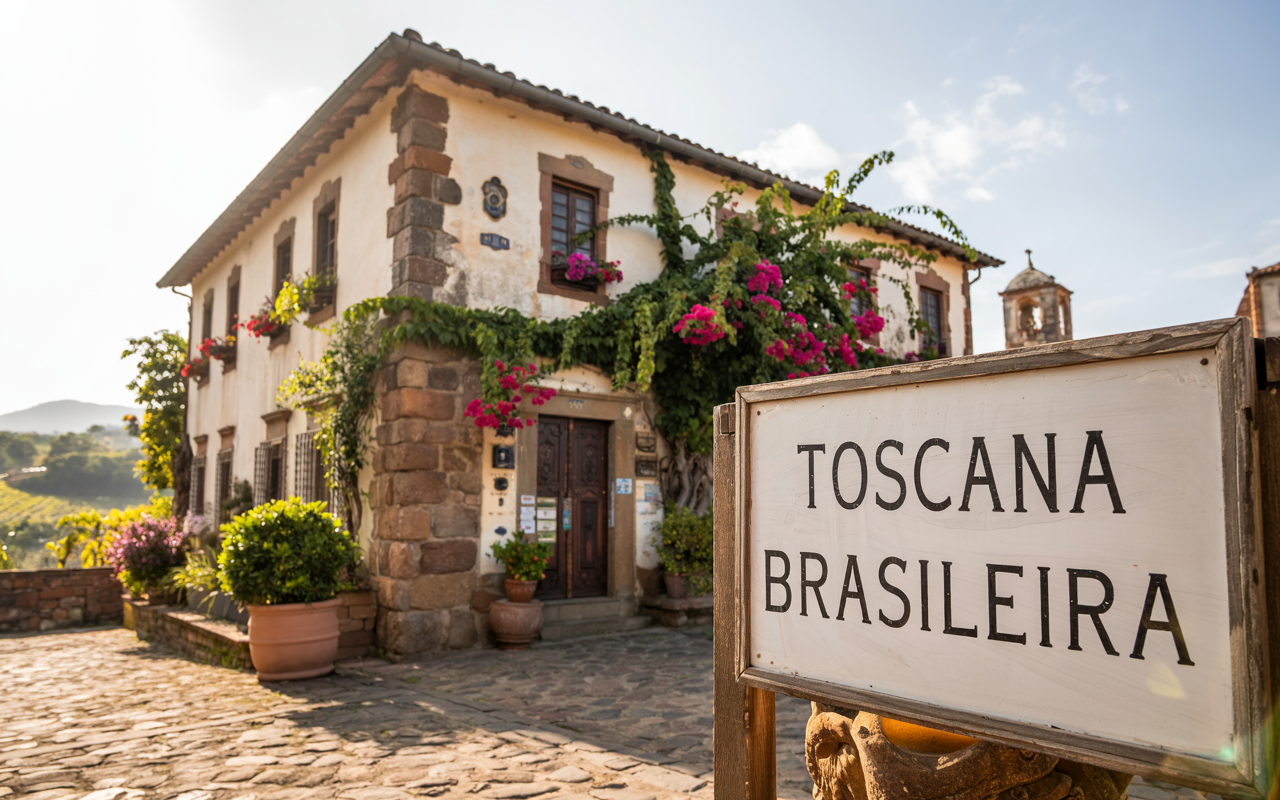


Cordislândia (MG) Is Being Called the “Brazilian Tuscany” for Combining Award-Winning Wines, Rural Landscapes, and Luxury Tourism in Southern Minas.
In southern Minas Gerais, between green hills and roads surrounded by araucarias, a previously discreet city has transformed into one of the most sought-after destinations for luxury rural tourism in Brazil. We are talking about Cordislândia, which has been gaining fame as the “Brazilian Tuscany”, thanks to the emergence of award-winning wineries, charming inns, and an atmosphere that blends rusticity with sophistication.
With mild weather, bucolic landscapes, and an expanding wine route, the city is attracting wine lovers, couples seeking romantic experiences, and tourists looking for an alternative to the more well-known wine regions of the country.
What Makes Cordislândia the “Brazilian Tuscany”?
The comparison with the Italian region of Tuscany is not an exaggeration. Just like the original, the Minas municipality has rolling terrain, fertile soil, and a dry climate with cool nights — ideal characteristics for growing fine grapes.
-
Unemployment rises again to 5.8% at the beginning of 2026, raising alarms about the end of temporary positions and its impact on the Brazilian job market.

-
Document organization can cut invisible costs in small businesses, a simple step that prevents waste, rework, and losses in daily operations.

-
Chinese giant worth nearly R$ 4 billion that manufactures cables for electric cars, solar energy, and robotics wants to open a factory in SC.

-
Many employers do not know, but the law guarantees domestic workers a 25% increase in salary during trips, 50% for overtime, 20% for night shifts, and 17 additional benefits that can lead to labor lawsuits if not paid.




In recent years, local producers have begun to invest in modern viticulture techniques and winter winemaking, obtaining labels that have already won international medals and are present in starred restaurants in Brazil.
In addition to wine, the city has invested in aesthetics: stone chalets, balconies with views of the hills, villas with rustic architecture, and roads reminiscent of the European countryside complete the setting that justifies the nickname.
The Boom of Award-Winning Wineries in Southern Minas
The growth of winemaking in Cordislândia is recent, where the main wineries in the region are located. Boosting winter wine production is a technique where pruning is reversed so that the grape develops in the dry and cold season — ideal for quality and concentration of aromas.
The results have caught attention: structured red wines, elegant whites, and fine sparkling wines have started to win awards in national and international competitions. Many of these wineries offer guided tours, paired tastings, and complete wine tourism experiences, which boosts the city’s tourism.
The circuit has already become a prestigious route, and weekends in Cordislândia have become coveted among couples, influencers, and tourists wanting to experience the new rural luxury of Minas.
Rural Tourism with a Touch of Luxury
With the increase in visibility, Cordislândia has seen the birth of a new type of business: boutique inns, accommodations in vineyards, private chalets with bathtubs, fireplaces, and gourmet breakfast.
This is rural tourism with a sophisticated touch, maintaining the simplicity of Minas while offering personalized experiences and a high standard of comfort.
Properties near the wineries offer picnics in the vineyard, dinners with guest chefs, and packages that include grape picking, grape stomping, and star-gazing nights with wine in hand.
This type of experience — once restricted to international destinations or the southern part of the country — is now available in Minas Gerais, just a few hours from São Paulo and Belo Horizonte.
Rustic Architecture and European Charm in the Interior of MG
The visual identity of the city has changed. New ventures follow an aesthetic aligned with the concept of “Brazilian Tuscany”: stone facades, warm lighting, pergolas with vines, noble wood furniture, and gardens with lavender or olive trees.
Walking through the more touristy areas, the feeling is of being in a European village from the 19th century, but with the typical hospitality of the Minas interior.
Cafes, bistros, and artisanal shops complete the charm with aged cheeses from the region, local olive oils, jams, cachaça truffles, and naturally fermented breads.
Award-Winning Wineries Change the Economic Base and Create a New Production Chain in Southern Minas
The advancement of wineries in the city known as “Brazilian Tuscany” goes beyond wine production as a final product. It has reorganized the entire local economic base, creating a production chain that involves specialized agriculture, logistics, processing industry, technical services, and commerce.
Winemaking has come to demand qualified labor for vineyard management, oenology, quality control, equipment maintenance, irrigation, and processing. This has raised the technical level of rural employment and reduced exclusive dependence on traditional low-value crops.
Small producers have started to integrate cooperatives or supply contracts, ensuring more stable income. At the same time, supplier companies for inputs, packaging, transport, and maintenance have found a new regional market.
The result is an economy less vulnerable to simple agricultural cycles and more connected to higher value chains, with a direct impact on municipal revenue.
The Generation of Direct and Indirect Jobs Pressures the Local Labor Market
The consolidation of the city as “Brazilian Tuscany” has had a clear effect on the labor market. Wineries have generated direct jobs in production, administration, sales, and technical control, but the most relevant impact is in indirect positions.
There has been an increase in demand for workers in construction, transportation, building maintenance, security, general services, and food. Many of these jobs did not exist on a significant scale before the expansion of winemaking. This has reduced structural unemployment and increased the local average income, but it has also created a challenge: the shortage of qualified labor.
Companies have begun to compete for professionals with experience, driving up salaries in certain segments. Young people who previously migrated to larger centers have begun to find opportunities in the region itself. At the same time, the economy has become more dynamic, with greater circulation of money and increased local consumption, reinforcing the cycle of job creation.
Real Estate Appreciation and Cost of Living Reflect Economic Transformation
The economic strengthening of the so-called “Brazilian Tuscany” has had an immediate reflection on the real estate market and the cost of living.
With the arrival of investors, specialized technicians, and workers from other cities, the demand for housing has rapidly increased. Rentals have become competitive, especially in areas close to production zones and the urban center.
Properties that were previously undervalued have been renovated or converted into residences for employees and service providers. This appreciation has brought asset gains for long-time residents, but has also created pressure on lower-income families.
The local commerce has kept pace with the movement, with prices adjusted to a new consumption profile. The municipality has begun to face the typical challenge of regions undergoing rapid economic transformation: to grow, create jobs, and attract investments without displacing part of the population due to excessive cost increases.
The Impact of New Tourism on the Local Economy
The transformation of Cordislândia into a luxury wine tourism destination has not only occurred in the landscape. The city is experiencing significant economic movement, with increased demand for seasonal rental properties, new rural ventures, and experiential tourism.
Properties that were once just farms or sites are being converted into boutique hotels, rural spas, and gastronomic retreats. The demand for rentals on weekends and holidays has skyrocketed — with nightly rates exceeding R$ 1,000 in high season, depending on the package and location.
Tourism is now one of the main engines of the local economy, generating income, jobs, and national visibility.
A Refuge for Those Seeking the New Luxury of the Countryside
Unlike mass tourism, Cordislândia attracts an audience that seeks exclusivity, nature, and authenticity. The focus is on immersive experiences: walking among the vines, tasting wines while watching the sunset over the mountains, sleeping under the stillness of the countryside, and awakening to the smell of freshly brewed coffee.
It is a proposal for uncomplicated luxury — valuing time, flavor, and silence. And this is precisely what has made the city a favorite among wine lovers and those seeking a tranquil life.
Cordislândia (MG) is not just another town in the countryside. With award-winning wines, exclusive accommodations, postcard-worthy landscapes, and rustic sophistication, it has rightfully earned the title of “Brazilian Tuscany.”
For those seeking luxury rural tourism, authentic experiences, and fine wines, this destination is promising — and it seems that it is just beginning to show its full potential.










Cês tem que parar de achar que pra ser bom tem que parecer com as coisa de fora, quer fazer propaganda positiva, fala que Toscana é a Cordislândia Italiana, ai sim é dá moral!
Uai, moro aqui em Cordislândia e não vi nada do que a reportagem fala. Eu sei que São Gonçalo do Sapucaí, a 22Km daqui é que está produzindo vinhos finos e tem estas construções onde se pode degustar os vinhos e está sendo chamada de Toscana brasileira. Gostaria muito que fosse verdade sobre Cordislândia.
Acho muito bom promover Minas .As coisas boas do nosso Estado devem ser mostradas e valorisadas