





 Português
  Inglês
  Espanhol
 4 min de leitura
  0 comentários


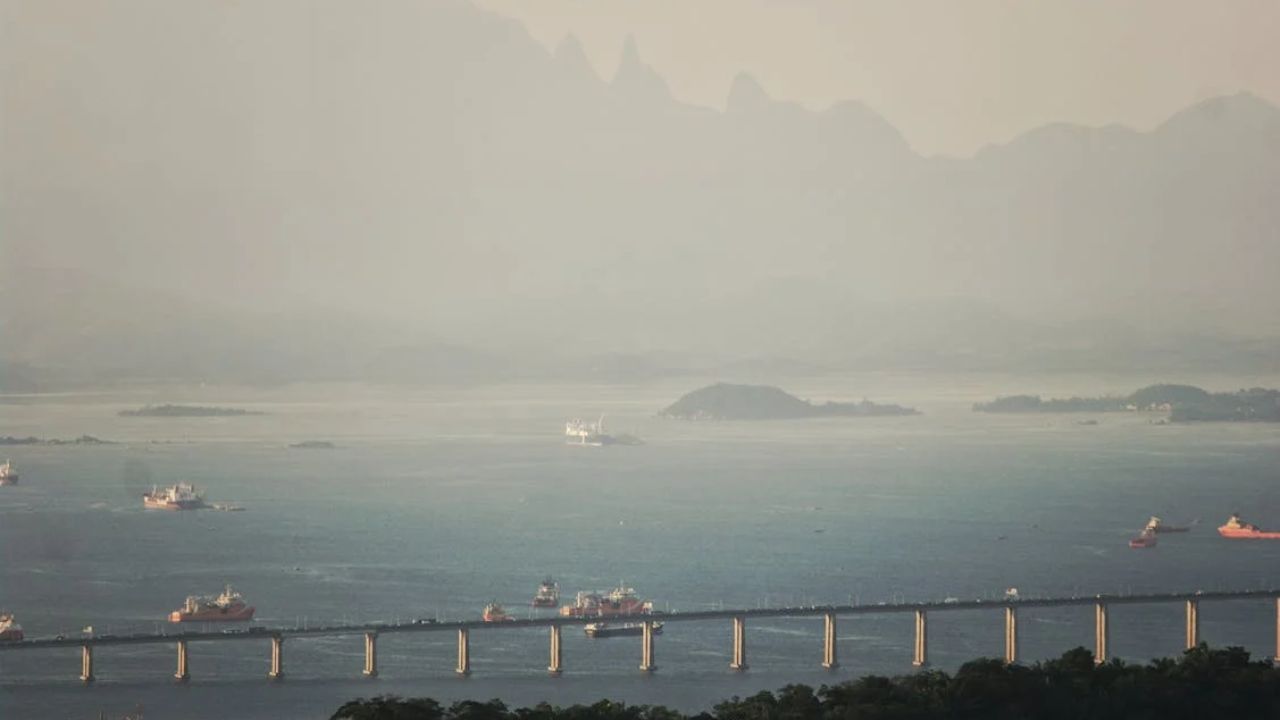
With 13 km in length and a flow of 150 thousand vehicles per day, the largest bridge in the Southern Hemisphere is a landmark of engineering and a controversial symbol of Brazil.
The Rio-Niterói Bridge spans 13 km over Guanabara Bay. It is the largest bridge in the Southern Hemisphere. Over 150 thousand vehicles cross its structure daily. The structure withstands hurricane winds and defines the landscape of Rio de Janeiro. However, its history is complex. The bridge is a landmark of development, but also a controversial project. Its construction occurred during the military dictatorship, leaving a legacy of debates that still endure today.
An Old Dream and a Political Tool
The idea of connecting Rio de Janeiro and Niterói is an ancient aspiration. The dream dates back to the 19th century, during the Brazilian Empire. For more than a hundred years, crossing Guanabara Bay relied on ferries or a detour of 100 kilometers. The journey could take over two hours.
The realization of this dream came during the military dictatorship (1964-1985). The regime promoted “grandiose works” as propaganda for a “Great Brazil.” The bridge was elevated to the status of “work of the century.” The construction also served as a power maneuver.
-
A megaproject worth R$ 89 billion is advancing in Iraq and promises to change the game in global trade by creating a new corridor between Asia and Europe, reducing traditional routes and repositioning the country as a logistics powerhouse.
-
Goodbye bedside table: floating shelves become a trend in 2026 by freeing up space in the bedroom, improving circulation, bringing visual lightness, and integrating technology without taking up floor space.

-
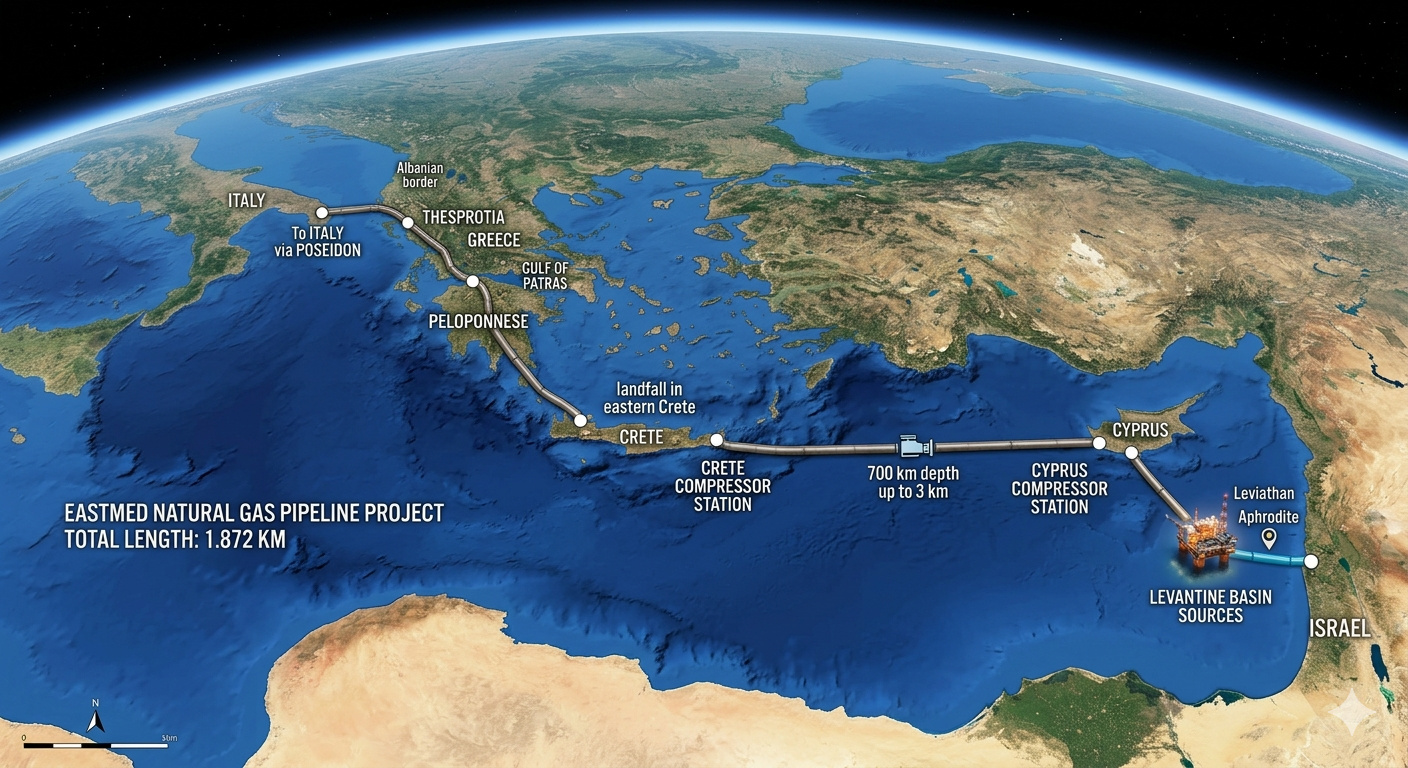
Israel, Greece, and Cyprus signed an agreement in 2020 to transport gas from the Mediterranean to Europe via a 1,872 km pipeline, but Turkey claimed sovereignty over part of the maritime route, and the project never materialized.
-
Israel, Greece, and Cyprus signed an agreement in 2020 to transport gas from the Mediterranean to Europe via a 1,872 km pipeline, but Turkey claimed sovereignty over part of the maritime route, and the project never materialized.

It was fundamental for the merger of the state of Guanabara with the former state of Rio de Janeiro. This union diluted the power of Guanabara, which was a center of opposition to the federal government. Thus, the bridge that today symbolizes unity was born as a political weapon.
The Saga of Construction: Challenges, Tragedies, and Controversies
The construction of the bridge, between 1969 and 1974, was an epic of engineering. The project faced difficulties from the beginning. The expected completion in 1971 was not met. The most dramatic point occurred in 1970. A concrete platform collapsed, causing the death of eight people, including engineers and workers.
In the face of the disaster and delays, the military regime intervened. The work pace was accelerated in a process known as “pau na máquina.” The human cost of the project is a grim legacy. Officially, there were 33 deaths. Unofficial sources, however, suggest much higher numbers, reaching 400 fatalities.
The uncertainty reflects the censorship of the time, under Institutional Act No. 5 (AI-5). The budget also exploded, going from 100 million to about 400 million dollars, raising suspicions of irregularities that were never investigated.
The Engineering Behind the Icon
The Rio-Niterói Bridge is a masterpiece of engineering. Its total length is 13.29 km, of which 8.83 km spans over water. Its most notable feature is the Central Span. With 300 meters in length and 72 meters in height, it is the largest continuous straight beam in the world. This height allows the passage of large ships to the Port of Rio de Janeiro.
The structure is the most important in the Americas for prestressed concrete, a technique that greatly increases the material’s strength. The bridge is often cited as the largest in the Southern Hemisphere and Latin America. Although there are already longer structures in the world, the persistence of this title reveals its symbolic value and the national pride associated with its construction.
Integrating Cities and Creating Challenges
The impact of the work reshaped the metropolitan region of Rio. The bridge was the most transformative factor for Niterói. The journey that once took hours now lasts about 13 minutes. This generated a strong real estate appreciation and a population surge in the city.
The structure also became a crucial economic artery, connecting the capital to the Lakes Region and important road axes. One of the main criticisms of the project is its exclusive focus on road transport. No provisions were made for the passage of trains or subways.
This decision, typical of the time, idolized the automobile. Fifty years later, the consequences are clear. The bridge, built to solve a traffic problem, has become one of the biggest bottlenecks in the region, with chronic traffic jams.
A Cultural Icon and the Dispute Over Its Name
In addition to its function, the bridge has inscribed itself in Brazilian culture. Its silhouette is an instantly recognizable symbol of Rio de Janeiro, immortalized in songs and other forms of art. However, the bridge carries a duality in its name.
Commonly referred to as Rio-Niterói, its official name is President Costa e Silva Bridge. The homage is to one of the presidents of the military dictatorship, signatory of AI-5. This official name is a source of ongoing controversy.
Civic movements have proposed changing the name to honor figures such as actor Paulo Gustavo. The dispute over the name of the bridge reflects the wider struggle of Brazil to deal with the narratives and wounds of its authoritarian past.








-

2 pessoas reagiram a isso.