





 Portuguese
  English
  Spanish
  4 min of reading
  0 comments


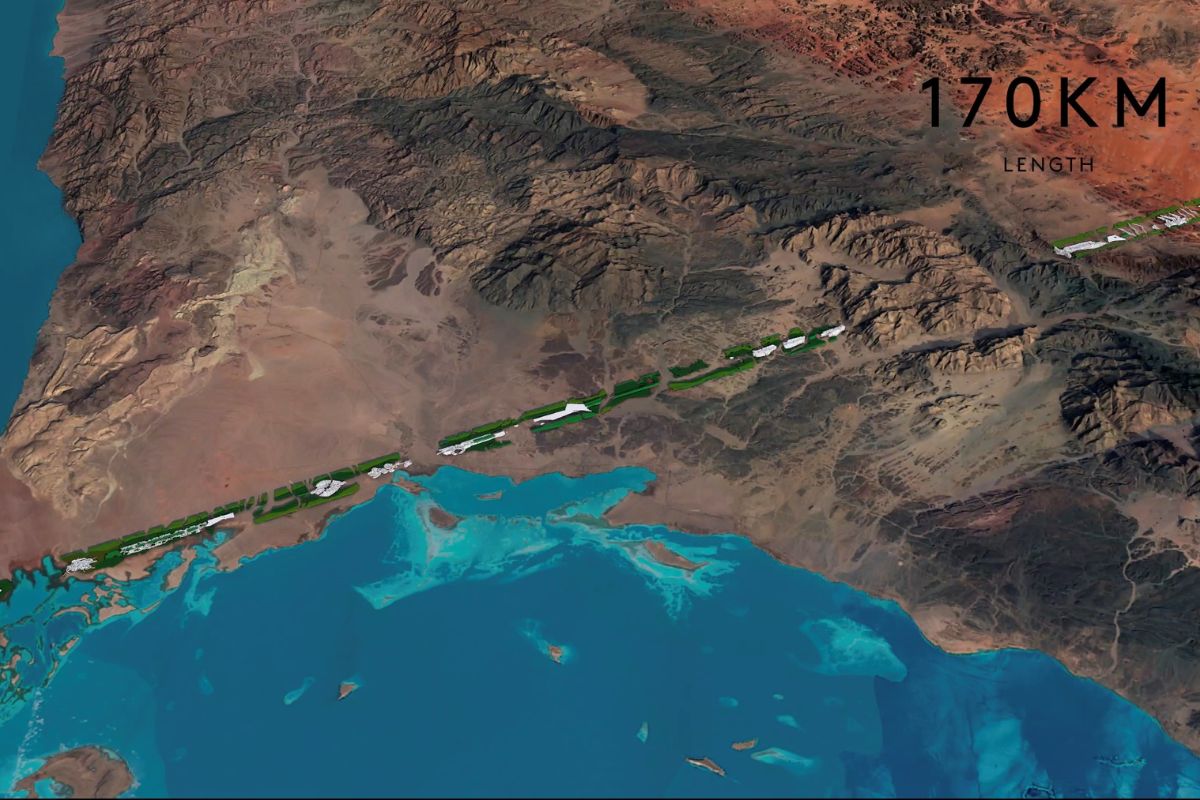
Recent Satellite Images Show The Progress Of The Monumental Construction In The Desert, A Project That Promises To Revolutionize Urban Life, But Also Faces Controversies Over Its Costs And Impacts.
In The Heart Of The Saudi Arabian Desert, One Of The Most Ambitious Projects In History Is Taking Shape. The Construction Of The Line, A Linear City 170 Km Long, Is The Main Pillar Of The NEOM Megaproject, Budgeted At US$ 500 Billion. The Initiative Is The Kingdom’s Major Bet To Diversify Its Economy Beyond Oil, As Part Of The Vision 2030 Plan.
Announced In 2021, The City Promises A Car-Free Future, With Zero Carbon Emissions, Powered 100% By Renewable Energy. In 2025, Satellite And Aerial Images Confirm That What Once Seemed Like Science Fiction Is Already A Reality In Progress, With Massive Excavations And Foundations Being Driven In The Province Of Tabuk.
What Is The Line, The Futuristic Car-Free City 500 Meters Tall?
The Line Is A Revolutionary Urbanism Project. The City Will Be Formed By Two Parallel Skyscrapers, 500 Meters Tall And Only 200 Meters Wide, Stretching 170 Kilometers. Its Mirrored Facade Was Designed To Reflect The Desert Landscape.
-
Made from recycled plastic, plastic wood is gaining space in the construction industry because it does not rot, resists moisture, and reduces maintenance costs over the years.

-
A couple buys an old chalet, breaks the kitchen floor for renovation, and finds over a thousand coins of gold and silver hidden since the English Civil War over 4 centuries ago.

-
Rigid bags with their days numbered: new trend prioritizes comfort in 2026.

-
Florianópolis will receive a million-dollar BRT that will begin construction in 2026 with nearly 400 million in funding from the federal government and the Inter-American Development Bank, and the map already shows the routes for the exclusive bus corridors.

The Philosophy Of The Project Is “Zero Gravity Urbanism,” Where Life Happens Vertically. All Essential Needs, Such As Housing, Work, And Leisure, Will Be Accessible Within A Five-Minute Walk.
There Will Be No Cars Or Streets, And An Underground High-Speed Train Will Connect Both Ends Of The City In Just 20 Minutes. The City Was Designed To Accommodate Up To 9 Million People.
The Progress Of The Construction Of The Line: What The Satellite Images Of 2025 Reveal

Despite Initial Skepticism, The Construction Of The Line Is Advancing Full Steam. Satellite And Aerial Images Released In April 2025 Show That The City’s 200-Meter Width Is Already Emerging From The Desert.
Massive Excavation: A Fleet Of 260 Excavators And 2,000 Trucks Operates 24 Hours A Day, Moving Millions Of Cubic Meters Of Earth.
Foundations: Specialized Companies, Such As Trevi Group, Are Executing The Foundation Work, With The Driving Of Over 4,500 Piles Up To 70 Meters Deep, A Job That Began In 2023.
Supporting Infrastructure: The “Neom Community,” Large Housing Complexes Built To House Hundreds Of Thousands Of Project Workers, Are Already Visible From Space.
The Progress Is Not Limited To The Line. Auxiliary NEOM Projects, Such As The Luxury Island Sindalah (Inaugurated At The End Of 2024) And The Ski Resort Trojena (Which Will Host The 2029 Asian Winter Games), Also Show Advanced Work.
The Technology Behind The City: High-Speed Train And Artificial Intelligence
The Line Was Designed To Be A “Cognitive City,” Where Technology And Artificial Intelligence (AI) Manage Operations. It Is Estimated That 90% Of The Data Generated In The City Will Be Analyzed By AI To Optimize Resource Use And Anticipate The Needs Of Residents.
In Addition To The Underground Train, The Project Envisions The Use Of Advanced Robotics, Augmented Reality, And An Autonomous Goods Transport System To Connect Different Areas Of NEOM.
Energy Will Be Fully Provided By Renewable Sources, Including The World’s Largest Green Hydrogen Plant, Which Is Being Built At The Neighboring Industrial Complex Of Oxagon.
The Cost Of The Vision: The US$ 500 Billion And The Financing Challenges
The Total Cost Of NEOM, The Project Encompassing The Line, Is Estimated At US$ 500 Billion, Primarily Financed By The Saudi Public Investment Fund (PIF).
Although The Kingdom Seeks To Attract Foreign Investors, Dependence On The Sovereign Fund Makes The Project Vulnerable To Fluctuations In Oil Prices.
In 2024, Reports Indicated That The Scale Of The First Phase Of The Line Was Reduced. The Original Plan To Accommodate 1.5 Million People By 2030 Has Been Adjusted To Less Than 300,000 Residents In A Section Of Just 2.4 Km To Be Completed By The Same Date.
The Saudi Government, However, Denies That The Full 170 Km Vision Has Been Abandoned, Stating That The Project Has Always Been Planned To Be Delivered In Phases. The New Goal Is To Have The First Major Phase Ready For The 2034 FIFA World Cup.
The Controversies Of The Project


The Construction Of The Line Is Not Happening Without Controversies. Environmentalists Criticize The Project’s Carbon Footprint. The Production Of Glass, Steel, And Concrete For Such A Colossal Structure Is Expected To Generate 1.8 Gigatons Of CO₂, A Contradiction To The Promise Of A “Green” City.
The Most Serious Issue, However, Involves Human Rights. The Project Area Was The Ancestral Home Of The Howeitat Tribe, Which Was Compulsorily Displaced.
Organizations Such As Amnesty International And The UN Have Denounced The Repression Against Tribe Members Who Protested Against The Evictions. In April 2020, An Activist Was Killed By Saudi Security Forces, And Others Were Sentenced To Long Prison Terms, Accused Of Terrorism.







-

-

2 pessoas reagiram a isso.