





 Portuguese
  English
  Spanish
  3 min of reading
  0 comments


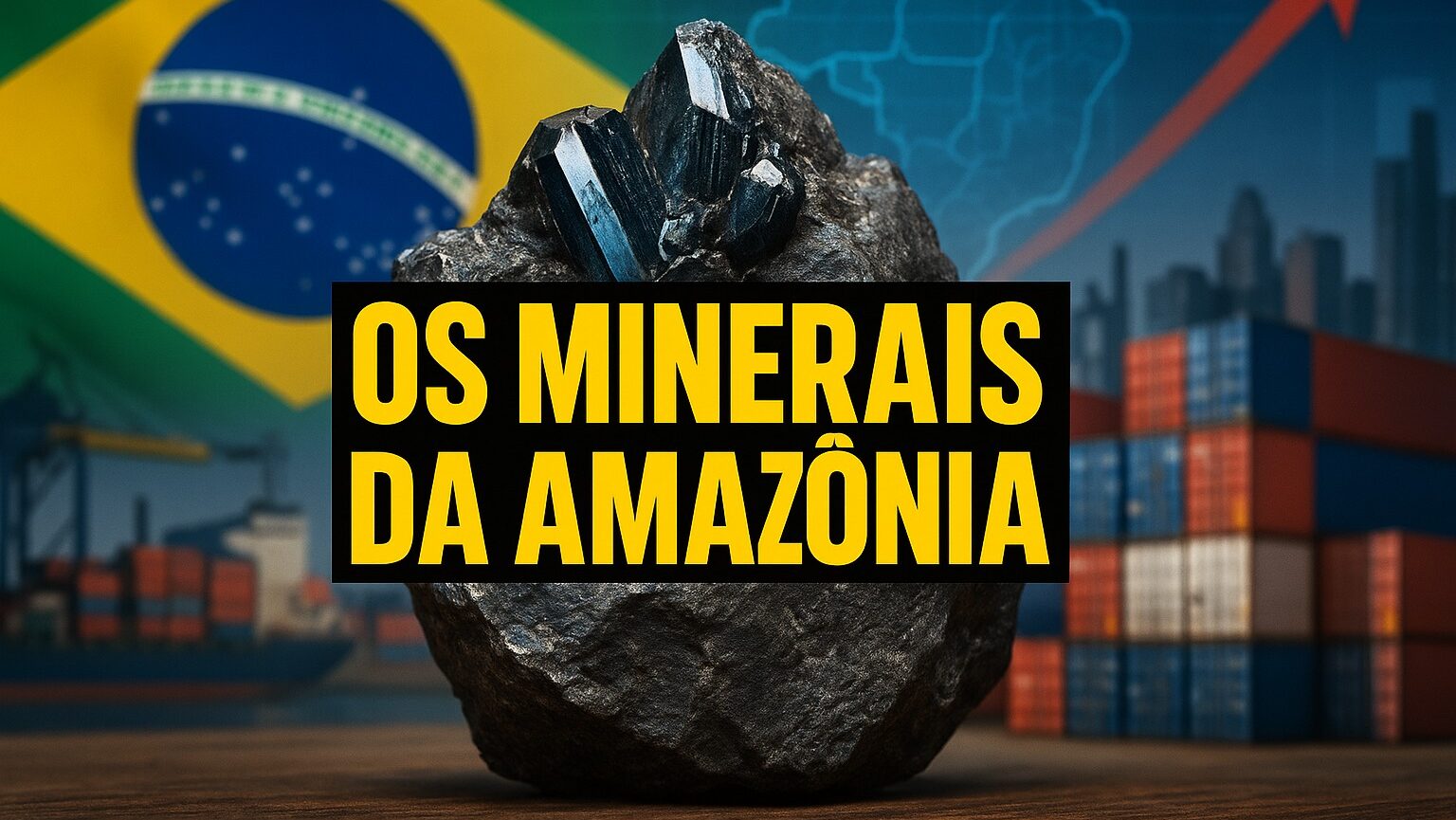
The International Race for Strategic Minerals of the Amazon Places Brazil Before the Dilemma Between Economic Development, Environmental Preservation, and National Sovereignty
The Amazon is going through a decisive period because the world is experiencing an energy transition and a global race for critical minerals. Powers are competing for access to niobium, tantalum, tin, thorium, and rare earth elements. These elements are located in the state’s underground and are essential for high-tech industries.
Despite this wealth, a large part of the population continues to face poverty, especially in the interior. The challenge is clear: to transform mineral resources into sovereignty and development without losing sight of environmental preservation.
Pitinga Mine as an Example
In Presidente Figueiredo, 119 kilometers from Manaus, lies the Pitinga Mine. The site encapsulates the dilemma between economic exploitation and national responsibility.
-
Motorola launched the Signature with a gold seal from DxOMark, tying with the iPhone 17 Pro in camera performance, Snapdragon 8 Gen 5 that surpassed 3 million in benchmarks, and a zoom that impresses even at night.

-
Satellites reveal beneath the Sahara a giant river buried for thousands of kilometers: study shows that the largest hot desert on the planet was once traversed by a river system comparable to the largest on Earth.

-
Scientists have captured something never seen in space: newly born stars are creating gigantic rings of light a thousand times larger than the distance between the Earth and the Sun, and this changes everything we knew about stellar birth.

-
Geologists find traces of a continent that disappeared 155 million years ago after separating from Australia and reveal that it did not sink, but broke into fragments scattered across Southeast Asia.

For fifty years, Mineração Taboca has been operating in the region, extracting cassiterite and columbite. The business generates over R$ 500 million annually in exports and creates approximately 1,200 direct jobs.
The municipality receives about 6% of its revenue in royalties. Additionally, the underground holds reserves of niobium, tantalum, tin, and thorium, used in rockets, batteries, and turbines.
In November 2024, the mine was sold to the Chinese state-owned company China Nonferrous Trade (CNT) for US$ 340 million, an amount equivalent to R$ 2 billion.
After the negotiation, the Federal Court demanded explanations from the companies and agencies involved. The reason was the accusation of violating the Constitution and rules that restrict foreign ownership of strategic resources.
Other Municipalities on the Mineral Route
The issue, however, is not limited to Presidente Figueiredo. Cities such as Autazes, São Gabriel da Cachoeira, Nova Olinda do Norte, Itacoatiara, and Apuí also have reserves.
These areas contain potassium, niobium, tantalum, and tin, minerals considered essential both for the energy transition and for food security.
Therefore, it is not possible to allow the discussion to be restricted to commercial contracts. A national debate is necessary on how to explore these resources in a responsible and strategic manner.
Risk of External Dependence
The warning came from the director of the Brazilian Mining Institute, Júlio Nery. According to him, China already concentrates 95% of the world’s production of rare earths.
If Brazil allows its deposits to remain under external control, it will forfeit its prominence in a sector fundamental to the green economy and technological future.
Moreover, the global scenario is marked by tensions between China and the United States, which reinforces the need for the country to secure its sovereignty over these assets.
International Experiences
There are clear examples of how to transform natural resources into geopolitical power. Chile has elevated lithium as a platform for international insertion.
Canada and Australia have created legislation that unites mineral exploration, social return, and protection of sovereignty.
Brazil needs to follow a similar path, especially in the Amazon. Mining should have science, technology, and responsibility as its central pillars.
Path for Brazil
The state recently created the Secretary of Mining. The aim is to prioritize the topic within planning policies.
This is an attempt to provide more clarity to the management of resources and reduce the lack of regulation that characterizes the sector.
Strengthening national sovereignty over minerals means ensuring that exploration, processing, and industrialization occur under public interest.
It is essential that part of this wealth be allocated to health, education, innovation, and public safety.
Only then will it be possible to transform potential into real social development.
Global Protagonism
Brazil needs to build a complete production chain. This will allow the transformation of strategic minerals into qualified jobs, technological innovation, and global competitiveness.
By following this path, the country can assume a leading role in the green economy.
Dispute in Progress
The race for the mineral resources of the Amazon has already begun. The future depends on a decision: whether Brazil will merely be a spectator or will lead the transformation of this wealth into sovereignty and progress.
With information from Gazeta do Povo.







-

2 pessoas reagiram a isso.