





 Portuguese
  English
  Spanish
  4 min of reading
  0 comments


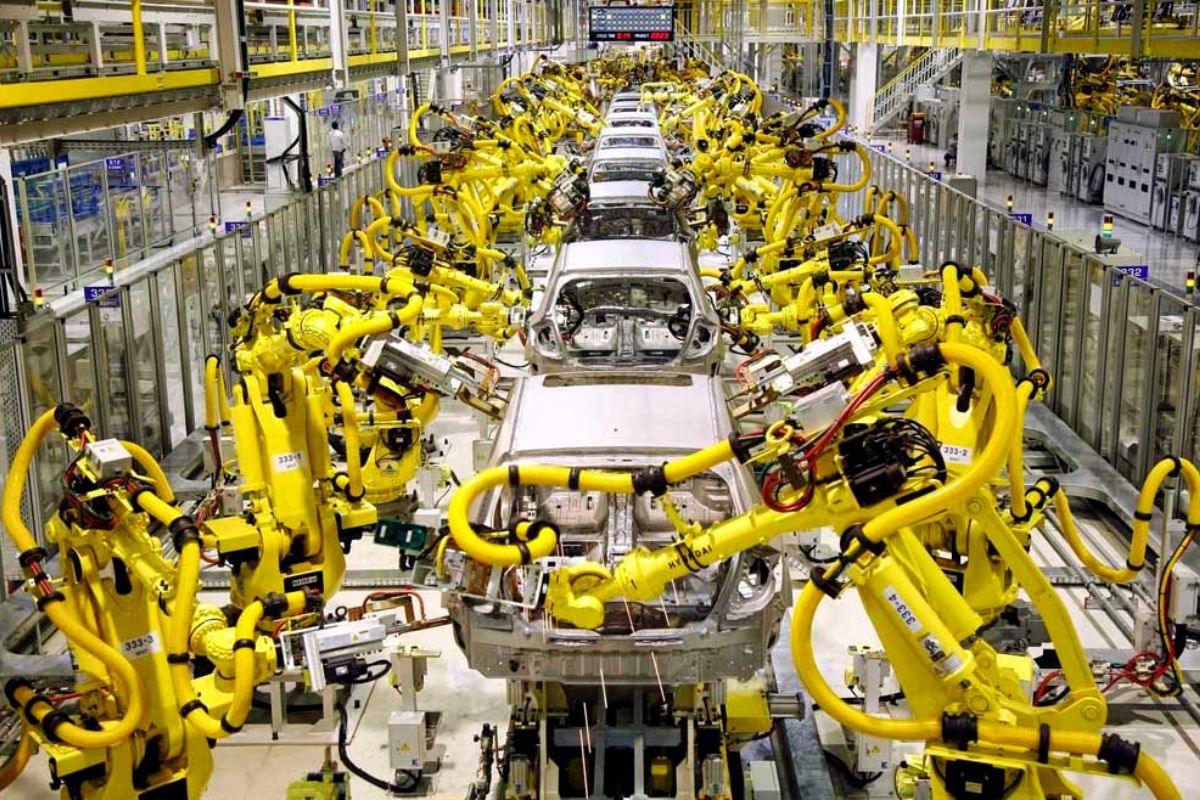
A Squeeze On Critical Mineral Exports Threatens To Paralyze Not Just Automakers But Also Aerospace, Tech, And Defense Industries
Imagine the world moving toward total electrification of mobility, with billions invested in green infrastructure, battery factories, and charging networks. Now imagine all of this coming to a halt because of a decision made on the other side of the planet. This is exactly the scenario haunting governments and companies: China currently has the power to single-handedly slow down the global electric vehicle industry — and the time to react is extremely short.
According to industry estimates, global stocks of certain critical minerals last only six weeks. The production chain that supports electric cars, chips, satellites, and modern weapons is dangerously concentrated in the hands of a single nation — and it has already begun to turn off the taps.
The Chinese Monopoly On Strategic Minerals
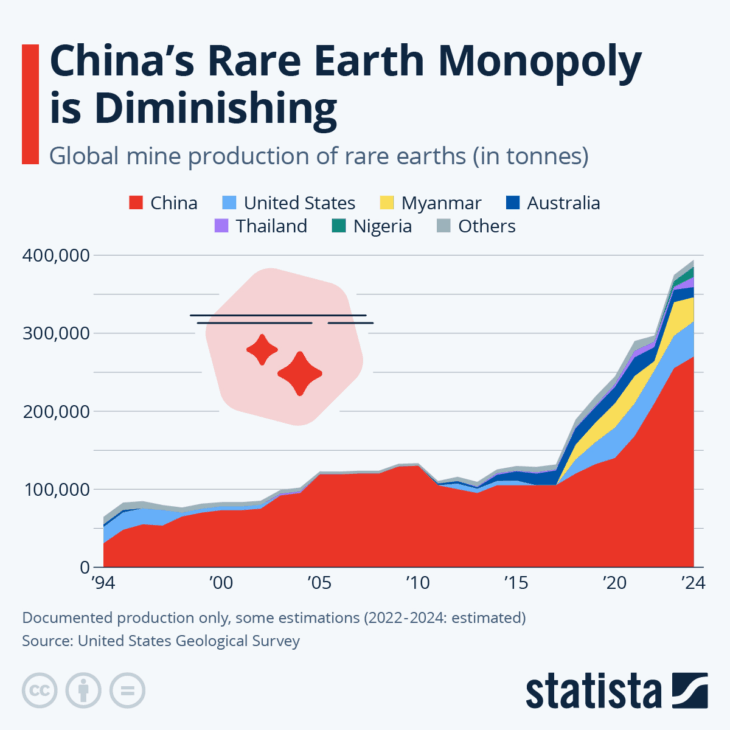
China controls more than 90% of global rare earth production — a group of 17 chemical elements used in various high-tech applications. But it’s not just about extraction: the Asian country also dominates the refining and industrialization of these materials, making its influence even deeper.
-
Motorola launched the Signature with a gold seal from DxOMark, tying with the iPhone 17 Pro in camera performance, Snapdragon 8 Gen 5 that surpassed 3 million in benchmarks, and a zoom that impresses even at night.

-
Satellites reveal beneath the Sahara a giant river buried for thousands of kilometers: study shows that the largest hot desert on the planet was once traversed by a river system comparable to the largest on Earth.

-
Scientists have captured something never seen in space: newly born stars are creating gigantic rings of light a thousand times larger than the distance between the Earth and the Sun, and this changes everything we knew about stellar birth.

-
Geologists find traces of a continent that disappeared 155 million years ago after separating from Australia and reveal that it did not sink, but broke into fragments scattered across Southeast Asia.

In April 2025, Xi Jinping’s government began requiring special export licenses for six essential minerals and high-performance magnets used in the automotive, aerospace, and military industries. The affected materials include:
- Gallium and germanium – vital for semiconductors and solar panels
- Antimony – used in batteries and flame-retardant components
- Disprosium and scandium – fundamental elements in the production of heat-resistant magnets and metal alloys for aviation
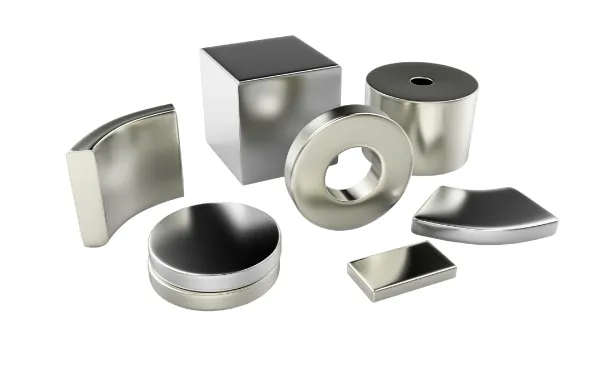
Furthermore, China has begun to restrict the export of compounds used in the manufacture of neodymium magnets, essential for the operation of compact, high-performance electric motors used in cars, drones, missiles, and wind turbines.
The Retaliation Against Trump’s Tariffs
This geopolitical move occurs as a direct response to the new tariff packages imposed by Donald Trump, who has reinstated economic sanctions on Chinese products. On April 2nd, the former U.S. president announced tariffs on about 60% of imports from China, including batteries, solar panels, and electric vehicles.
Less than 24 hours later, Beijing blocked the export of strategic minerals to the American market, escalating a trade war that has resources from the ground as its battleground.
But the impacts are not limited to the U.S. Companies from Europe, Japan, and even India also depend on the Chinese industrial chain. With minerals being used as a pressure tool, countries without their own reserves or refining infrastructure are exposed to a supply crisis.
Sectors At Risk: From Electric Mobility To National Security
Rare minerals and their derivatives are irreplaceable in many sectors. In the automotive industry, for example, electric motors depend on neodymium and dysprosium permanent magnets, which ensure lightness, power, and high energy efficiency.
In aviation, metal alloys containing scandium make aircraft lighter and stronger. In the military field, sensors, guided missiles, and radars use semiconductors made with gallium and germanium. In consumer technology, cell phones, tablets, and computers also contain elements from these chemical families.
According to a report by the IEA (International Energy Agency), the demand for critical minerals will quadruple by 2040, mainly due to the energy transition. If supply is interrupted, global decarbonization plans could collapse.
And Brazil? A Mineral Power But Not An Industrial One
Brazil is one of the countries with the largest potential reserves of rare earths in the world. Regions like Minas Gerais, Bahia, Goiás, and Amazonas have deposits with high concentrations of these elements. However, according to the National Mining Agency (ANM), the country still relies on raw mineral exports, lacking a structured refining chain.
“It doesn’t help to have resources in the ground if we can’t transform them into industrial products,” explains Marcus Vinícius, a technical consultant at the ANM. “Brazil needs to invest heavily in separation technology and in strategic partnerships to avoid being left out of the game.”
Despite recent initiatives supported by the BNDES, the sector still lacks tax incentives, clear regulatory frameworks, and long-term industrial policies. This means that in case of a global shortage, Brazil will not be able to meet international demand — not even domestic demand.
The Alert From Automakers And The Race For Diversification
Companies like Tesla, BYD, Volkswagen, and GM have alerted governments about the urgency of reducing dependence on China. Various mining companies are being encouraged to expand operations in countries like Australia and Canada, and new technologies are being developed to create rare earth-free batteries.
However, according to experts from Benchmark Mineral Intelligence, these alternatives will still take years to solidify. In the short term, the global industry remains vulnerable. And the clock is ticking.








Seja o primeiro a reagir!