





 Portuguese
  English
  Spanish
  4 min of reading
  0 comments


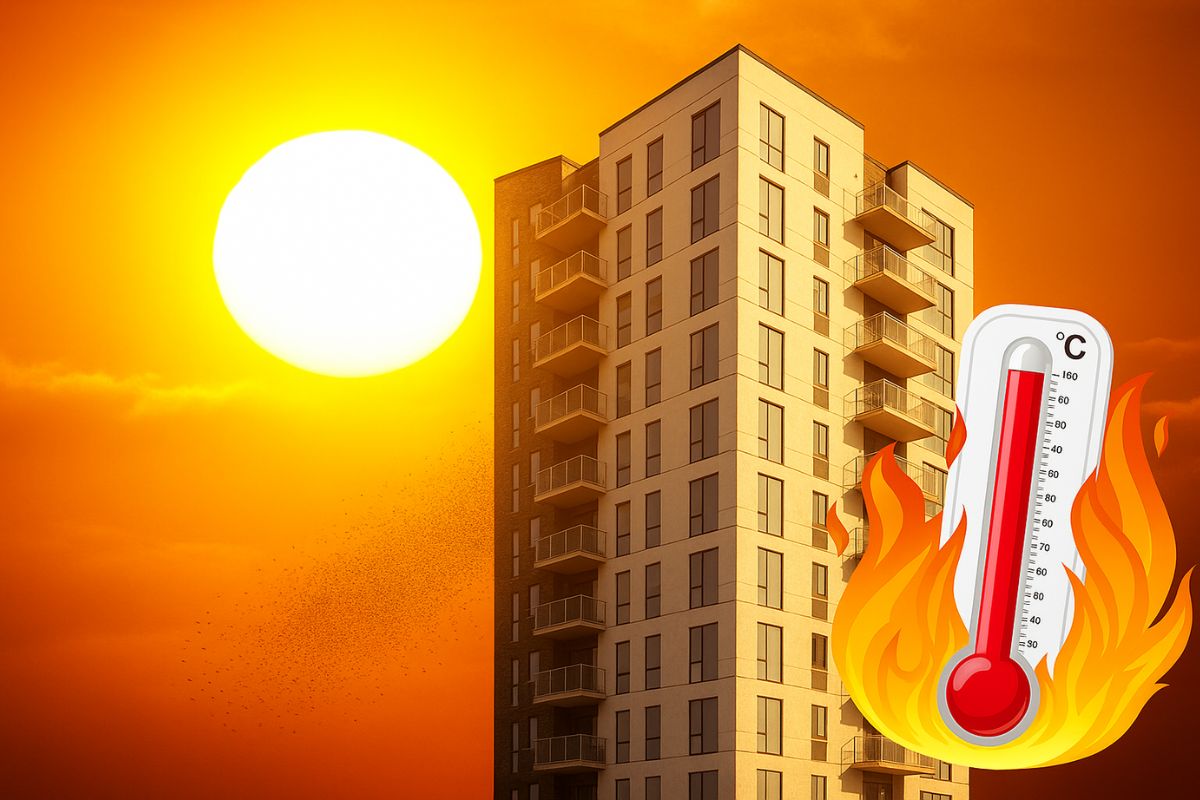
Developed by Purdue University, this ultrawhite paint promises to revolutionize the cooling of buildings and vehicles with its unique passive cooling capacity, understand the discovery that reflects 98% of solar light.
The growing energy crisis and climate change impose an urgent search for sustainable solutions. In this scenario, passive cooling, which minimizes energy consumption, has become a priority. A discovery that reflects 98% of solar light emerges as a revolution in this field: an ultrawhite paint developed at Purdue University in the USA.
This invention, created by a team led by Professor Xiulin Ruan, promises to drastically reduce, or even eliminate, the need for air conditioning. This article explores how this invention works, its impressive performance and its potential to change the way we cool our world.
What Is The Whitest Paint In The World?
The whitest paint in the world is a milestone in passive radiative cooling technology. Its development was not aimed at breaking whiteness records, but rather at combating climate change and saving energy. The extreme whiteness was, in fact, a consequence of the quest for maximum solar reflectance.
-
Millions of people have been eating yam for centuries without knowing that this humble tuber contains a compound called diosgenin, which scientists have now discovered can improve memory and help control blood sugar levels.

-
Rigid bags with their days numbered: new trend prioritizes comfort in 2026.

-
Scientists from an international project drill 1,800 meters of ice in Antarctica using hot water and discover details about one of the most intriguing places on planet Earth.
-
YouTuber creates an excavator equipped with a giant 4.5-meter sword to challenge his brother to a rematch, and the invention quickly goes viral on social media.


Commercial white paints that reject heat reflect between 80% and 90% of solar light, which is not enough to cool a surface below ambient temperature. Purdue’s paint, on the other hand, achieves a significantly superior performance, representing a potential paradigm shift.
The Science Behind The Discovery That Reflects 98% Of Solar Light
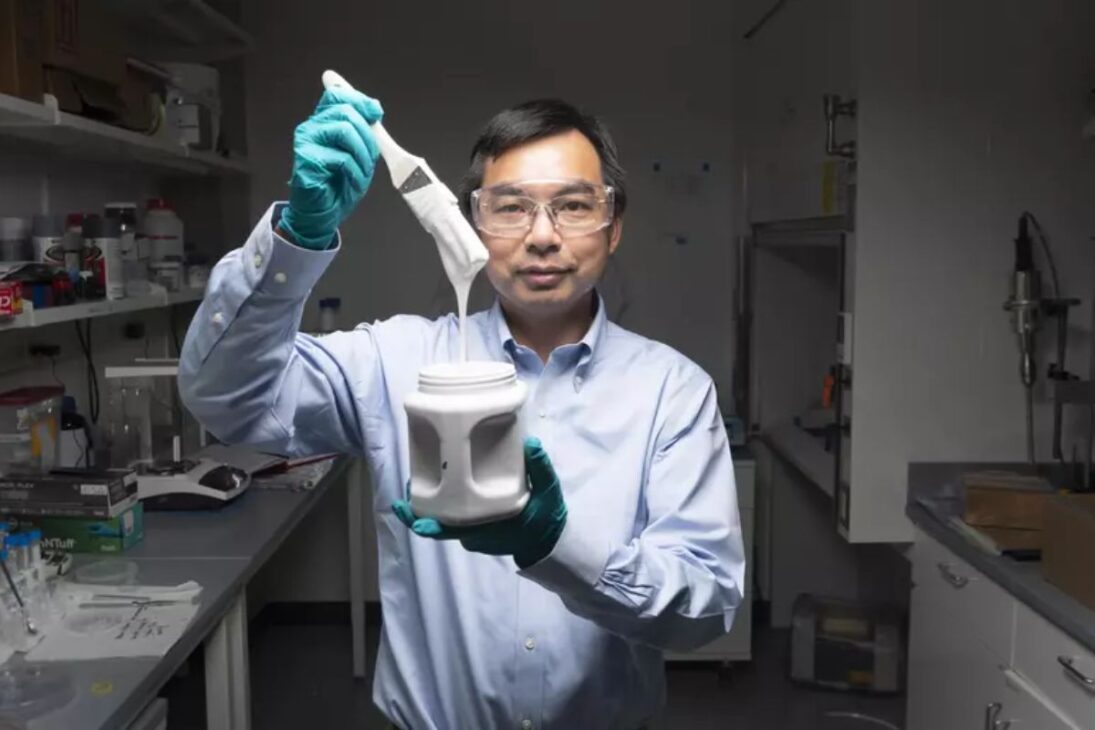
The extraordinary performance of this discovery that reflects 98% of solar light lies in its composition and microstructure. The central component is barium sulfate (BaSO₄), selected after tests with more than 100 different materials. Barium sulfate does not absorb ultraviolet light, unlike titanium dioxide used in common paints.
Two factors are crucial in the formula:
- High Concentration: the paint has a very high concentration of barium sulfate, around 60%.
- Various Particle Sizes: the formula includes barium sulfate particles of different sizes. This heterogeneity allows the paint to scatter a much larger portion of the solar spectrum.
Thanks to this composition, the paint achieves a record solar reflectance of 98.1%. In addition to reflecting light, it also efficiently emits infrared heat. As a result, the coated surface loses more heat than it absorbs, actively cooling.
Performance In Practice: The Ability To Cool Below Ambient Temperature
The cooling capacity of the paint has been proven in practical tests. Surfaces coated with it can be 4.5 °C cooler than the surrounding air, even under intense sunlight, and up to 10.5 °C cooler at night.
In terms of power, researchers demonstrated that covering a 93 m² roof with the paint can generate a cooling power of 10 kilowatts (kW). This value exceeds that of air conditioning units used in most homes. In 2022, the team developed a new formulation, thinner and lighter, that achieves similar cooling with a layer of just 0.15 millimeters.
The Revolutionary Potential And Challenges Of Purdue Paint
The team of experts at Purdue University, led by Professor Xiulin Ruan, sees this technology as a powerful tool against climate change. Ruan himself states that the initial motivation for the project was the search for energy savings. The team’s extrapolations are ambitious: covering just 1% of the Earth’s surface with this technology could mitigate the total effects of global warming.
Global recognition validates the importance of the discovery. The paint was officially recognized as the “Whitest Paint” by the Guinness World Records in 2021. Additionally, it won the prestigious SXSW Innovation Award in 2023 in the sustainability category. Experts suggest that future research will focus on durability testing and the development of colored versions, which, even with lower cooling power, would greatly expand its applicability.
When Will This New Technology Be Available?


The Purdue team is actively working to bring the paint to market. Patent applications have been submitted and a partnership has been established with a company to scale up production.
A crucial factor for its adoption is cost. The price of the ultrawhite paint is expected to be comparable to, or even lower than, conventional paints. Barium sulfate, its main component, is a relatively inexpensive material. The expectation is that the paint will reach the market in one to two years, a timeline that depends on the completion of long-term durability tests, the initial results of which are promising.





Seja o primeiro a reagir!