





 Portuguese
  English
  Spanish
  4 min of reading
  0 comments


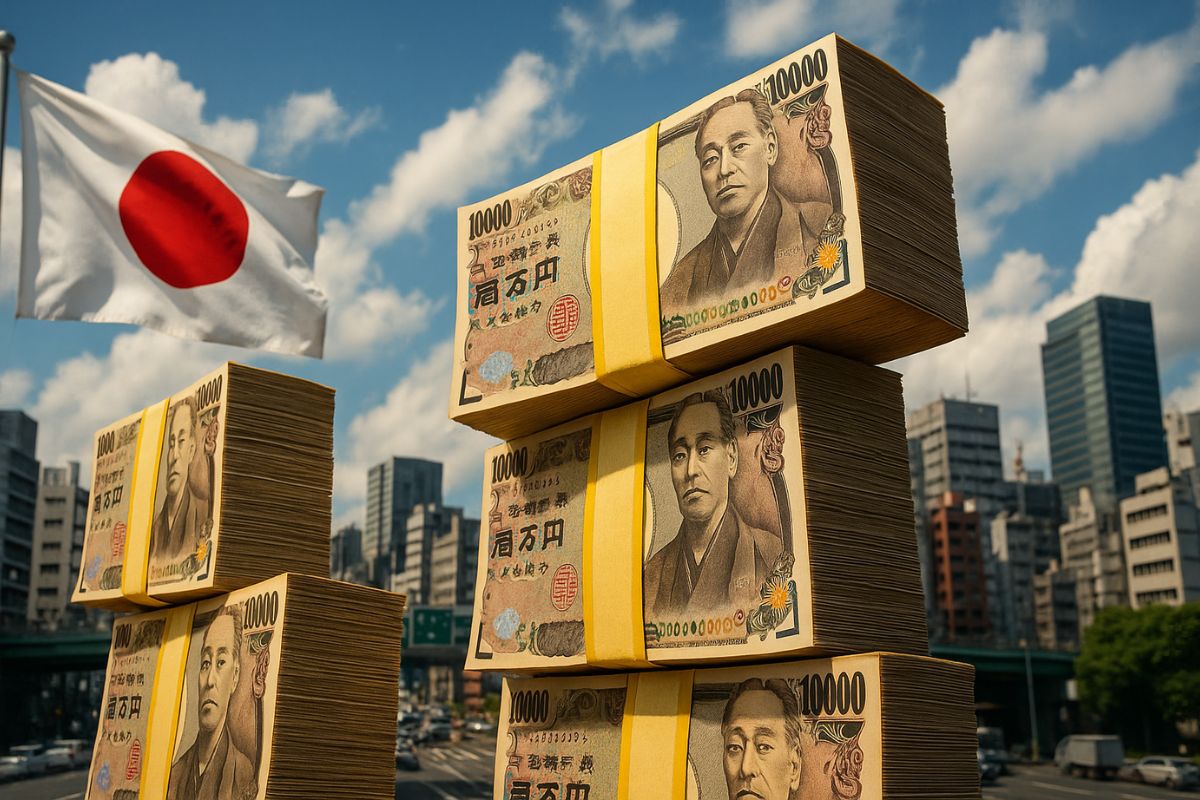
Japan’s Debt Is the Largest in the World in Proportion to GDP, Exceeding 235% of GDP, Yet the Country Maintains Stability with Domestic Financing, Historically Low Interest Rates, the Bank of Japan’s Actions, and High Domestic Savings, Which Support Debt Rolling Without Default
The debt of Japan already exceeds 235% of GDP and nevertheless, the Japanese economy has not collapsed. This case intrigues analysts because it combines the highest proportional indebtedness among major economies with a level of stability that has persisted for decades, anchored by domestic financing and ultra-accommodative monetary policy.
This scenario arose from a long process: after the bubble burst in the early 1990s, the country accumulated deficits, launched stimulus packages, and witnessed population aging increase mandatory spending. The debt of Japan grew, but internal mechanisms reduced the risk of immediate crisis.
Origin of Debt: Bubble, Stimulus, and Demographics
The turning point came with the bursting of the asset bubble in the early 1990s.
-
With an investment of R$ 612 million, a capacity to process 1.2 million liters of milk per day, Piracanjuba inaugurates a mega cheese factory that increases national production, reduces dependence on imports, and repositions Brazil on the global dairy map.

-
Brazilian city gains industrial hub for 85 companies that is equivalent to 55 football fields.

-
Peugeot and Citroën factory in Argentina cuts production by half and opens a layoff program for more than 2,000 employees after Brazil drastically reduced purchases of Argentine vehicles.

-
A Brazilian city gains a factory worth R$ 300 million with the capacity to process 200 thousand tons of wheat per year, a mill of 660 tons/day, silos for 42 thousand tons, and an industrial area of 276 thousand m².


Real estate and stock prices fell sharply, companies and banks became weakened, and the economy plunged into stagnation with deflation.
The government responded with infrastructure spending and support for the financial system.
With revenues declining and an expansionary fiscal policy, the Treasury increased bond issuances.
The dynamic became structural when the working-age population began to shrink and spending on pension and health rose.
The debt of Japan started to reflect both a historical shock and ongoing demographic pressure.
Why There Was No Collapse: Five Pillars of Support
The first pillar is internal debt. About 90% of the bonds are in the hands of Japanese investors, such as banks and pension funds, which reduces exposure to external shocks and currency volatility.
The second pillar is very low interest rates, including negative rates during parts of the period, which lowered the cost of rolling over debt.
The third pillar is the role of the Bank of Japan (BoJ), which bought a significant share of government bonds. As a result, part of the interest paid returns to the public sector itself.
The fourth pillar is the high domestic savings, which creates a broad and stable base of lenders.
Finally, a strong currency and credibility of a G7 economy preserve investor confidence.
Milestones That Changed the Trajectory
In the 1990s, in addition to the collapse of the bubble, the country faced the Asian crisis of 1997, reinforcing the stimulus. In the 2000s, zero interest rates and quantitative easing were implemented to try to contain deflation.
These moves did not eliminate the underlying causes but kept debt servicing manageable.
In the 2010s, the 2011 earthquake and tsunami required heavy reconstruction, and Abenomics starting in 2012 combined fiscal stimulus, monetary easing, and reforms.
In the 2020s, COVID-19 brought new packages. More recently, the end of negative interest rates in 2024 and the rise in long-term yields in 2025 added uncertainty to the future cost of debt.
Current Situation: Stability with New Pressures
Today, Japan’s debt remains above 250% of GDP in gross terms, supported by domestic financing and the BoJ’s weight in the JGB market.
Monetary normalization and rising long-term rates, however, could increase the cost of rolling over debt and test the limits of the model.
Demographics remain central. The decline in birth rates and rapid aging raise mandatory spending and compress the tax base.
If the savings of the older generations decrease, it may increase reliance on external capital, raising financial risk and sensitivity to global movements.
Curiosities and Little Discussed Facts
Japan’s net debt is much smaller than its gross debt when financial government assets are deducted.
In a recent reference, net debt was close to 78% of GDP, while gross debt was near 270%. This difference alters the sustainability reading.
The BoJ once held more than half of the government bonds in circulation, making the public sector the main creditor of itself.
Systems like postal savings have been massive channels for funding public policies for years.
And, despite the size of the debt, net spending on interest remained very low during much of the negative interest period.
Japan’s debt is a paradox: it combines structural fragility with funding resilience.
The country has gone through decades of indebtedness without defaults, but the recent monetary shift and demographics pressure the equation.
The real test will be to keep the cost of rolling over debt low while domestic savings shrink and long-term yields rise.
Do you think Japan’s debt remains manageable with higher interest rates, or is the country buying time and pushing adjustments forward? What lessons does this case leave for economies that do not have the same internal savings? Share how you see the risks and possible solutions in the comments.










Seja o primeiro a reagir!