





 English
  Francês
  Alemão
  Italiano
  Japonês
  Norueguês
  Portuguese
  Spanish
  6 min of reading
  2 comments


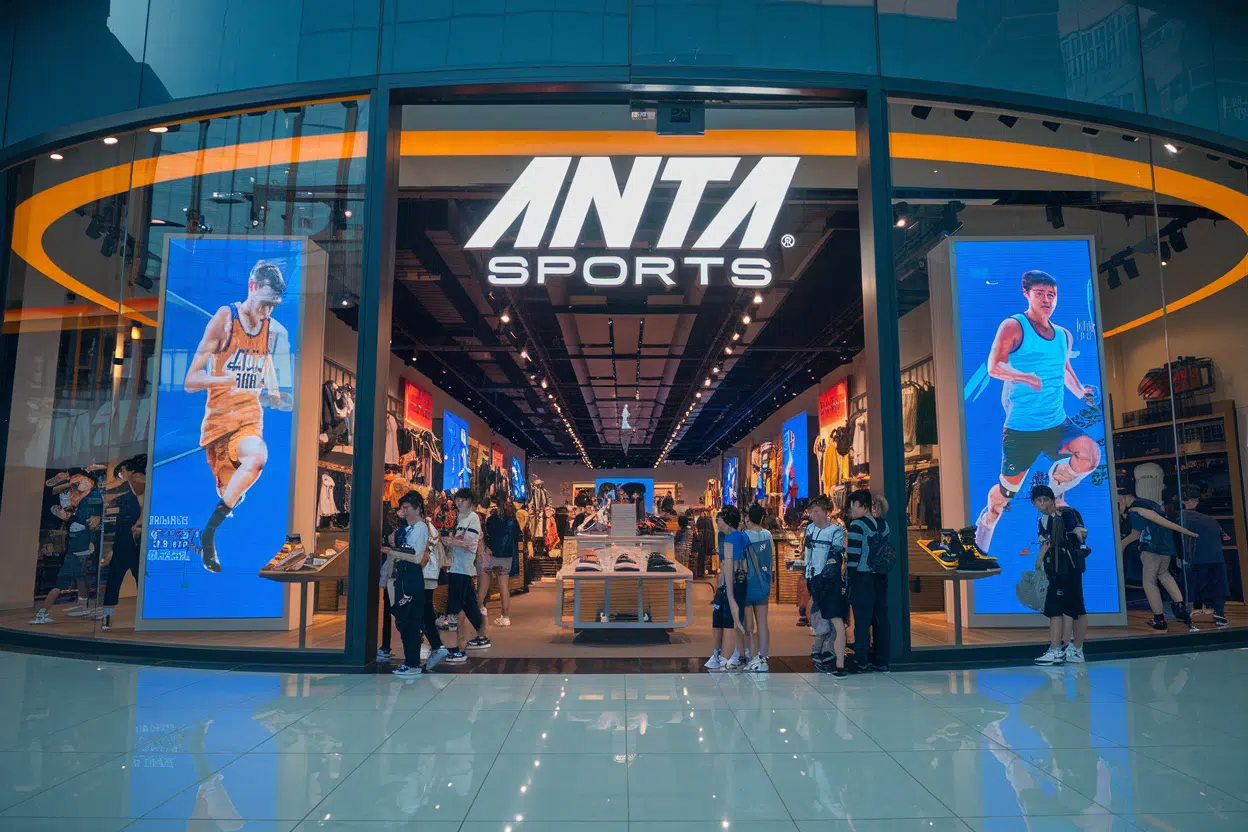


Anta Sports, Chinese Sports Leader, Is Transitioning from Local Manufacturer to a True Global Giant. An Example of China’s New Industrial Ambition
Just over thirty years ago, a Chinese teenager named Ding Shizhong traveled from Fuzhou to Beijing carrying shoes made in his family’s business. Today, that company has not only surpassed Adidas as the second largest sports brand in China, but is also forging a new path: to become a major global name in the sports sector.
The Financial Power of a Giant
Much has changed since the days when Shizhong was carrying shoes on a train. Now, Anta Sports generates nearly $81 billion in annual revenue, according to Financial Times data for 2023, the last year with financial statements presented.
The story of Anta represents much more than just the meteoric growth of a company: it symbolizes China’s transformation from “the world’s factory” to an innovative powerhouse capable of competing with established Western brands.
-
Explorers find Roman treasure trapped between rocks on the seabed for nearly 1,600 years and reveal a desperate attempt to hide 53 gold coins during the invasions of the Empire.
-
Archaeologists discover Roman vase buried for over 2,000 years with more than 175 intact gold and silver coins, revealing a desperate strategy to protect wealth during the collapse of the Empire.
-
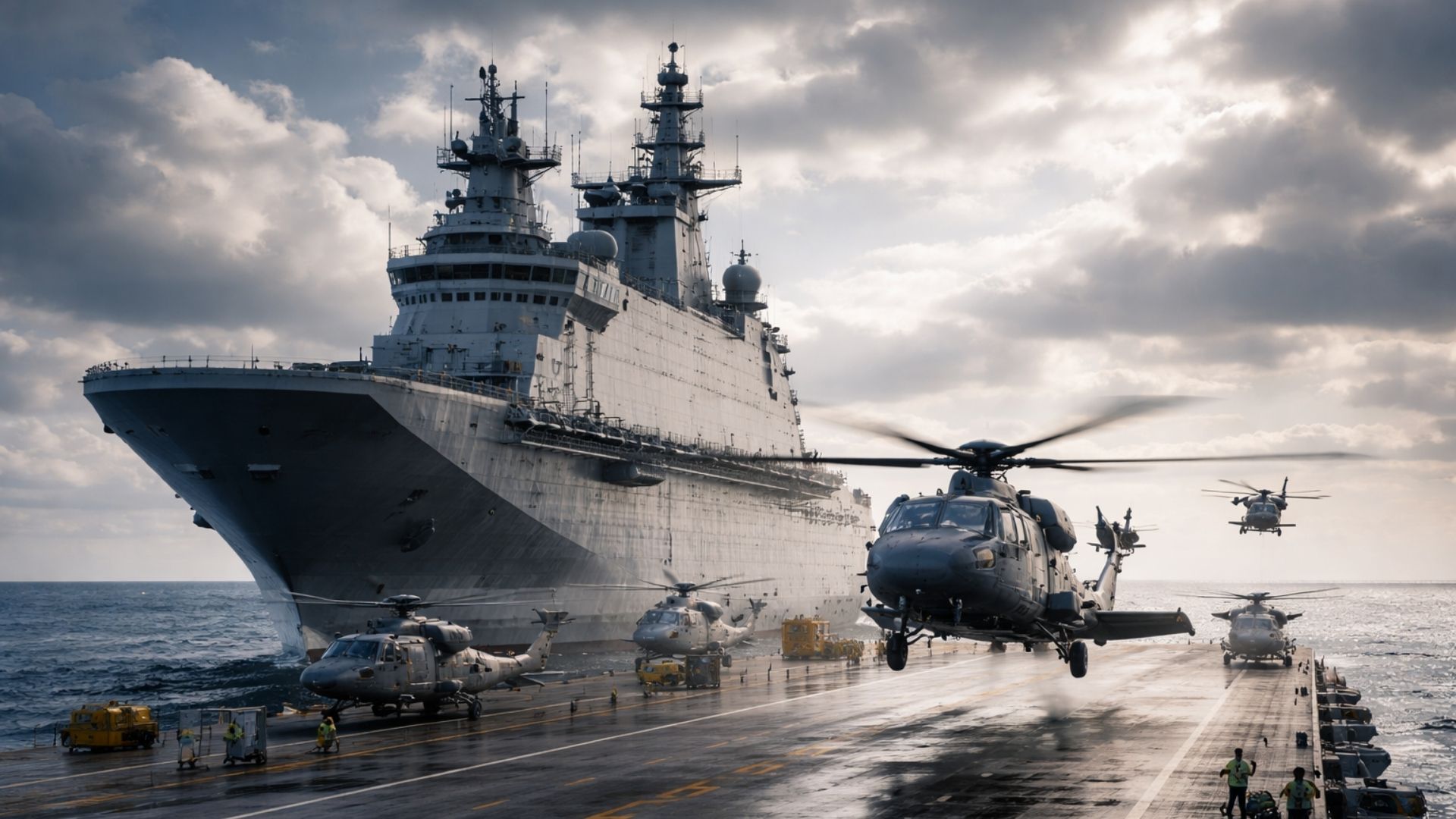
With 241 meters, 48 thousand tons, and a structure designed to accompany aircraft carriers at sea, the Chinese ship that refuels fleets in motion was born to push Beijing away from the coast and has become the hidden gear of its naval projection.

-
“Discreet” city in the interior of SP stands out among the smartest in Brazil thanks to a national ranking.

Its global growth still needs to be consolidated, but its progress in China is undeniable. Just in the first half of 2024, Anta recorded $4.7 billion in revenue, which represents:
20% more than Nike China.
160% more than Adidas China.
Additionally, Anta operates over 9,000 retail stores, most of which are in mainland China. To grasp the magnitude of this number: Nike and Adidas each have between 1,000 and 2,000 stores globally.
In contrast, Anta has nearly all of its 9,000 stores concentrated exclusively in China.
In fact, Anta has been called “the Nike of China,” even in Spain. This is a quick way to define its essence. However, its founder rejects this comparison:
“We don’t want to be the Nike of China, but rather Anta globally,” Shizhong declared.
For now, the company has already achieved significant milestones. It is currently the fourth most valuable company in the sports sector worldwide, behind only Nike, Lululemon, and Adidas.

The Acquisition of Amer Sports and Its Importance
A crucial detail: Amer Sports operates independently but has been part of Anta since its acquisition in 2019.
This means that if we combine the market values of both, Anta already competes directly with Adidas and Lululemon for second place in the global sports sector.
Ding Shizhong’s ambition has a clear backing: Anta’s aggressive international acquisition strategy, which has been ongoing for decades. Some examples:
In 2009, it acquired the rights to Fila in China.
In 2019, it purchased the Finnish group Amer Sports.
The purchase of Amer Sports gave Anta control of premium brands such as Salomon, Arc’teryx, and Wilson.
This strategy has allowed Anta to grow much faster than rivals that were in similar positions at the beginning of the last decade, such as Li-Ning and Xtep.

Incidentally, Anta is located in the heart of China’s athletic footwear industry, in Jinjiang, a region that has historically been a production hub for Western companies.
Over time, this region has learned a lot and has started creating its own brands, becoming an engine of innovation.
From Manufacturer to Innovator
Anta is no longer limited to manufacturing sports footwear. It now invests heavily in innovation.
In 2018, it allocated 5.2% of its revenue to Research and Development (R&D), according to Nice Kicks.
In 2021, it announced a direct investment plan of $5.5 billion to improve its global R&D system.
The results of this investment include:
The ANTA Sports Science Laboratory, the first of its kind in China.
A global network of R&D centers, including facilities in Los Angeles, Tokyo, Seoul, and Milan.
More than 1,500 patents registered.
Innovative materials, such as the recycled REPREVE fabrics, which reduce energy consumption by 44% compared to traditional nylon.
The Anta Brand Empire

Understanding Anta means looking beyond its own brand. Its acquisition and expansion strategy has transformed it into a sports conglomerate similar to Xiaomi, owning various strategic brands under its control.
The Main Brands of the Anta Group:
Anta – Its main brand, responsible for 50% of revenue. It offers professional sports equipment at affordable prices but does not operate in the luxury or low-cost segments. It competes directly with Nike and Adidas.
Fila – Since its acquisition in 2009, it has become the company’s second pillar, representing 40% of revenue. In China, Fila has been repositioned as a premium sports brand, much more oriented towards luxury than in the West. Currently, Fila sells more in China than in Italy, its country of origin.
The purchase of Amer Sports in 2019 (for €5.6 billion) gave Anta control over several well-known Western brands, including:
Arc’teryx (Canada) – Technical mountain clothing, with around 140 stores worldwide.
Salomon (France) – Expert in trail running shoes and skiing equipment, with 114 owned stores and leadership in technical sports niches.
Wilson (USA) – An icon of sports, a reference in tennis, with global distribution and presence in various sports.
Atomic (Austria) – Manufacturer specializing in alpine skiing and winter equipment.
Peak Performance (Sweden) – Premium sports fashion brand with a strong presence in the Nordic countries.
In addition to these acquisitions, Anta has also established joint ventures (50%-50%) with specialized brands:
Descente – Partnership with this Japanese ski clothing brand to explore the Chinese market.
Kolon Sport – Alliance with this Korean outdoor brand to expand its presence in Asia.
And at the end of 2023, Anta made another strategic acquisition: Maia Active, a Chinese athleisure brand focused on the women’s market.
This diversified portfolio has helped Anta change its business model in recent years.
Transformation in the Sales Model
Since 2020, Anta has shifted from a wholesale system to a model of direct control over stores in major cities.
This has allowed the company to:
Respond more quickly to new trends – while competitors take about a year and a half, Anta can launch new products in three months.
Directly control the brand experience.
Obtain real-time data on consumer preferences.
Manage inventory more efficiently.
This multi-brand, international, and direct-to-consumer (DTC) strategy is unique among Chinese sports companies. While competitors like Li-Ning are trying to develop their own brands, Anta prefers to acquire them and reposition them in the market.
However, this brand diversification can be a challenge: some analysts point out that this strategy may dilute resources from the main brand.
The Next Step: Global Expansion
Despite its success in China, Anta aims to expand its presence globally. Its initial focus is Southeast Asia, where it already operates its own stores in Singapore, Malaysia, the Philippines, and Thailand.
Anta’s international bet gained even more strength with an unexpected move:
The Impact of Signing Kyrie Irving
In September 2024, Anta caught the market’s attention by signing NBA star Kyrie Irving.
He visited the Anta store in Bangkok, Thailand, attracting crowds like never before, according to Nikkei Asia.
The contract worth $125 million over five years with Irving also includes an important position: Creative Director of Anta Basketball.
The most symbolic aspect of this agreement? Irving parted ways with Nike after nearly a decade as one of the brand’s most profitable athletes.
According to Nice Kicks, products signed by Kyrie generated $2.6 billion in revenue for Nike over seven years.
Now, an elite star has chosen to sign with a Chinese brand instead of continuing with Nike. This marks a turning point in the global sports sector.
Anta is replicating the formula that made Nike a global phenomenon: combining technical innovation with the charisma of sports stars.


The Final Transformation
Anta represents the third wave of successful Chinese brands on the global stage, following advancements in technology with Huawei and Xiaomi and electric vehicles with BYD and NIO.
The next big test for the company will be its initial public offering (IPO) on the New York Stock Exchange, valued at $10 billion.
This IPO is not just a financial move – it symbolizes Anta’s transformation from a simple manufacturer to a true manager of global brands.
The company’s strategy is clear:
Verticalize to control the customer experience.
Diversify through acquisitions to reduce risks.
Invest in innovation to compete on added value.
Success is not guaranteed. Nike and Adidas still dominate the sector globally, while brands like Lululemon, Hoka, and On Running are rapidly growing in specific markets.
But one thing is already clear:
Anta is no longer just “the Chinese Nike.” Now, it is a global sports giant that, by chance, was born in China.
The real question is not whether Chinese brands can compete in the premium segment globally.
Anta is already proving that it can.
The question now is:
How long will it take to dominate the global sports market?






Excelente matéria. Parabéns!!
Obrigado !