





 Portuguese
  English
  Spanish
  4 min of reading
  0 comments


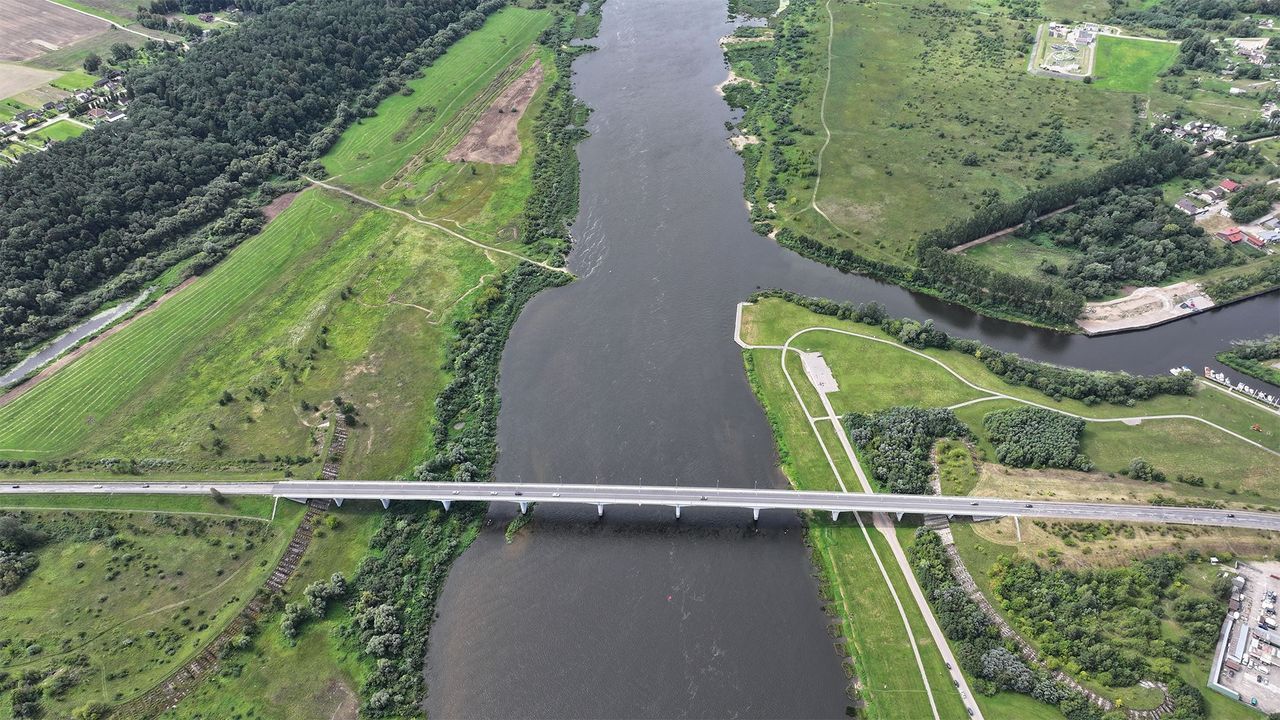
A 100 km Road, Filled with Castles and Historic Towns, Became the Main Smuggling Route for Over 40,000 Publications and to Save the Oldest Indo-European Language from the Ban Imposed by the Russian Empire!
You know those roads that seem to have come out of a fairy tale? The Panemune road in Lithuania is exactly that. It is over 100 kilometers of pure charm, passing through imposing castles, Renaissance mansions, and historic towns. But behind all this beauty, there is a story that few people know.
This road, which is now an incredible tourist destination, was essential for the survival of the Lithuanian language, considered the oldest Indo-European language still spoken today. It was not just a transportation route — it was a symbol of cultural resistance.
Now, how did a simple road manage to save an entire language? Hold on; this story is good!
-
50 viaducts, 4 tunnels, 28 bridges, and 40 kilometers of bike paths: BR-262 in Espírito Santo will receive 8.6 billion reais for the largest engineering project in the state’s history, inspired by the Immigrant Highway in São Paulo.

-
Brazil produces too much clean energy and doesn’t know what to do with it: over 20% of solar and wind capacity was wasted in 2025 while investors flee and 509 renewable generation projects were abandoned in the last year.

-
Piauí will produce a new fuel that replaces diesel without needing to change anything in the truck’s engine and reduces pollutant gas emissions by half: truck drivers from all over the Northeast are already celebrating the news that will arrive later this decade.

-
A new Brazilian shopping center worth R$ 400 million will be built in an area equivalent to more than 4 football fields, featuring 90 stores, 5 cinemas, a supermarket, a college, and parking for 1,700 cars, potentially generating 3,000 jobs.


From Military Route to Corridor of Lithuanian Culture

The Panemune road emerged in the 13th century, during a time when Lithuania needed to protect itself from the incursions of the Teutonic Knights coming from Prussia. So, nothing better than surrounding the path with fortresses and castles to block the enemies.
However, over the centuries, times changed. Wars took a break, the castles became aristocratic mansions, and the road became an important commercial route. Towns began to emerge around it, bringing prosperity to the region.
So far, so good. But in the 19th century, this road was put to the test in a completely different way…
When Speaking Lithuanian Became a Crime
Now imagine this: suddenly, you can no longer speak your language, write, or print a book in your own language. This is exactly what happened to the Lithuanian people between 1865 and 1904, when the Russian Empire banned the use of the Lithuanian language in the Latin alphabet.
The idea of the tsarist government was simple (and cruel): eradicate Lithuanian culture and force the population to adopt Russian. But the Lithuanians didn’t accept this so easily. They found a way to continue spreading their language — and the Panemune road became a key piece in this resistance.
The Road of Book Smuggling
If the Russians banned the printing of books in Lithuanian, what did the Lithuanians do? They went to print elsewhere! Thousands of publications began to be produced in East Prussia and the USA, where there was a large community of Lithuanian emigrants.
However, there was a problem: how would these books reach Lithuania without being confiscated?
That’s when a clandestine network of smugglers emerged, transporting books through alternative routes. And guess which one was one of the main ones? Yes, the Panemune road!
The books were hidden in hay carts, inside furniture, and even in empty coffins. Some smugglers even swam across the Nemunas River with books strapped to their bodies. Others used boats or bribed traders to go unnoticed.
In 39 years of prohibition, over 40,000 publications were smuggled along the road. That’s right, forty thousand!
The Unsung Heroes Who Saved the Lithuanian Language
The city of Tilze (now Sovetsk, in Kaliningrad) was one of the main points for the passage of books. From there, they continued to Kaunas, which would later become the capital of Lithuania.
Without this resistance network, the Lithuanian language would likely have been lost. But thanks to these anonymous heroes, the language survived and became one of the main symbols of the Lithuanian struggle for independence, achieved in 1918.
Today, the Panemune road still stands strong, filled with history to tell. Those who walk this path today are not just seeing beautiful landscapes and castles — they are stepping on a road that was vital for the identity of an entire people.
Much More Than a Road, a Symbol of Resistance
In the end, the Panemune road proved that resistance doesn’t always happen in the trenches. Sometimes, it happens on hidden routes, in camouflaged packages of books, in the effort to keep alive a language that was almost erased from history.
If today Lithuania takes pride in its language and culture, much is due to this road and the people who risked everything to ensure that the Lithuanian language did not disappear.
So, the next time someone says that a road is just a way from one point to another, remember the Panemune. Because some roads carry much more than just cars — they carry the history of an entire people.









-

-

3 pessoas reagiram a isso.