





 Portuguese
  English
  Spanish
  3 min of reading
  0 comments


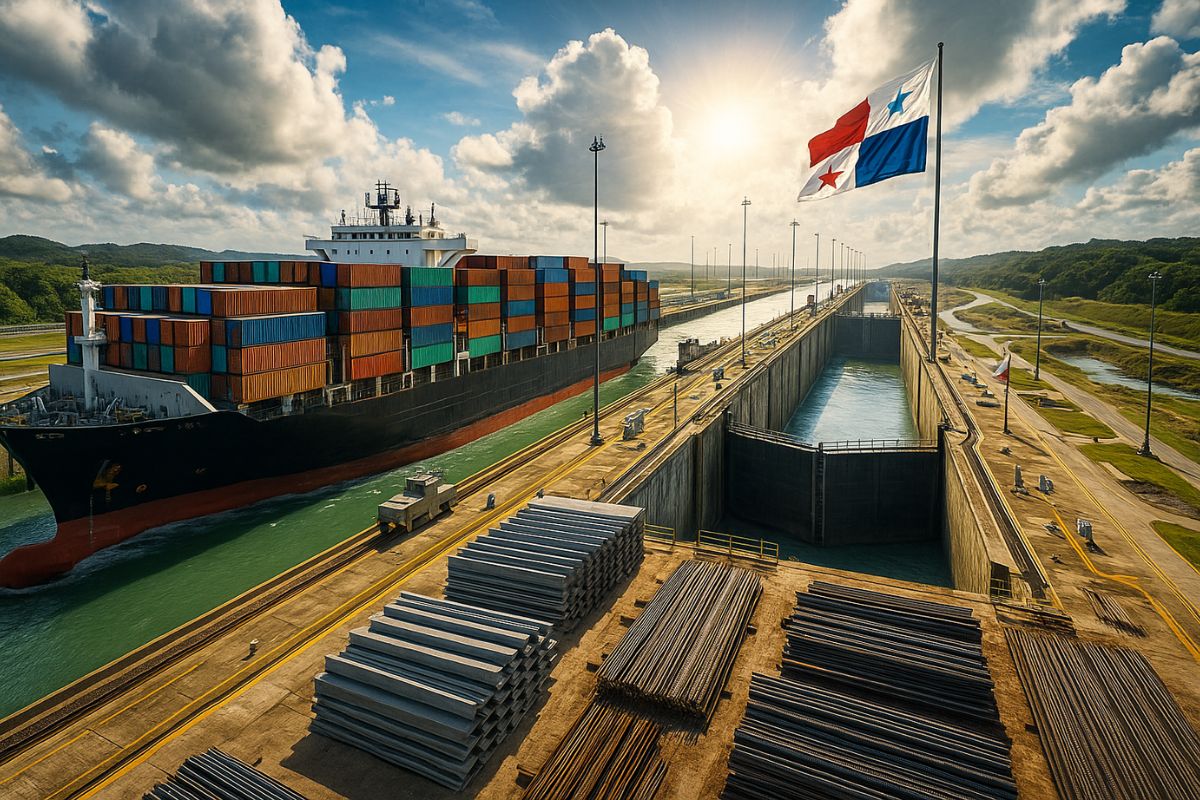
With Billion-Dollar Investment and a Workforce of 40,000 People, the Expansion of the Panama Canal Doubled Its Operational Capacity and Triggered a Logistical Transformation on a Continental Scale.
The expansion of the Panama Canal, inaugurated in 2016, represents one of the greatest milestones of modern engineering and global maritime trade. The US$ 5.25 billion project added a third set of locks and allowed the passage of so-called New Panamax ships, vessels 50% larger and with double the cargo capacity of the old standards.
The expansion not only consolidated the canal’s strategic role as a vital route between the Atlantic and Pacific Oceans but also sparked a chain reaction: ports throughout the Western Hemisphere needed to modernize to receive the new vessels, in a domino effect of investment and logistical reconfiguration.
A Centenary Landmark Rebuilt for the 21st Century
Originally completed in 1914, the Panama Canal took ten years to build and consumed over US$ 350 million, a monumental figure for the time.
-
50 viaducts, 4 tunnels, 28 bridges, and 40 kilometers of bike paths: BR-262 in Espírito Santo will receive 8.6 billion reais for the largest engineering project in the state’s history, inspired by the Immigrant Highway in São Paulo.

-
Brazil produces too much clean energy and doesn’t know what to do with it: over 20% of solar and wind capacity was wasted in 2025 while investors flee and 509 renewable generation projects were abandoned in the last year.

-
Piauí will produce a new fuel that replaces diesel without needing to change anything in the truck’s engine and reduces pollutant gas emissions by half: truck drivers from all over the Northeast are already celebrating the news that will arrive later this decade.

-
A new Brazilian shopping center worth R$ 400 million will be built in an area equivalent to more than 4 football fields, featuring 90 stores, 5 cinemas, a supermarket, a college, and parking for 1,700 cars, potentially generating 3,000 jobs.


The expansion, finalized 102 years later, involved 40,000 workers and a global-scale technical challenge: doubling the capacity of the route without interrupting the daily traffic of over 14,000 vessels per year.
With a length of 82 kilometers, the canal connects 1,920 ports in 170 countries and is responsible for shortening trade routes between Asia, the Americas, and Europe.
The average toll per ship reaches US$ 143,000, a value that reflects the economic impact of the route on global trade.
The Engineering Behind the Expansion
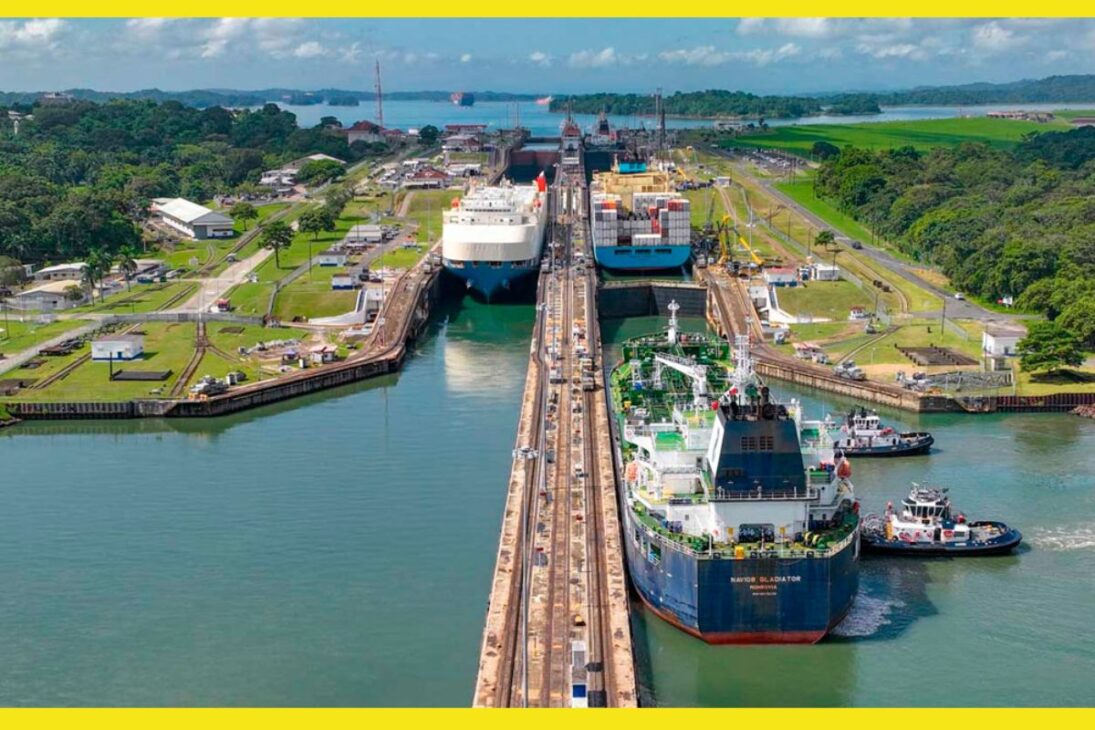
The heart of the expansion was the third set of locks, designed to elevate ships up to 366 meters in length, equivalent to nearly four football fields.
Each new lock functions as a gigantic hydraulic elevator, capable of moving vessels weighing hundreds of thousands of tons between the levels of Gatun Lake and sea level.
In addition to mechanical engineering, the project introduced side reservoirs that recycle up to 60% of the water used in each cycle, reducing dependence on the lakes and ensuring sustainable operation.
The result was an increase of more than 100% in annual cargo capacity, making the canal competitive against the Suez Canal and other intercontinental routes.
The Economic Impact on Global Maritime Trade
The expansion redefined global maritime trade by establishing the New Panamax standard, which forced a chain modernization of ports and logistical infrastructures across the American continent.
Port cities on the U.S. East Coast, such as New York, Miami, and Charleston, invested billions in dredging, bridges, and terminals to accommodate the new ships.
In Latin America, similar projects occurred in Colombia, Mexico, and Brazil, demonstrating how a single infrastructure upgrade can alter global logistical balance. This interdependence reveals the strategic power of a single maritime corridor in the contemporary international economy.
From Epic Construction to the Water Challenge
If the construction of 1914 was marked by a <strong/devastating human cost, the 2016 expansion was defined by financial challenges and contractual disputes. Nevertheless, it delivered what it promised: a canal ready for the 21st century.
Now, a new challenge looms: the water crisis. The canal relies on large volumes of freshwater from Gatun Lake to operate its locks, and recent droughts have reduced the number of daily transits.
This scenario is already prompting alternative plans, such as land interoceanic corridors in Mexico and Colombia, which try to compete for part of the logistical flow.
More than a century after its inauguration, the Panama Canal remains one of the most strategic hubs on the planet. Its expansion in 2016 demonstrated that infrastructure can be as crucial for global trade as the very goods it transports.
Today, the route symbolizes the central challenge of modern globalization: balancing economic efficiency, environmental sustainability, and management of finite resources.
Do you believe that the future of global maritime trade will continue to depend on routes like the Panama Canal, or will it be replaced by new logistical and technological alternatives? Share your opinion in the comments.










Seja o primeiro a reagir!