





 Portuguese
  English
  Spanish
  8 min of reading
  0 comments


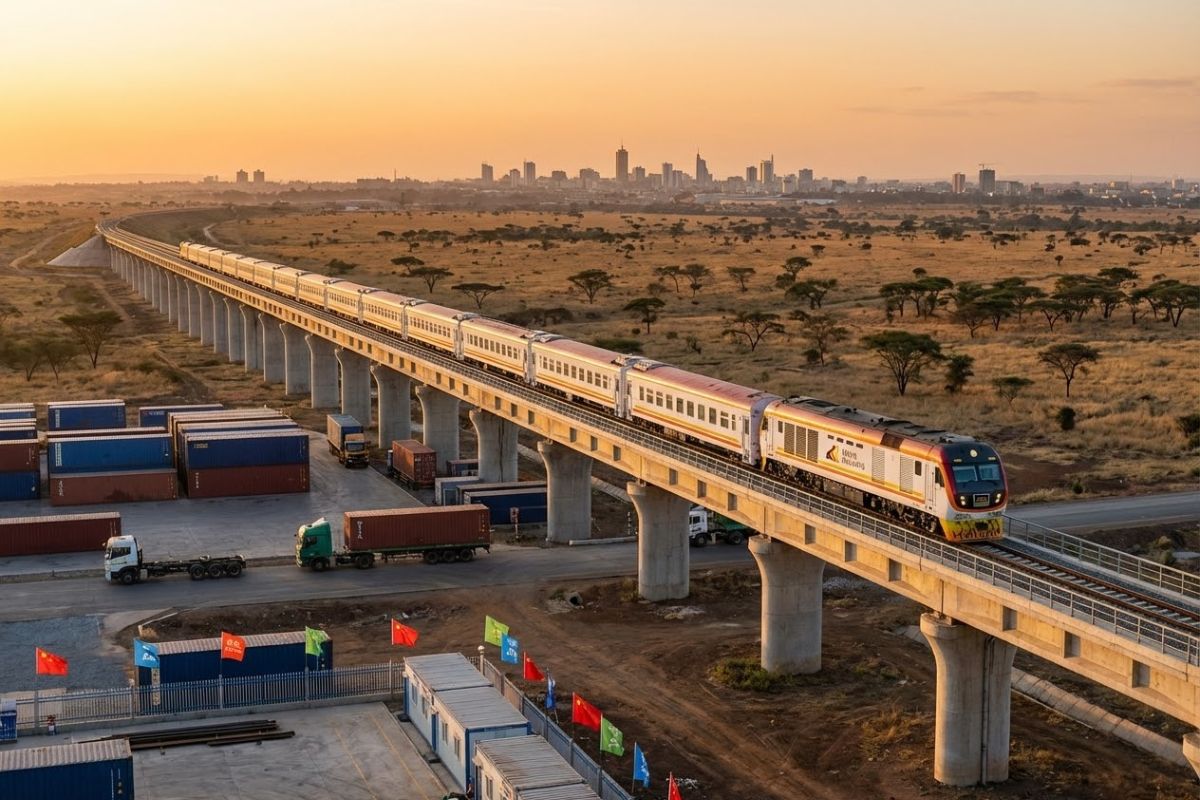
The Railway Built by Kenya with Financing from China Connected Mombasa to Nairobi in Record Time, Reduced the Trip for Passengers to About 4 Hours, Lowered Part of Freight Costs, Generated Thousands of Jobs and Put East Africa in Front of a Choice Between Urgency, Integration and Future Regional Debt.
The railway inaugurated by Kenya in 2017 was not just a new link between Mombasa and Nairobi. It came to represent a structural change in the way goods and passengers circulate within the country and, by extension, in part of East Africa, where access to the sea depends on efficient logistics corridors. The project shortened distances, accelerated shipments, and repositioned the debate on infrastructure in the region.
The central point is that this project was never limited to Kenyan territory. The participation of China, through construction and financing, inserted the railway into a broader plan for the integration of ports, cities, and trade routes. The result was immediate in transportation, but the underlying discussion remained open: how much does this advancement cost, who pays for it, and how long does the return really take to appear.
Why Kenya Decided to Invest in This Railway
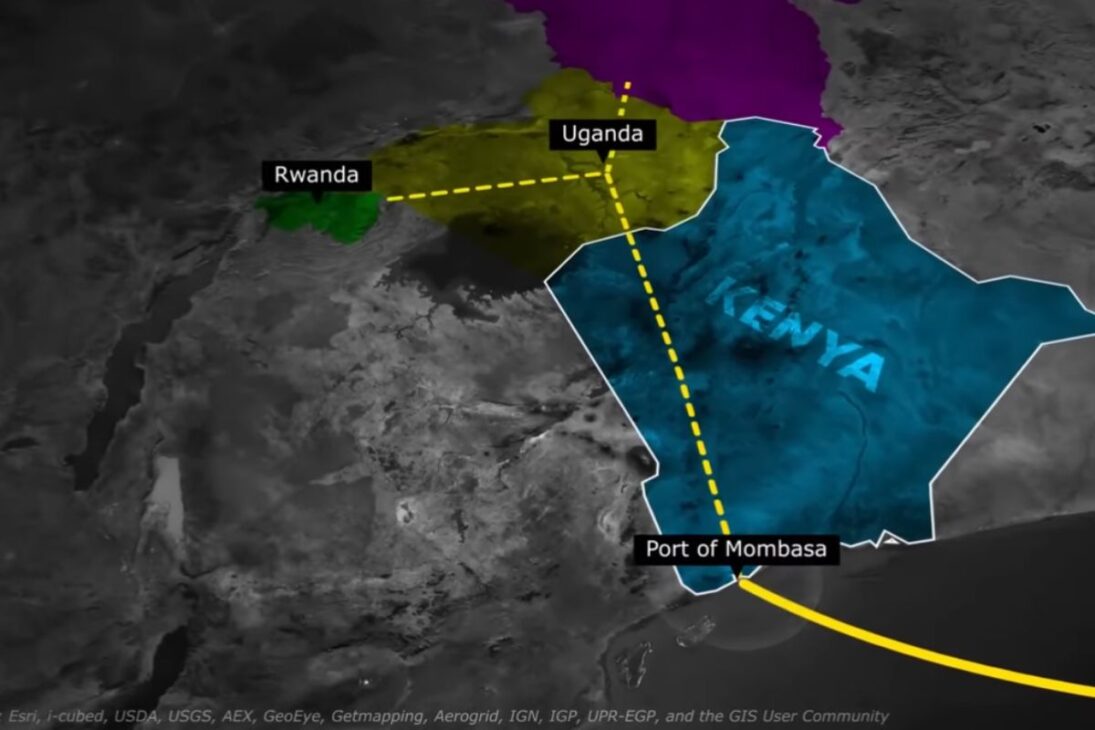
Before the new railway, Kenya’s logistics were pressured by excessive dependence on highways. Mombasa was the main entry point for goods coming from Asia, Europe, and the Middle East, and this flow needed to move to Nairobi and to landlocked countries such as Uganda, Rwanda, South Sudan, and parts of the Democratic Republic of the Congo.
-
New CCR concrete paving technology promises roads up to 3x more durable, less maintenance, and cost reduction in Brazil.
-
Made from recycled plastic, plastic wood is gaining space in the construction industry because it does not rot, resists moisture, and reduces maintenance costs over the years.

-
Florianópolis will receive a million-dollar BRT that will begin construction in 2026 with nearly 400 million in funding from the federal government and the Inter-American Development Bank, and the map already shows the routes for the exclusive bus corridors.
-
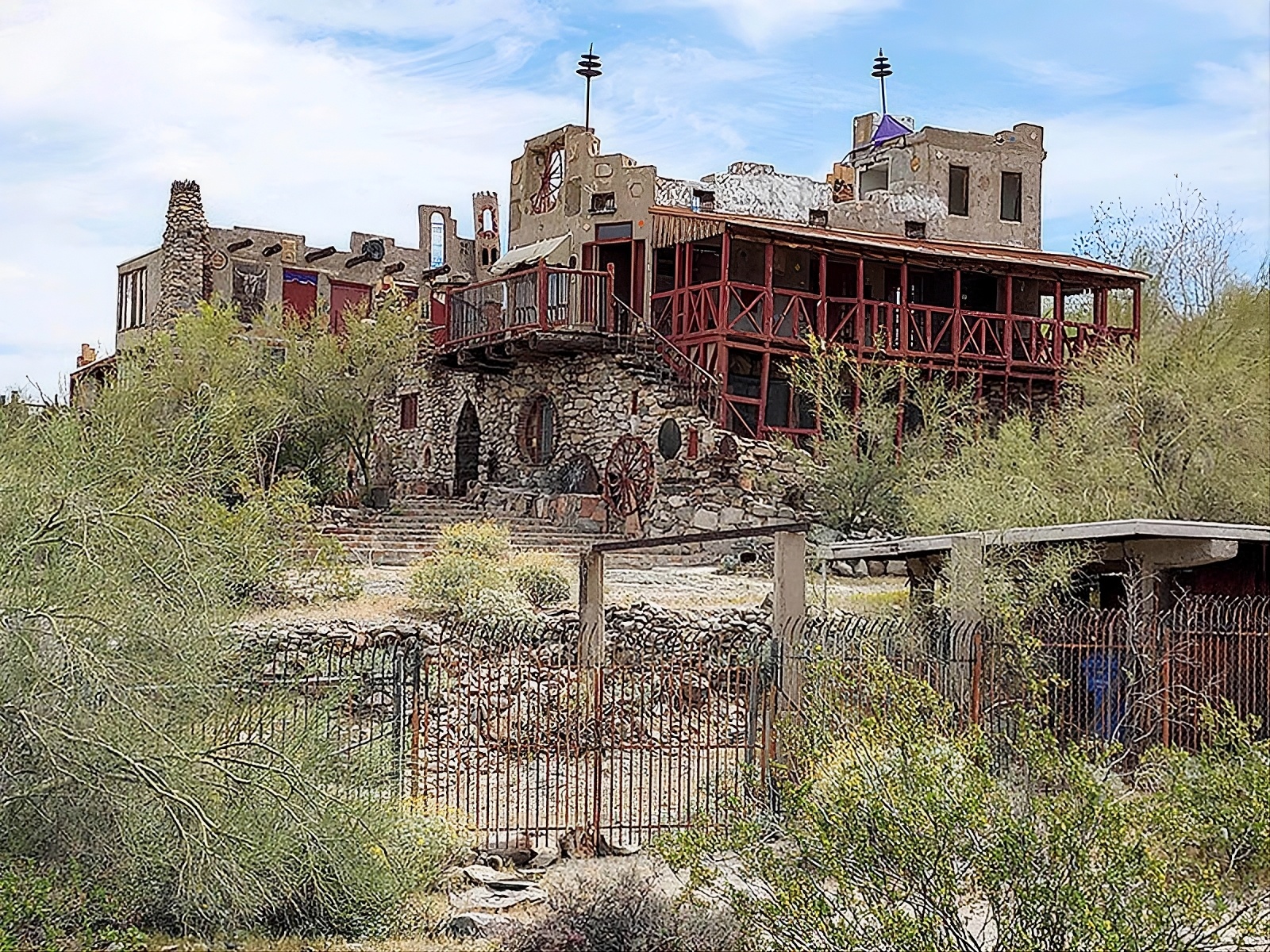
Without a blueprint, without an engineer, and using scrap from the dump, a father spends 15 years building an 18-room castle for his daughter, featuring tram tracks, 13 fireplaces, and over 700 m², which may now be demolished.

The problem was that most of this movement left the port by truck, causing long traffic jams, increasing accidents, and raising transportation costs.
The old railway line, inherited from the British era, was no longer sufficient for the volume of the modern economy. The narrow tracks, old locomotives, and low speeds meant that a freight train between Mombasa and Nairobi could take two days or more.
It was a slow system for a country that was growing and needed to move goods quickly. It was in this context that Kenya began seeking a standard gauge railway, capable of carrying more freight, operating with greater stability, and connecting the port to internal markets.
The decision also had regional weight. For East Africa, Mombasa is not just a national port. It serves as a strategic outlet for economies that do not have direct access to the sea. When this corridor gets blocked, it is not just Kenya that feels the impact. The entire regional chain wastes time, money, and predictability. The new railway emerged precisely as a response to this bottleneck.
How China Built the Railway in Just Three Years
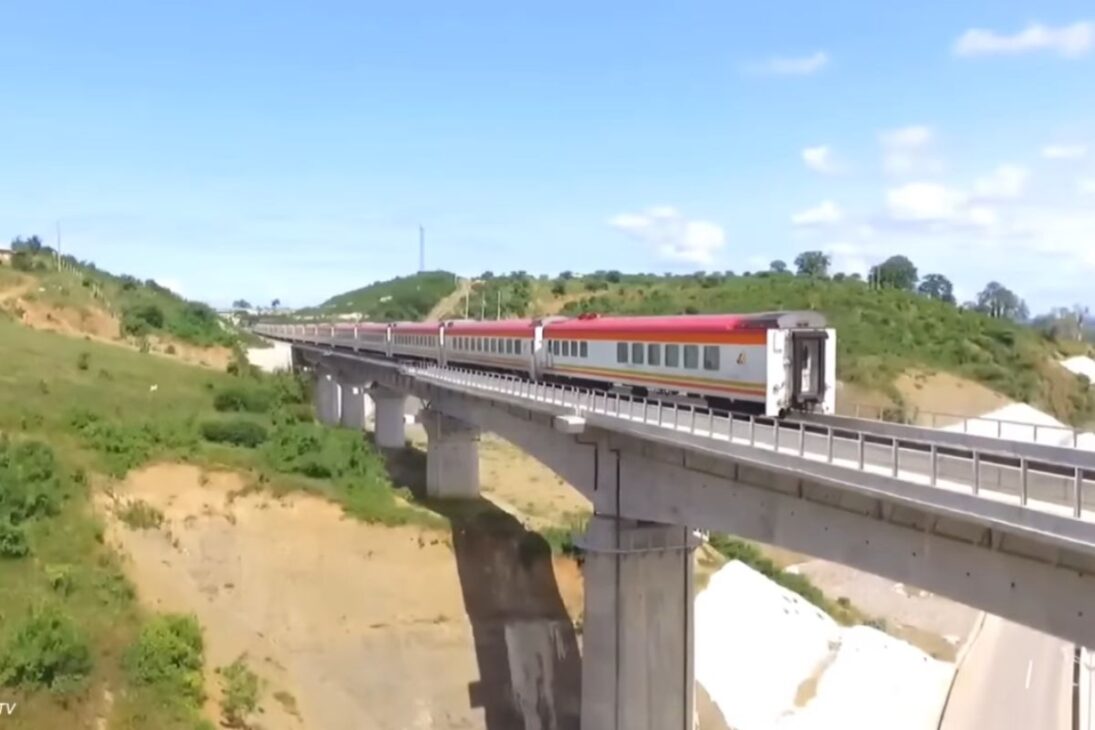
The construction of the railway was led by the China Road and Bridge Corporation and financed primarily by the Export-Import Bank of China, which covered 90% of the cost with loans.
The main line between Mombasa and Nairobi is about 472 kilometers long, and the subsequent extension to Naivasha added another 120 kilometers to the project. Combined, the two phases reached nearly US$ 5 billion. It was one of the largest infrastructure projects in the recent history of East Africa.
The speed of delivery helps explain why the project gained so much attention. At the peak of construction, over 25,000 workers were mobilized, including engineers, surveyors, machine operators, and support teams.
Instead of progressing slowly from one end to the other, crews worked on multiple segments simultaneously.
China also brought heavy equipment, pre-fabricated bridge parts, and prepared rail segments, which sped up the installation of the railway after the earthworks phase. The logic applied was industrial, almost assembly line.
That said, the route was not simple. The railway crosses Tsavo National Park, one of the largest wildlife reserves in Africa, which necessitated elevated bridges, wildlife crossings, dozens of large bridges, hundreds of smaller tunnels, and long viaducts over rivers and valleys. This detail shows that the short timeframe did not mean a lack of complexity.
The project was fast because financing, approval, and construction moved together, something that rarely happens at such a pace in similar projects.
What the Railway Changed in Transportation and the Economy of Kenya

In passenger transportation, the impact was direct. The journey between Mombasa and Nairobi, which used to take 10 to 12 hours, now takes about 4 hours.
The diesel-electric trains of the railway operate on standard gauge and reach speeds of approximately 120 km/h, well above the capacity of the old colonial line. This changed the scale of internal movement in Kenya, both in time and reliability.
In freight, the change appeared in speed and cost. Before the new railway, a container from Mombasa to Nairobi could cost around 1,000 by truck, depending on fuel and delays on the route.
With the new line, transportation of bulk goods dropped by about 30% to 40%, and each train now carries hundreds of containers per trip. Fewer trucks on the road mean less congestion, lower fuel consumption, and a more predictable supply chain.
The economic effect also spread beyond the tracks. During construction, the project created about 40,000 to 46,000 local jobs. Technicians from Kenya received training in railway maintenance, signaling, and operation, and some of this group began working in the system alongside engineers from China.
At the same time, suppliers of cement, steel, transportation, and services were driven by the demand of the project. Kenya’s GDP grew by about 5% per year during this period, also boosted by investment in infrastructure. The railway was not the only engine, but it was certainly one of the most visible.
Where the Harshest Criticism About Debt and Return Comes From
The main point of friction was never the engineering of the railway, but the financial model. From the beginning, the question was simple: how would Kenya pay for a project of this scale primarily financed by loans?
Supporters of the project argued that this is common in heavy infrastructure, and that highways, ports, and railways are often funded with public debt. The problem arises when revenue takes longer than expected to mature.
It was precisely here that criticism grew. Kenya’s public debt rose from about 42% of GDP in 2013 to over 60% in just a few years.
The railway was not the only factor in this increase but was among the largest projects of this cycle. Economists began to question whether freight demand had been overestimated and whether the revenue from the line would be sufficient to cover the commitments made.
A project can be useful and still carry a burdensome financial cost for a long time.
In this environment, rumors began to circulate that China could take control of the port of Mombasa in case of default. According to the available evidence, there is no evidence of this clause in the contract, and Kenyan authorities denied this possibility.
Nevertheless, the narrative gained traction because it touched on the heart of the discussion about Chinese presence in Africa. Later, Kenya renegotiated terms to ease payments, something common in large infrastructure loans.
The real critique, therefore, is not only ideological. It revolves around timing, cash flow, and payment capacity.
Why the Railway Only Changes All of East Africa if It Becomes a Network
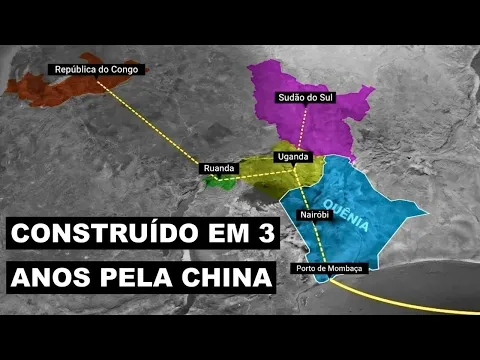
The original ambition was never to stop in Nairobi or even in Naivasha. The plan of Kenya was to transform the railway into the axis of a larger network, connecting East Africa to Uganda and from there reaching Rwanda, South Sudan, and eastern Congo.
For landlocked countries, a faster railway corridor to Mombasa would reduce costs and time throughout the trade chain. An isolated line helps, but an integrated network changes the whole game.
This logic explains why the regional impact is still partial. Kenya started dry ports near Naivasha to facilitate the transfer of containers and planned industrial parks along the railway, aiming to attract factories dependent on stable logistics.
However, expansion has stalled. Uganda suspended its part of the project after reviewing costs, and the financing environment became more difficult with rising debts and interest rates.
Without international continuity, the volume of freight fell below what was anticipated for full operation. The infrastructure exists, but the regional scale has not yet arrived intact.
This point is crucial to understand why Kenya’s railway can be seen, at the same time, as a progress and an incomplete bet. Within the country, the gains are concrete.
In East Africa as a bloc, the potential still depends on connections that have not been completed. The corridor improved Kenyan transportation, but has not yet delivered everything it promised for the region. Without integrated railway borders, part of the journey remains in the hands of trucks.
What This Project Reveals About China’s Strategy Outside Its Territory
The Kenyan railway fits into a larger pattern of China‘s involvement in international infrastructure. The method combines financing, construction, equipment, and training into a single package, which accelerates delivery in countries that do not have a significant railway industry of their own.
This formula has also appeared in other connections mentioned in the database, such as Addis Ababa-Djibouti, Laos-China, and Jakarta-Bandung.
The central difference lies in the speed with which the project goes from paper to operation.
This does not mean that all problems disappear after inauguration. Experience shows that many railways struggle to generate robust revenue in the first years, especially when the network is still incomplete.
In the case of Kenya, this tension became evident early on: the railway delivered real logistical gains but still operates under pressure to prove, in the long run, that its financial burden will be compensated by growth, trade, and regional integration.
Speed in construction does not alone solve the economic equation.
The balance, therefore, is mixed but far from irrelevant. The railway has already transformed transportation in Kenya, shortened the time between Mombasa and Nairobi, reduced some logistical costs, and improved the circulation of goods.
At the same time, the promise to transform all of East Africa still depends on physical continuity, operational scale, and economic maturation.
It was a project that changed a lot, but has yet to prove everything it promised.
The railway of Kenya financed by China cannot be treated as an easy failure nor as an automatic success.
It delivered speed, capacity, and infrastructure where there was a historical bottleneck but also left a heavy bill and a return that depends on time, expansion, and financial discipline.
For East Africa, the transformation has begun but is still incomplete.
In your opinion, was this project a necessary strategic bet or too great an advance for a regional network that is still not ready?








-

2 pessoas reagiram a isso.