





 Portuguese
  English
  Spanish
  3 min of reading
  1 comment


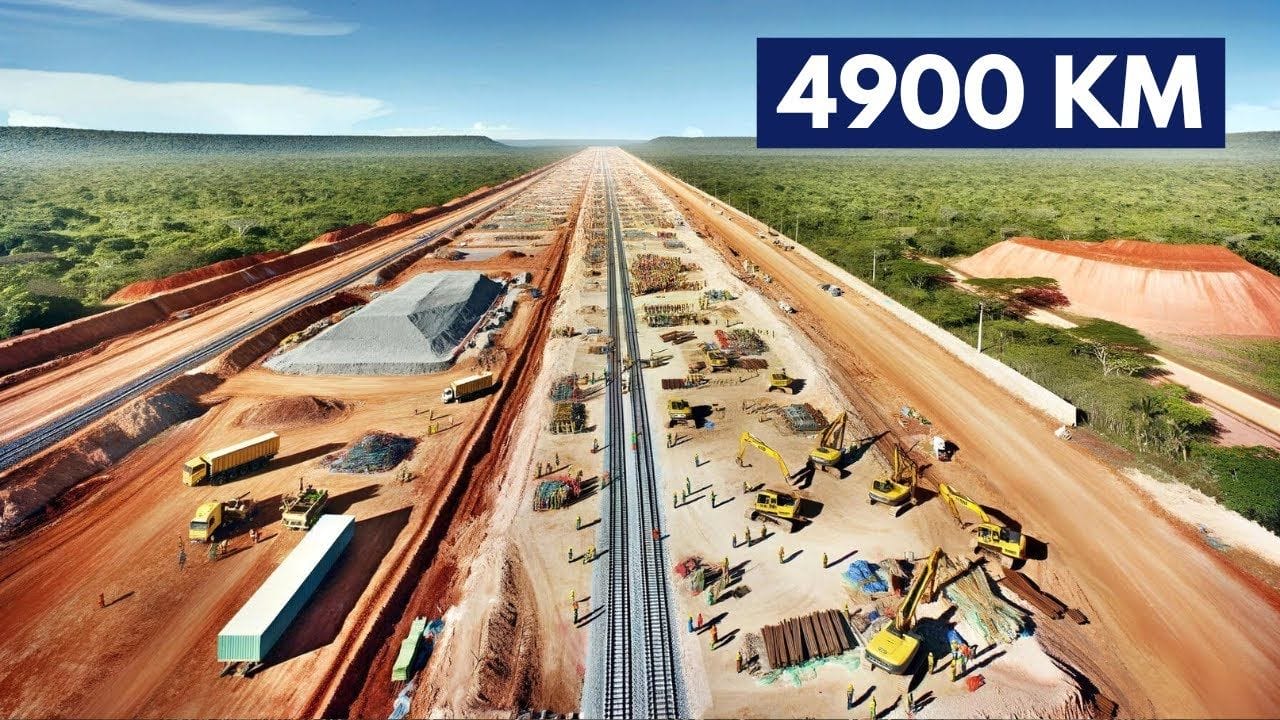


Trans-Oceanic Railway, The Ambitious Partnership Between Brazil, Peru, And China Redefines The Future Of South American Commerce.
The physical distance between South America and China may be approximately 17,000 km, but economic partnerships shorten these spaces, bringing these regions closer than ever. An emblematic example of this approach is the Trans-Oceanic Railway project, an ambitious initiative that sees Brazil, Peru, and China joining forces to redefine negotiation dynamics between South American and Asian countries. This project not only symbolizes international cooperation but also highlights China’s position as a driving force in the global trade and investment landscape.
China’s Role, A Giant In Global Development

In recent years, China has solidified its status as a global economic power, with an impressive expansion that now seeks to encompass South America through the Trans-Oceanic Railway. The Belt and Road Initiative (BRI) has already demonstrated China’s ability to connect distant regions, promoting trade and cultural exchange. Now, by focusing on South America, China aims not only to consolidate trade partnerships but also to invest in infrastructure projects that promise to transform the logistics and economy of the continent.
Economic And Logistical Impacts Of The Trans-Oceanic Railway
Economic cooperation between China and South America has grown exponentially, with trade volume exceeding $490 billion. The Trans-Oceanic Railway is a step forward in this relationship, offering a new route for trade that can shorten distances and significantly reduce costs. By connecting Brazil to the Pacific Ocean, the project benefits not only the nations directly involved but also has the potential to positively impact the entire South American region, facilitating access to Asian markets and vice versa.
-
Florianópolis will receive a million-dollar BRT that will begin construction in 2026 with nearly 400 million in funding from the federal government and the Inter-American Development Bank, and the map already shows the routes for the exclusive bus corridors.
-
Without a blueprint, without an engineer, and using scrap from the dump, a father spends 15 years building an 18-room castle for his daughter, featuring tram tracks, 13 fireplaces, and over 700 m², which may now be demolished.

-
A megaproject worth R$ 89 billion is advancing in Iraq and promises to change the game in global trade by creating a new corridor between Asia and Europe, reducing traditional routes and repositioning the country as a logistics powerhouse.

-
Goodbye bedside table: floating shelves become a trend in 2026 by freeing up space in the bedroom, improving circulation, bringing visual lightness, and integrating technology without taking up floor space.


Despite the evident benefits, the project faces considerable logistical and financial challenges. Building a railway that crosses the diverse geography of South America, including the Amazon Rainforest and the Andes Mountains, requires significant investment and careful execution. However, China’s expertise in large-scale infrastructure projects suggests that these obstacles can be overcome, paving the way for a new era of more integrated trade and cooperation between South America and Asia.
A Partnership For The Future
The Trans-Oceanic Railway project is a manifestation of the globalized world we live in, where physical distances are shortened by shared vision and cooperation among nations. With China at the helm of this ambitious project, South America stands on the brink of a new era of connectivity that promises to bring substantial economic benefits, redefining trade routes and strengthening international ties. As the project progresses, it not only symbolizes the partnership between China and South America but also serves as a testament to the power of transcontinental collaboration in building a shared future.
History Of China’s Expansion In Brazil

From 2007 to 2020, China has been a central figure in the Brazilian economic landscape, highlighting its role as one of the leading foreign investors in the country. With extensive investments spanning vital sectors such as electric power, oil and gas, mining, manufacturing, infrastructure, agriculture, and financial services, China leaves its indelible mark on Brazilian economic development. Companies like State Grid and China Three Gorges exemplify this influence by having significant operations in Brazil, a clear manifestation of the Chinese global strategy to establish lasting economic partnerships.
In a strategic move to solidify such cooperation, the governments of China and Brazil created the China-Brazil Fund in 2017, endowing it with $20 billion primarily aimed at infrastructure and industrial development projects. This fund symbolizes China’s commitment to supporting Brazilian economic growth, particularly in strategic sectors that include railways, a critical element for the country’s logistical and commercial efficiency.
The history of Chinese investments in Brazil and the partnership for the Trans-Oceanic Railway are testaments to the growing global economic interdependence. While China seeks to expand its influence and secure access to essential resources, Brazil benefits from investment in critical infrastructure and the strengthening of its international trade connections. As this project advances, it not only redefines trade routes but also reaffirms the importance of collaborative strategies for sustainable development and mutual economic growth.








USD 490 Bilhões para 17 mil km, dá 28.8 mil dólares POR METRO, ou seja, R$ 161.500 por metro. Dá pra Construir 1 casa pra cada Metro!!! Se o Brasil firmar esse acordo vamos DOBRAR a Dívida Externa. E o PT vai Roubar dezenas de Bilhões facinho e deixar o Brasil Refém da Xina.