





 Portuguese
  English
  Spanish
  4 min of reading
  0 comments


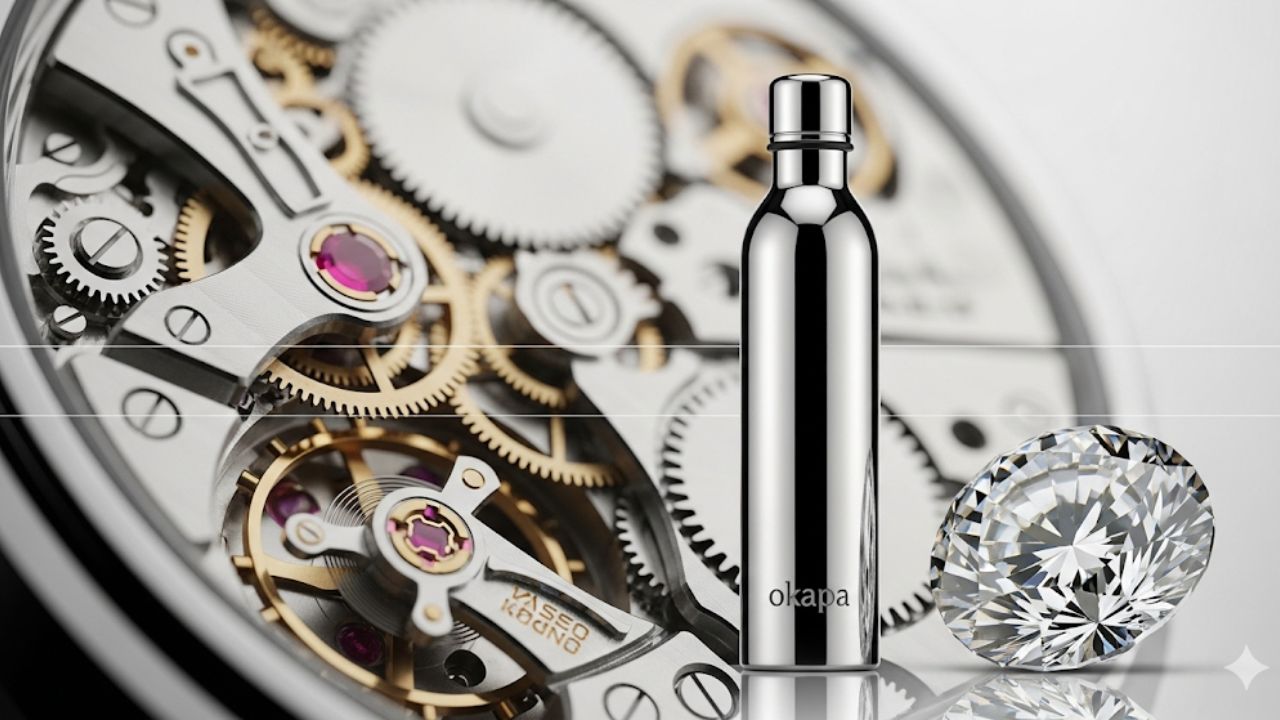
With 71 Patents and 10,000 Prototypes, the Okapa Bottle Aims to Transform Luxury Hydration into Reality.
A new water bottle has hit the market costing US$ 300 (about R$ 1,600). It promises to be the best-designed one yet. The product is the result of 10 years of work, 71 patents, and 10,000 prototypes. The goal is to make luxury hydration a reality in the competitive market of 2025.
What Justifies the Price of This Luxury Water Bottle?
Hardy Steinmann is the creator of the Okapa water bottle. The design company Ideo helped bring the project to life. Steinmann has spent the last decade in a quest to create the perfect luxury water bottle. The Okapa underwent rigorous testing, including a drop test directly onto concrete.
After the impact, the bottle bounced but remained intact. The sophisticated anodized aluminum structure sustained some dents. However, the custom German borosilicate glass inside remained unscathed. The medical-grade components of the design also sustained no damage.
-
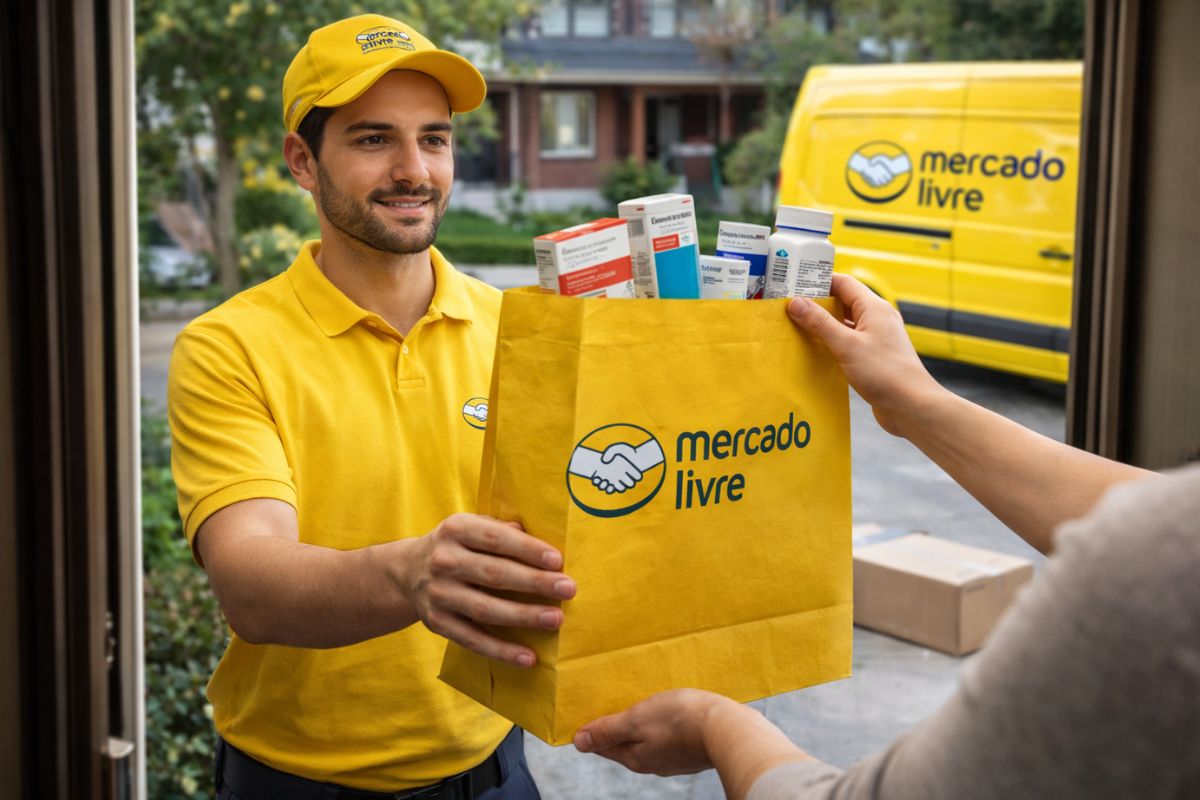
Mercado Livre has just started selling medications with delivery in up to three hours to your door, and this move could completely change the way Brazilians buy medicines on a daily basis.
-
In Dubai, rising tensions from the war in the Middle East are causing super-rich individuals to leave the Gulf and direct their fortunes to a new financial refuge in Asia.

-
“No one will make us change the Pix,” says Lula after the US report.

-
Lula responds directly to Trump and says that Pix is from Brazil and will not change under pressure from anyone, after a report from the United States pointed out the Brazilian payment system as an American trade barrier.

Hardy Steinmann’s Vision: The Water Bottle as a Status Symbol
The Okapa packaging proclaims that it is a “technical feat of engineering beyond reason.” Steinmann, a 69-year-old Swiss creative, never wanted to launch a common bottle. He has experience with luxury brands like Hublot and Swatch Group USA.
About 20 years ago, he had an epiphany about water bottles. “I said, ‘This is going to be a status symbol‘”, he recounts. “I said, ‘You’re going to have this with you, like a watch, sunglasses…'” He was right. The reusable water bottle market hit US$ 9.7 billion in 2024.
Steinmann says that, unlike cars or watches, there’s a lack of high-quality offerings in this market. He believed that existing bottles were prone to odors and bacteria, made with cheap components, and often leaked.
A Design Focused on Hygiene and High-End Materials
In 2015, Steinmann decided to create his own bottle. The inspiration came from a small Japanese perfume vial, made of glass and aluminum-coated. The Okapa project (named after a place where Steinmann worked) avoided common materials.
Microplastics are a current concern. According to the entrepreneur, steel bottles can also have issues, developing porosity where bacteria can thrive. Therefore, Okapa opted for medical-grade borosilicate glass. This material stands out for its lack of porosity and high shock absorption.
The design is complex. The inner glass bottle is suspended between two silicone dampeners. It floats without touching anything, a solution compared to a luxury watch mechanism. The outer structure is made of lightweight aluminum. The bottle is modular, with eight recyclable pieces. They can be quickly disassembled for cleaning, like Lego pieces.
Precision Engineering and the Temperature Challenge
The Okapa reinforces its focus on hygiene. The lid is made from food-grade Grilamid TR90. The button, latch, and other mechanisms use Nitronic 60 stainless steel, which is corrosion-resistant and used in the medical field. The hinge features a titanium internal pin. It opens with a touch and stays back, without hitting the user’s nose.
The spout was designed to be pleasant and opens with a click for easy cleaning. The entire unit fits in car cup holders and allows for one-handed operation.
However, the water bottle does not have the same thermal insulation as competitors. Steinmann refutes the criticism. “You can actually drink boiling coffee [in an Okapa], but, to be fair, you need to drink it in two to three hours.
The Challenge for Okapa: Conquering the Competitive Bottle Market
The current market is dominated by brands like Stanley and Owala. Okapa had a discreet launch. Steinmann states it was a strategic decision. “I wanted to launch it as the best-kept secret“, he says. “I believe that with a price of US$ 295, you can’t just hit people over the head. You let them ‘soak’ it in. There’s an educational process.”
The company will now focus on social media and influencers. The aim is to foster a “cult following” around the brand. Thomas Overthun from Ideo believes it will be a slow build. Time will tell if Steinmann’s tenacity will turn Okapa into a true luxury item.






Seja o primeiro a reagir!