





 Português
  Inglês
  Espanhol
 4 min de leitura
  0 comentários


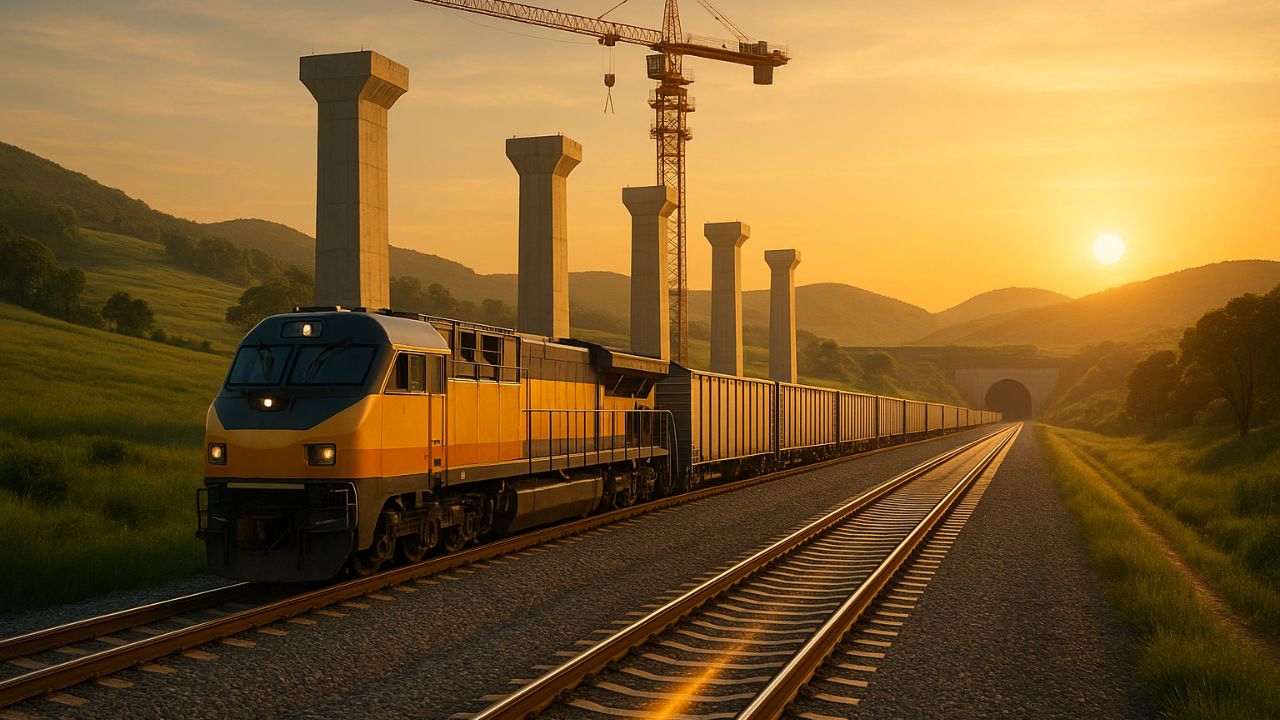
An Ambitious Project Of More Than 3,000 Km Of New Railways Promises To Revolutionize Freight Transport In Paraná, Santa Catarina And Rio Grande Do Sul, Boosting The Economy And National Logistics.
A silent, yet massive transformation is about to begin in southern Brazil. An ambitious railway construction project promises to radically change how goods are transported across three states that are fundamental to the national economy. This could be the spark for a new era of logistics in the country.
More Than 3,000 Km Of New Rail Construction In The South
Southern Brazil is preparing for a radical change in its transport infrastructure. The proposal involves the construction of more than 3,000 km of new railways. These lines will connect Paraná, Santa Catarina, and Rio Grande do Sul. The goal is to link productive regions in the interior to strategic ports on the coast. This will create a modern alternative to road transport, which is dominant in the region. On paper, they are just lines. In practice, these tracks could redefine the transport of grains, minerals, wood, containers, and manufactured goods. As highlighted by Canal Construction Time, presented by Luciano Guimarães, this expansion of tracks is a game changer for national logistics.
Paraná, Santa Catarina And Rio Grande Do Sul At The Forefront Of Change
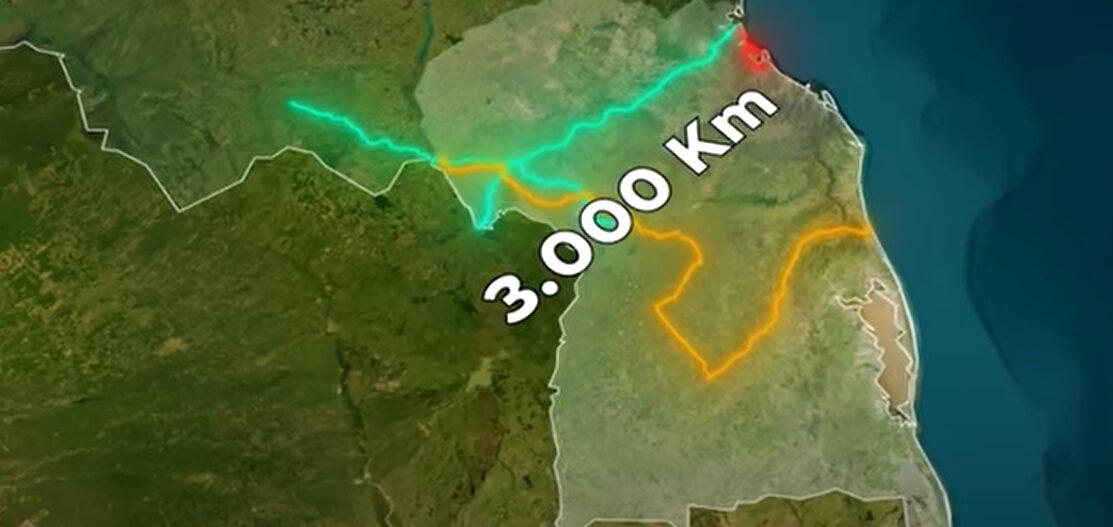
In Paraná, the main axis is Nova Ferroeste. There are 1,567 km planned. The route starts in Maracaju (MS) and moves through Paraná cities like Cascavel, Guarapuava, and Ponta Grossa, reaching the port of Paranaguá. There will be two branches: one between Foz do Iguaçu and Cascavel, connecting to Paraguay, and another to Chapecó (SC). According to the Paraná government, it will be the second largest export route in the country, handling up to 38 million tons per year. This is equivalent to removing more than 1.5 million trucks from the roads annually. The travel time between Cascavel and Paranaguá will decrease from 5 days to 20 hours. Nova Ferroeste will also strengthen the protein chain, as Paraná and Santa Catarina account for 71% of Brazil’s pork exports and almost 70% of chicken exports. About 9 million people will benefit directly.
-
A megaproject worth R$ 89 billion is advancing in Iraq and promises to change the game in global trade by creating a new corridor between Asia and Europe, reducing traditional routes and repositioning the country as a logistics powerhouse.

-
Goodbye bedside table: floating shelves become a trend in 2026 by freeing up space in the bedroom, improving circulation, bringing visual lightness, and integrating technology without taking up floor space.

-
Israel, Greece, and Cyprus signed an agreement in 2020 to transport gas from the Mediterranean to Europe via a 1,872 km pipeline, but Turkey claimed sovereignty over part of the maritime route, and the project never materialized.
-
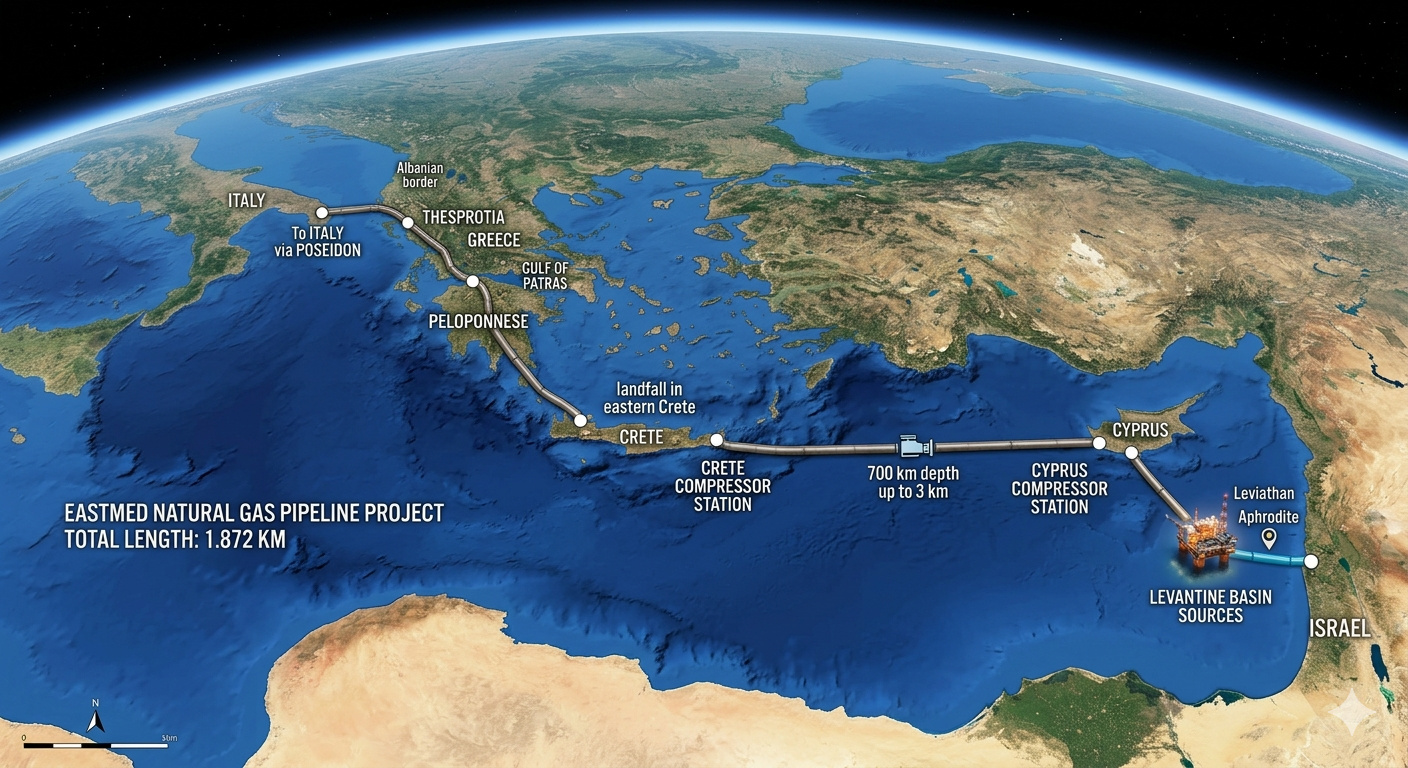
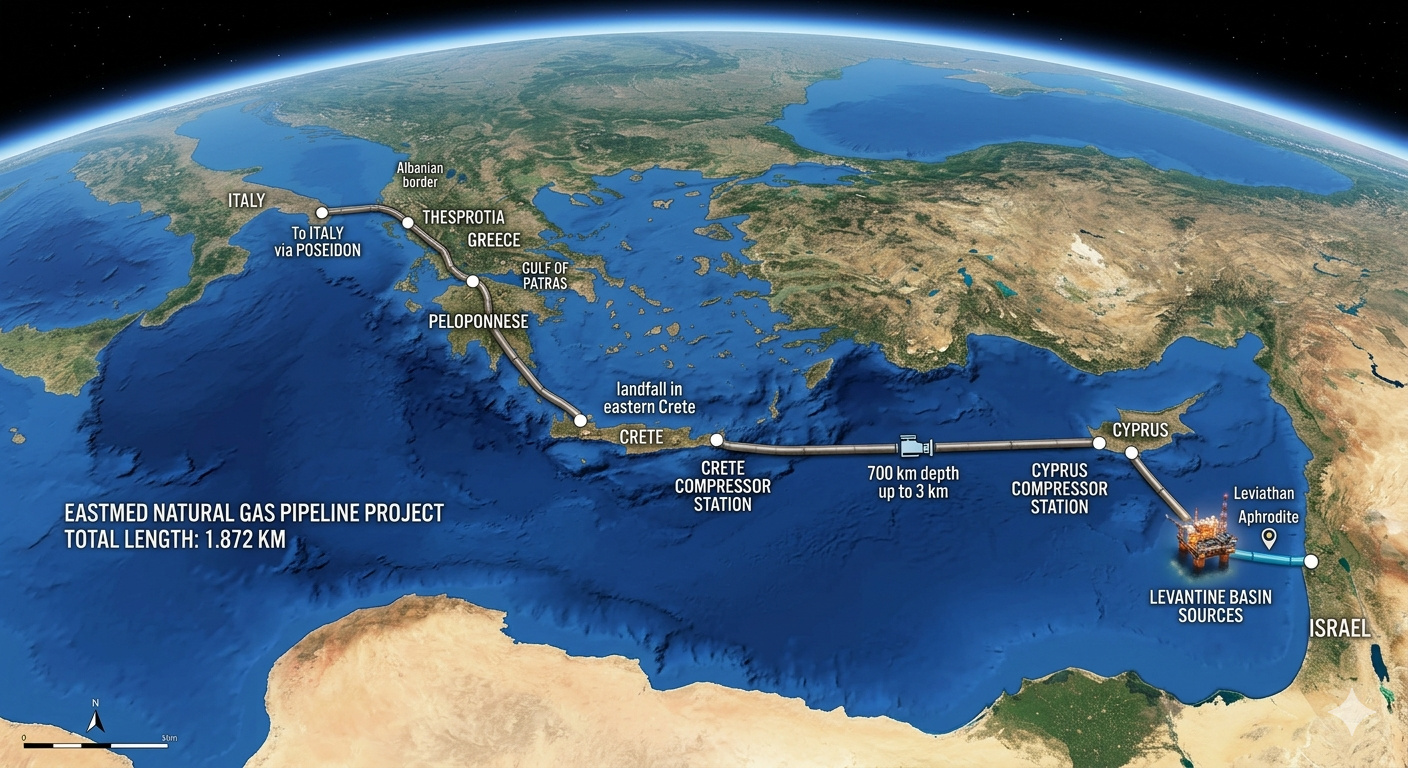
Israel, Greece, and Cyprus signed an agreement in 2020 to transport gas from the Mediterranean to Europe via a 1,872 km pipeline, but Turkey claimed sovereignty over part of the maritime route, and the project never materialized.

In Santa Catarina, the focus is on the railway connection to the port of Itapoá. This port handles 70,000 containers per month. The proposal includes two new stretches: Itapoá-Araquari (113 km) and Itapoá-Morretes (83 km), the latter crossing the border with Paraná. These connections are strategic, as the port of Itapoá prepares to operate with ships that are 366 meters long.
In Rio Grande do Sul, the plan is to build a 1,549 km railway. It will connect Terra Roxa (PR) to the coastal area of Rio Grande do Sul in Arroio do Sal. There, a new port is expected to be constructed with a federal investment of R$ 1.3 billion. This railway will be the largest transversal axis in the south.
The Progress Of The Railway Expansion Construction
The execution of the projects is at different stages. Nova Ferroeste has already gone through impact studies. It is now in the environmental licensing and modeling phase for concession. The auction is scheduled for 2025, according to the Paraná government. The railway connections in Santa Catarina and the Terra Roxa-Arroio do Sal railway have been submitted to ANTT (National Land Transportation Agency) by private companies. These companies are seeking authorization to develop studies on technical, economic, and environmental viability. All projects are part of the new PAC (Growth Acceleration Program), which ensures priority and coordination with federal resources. The routes are mapped, studies are underway, and the investment is in the billions.
The Future Of Integrated Logistics In Brazil
This new railway network will form a kind of backbone of tracks in the south. The idea is for trains to replace trucks on long routes. Road vehicles would be responsible for short and urban stretches. What is taking shape is a real attempt to reorganize the logistics base of one of the most productive regions in the country. With fewer trucks on the highways, a more fluid traffic and a more stable and modern transport chain is expected. Products should arrive faster, with fewer losses and environmental impacts.
Of course, such projects raise discussions. They are bold and involve billions in funding. In Brazil, the distance between announcing a project and its completion is not always measured in kilometers. However, the expectation is that southern Brazil will leave the “asphalt century” to enter the era of integrated logistics, with the rails returning to the spotlight. The largest railway expansion construction in the history of southern Brazil is moving from a plan to becoming a reality.








Seja o primeiro a reagir!