





 Português
  Inglês
  Espanhol
  3 min de leitura
  10 comentários


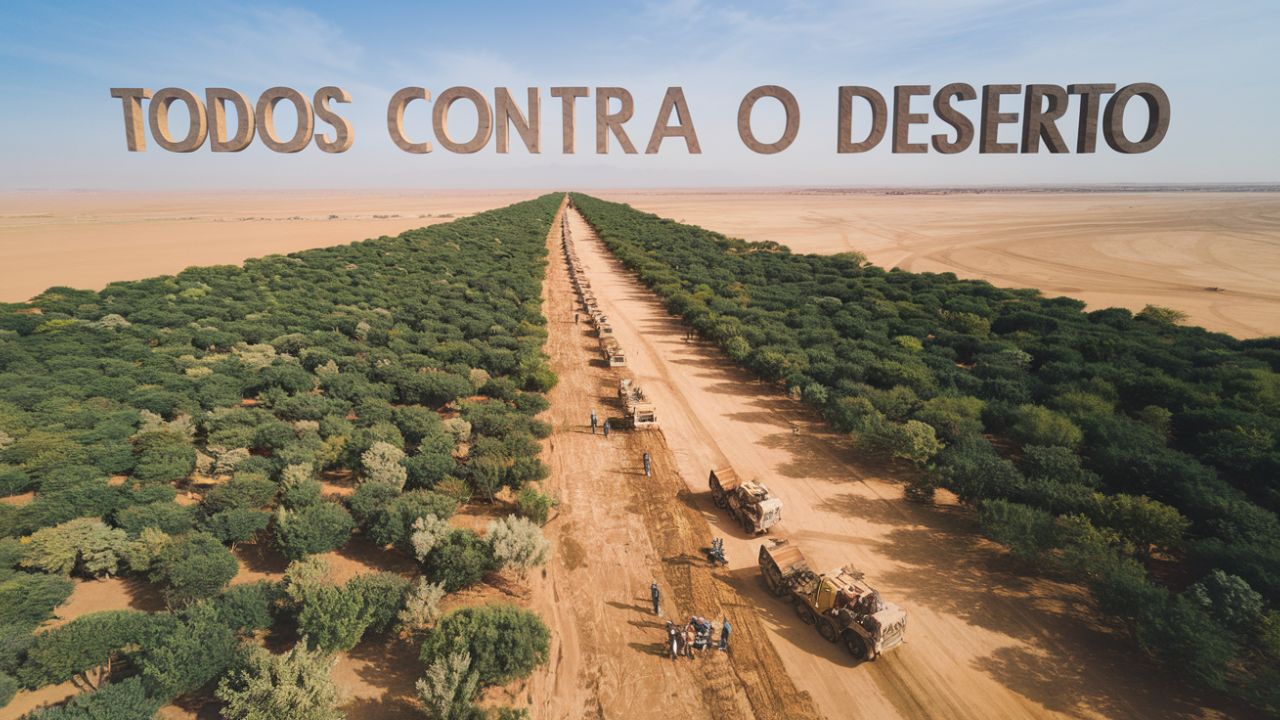


With over 6,437 kilometers in length, this megaproject seeks to restore 100 million hectares, create 10 million jobs, and capture 250 million tons of CO₂ by 2030, transforming life in the Sahel.
Desertification is a silent threat that gradually devours fertile land and destroys entire ecosystems. In the heart of the African continent, the expansion of the Sahara Desert challenges the survival of millions of people. But an audacious idea is changing this scenario: the Great Green Wall, a megaproject that promises to transform the continent and inspire the world.
Since its conception in 2007, this project aims to plant a “living wall” of trees along the Sahel, a strip that spans 22 African countries, totaling over 6,437 kilometers. But why is this project so important and how is it progressing?
The Context of Desertification and the Expansion of the Sahara
Imagine losing a farmland area the size of an entire city every year. This is what desertification causes in the Sahel. The Sahara Desert, which has already grown by about 10% since 1920, continues to advance at a rate of 62.76 kilometers per year, impacting agriculture, the environment, and food security.
-
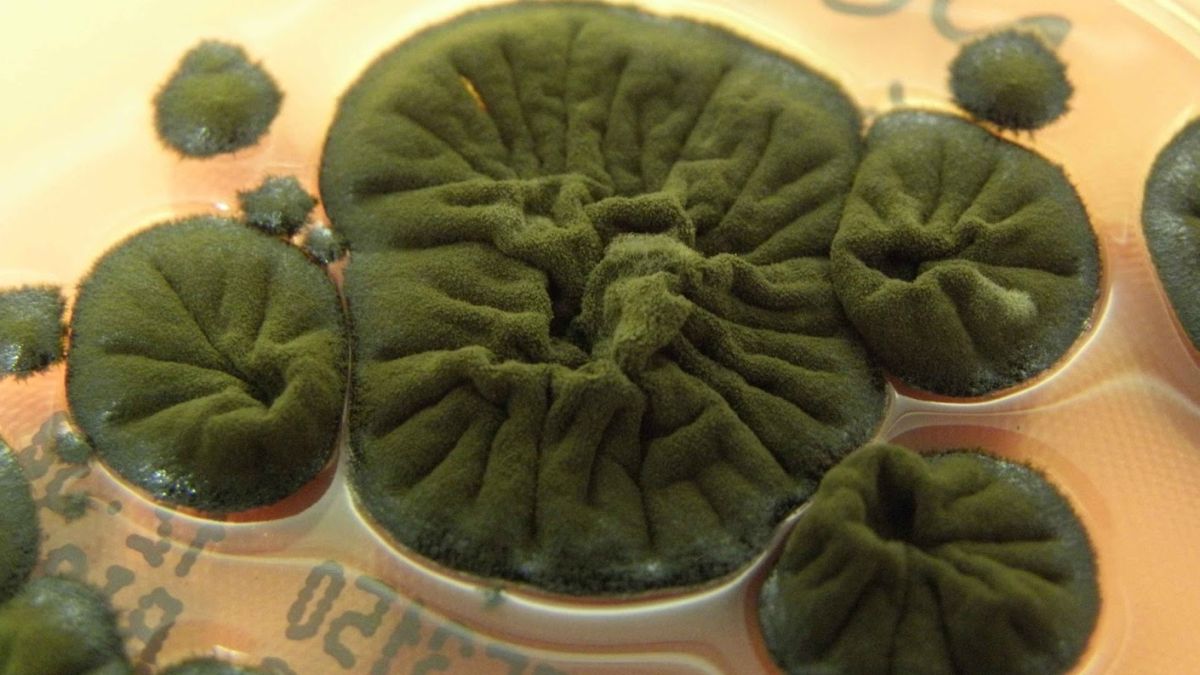
Found in one of the most radioactive places on Earth, this Chernobyl fungus may be doing something with radiation that no one has been able to explain to this day.
-
A bright yellow mushroom imported from Asia escaped from a cultivation farm in the United States in 2010 and is now aggressively spreading across 25 states, destroying entire communities of native fungi in American forests.

-
Buried under China, a colossal machine weighing 20,000 tons began operating as the largest neutrino detector on the planet and, in just 59 days, surpassed results that science took half a century to achieve.

-
Iran enters the center of a climate alert after the war emitted 5.6 million tons of CO2 in two weeks, surpassing the annual pollution of entire countries.


The loss of fertile land means smaller harvests, food scarcity, and increased poverty. And with the population of the Sahel projected to double by 2039, the challenges only increase. It was in this context that the idea of the Great Green Wall was born.
The Megaproject of the Great Green Wall

The megaproject of the Great Green Wall is much more than a belt of trees. It is an ambitious response to the environmental and social challenges of the region. Initially planned to be 14.5 kilometers wide and nearly 7,800 kilometers long, the initiative has expanded to include restoration actions in various African nations.
- Restore 100 million hectares of degraded land by 2030.
- Capture 250 million tons of carbon dioxide.
- Create 10 million jobs, generating hope in local communities.
This is a true race against time to save the Sahel, drawing inspiration from previous projects such as Algeria’s Green Dam and China’s Green Wall, which faced similar challenges.
Results Achieved So Far
Although the road is long, the first fruits of the megaproject are already beginning to appear. In Burkina Faso, more than 15 million trees have been planted, restoring nearly 35,000 acres. In Senegal, the number exceeds 1.4 million trees, while in Ethiopia approximately 8,900 acres have been recovered.
Partnerships like the one with Ecosia have been essential. This eco-conscious search platform mobilized local communities, proving that small actions can generate significant impacts.
However, by 2023, only 18% of the restoration goal had been reached, highlighting the challenges the project faces.
Challenges and Future Prospects
Like any megaproject, the Great Green Wall is not without difficulties. Broken promises, poor coordination, and lack of funding have delayed progress. Even so, the goal for 2030 remains: restore the Sahel and transform the lives of millions of people.
Will this “green wall” be able to fulfill its role? With more international support, greater local engagement, and innovative solutions, the chances are promising.
The Great Green Wall is more than a project; it is a symbol of hope and resilience. If successful, it will not only halt the desert’s advance but also bring new life to the heart of Africa.
This megaproject reminds us that, even in the face of the greatest challenges, solutions begin with small steps — or, in this case, trees. May this wall continue to grow and inspire the world!







It looks that this project may be a myth. Which is unfortunate, because the idea is great. However, here is some more context showing that the realization of the Great Green Wall is very far from the stated objective.
E viva a ciência e a tecnologia confuciana.
Todas as cidades do Brasil e no mundo tem que reflorestar no seu entorno milhões de árvores dos biomas que foi derrubado ao longo dos milênios tiraram pra construção e queimar e queimavam florestas pra fazer pastor para animais e agricultura, todos os municípios tem que contribuir.