





 Portuguese
  English
  Spanish
  5 min of reading
  0 comments


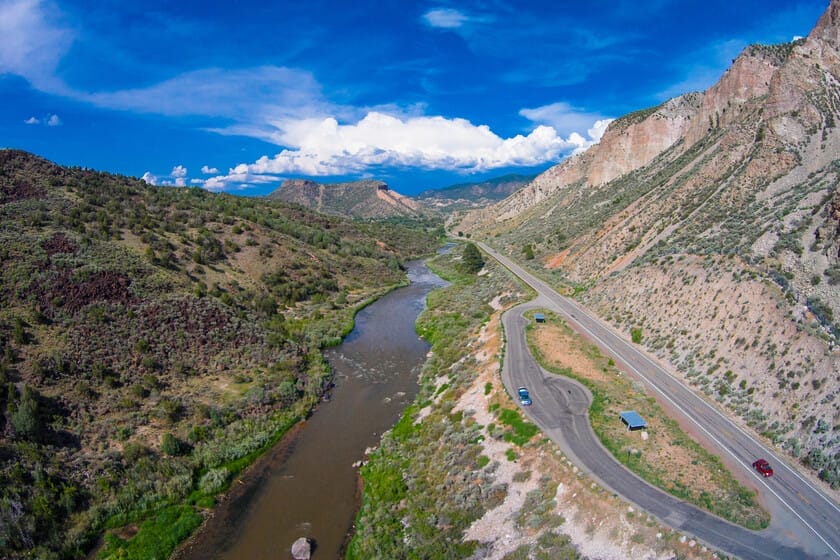
The Water Conflict Between Mexico and the USA Intensifies. Learn How the Treaty Faces Modern Challenges. Discover the Causes and Possible Solutions to This Border Crisis
The United States and Mexico seem destined for a new border dispute, this time over water. To be more specific, over a lack of it. Since 1944, both countries have had a treaty to divide the use of the transboundary basins of the Colorado and Bravo rivers. The problem is that when this pact was signed 80 years ago, its authors did not consider the growing demand or the persistent droughts affecting the region in the 21st century.
The result is that the commitments made in 1944 have turned into a ticking time bomb that both countries are now grappling with.
A Little History
To understand the current situation at the border between the USA and Mexico, it is necessary to go back to the first half of the 20th century, when both countries signed agreements to divide the water from three transboundary rivers: the Bravo—known as the Grande in the USA—, the Colorado, and the Tijuana. The first agreement was in 1906. The second, the International Water Treaty of 1944, established the commitments of both parties: Mexico would provide a certain amount of water from the Bravo and the USA would do the same with the Colorado.
-
If the USA were to go to war with Brazil, Washington’s greatest fear would not be the attack itself, but facing a vast territory, prolonged resistance, and a costly, chaotic, and unpredictable occupation.
-
In 2013, Nicaragua sold the concession for a canal to rival Panama to a Chinese billionaire who lost 85% of his fortune, disappeared, and was declared bankrupt. Now the project resurfaces with a new route, a new Chinese partner, and a cost of $64.5 billion.
-
The USA announces a mysterious billion-dollar vault project to store critical minerals, but what intrigues experts is not just the plan itself, but why Latin America, including Brazil, has entered the center of this global dispute against China.
-
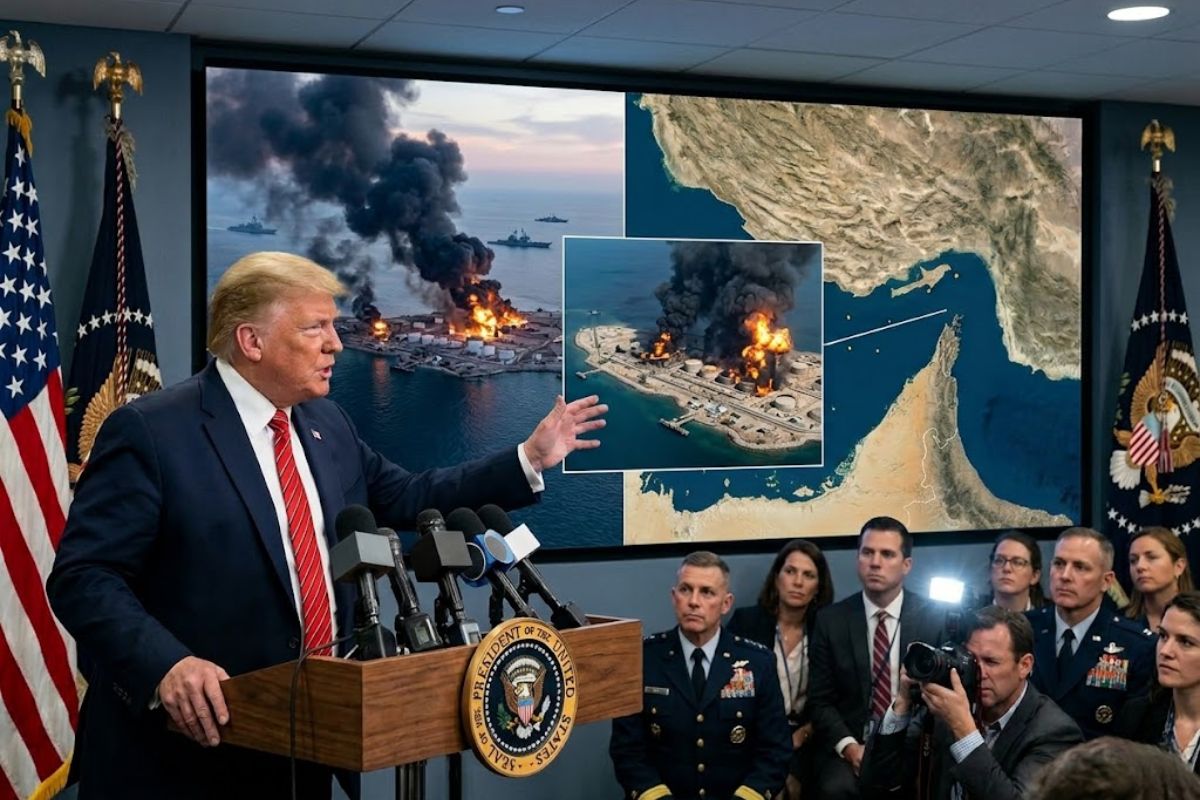
Trump Announces Bombing of U.S. Military Targets on Iranian Island Responsible for About 90% of Iran’s Oil Exports, Warns of Further Attacks if Navigation in Strategic Strait of Hormuz Is Threatened
Detailing the Agreement
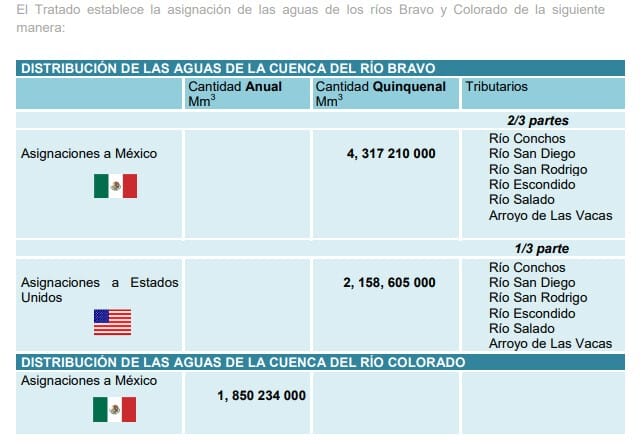
The fine print is a bit more complicated and can be consulted on the Government of Mexico’s website. The USA commits to sending 1.5 million acre-feet of Colorado water per year, while Mexico sends 1.75 million acre-feet of water to the USA every five years from the Grande. For reference, an acre-foot is the volume needed to cover an acre to a depth of one foot. More graphically, The Washington Post clarifies that it is the amount of water consumed by two or three average households over the course of a year.
The 1944 pact, which establishes the division of the waters of the Colorado and Bravo rivers from Fort Quitman in Texas to the Gulf of Mexico, includes five-year cycles for a very simple reason: the unpredictability of the river. The idea was that if there were periods of deficit, they could be compensated by periods of surplus.
“Something Changed”
This peculiar transboundary arrangement worked for a time, in the first decades, but by the end of the 20th century it showed its weaknesses. As María Elena Giner from the International Boundary and Water Commission (IBWC) explains to CNN, “something changed”. Mexico closed several five-year cycles with deficits in a relatively short period. Moreover, The Washington Post highlights that the country has regularly fallen short since 1997.
One reason could be that the 1944 international treaty was based on water availability and drought forecasts of the time, without considering the current scenario. Just this week, Álvaro Iván Bustillos from the Regional Livestock Union of Chihuahua in Mexico acknowledged to El Heraldo that the sector is facing the worst drought crisis in the last 35 years.
The Memory of 2020
You don’t have to go back too far to find tensions between Mexico and the USA due to water. In the summer of 2020, just before the five-year cycle closed, Mexico was already at risk of not meeting its quota. The situation was so complicated that authorities even considered using the reservoir from La Boquilla, provoking outrage from farmers. During the peak of the protests, there was even one death.
Four Years Later…
The scenario is not much different, as CNN recently exposed in an extensive report explaining that due to the drought and high temperatures plaguing the country, Mexico is behind on its supply. The current cycle will not end until October 2025, but the outlook is not optimistic, especially given the prospect of a hot summer. “We only received one year of water and we are in the fourth year”, warns Giner.
The current situation is explained by high temperatures and the drought associated with global warming, but also by the construction of reservoirs since the signing of the 1944 treaty and by the increasing demand for water as the Rio Grande region developed and the population grew.
To further complicate the situation, Vianey Rueda, a researcher at the University of Michigan, reminds that the last 80 years have taken their toll on the system agreed upon at the time: “We have treaties that were conceived for a stable climate, but are now trying to apply to a climate that is not stable”.

Unease in the USA
The situation is complicated in northern Mexico, but also in southern USA, more specifically in Texas, where water scarcity is affecting farms. “American agriculture, and particularly that of Texas, is being deprived of the water it needs to grow and make a living”, lamented recently John Cornyn, Republican Senator from Texas: “We are trying to get the attention of the Mexican government”.
According to data from CW39, which cites the International Boundary and Water Commission, since 2020, Mexico has reportedly delivered one-third of what was stipulated in the treaty. “It’s a matter of life or death for many farmers”.
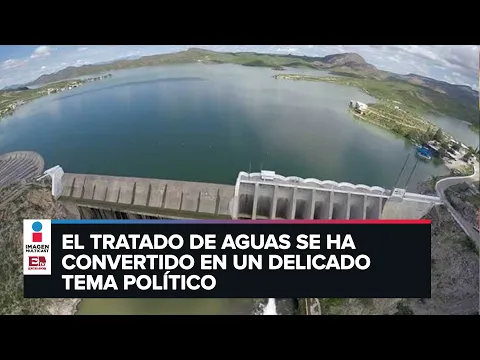
The area most affected is the Rio Grande Valley and some say that water problems could ultimately result in a rise in food prices. CNN goes further and claims there are reservoirs on the border supplying homes and farms at historical lows: Amistad is reported to be below 26% and Falcon at 9.9%. The drought has also reportedly forced the closure of a sugar plant in Texas, affecting around 500 employees.
What is the Solution?
Just a month ago, The Washington Post was already warning that the diplomatic conflict between Mexico and the USA was deepening, and voices in Texas are already demanding that Mexico provide water or face cuts in US aid. At the center of the crisis is the 1944 treaty, the drought, and its effect on the upper reaches of the Rio Grande. After all, there are two difficult-to-control factors: the increased demand since the 1940s and the rainfall.
Precisely the latter, a strong storm that feeds the Mexican rivers, is one of the possible solutions to alleviate the current problem, although experts warn it would be a short-term solution for a complex challenge. Another possibility is to reconsider the treaty or to apply amendments. In 2020, López Obrador stated that the 1944 pact is “one of the best agreements reached in history regarding the USA”. In any case, Giner admits that, at least in the short term, without available water, “there is nothing we can do”.
Rueda goes further and advocates on CNN that we stop viewing the division as a zero-sum game where losing one side implies a gain for the other. “Then you start to eliminate that zero-sum game, and you start to say we are both essentially losing. In reality, no one is winning”.
Image | Daxis (Flickr)









Seja o primeiro a reagir!