





 Portuguese
  English
  Spanish
  6 min of reading
  0 comments


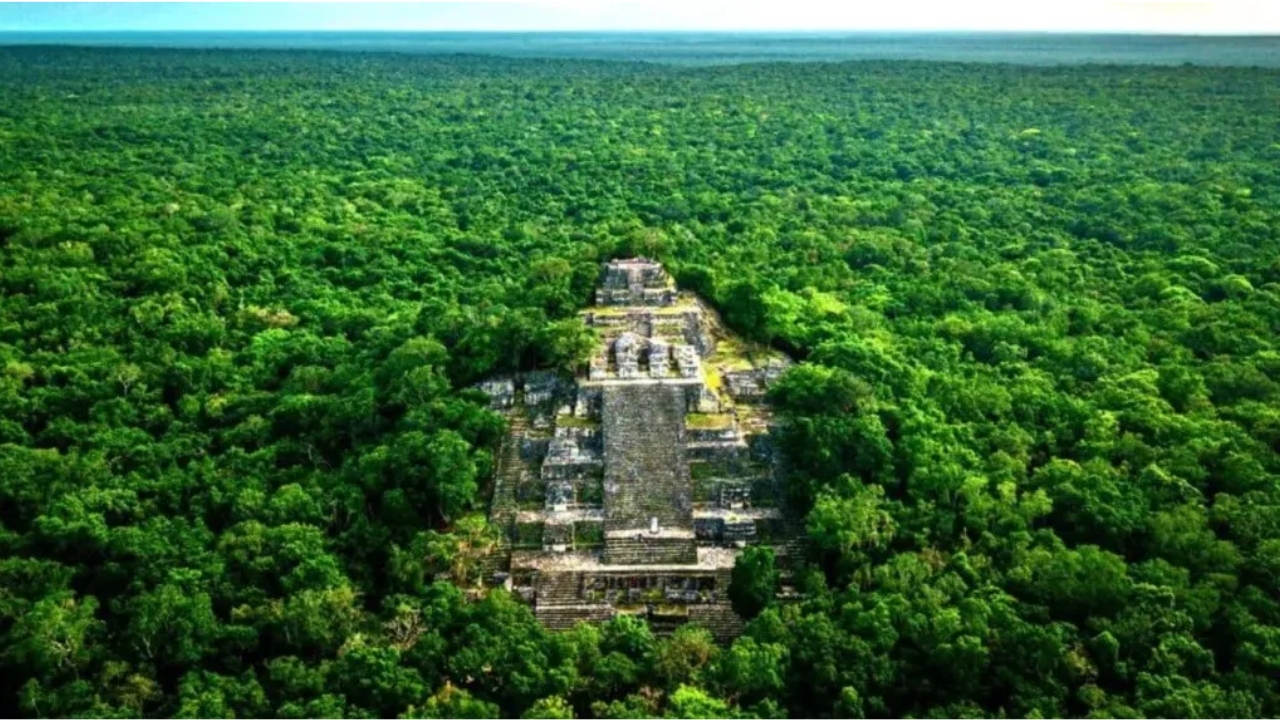
The Campeche jungle has once again surprised science by revealing a monumental Maya city with pyramids, a ball court, a reservoir, a processional walkway, and a probable Group E, in a finding that indicates that other megacities may still be hidden beneath the forest.
An announcement from the state of Campeche in southeastern Mexico has placed Maya civilization back at the center of major archaeological discussions worldwide. Researchers have identified a massive ancient city hidden beneath the dense jungle vegetation, reinforcing the idea that Mesoamerica still holds entire urban centers that have escaped traditional mapping for centuries.
The discovery gained international attention because it is not a small isolated ceremonial area, but a large-scale urban complex, with clear signs of planning, monumentality, and intense occupation. For archaeologists, this case shows that the map of the Maya world is still far from complete, even in regions already known in academic research.
The finding that caught the attention of UNESCO and world archaeology
The reference made by the UNESCO Courier in 2024 helped to broaden global interest in the case by highlighting that a large Maya city had been detected in the Campeche jungle. Although this mention was brief, it served as a seal of international relevance for a finding that was already considered one of the most impressive of the year in the field of archaeology.
-
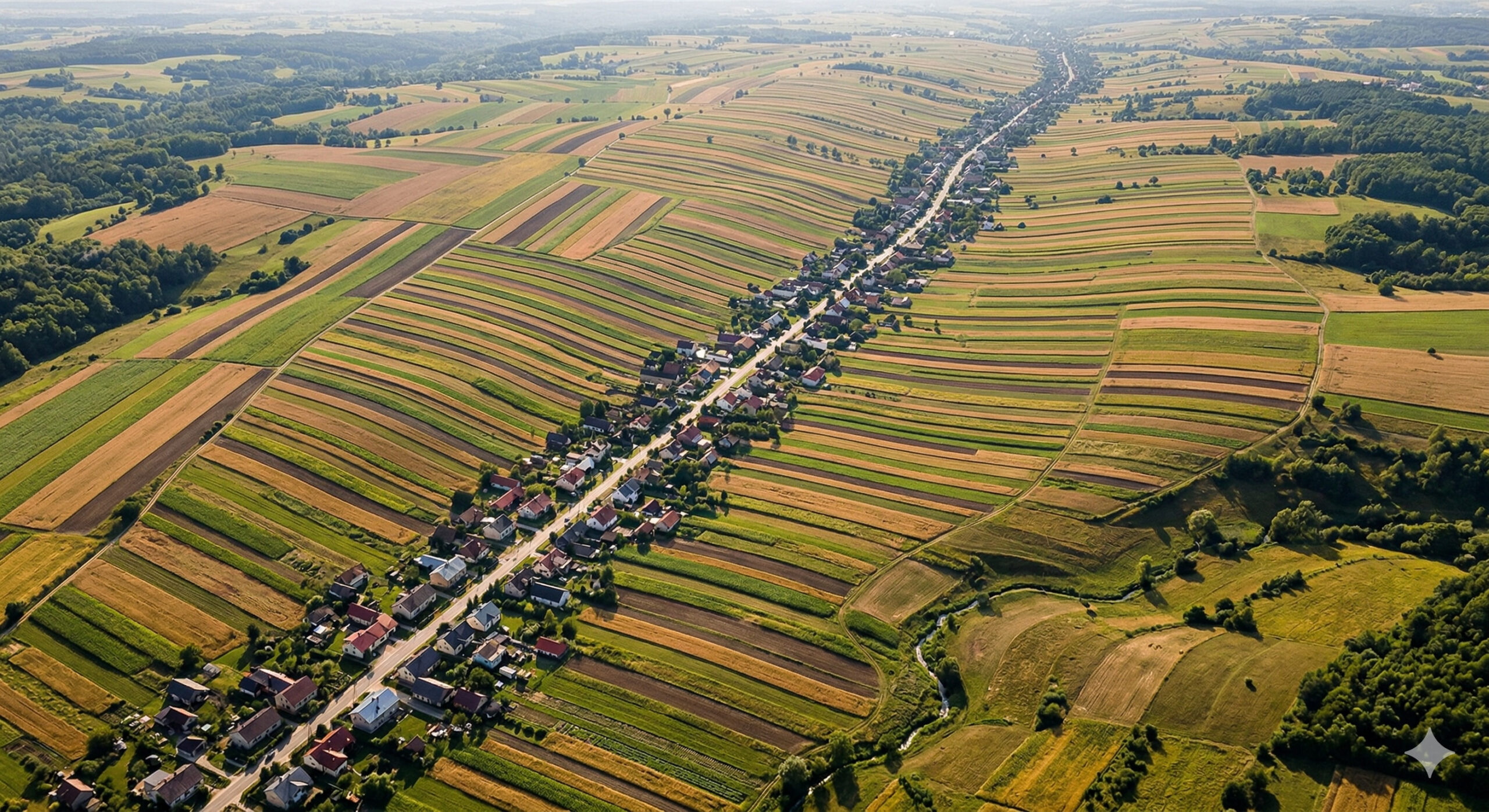
About 6,000 residents live concentrated along a single street nearly 9 km long in the interior of Poland, with houses forming a continuous row and narrow agricultural strips emerging behind them, creating one of the most unusual rural patterns in Europe.
-
Millionaires flee to Florida and create chaos at the marinas: megayachts of Bezos, Brin, and Zuckerberg don’t fit, spots disappear, cost up to $500,000 a year, and it has already turned into a legal battle for space.

-
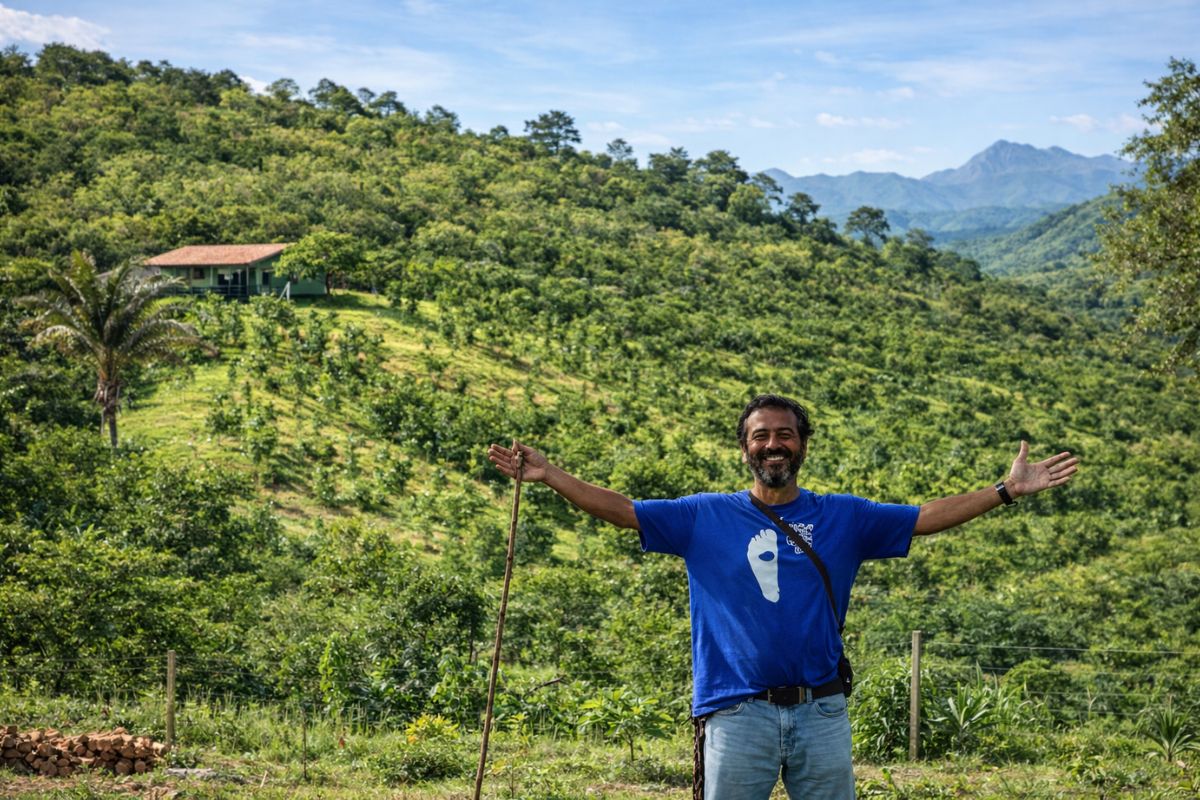
A Globo actor lives on a farm the size of 300 football fields in Teresópolis, where he produces cheese, honey, and organic chocolate, and has already planted 20,000 native trees.
-
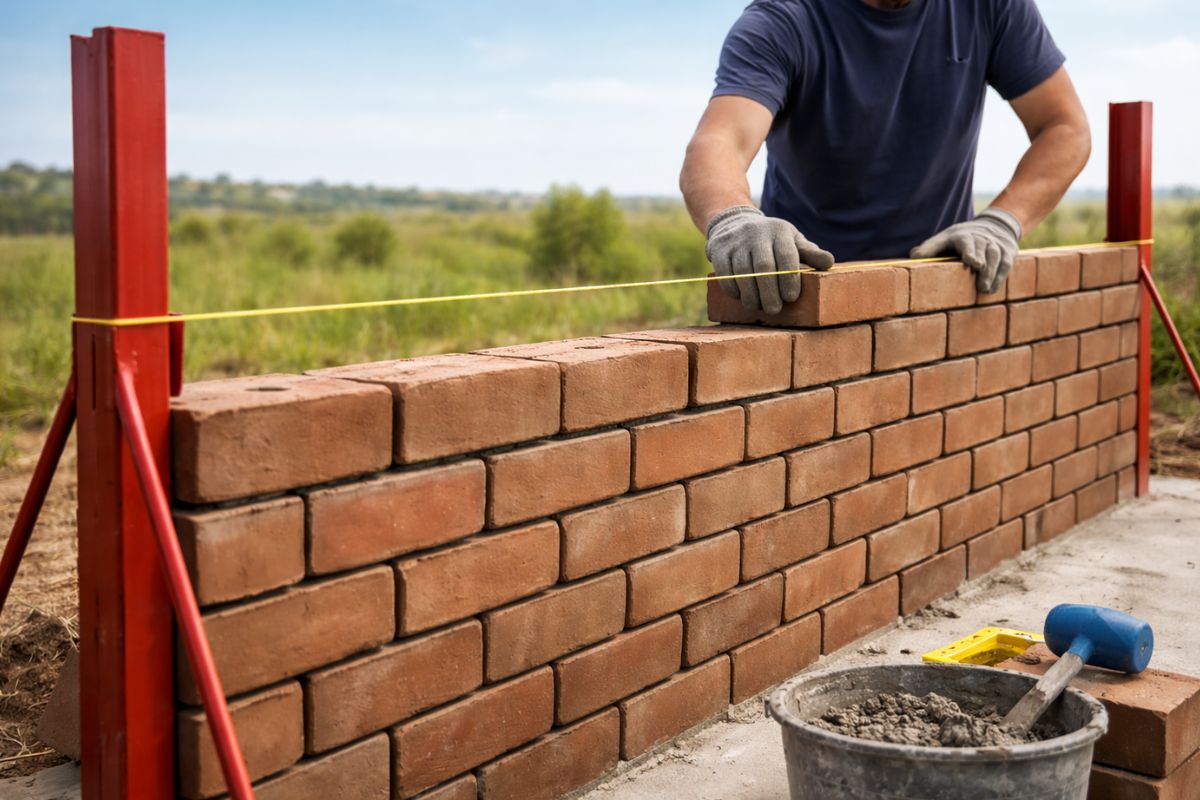
This simple tool eliminates the need for a plumb line with each row, speeds up brick laying by up to 40%, and any laborer can align the wall by themselves, but almost no one in Brazil uses it on construction sites.

The more robust basis of the discovery, however, lies in two fronts: a scientific study published in the journal Antiquity and the institutional disclosure from INAH, the National Institute of Anthropology and History of Mexico. These sources confirm that the detected city corresponds to the site called Valeriana, a modern name given to the archaeological complex due to a nearby lagoon.

What is Valeriana and why is this site so impressive
Valeriana was not presented as a simple grouping of ruins, but as a highly complex Maya city. The study describes two main monumental cores, separated by about 2 kilometers, but connected by a continuous dense occupation, suggesting a well-structured urban fabric and not just randomly scattered constructions throughout the forest.
The identified area within the analyzed block reaches 16.6 km², a significant number considering the difficulty of recognizing ancient structures in a tropical environment. Within this set, researchers recorded 6,764 structures, including residences, platforms, temples, elevated areas, and other architectural elements that reveal a landscape intensely modified by the ancient Maya.
The technology that allowed us to see the city beneath the vegetation
The most fascinating point of this discovery is the method used to locate it. Instead of a broad initial excavation on the ground, recognition came through LiDAR, a remote sensing technology based on laser pulses emitted from the air, capable of penetrating vegetation cover and recording the terrain with extraordinary precision.
In practice, LiDAR allows for the digital “removal” of the forest and exposes artificial patterns on the ground, such as platforms, walkways, terraces, and pyramids. In regions like Campeche, where the jungle hinders direct observation, this tool has become revolutionary, as it reveals entire cities that remained invisible to the naked eye, even in areas relatively close to modern communities and roads.

A city that was hidden, but not exactly lost in the void
One of the most curious aspects of Valeriana is that part of the site is located near current infrastructure, including inhabited areas and modern roads. This helps to explain why many experts describe the case as a city “hidden in plain sight”: it was there, but its true urban scale remained masked by vegetation and the absence of comprehensive archaeological surveys.
This detail also corrects a rather common sensationalist view. It is not a completely unknown city in an absolute void, as if no one had ever passed through there. What was hidden was its real extent, the density of its constructions, and the political and urban dimension that the site had during the height of Maya civilization.
The architectural elements that reveal a Maya capital
The study highlights that the main core of Valeriana exhibits typical characteristics of a Maya political capital of the Classic period. Among the identified elements are enclosed plazas, a large processional walkway, temple pyramids, a ball court, a water reservoir, and a possible Group E, an architectural set often associated with ritual and astronomical observations.
These components do not appear by chance in secondary centers without regional importance. Their combination suggests a settlement with strong political power, the ability to mobilize labor, and control over the surroundings. In other words, Valeriana does not seem to have been a periphery of large neighboring cities, but rather a significant center within the Maya urban network.

What was the age of this hidden city
The published evidence points to intense occupation during the Maya Classic Period, approximately between 250 and 900 A.D.. However, the possible presence of a Group E suggests that the foundation of the settlement may be even older, perhaps predating 150 A.D., which would enhance its historical relevance and chronological depth.
This means that Valeriana may have gone through different phases of Maya history, from formative moments to the political peak of the region. Broader excavations are still needed to accurately close this chronology, but the current scenario indicates a long, complex urban trajectory closely linked to the development of the central lowland Maya.
Why this discovery changes the view of Mesoamerica
The impact of Valeriana goes far beyond a new point on the archaeological map. The finding reinforces a conceptual transformation that has been growing in recent years: that many Maya areas were not composed solely of isolated ceremonial centers, but rather extensive urban landscapes, with infrastructure, population density, and territorial engineering at levels much higher than previously imagined decades ago.
The discovery also shows that Campeche may still hide other large centers beneath the forest. The authors of the study themselves argue that the region remains full of cartographic gaps and that the case of Valeriana proves how little-analyzed areas can reveal cities of great significance. This places Mesoamerican archaeology in a moment of enormous scientific expectation.

What is still unknown about Valeriana
Despite the enthusiasm, there are important limits to what has already been confirmed. The actual size of the city may be even larger than what has been measured so far, because the analyzed LiDAR survey does not necessarily cover the entire extent of the settlement. Its original name, complete sequence of occupation, or exact political relationship with Maya powers like Calakmul and other major centers in Campeche are also not definitively known.
Another open point is how much of the current interpretation will withstand future field verifications. LiDAR is excellent for detecting shapes and patterns, but surface archaeology and excavation remain essential to confirm dates, specific functions of buildings, materials used, construction phases, and direct evidence of the daily life of the population.
The Campeche jungle may still hide other megacities
Valeriana has become a powerful symbol of a new phase in archaeology: one where cutting-edge technology, terrain analysis, and historical reading come together to reveal entire worlds beneath the forest. What seemed like just continuous jungle revealed pyramids, plazas, circulation systems, and a dense urban occupation that changes the archaeological weight of the region.
More than solving a mystery, the discovery opens many others. If a city of this scale remained unrecognized until 2024, the big question now is inevitable: how many other Maya metropolises still remain hidden beneath the vegetation of Mesoamerica, waiting for the moment when technology can finally bring them back to history?





Seja o primeiro a reagir!