





 Portuguese
  English
  Spanish
  5 min of reading
  0 comments


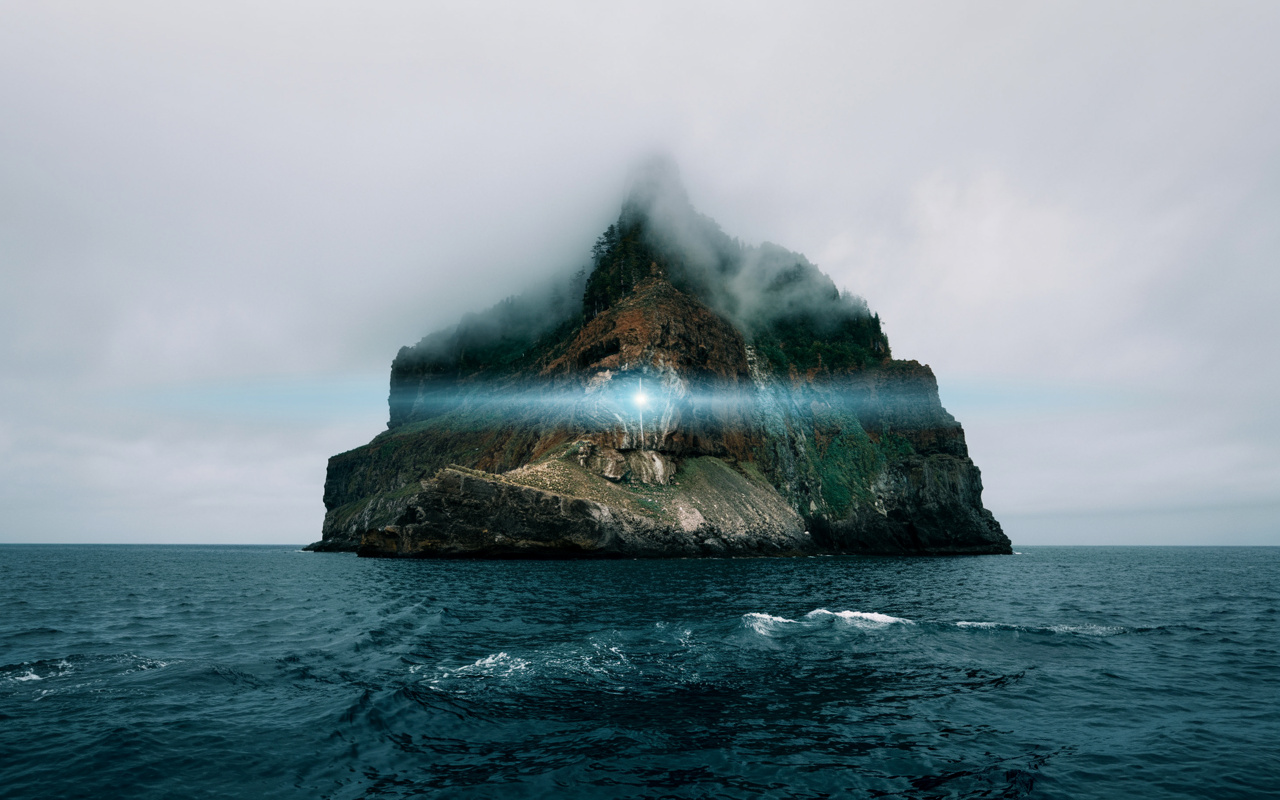
For Over 100 Years, A Phantom Island Called Sandy Deceived Navigators, Scientists, and Even Google. But in 2012, An Expedition Revealed: It Never Existed. A Cartographic Error That Became Legend.
Imagine sailing for weeks at sea, crossing an inhospitable area of the South Pacific, and, upon reaching the exact coordinate marked on the maps — finding absolutely nothing. No stretch of sand, no reef, no sign of dry land. Just deep ocean and silence. This is the true story of Sandy Island, one of the greatest hoaxes (or deceptions) in cartographic history. For over a century, it appeared on official maps, scientific databases, and even on modern platforms like Google Earth and CIA and National Geographic records. But the truth came to light in 2012: the island never existed.
The Birth of A Geographical Illusion
Sandy Island began to appear in nautical records in the late 19th century. Located between Australia and New Caledonia in the Coral Sea, it was described as a long stretch of land about 24 km long.
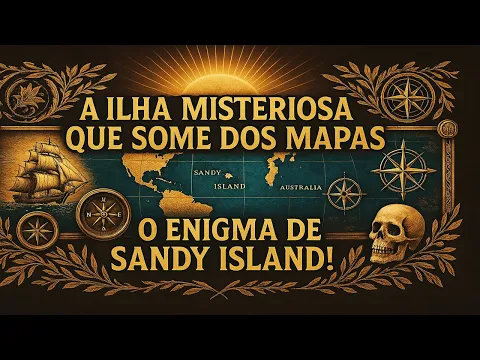

British nautical charts, international atlases, and even digital navigation software included it in their databases. The island’s position was accurate, its shape was drawn, and no one seemed to doubt its existence.
-
Friends have been building a small “town” for 30 years to grow old together, with compact houses, a common area, nature surrounding it, and a collective life project designed for friendship, coexistence, and simplicity.

-
This small town in Germany created its own currency 24 years ago, today it circulates millions per year, is accepted in over 300 stores, and the German government allowed all of this to happen under one condition.

-
Curitiba is shrinking and is expected to lose 97,000 residents by 2050, while inland cities in Paraná such as Sarandi, Araucária, and Toledo are experiencing accelerated growth that is changing the entire state’s map.

-
Tourists were poisoned on Everest in a million-dollar fraud scheme involving helicopters that diverted over $19 million and shocked international authorities.


For decades, ships would divert their routes to avoid it, airplanes used it as a reference, and geographers reproduced it in school atlases and official publications. The island that never existed became part of global knowledge.
The Day the Truth Came to Light
In 2012, a team of scientists from the University of Sydney boarded the research vessel RV Southern Surveyor with a clear objective: to confirm the existence of Sandy Island.
Upon arriving at the exact location marked on the maps, the researchers encountered the unexpected: deep water, with no sign of land or shallow underwater structures. The recorded depth was over 1,400 meters, making the presence of an atoll or submerged island impossible.
It was official: Sandy Island did not exist. An awkward silence swept through the cartographic, scientific, and digital community. How could something like this have gone unnoticed for so long?
How Did An Error Last More Than 100 Years?
The answer lies in the very history of cartography. In the 19th century, many geographical discoveries relied solely on visual reports from navigators. The most accepted theory is that Sandy Island was a misobservation made by a Breton captain, who may have confused a floating mass of pumice stone with a real island.
Underwater volcanic eruptions are common in that region, and large pumice plates can behave like floating islands, visible from the deck of a ship.
The supposed sighting was recorded, reproduced, and, over time, automatically copied by cartographers worldwide. With each new edition of maps, the error became more “official”.
When Even Google Was Fooled
Before the confirmation of the error, Sandy Island was even displayed on Google Earth, as a black spot in the middle of the ocean. National Geographic itself listed it in its official maps. Maritime navigation software and offline encyclopedia editions kept the island as part of the real world.
After the revelation by Australian scientists in 2012, both Google and institutions like the CIA, NOAA, and international hydrographic agencies removed Sandy Island from their databases.
Even so, for years, it continued to appear in old versions of maps and offline navigators, reinforcing its status as the most famous phantom island in history.
What Are Phantom Islands?
Phantom islands are geographical locations that appear on maps but do not physically exist. Some were created by error, others by superstition or misinterpreted reports. There are even cases where they were intentionally “invented” to deceive rivals or protect strategic territories.
Sandy Island has become the most emblematic example of the 21st century, precisely because it resisted even the digital age and cross-referencing of data via satellite.
Consequences of the Error: More Than A Curiosity
It may seem like just an anecdote, but the case of Sandy Island sparked important discussions in academia and technology. After all:
- How can we ensure the accuracy of modern maps?
- How many other cartographic errors still persist in global databases?
- What happens when political, military, or economic decisions are made based on false information?
The discovery also revealed the importance of empirical verification, even in a hyperconnected world. Sandy Island was recorded in all reliable sources — but only going there revealed the truth.
Curiosities and Legacy of Sandy Island
- The island was listed for decades as “Sandy Island” on CIA and NOAA maps.
- It appeared in the Google Earth database until November 2012.
- The name Sandy Island was shared by other real islands in Antarctica and Canada, which further helped to confuse the data.
- After the scandal, National Geographic updated both print and digital editions, and the story became the subject of documentaries and scientific articles.
Today, the exact location where Sandy should exist is studied as a symbol of what is called “persistent cartographic error.”
The story of Sandy Island shows that even in times of satellites and artificial intelligence, illusion can still triumph over precision for many years. It is not just a flaw in the maps — it is a reminder that the world still has its mysteries and human errors, which can persist for centuries.
In the end, Sandy Island was never a piece of land. It was an idea, a shared mistake, a shadow in the ocean that fooled generations — and that now remains alive as the island that deceived the entire world.










-

-

5 pessoas reagiram a isso.