





 Português
  Inglês
  Espanhol
  4 min de leitura
  0 comentários


Stromatolite Formation in Shark Bay, Australia, Reveals How Cyanobacterial Colonies Shaped Earth’s Atmosphere Billions of Years Ago and Explains Why These Living Fossils Still Survive in Hypersaline Waters That Preserve One of the Oldest Records of Life
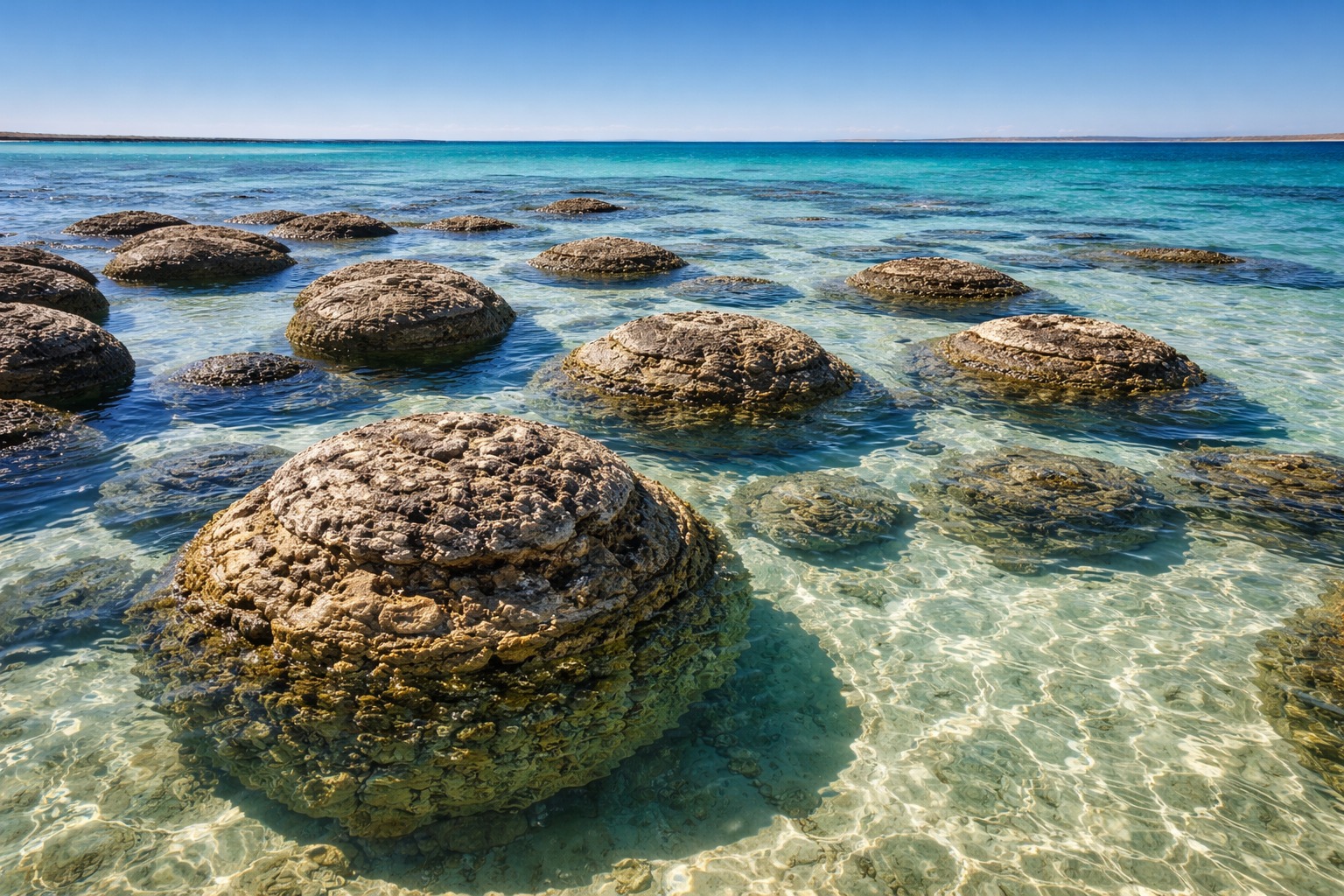
A formation known as stromatolites emerges in the shallow, hypersaline waters of Shark Bay on the west coast of Australia. These structures, created by cyanobacteria, record the most continuous history of life on Earth and played a crucial role in oxygenating the atmosphere.
How Stromatolites Form on the Coast of Australia
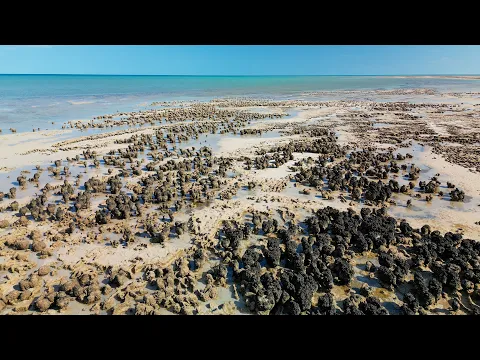
In Shark Bay, located on the western Australian coast, irregularly shaped limestone structures arise in the shallow waters.
They are called stromatolites, biological formations produced by colonies of photosynthetic cyanobacteria.
-
Found in one of the most radioactive places on Earth, this Chernobyl fungus may be doing something with radiation that no one has been able to explain to this day.
-
A bright yellow mushroom imported from Asia escaped from a cultivation farm in the United States in 2010 and is now aggressively spreading across 25 states, destroying entire communities of native fungi in American forests.

-
Buried under China, a colossal machine weighing 20,000 tons began operating as the largest neutrino detector on the planet and, in just 59 days, surpassed results that science took half a century to achieve.

-
Iran enters the center of a climate alert after the war emitted 5.6 million tons of CO2 in two weeks, surpassing the annual pollution of entire countries.


These structures are considered the most continuous record of life on the planet. They emerge from the interaction between microorganisms and the physical environment, resulting in rocky formations built slowly over centuries.
The process occurs when cyanobacteria trap sediment grains using a type of biological glue.
During photosynthesis, they also precipitate calcium carbonate, forming layers that progressively grow and create dome-shaped structures.

The Role of Structures in the Great Oxygenation Event
The importance of stromatolites goes beyond geology. These structures are directly linked to the transformation of Earth’s atmosphere throughout the planet’s history.
For billions of years, Earth’s air was dominated by methane and carbon dioxide. The cyanobacteria present in these systems performed oxygenic photosynthesis, using water and releasing molecular oxygen as a byproduct.
The accumulation of this gas reached a critical point about 2.4 billion years ago. This moment triggered the so-called Great Oxygenation Event, known by the acronym GOE.
Historical records from PubMed Central indicate that this event caused a mass extinction of anaerobic life forms.
At the same time, it allowed for the emergence of the ozone layer and paved the way for the evolution of complex life.
Layered Structure Keeps the Ecosystem Active
The current stromatolites of Hamelin Pool are not just blocks of limestone. They function as stratified ecosystems, with different microbial communities organized vertically according to oxygen availability.
The upper layer is dominated by photosynthetic cyanobacteria. They are responsible for the active production of oxygen, sustaining the chemical balance of the system.
The intermediate zone is dominated by aerobic heterotrophic bacteria. These organisms consume organic compounds and participate in nutrient cycling within the structure.
In the deeper layers live sulfate-reducing bacteria. These microorganisms carry out strictly anaerobic metabolism and complete the functioning of the microbial system.
Recent research released by the National Institutes of Health indicates that scientists have isolated a new strain of Acaryochloris in these environments.
This bacteria is capable of living under near-infrared light, revealing unusual adaptations of microbial life.

Survival After the Cambrian Explosion of Life
The global abundance of stromatolites collapsed about 600 million years ago. This decline occurred during the marine life explosion of the Cambrian period.
During this period, grazing animals began to consume the microbial mats that formed these structures. The result was a drastic reduction of these colonies in normal marine environments.
The current formations survive primarily in extreme environments. The hypersalinity of the Australian bay prevents the development of complex predators.
The water in the lagoon has about double the salinity of open ocean water. This condition creates a hostile environment for many organisms and ultimately protects the modern stromatolites.
Climate Change Threatens Millennial Structures
Although they have survived ice ages and mass extinctions, these structures now face new challenges. Climate change and the urbanization of the Australian coast may alter the balance of the lagoon.
Environmental research indicates that changes in salinity and water quality pose a direct risk to the biological system.
International studies on microbialites also warn about the impact of ocean pH changes. This alteration may affect the organisms that keep the stromatolites active.
Due to their scientific significance and rarity, the region was declared a World Heritage Site by UNESCO in 1991. The site hosts one of the oldest records of life on Earth and continues to be the subject of modern scientific study.
With information from BMC News.





Seja o primeiro a reagir!