





 Portuguese
  English
  Spanish
  3 min of reading
  0 comments


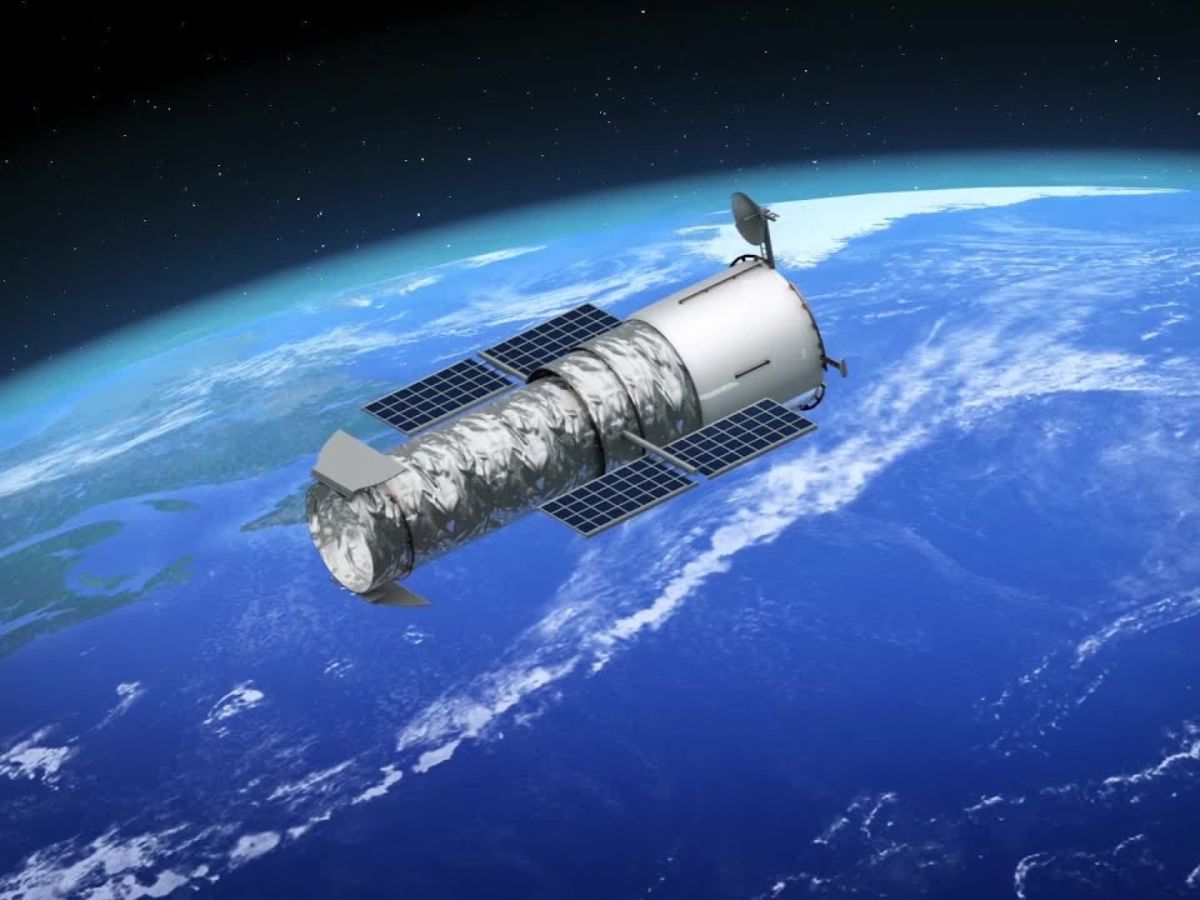
Discover The True Capacity Of A KH-11 Series Spy Satellite Scanner Lens And Why, Despite Advanced Technology, Reading A License Plate At 300 Km Altitude Is Still A Myth
The capacity of a spy satellite scanner lens to read fine details on Earth, such as a license plate, is a topic that fascinates and generates much speculation. This idea, popularized by fiction, often leads to an overestimation of what current technology can accomplish. The debate is fueled by classified information about satellites like those in the KH-11 series from the United States.
Despite their cutting-edge technology, these satellites operate under the laws of physics and the limitations of the atmosphere. The truth about their resolution is impressive, but not magical. Understand, based on public data and expert analyses, what the real capacity of these eyes in the sky is and why reading a license plate from space remains a challenge.
What Are The KH-11 Satellites, The Lens Of A Spy Satellite Scanner, Launched Since 1976
The KH-11 KENNEN series of satellites represents a milestone in space espionage. The first one was launched in December 1976 by the National Reconnaissance Office (NRO) of the USA. Its major innovation was the use of electro-optical digital imaging, allowing real-time photo transmission to Earth. Prior to this, it took days or weeks to recover physical film capsules.
-
Archaeologists find an intact tomb over 2,500 years old, with more than 100 preserved objects, weapons, jewelry, and human remains never touched.

-
Volcanic lava transforms into threads as fine as human hair that travel over 30 kilometers by wind and fall like cutting rain on roofs and backyards in Hawaii and Iceland.
-
Son of a seamstress from the rural area of Ceará who did not speak English wins a scholarship of over 2 million reais at Williams College, one of the top 10 universities in the United States, covering everything including dormitory, meals, and annual trips to Brazil.

-
Bill Gates revealed that the true secret behind every great achievement is not a brilliant leap but rather small improvements repeated over the years, and the data from his own career and the fight against climate change prove that he is right.


These satellites share a remarkable physical resemblance to the Hubble Space Telescope. In fact, the technology developed for spy satellites, such as mirror polishing techniques, was used in making the Hubble. This illustrates the deep connection between secret military programs and public scientific projects.
Why The Atmosphere Limits The Power Of The Lens
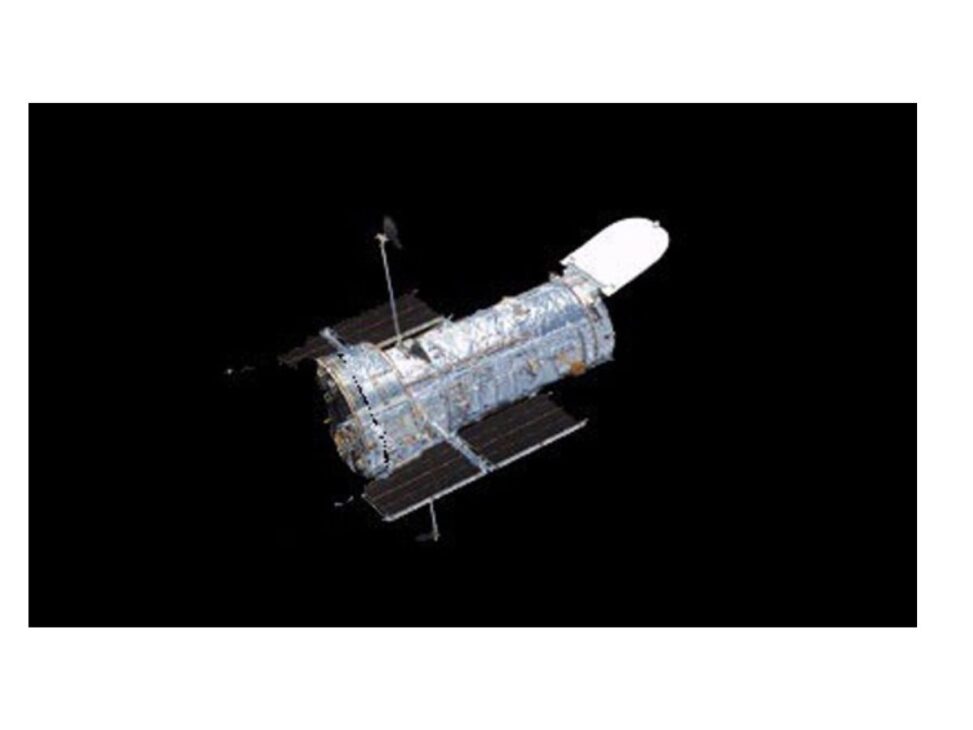
The theoretical maximum resolution of a spy satellite scanner lens like the KH-11, with its 2.4-meter mirror, is approximately 6 centimeters. This means that, under perfect conditions, the smallest object it could distinguish would be 6 cm.
However, in practice, the achieved resolution is between 5 and 10 centimeters. The main culprit for this loss of clarity is Earth’s atmosphere. Turbulence and temperature variations cause optical distortions, the infamous “twinkling” effect we see with stars. This makes it extremely difficult to achieve a resolution below 10 cm, regardless of the quality of the lens.
The Crucial Difference Between Identifying And Reading
This brings us to the central point of the myth. To read letters and numbers clearly on a license plate, a resolution of approximately 1 millimeter (or 0.10 cm) would be necessary. The practical capability of the KH-11, at 10 cm, is far from that.
Therefore, the distinction is crucial: a KH-11 satellite can indeed identify the presence of a license plate on a car, recognizing it as a rectangular object. However, it cannot read the individual characters written on it. The difference in resolution between what it can do (10 cm) and what would be needed (1 mm) is 100 times.
What The Famous Photo Of Iran In 2019 Really Showed About Satellite USA-224
In 2019, a publicly released image of a rocket launch site in Iran provided a rare glimpse into the capabilities of the KH-11. The photo was taken by satellite USA-224, a member of the series. Expert analyses estimated that the resolution of that image was about 10 cm.
The image was detailed enough to show light poles and fences, confirming the performance envelope of the satellite. However, it also served as concrete evidence that while the resolution is exceptional, it falls far short of what is needed to read small texts, such as those on a license plate.
The Strategy Behind The Secrecy, Why The Name “Key Hole” Was Discontinued
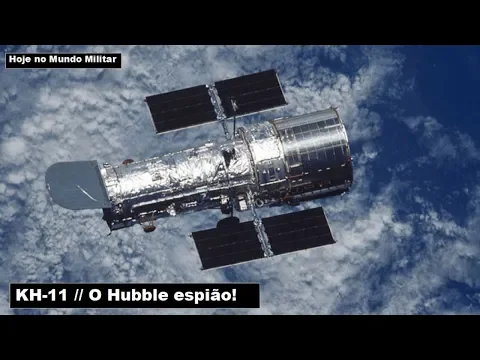

The exact capabilities of KH-11 satellites are highly classified. The name “Key Hole” (KH), which followed a sequence (KH-8, KH-9, etc.), has been publicly discontinued. Now, satellites receive names in a random numbering scheme, such as USA-224.
This change is a deliberate counterintelligence tactic. By breaking the logical sequence, it becomes more difficult for external analysts to track the evolution of the program and estimate its future capabilities. This adds a layer of secrecy that protects the deepest operational secrets, even though the general existence of the satellites is known.







Seja o primeiro a reagir!