





 Portuguese
  English
  Spanish
  3 min of reading
  0 comments


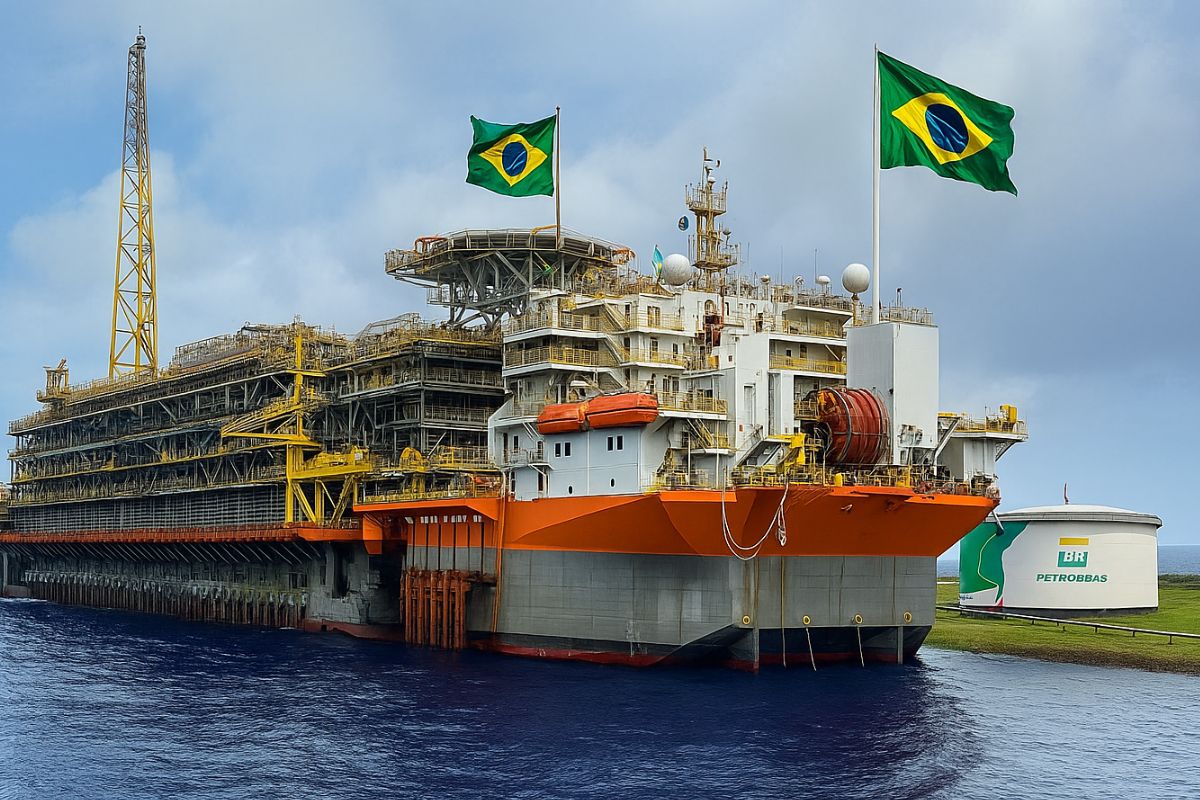
With Capacity to Process 225 Thousand Barrels of Oil Per Day, the FPSO Almirante Tamandaré Began Operations in February 2025, Consolidating Itself as the Largest Oil Platform in Brazil.
In early 2025, Brazil’s energy industry reached a new milestone. The FPSO Almirante Tamandaré, the largest oil platform in Brazil in production capacity, was put into operation. The unit, which operates in the strategic Búzios field in the pre-salt layer of the Santos Basin, is not only an engineering colossus but also a pillar for the country’s strategy to consolidate itself as a global energy powerhouse.
The story of the platform, from its construction in China to the beginning of its production, is an example of the complex logistics and cutting-edge technology required to extract the “black gold” from the ultra-deep waters off the Brazilian coast.
What Is the FPSO Almirante Tamandaré? The Numbers of the New Largest Oil Platform in Brazil
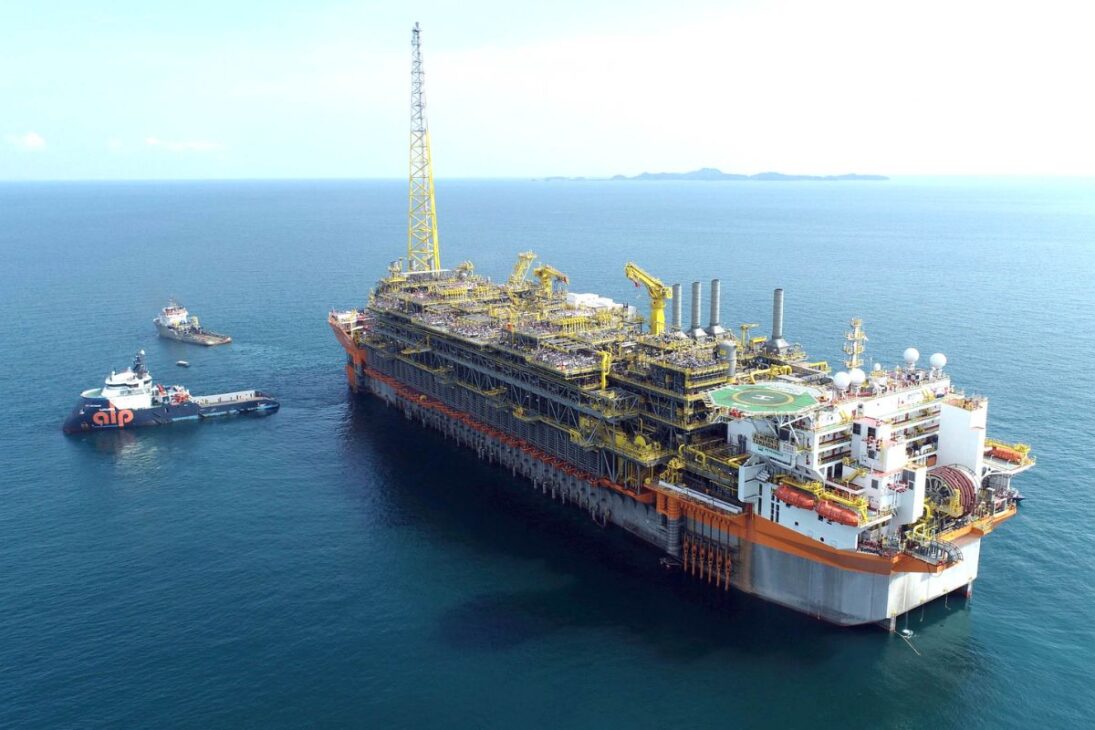
The FPSO Almirante Tamandaré is a Floating Production, Storage, and Offloading Unit. In simple terms, it is a platform vessel designed to operate offshore. Its numbers confirm its status as the largest in the country:
-
Offshore industrial demand in Macaé skyrockets with the recovery of oil and gas and could grow by up to 396% by 2026 in the Campos Basin.
-
Offshore industrial demand in Macaé surges with the recovery of oil and gas and could grow by up to 396% by 2026 in the Campos Basin.
-
Brazilian giant expands borders in the Southeast: Petrobras confirms new oil discovery in ultra-deep waters in the pre-salt of the Campos Basin.
-
Alert in the global energy market: Severe tropical cyclone hits the coast and disrupts gas production at major plants in Australia, threatening global supply.

- Oil Capacity: Can process up to 225,000 barrels of oil per day.
- Gas Capacity: Processes up to 12 million cubic meters of natural gas per day.
The platform is anchored about 180 km off the coast of Rio de Janeiro, at a depth of nearly 2,000 meters, and is connected to a network of 15 subsea wells in the Búzios Field.
The Engineering of the Business: A Project by SBM Offshore Chartered by Petrobras
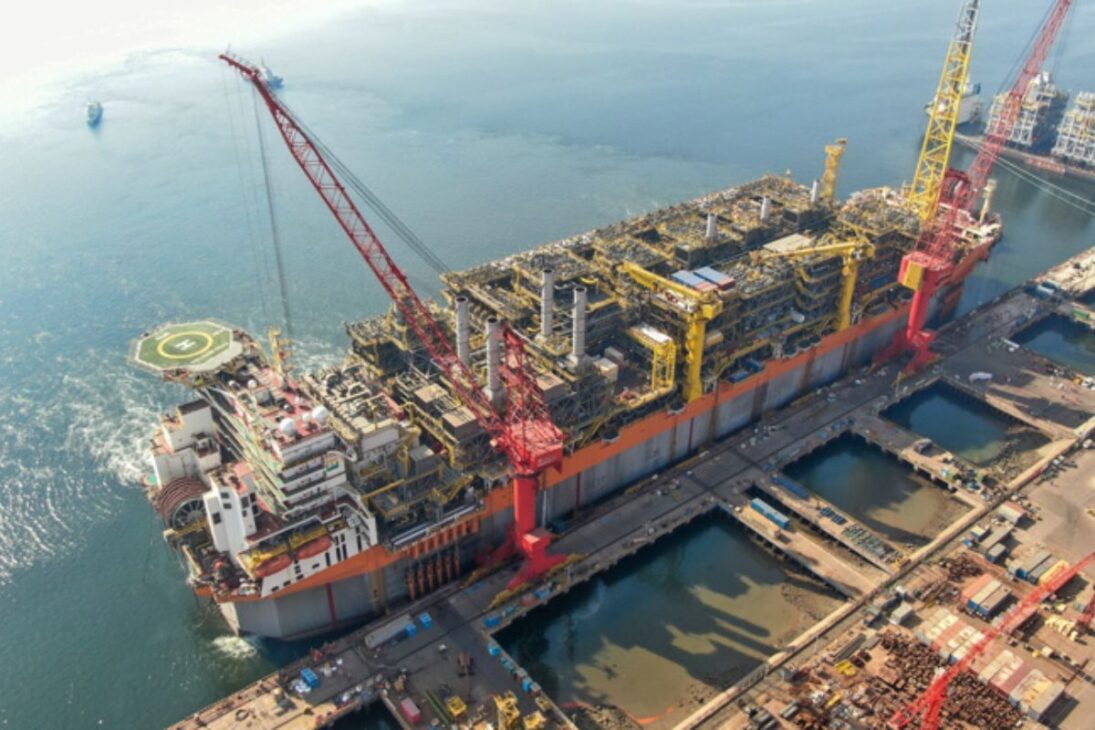
A curious fact about the largest oil platform in Brazil is that it does not belong to Petrobras. The unit is owned by a consortium led by the Dutch company SBM Offshore, one of the largest in the industry.
Petrobras, as the operator of the field, uses the platform through a long-term charter contract, lasting 26.25 years. This business model is common in the industry and allows Petrobras to focus its investments on exploration and production, while SBM Offshore, which financed the construction with a loan of US$ 1.63 billion, manages the platform’s operation.
The Journey from China to Brazil: The Timeline of Construction and Installation
Building a giant like the Almirante Tamandaré is a global operation. The platform was constructed at the Chinese shipyard China Merchants Heavy Industry (CMHI).
Its journey to Brazil began on July 31, 2024. After a long transoceanic voyage, the platform arrived off the coast of Espírito Santo on October 25, 2024 for customs procedures. The complex anchoring operation at the Búzios Field was completed on December 13, 2024.
The Start in 2025: The First Oil and the Beginning of Operations
With the platform installed, the final step was obtaining regulatory licenses. Ibama granted the Operating License in December 2024. The final approval from the National Agency of Petroleum (ANP) came on February 14, 2025.
Just one day later, on February 15, 2025, Petrobras announced the “first oil”, marking the official start of production from the largest oil platform in Brazil.
More Than Size: Cutting-Edge Technology and a Focus on Sustainability
The FPSO Almirante Tamandaré stands out not only for its scale but also for its technology. The project was based on SBM’s Fast4Ward® concept, which uses a standardized hull to accelerate construction and reduce costs.
Moreover, the platform was designed with a strong focus on sustainability. It features a closed flare system that utilizes gas rather than burning it, and technologies for heat recovery, which reduce carbon emissions. For these reasons, the Almirante Tamandaré was the first platform in Brazil to receive the “Sustainability-1 Notation” from Bureau Veritas, a recognition of its environmentally advanced design.








-

Uma pessoa reagiu a isso.