





 Portuguese
  English
  Spanish
  5 min of reading
  0 comments


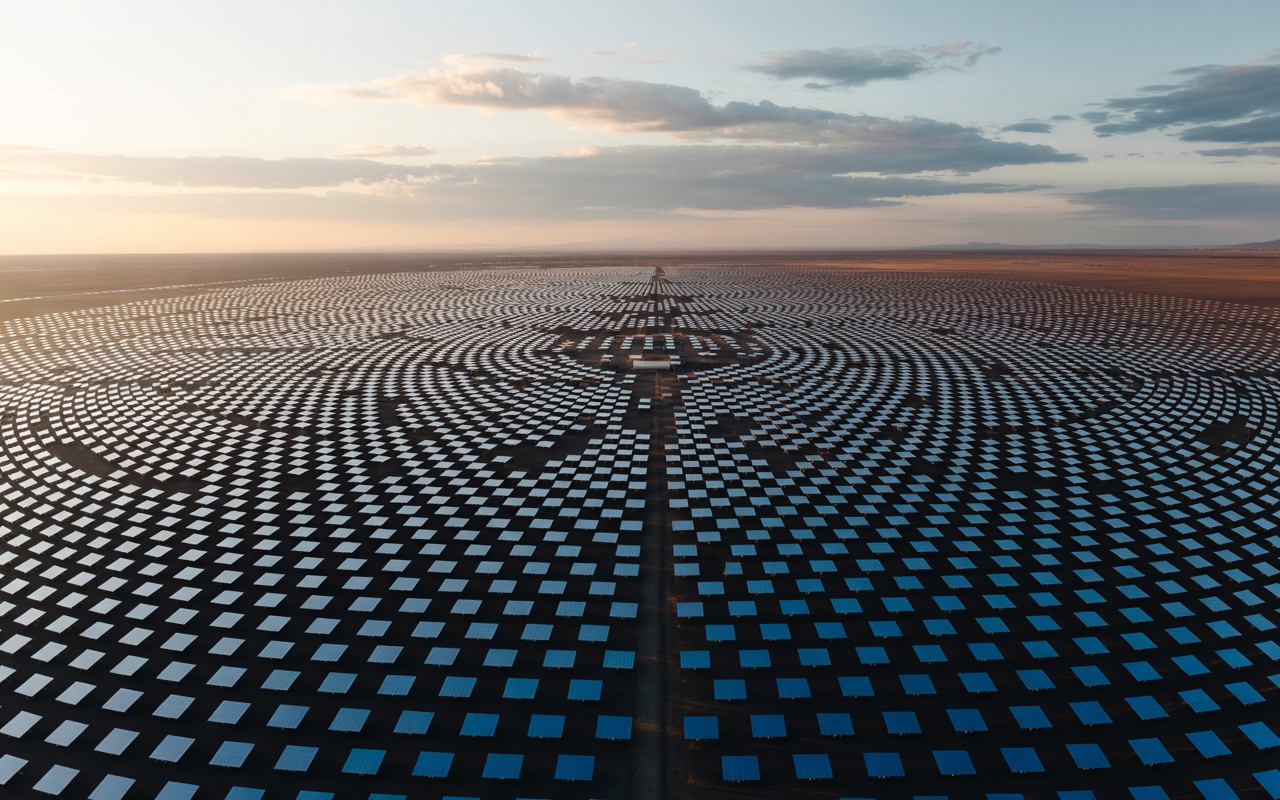
Located in India, Bhadla Solar Park is the largest solar park in the world, covering a huge area — but faces challenges when cloudy skies drastically reduce its energy efficiency.
In the far west of India, where the relentless sun shines over the desert lands of Rajasthan, a mega-structure emerges as a landmark of the 21st-century energy revolution: the Bhadla Solar Park, officially recognized as the largest solar park in the world. Its land area is so vast that it is equivalent to more than 6,000 soccer fields, a symbolic image that helps to measure the grandeur of this enterprise that, although colossal, also reveals significant challenges related to climate and solar intermittency.
With more than 2,245 megawatts (MW) of installed capacity, the solar park is the material expression of India’s commitment to redesign its energy infrastructure and accelerate the adoption of renewable energy. In an era marked by climate change and the need for decarbonization of economies, the plant represents a promise: the possibility of providing millions with clean and abundant solar energy. But this promise also carries limitations, especially when dense clouds cover the panels and reduce their efficiency.
The Birth of a Solar Colossus in the Desert
Bhadla Solar Park is located in the district of Jodhpur, in a region known for extreme temperatures, low humidity, and high solar radiation. These conditions made the region a strategic choice to host one of the largest solar projects ever executed. Construction began in 2015 and was completed in phases, with a public-private financing model led by the Solar Energy Corporation of India (SECI).
-
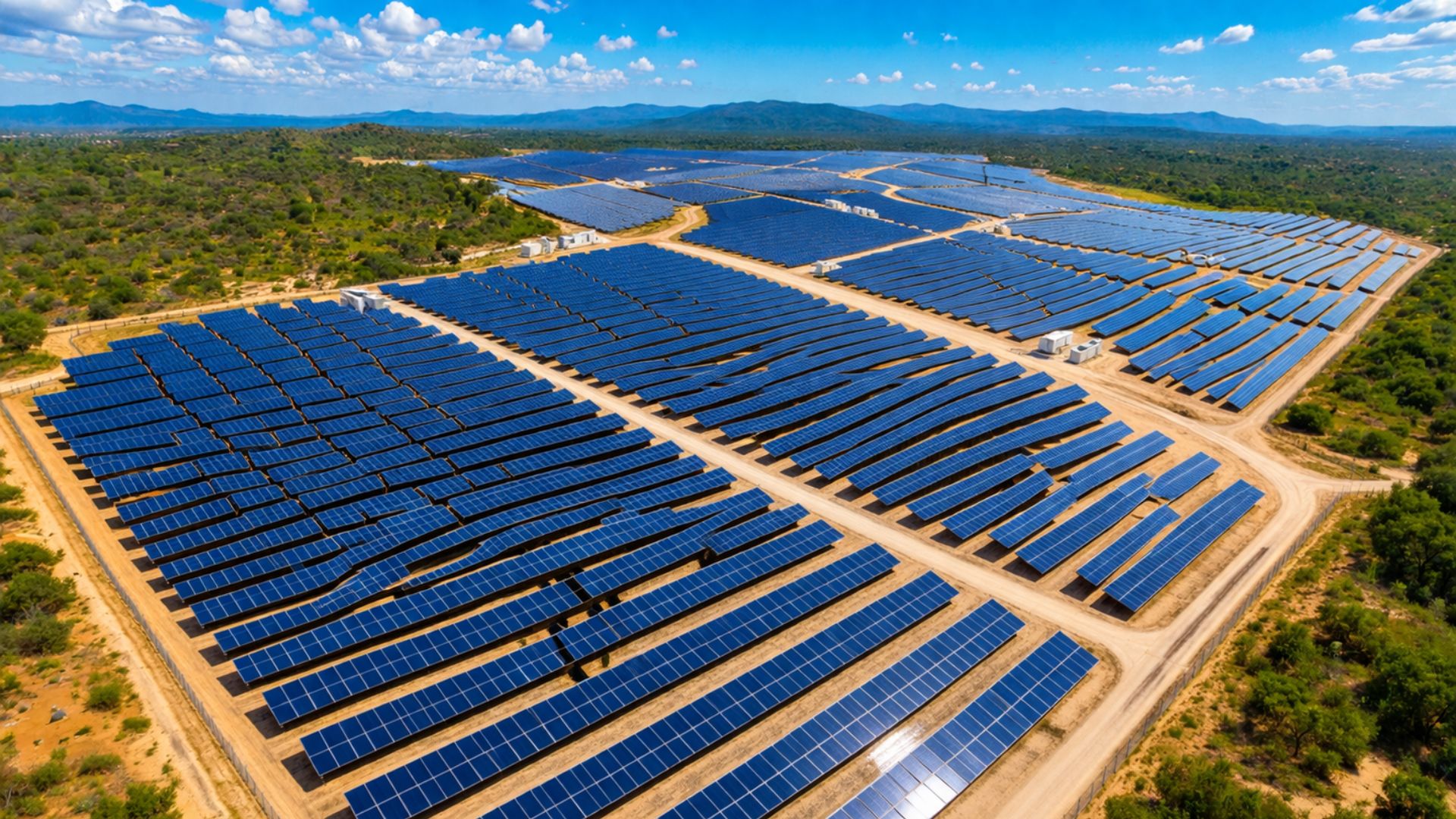
The Sol do Agreste Photovoltaic Complex begins operations in Pernambuco and accelerates the expansion of solar energy in Brazil, directly impacting the reduction of emissions and strengthening the sustainable energy matrix.
-
Renewable energy advances over protected areas in Brazil, and a survey by the Energy Transition Observatory reveals silent impacts that challenge environmental conservation and pressure sensitive traditional territories.

-
Rio Grande do Sul accelerates energy transition: State invests in renewable technologies and consolidates decarbonization strategies and pathways to attract billions in new industrial investments.

-
With 160,000 m² of collectors, an area larger than 20 football fields, Silkeborg, in Denmark, hosts a solar thermal plant that heats 19,500 homes and could become the largest solar heating plant in the world.


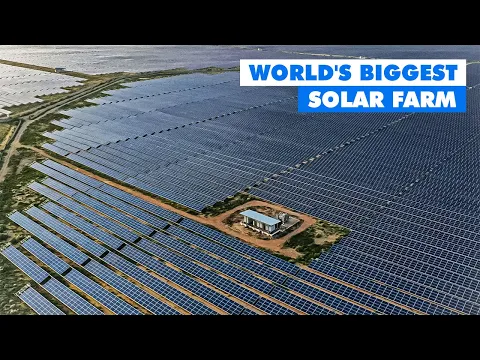

The large-scale investment aimed to accelerate the share of renewable energy in India’s electricity matrix, a country that ranks third among the largest greenhouse gas emitters on the planet. The official goal: to reach 500 GW of renewable capacity by 2030, with solar energy being the flagship of this transformation.
The Bhadla plant was designed to function as a reference infrastructure. According to the International Energy Agency (IEA), its total area is 5,783 hectares, and its capacity surpasses rival parks such as the Tengger Desert Solar Park in China (1,547 MW) and the Benban Solar Park in Egypt (1,650 MW). It is therefore not only the largest in size but also in operational efficiency and integration with the Indian national grid.
The Sun as an Ally and as a Challenge
Despite the high number of sunny days, Bhadla Solar Park faces an invisible enemy: atmospheric instability. Although rare, the presence of dense clouds can compromise up to 30% of the efficiency of the panels on certain days, according to reports from Bloomberg Green. This vulnerability highlights a critical point of the energy transition based on intermittent sources: dependence on the weather.
In response, the Indian government has maintained backup plants — many still powered by coal or natural gas — to ensure stability in supply. This sparks an important discussion about the need to invest in energy storage on a large scale, such as lithium-ion batteries or green hydrogen, that could buffer the variation in solar production and avoid a return to fossil sources.
Another recurring problem is dust. The desert location requires that the panels be cleaned regularly to maintain optimal performance. For this, thousands of liters of water are consumed each week — a paradox in a semi-arid region that suffers from water scarcity. Studies by the Ministry of New and Renewable Energy, India indicate that, on average, each installed megawatt requires 7,000 to 10,000 liters of water per year just for maintenance.
Economic, Social, and Environmental Impacts
Bhadla Solar Park has also generated positive impacts. More than 10,000 direct and indirect jobs were created during its construction and operation. New roads, substations, transmission lines, and telecommunications infrastructure were implemented in the region, fostering local development and reducing inequalities.
However, local communities reported land conflicts. Part of the area used for the park was previously designated for cattle grazing, which directly affected traditional groups and created tensions that are still under judicial discussion. The case highlights the importance of an approach that takes into account not only technical viability but also the social dimension of energy infrastructure.
Global Reference, but Not Free from Criticism
The success of Bhadla Solar Park has placed India at the center of global discussions on energy transition. Other developing countries are studying how to replicate the model in high-sunlight regions, but the challenges faced also serve as a warning. The absence of sustainable backup systems and the lack of energy storage infrastructure continue to be structural bottlenecks.
The Indian model stands out for its aggressive competitive bidding policy, which has reduced the cost of solar energy to levels below US$ 0.03 per kWh, making it cheaper than coal-generated energy. This cost difference, combined with international pressure for climate goals, has been what drives the rapid growth of renewable energy in the country.
The Largest Solar Plant is a Milestone of the Transition, but Not the Final Destination
The Bhadla Solar Park, with its thousands of hectares filled with photovoltaic panels, represents the forefront of energy infrastructure based on solar energy. It is a project that, at the same time, inspires and challenges. It shows that it is possible to replace polluting sources on a large scale, but it is also necessary to think about resilience, integration, and social sustainability.
Being the largest solar plant in the world is an achievement that places India at the forefront of global climate solutions. However, the true success of the energy transition will depend on the ability to overcome the limits of solar intermittency, adopt effective storage systems, and ensure that projects like this benefit all of society, without exceptions.
Official Sources Consulted for the Production of This Content:
- International Energy Agency (IEA) – www.iea.org
- Bloomberg Green – www.bloomberg.com/green
- Solar Energy Corporation of India (SECI) – www.seci.co.in
- Ministry of New and Renewable Energy, India
- Solar Performance Reports 2023 – India Energy Portal









Seja o primeiro a reagir!