





 English
  Francês
  Alemão
  Italiano
  Japonês
  Norueguês
  Portuguese
  Spanish
  6 min of reading
  0 comments


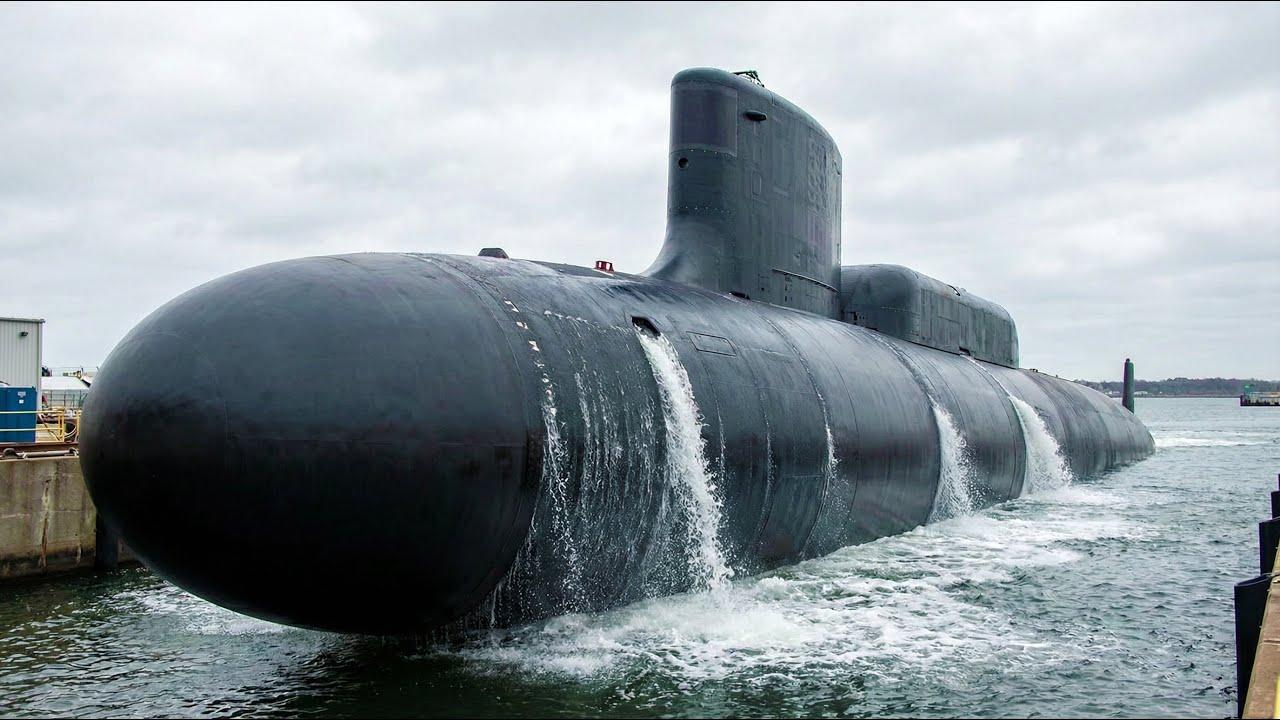
USS Arizona (SSN-803): New Nuclear Submarine of the Virginia Class is Born to Replace the Giant Ohio Class Missile Launchers
In December 2022, General Dynamics Electric Boat held a low-key ceremony at its shipyard in Rhode Island to mark the beginning of construction of the USS Arizona (SSN-803), the 30th submarine of the Virginia class. The event carried deep symbolism: the name Arizona, associated with the ship that sank during the Japanese attack on Pearl Harbor on December 7, 1941, was officially returning to active service in the U.S. Navy. The new USS Arizona will not be a surface ship or an aircraft carrier. It will be a Virginia-class nuclear attack submarine equipped with the Virginia Payload Module, designed to carry a much larger volume of long-range weapons. The project emerges at a critical moment for American naval strategy, where the fleet needs to replace the largest underwater missile launchers ever operated by the United States.
The new submarine is specifically designed to offset the imminent retirement of the giants of the Ohio class converted for cruise missiles.
The Retirement of Ohio Class Submarines Creates a Strategic Void in Underwater Attack Capacity
Between 2026 and 2028, the U.S. Navy will begin decommissioning four nuclear submarines of the Ohio class converted for cruise missiles. These ships — USS Ohio, USS Florida, USS Michigan, and USS Georgia — currently represent the greatest conventional underwater attack capacity in the American arsenal.
-
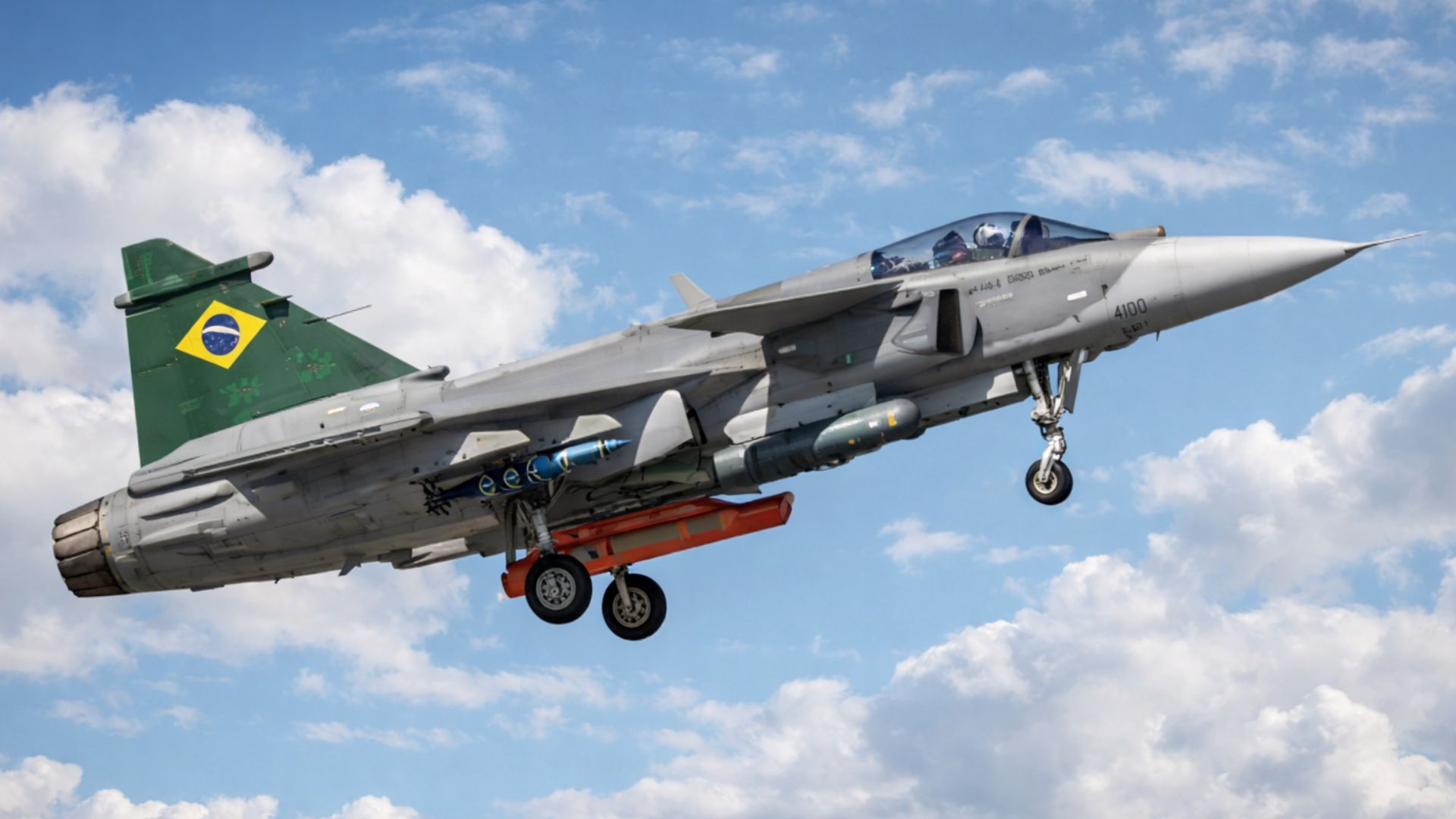
Brazil presents the first national F-39 Gripen fighter and redefines air defense with technological advancement, job creation, and strengthening of the defense industry on the global stage.
-
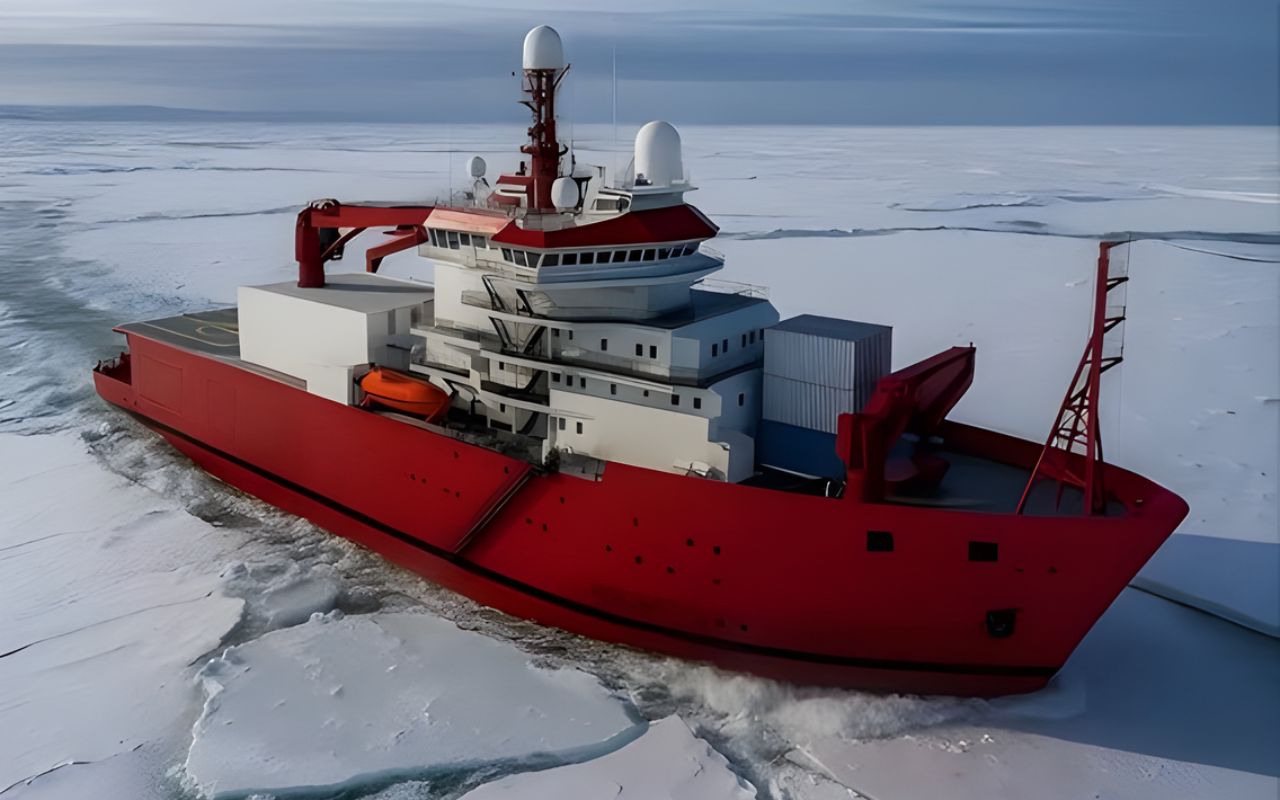
The construction of the Polar Ship Almirante Saldanha is progressing ahead of schedule and strengthens Brazil’s presence in Antarctica; the vessel will be 93 meters long, have a two-month autonomy, and technology to face ice.
-
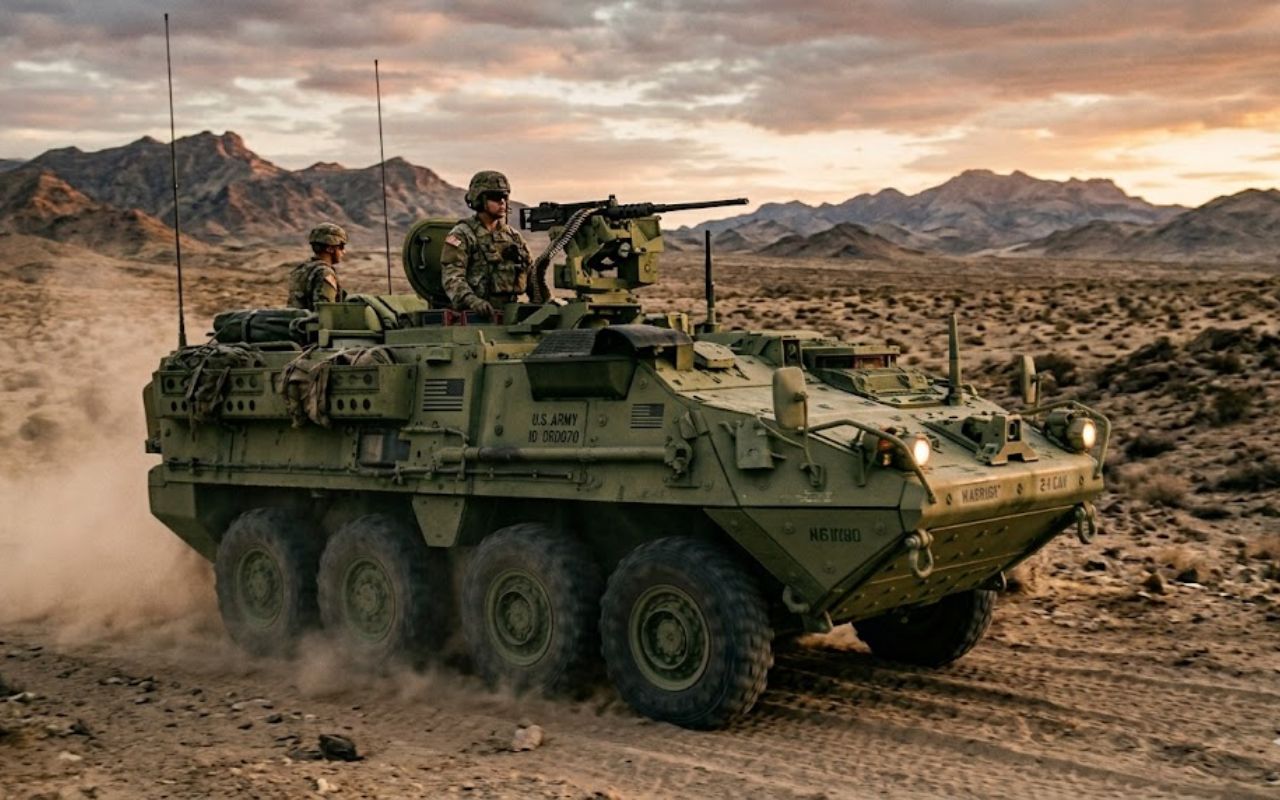
The United States Army has an armored vehicle that reaches speeds of up to 100 km/h, capable of operating normally on different types of terrain and also on asphalt without causing damage; equipped with a 350 hp engine, it can transport up to 9 soldiers — meet the Stryker.
-
Gepard 1A2: the armored vehicle that fires 1,100 rounds per minute and became a shield against drones in Brazil.

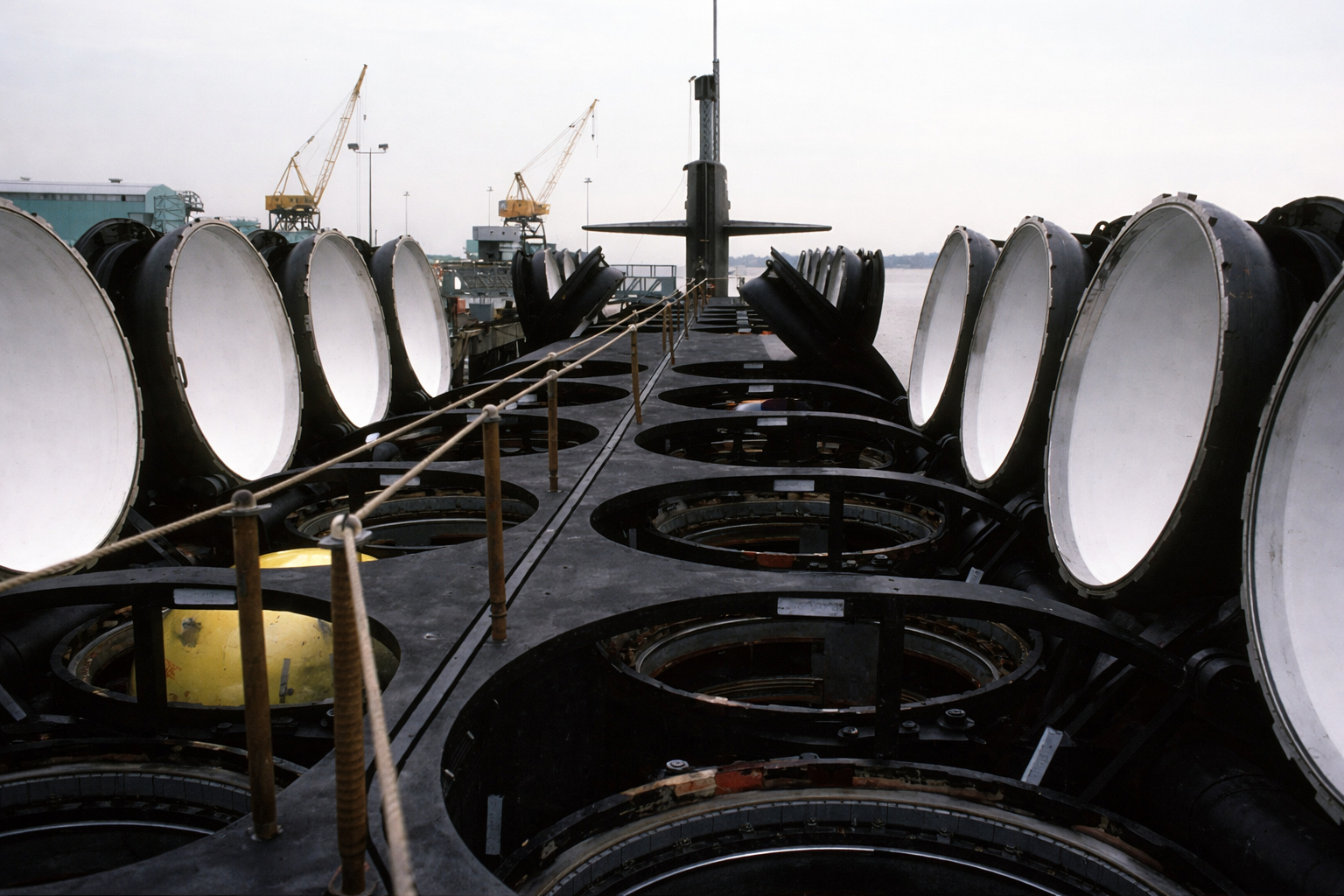
Each submarine of this class can carry up to 154 Tomahawk cruise missiles, distributed in 22 vertical launch tubes, each containing seven missiles. Altogether, the four submarines can carry up to 616 Tomahawk missiles ready for launch.
These ships were originally built as nuclear ballistic submarines (SSBN). Between 2002 and 2008, they were converted to guided missile submarines (SSGN) following the limitations imposed by the START II treaty, which reduced the number of permitted nuclear strategic submarines in the American fleet.
The conversion transformed the Ohio class into the largest conventional submarine attack platforms ever built.
Ohio Submarines Proved Their Capability in Real Combat Operations
The Ohio class submarines were not limited to military exercises. They participated in various real operations over the past two decades. One of the most notable examples occurred in 2011, during Operation Odyssey Dawn in Libya. On that occasion, the USS Florida launched over 90 Tomahawk missiles against strategic targets, marking the first time in history that a guided missile submarine executed an attack of this scale in real combat.
Another example occurred during Operation Epic Fury in 2025, when the USS Georgia participated in military pressure operations against Iran.
In addition to firepower, these submarines also serve as forward bases for special operations. Each vessel can carry up to 66 Special Forces operators, including SEAL teams, as well as two dry-deck shelters for underwater infiltration vehicles.
Virginia Payload Module: The Navy’s Solution to Replace Ohio Class Submarines
The strategic challenge was clear: how to replace ships capable of launching hundreds of cruise missiles without building gigantic submarines again? The answer was the Virginia Payload Module (VPM).
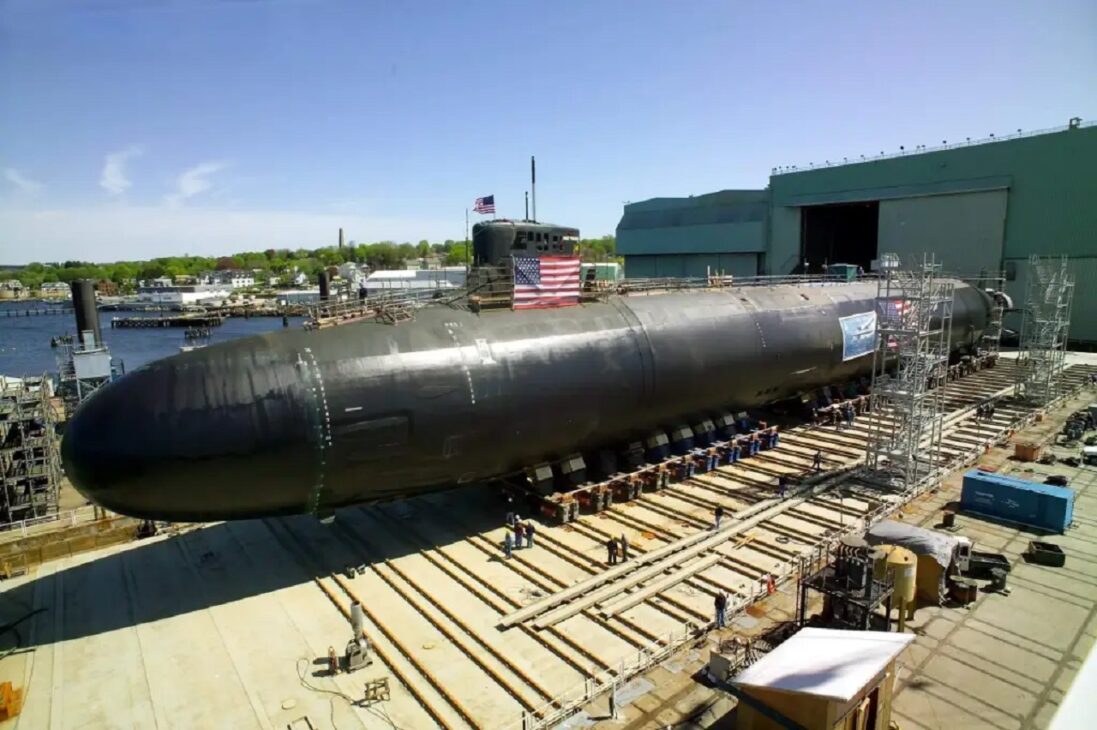
The VPM is an additional hull section measuring 25.6 meters in length inserted in the middle of the submarine during construction. This module significantly enhances the submarine’s armament capacity.
Each module includes four large-diameter launch tubes, capable of carrying seven Tomahawk missiles each. This adds 28 additional missiles to the submarine, which combines with the 12 missiles already present in the standard Virginia class tubes.
With the VPM, a Virginia Block V submarine can carry up to 40 Tomahawk missiles, more than tripling the capacity of previous models.
Virginia Block V Submarines Become Larger, Heavier, and More Armed
The inclusion of the Virginia Payload Module significantly alters the vessel’s dimensions. Previous Virginia class submarines were approximately 114 meters long and had a submerged displacement of 7,800 tons. With the new module, the Block Vs are around 140 meters long and have a displacement of approximately 10,200 tons.

The cost also increases. Each Block V submarine costs around US$ 3.2 billion, approximately US$ 400 million more than previous models.
Despite the increase in size and armament capacity, the propulsion system remains the same. The submarines continue to use the S9G nuclear reactor, with an estimated lifespan of 33 years and a power of about 40,000 horsepower at the shaft. The officially reported speed is over 25 knots submerged, although unconfirmed estimates suggest that the actual speed may reach close to 35 knots.
Not Even Four Virginia Submarines Can Fully Replace One Ohio
Even with the increased capacity provided by the VPM, there is a mathematical limit. An Ohio class submarine carries 154 Tomahawk missiles. A Virginia Block V submarine with VPM carries 40 missiles.
This means it would take almost four Virginia Block V submarines to match the firepower of a single converted Ohio. As four Ohio submarines are set to retire, the U.S. Navy would need about 22 Virginia Block V submarines equipped with VPM to fully restore the current vertical launch capacity.
So far, the official plan calls for only ten submarines of this type, enough to reduce the loss of capacity but not to fully compensate for it.
USS Arizona (SSN-803) Bears One of the Most Symbolic Names in American Naval History
The choice of the name Arizona for the SSN-803 carries significant historical meaning. The USS Arizona (BB-39) was destroyed during the Japanese attack on Pearl Harbor on December 7, 1941. The explosion of its ammunition magazine killed 1,177 sailors, representing the greatest loss of life on a single ship in the history of the U.S. Navy.
The hull of the ship remains submerged in Pearl Harbor today, transformed into a national memorial. For over 80 years, no ship in the U.S. Navy has used the name Arizona. The SSN-803 will be the first ship to reclaim this name since World War II.
The keel of the submarine was laid exactly on December 7, 2022, marking the 81st anniversary of the attack on Pearl Harbor.
The Virginia Payload Module Was Designed for Future Weapons, Including Hypersonic Missiles
The VPM was not designed just for the current Tomahawk missiles. The large-diameter tubes have also been sized to accommodate developing weapon systems, including the Conventional Prompt Strike, the U.S. Navy’s hypersonic missile program.
While the Tomahawk flies at subsonic speeds and can take hours to reach distant targets, a hypersonic missile can travel 1,500 kilometers in less than 15 minutes, flying at speeds greater than Mach 5.
This capability could transform Virginia submarines into extremely fast strategic attack platforms.
The Production of Virginia Submarines Faces Industrial Delays
Despite technological advancements, the program faces industrial challenges. The two shipyards responsible for building the submarines — General Dynamics Electric Boat and HII Newport News Shipbuilding — have combined production goals of 2.33 submarines per year, above current capacity.

Strikes, a shortage of skilled labor, and supply chain issues during the pandemic delayed the construction of several units. The USS Arizona (SSN-803), whose construction began in December 2022, is not expected to enter service until the end of this decade.
The Submarine Race in the Indo-Pacific Pressures the American Navy
These delays occur at a time when global naval competition is intensifying. China is rapidly expanding its fleet of nuclear submarines and strengthening its military presence in the Indo-Pacific.
During the period between 2026 and 2028, when the Ohio submarines will be retired and the new Virginia Block Vs will not yet be fully operational, the underwater attack capacity of the United States may fall below historical levels.
Recognizing this vulnerability, the U.S. government has been accelerating investments. In April 2025, General Dynamics Electric Boat received a US$ 12.4 billion contract for the construction of two new Virginia submarines.
The New USS Arizona Represents a Historic Transition for the American Submarine Force
The original USS Arizona sank at Pearl Harbor at a time when the United States was still preparing for war. More than eight decades later, the new USS Arizona (SSN-803) represents an attempt by the U.S. Navy to avoid repeating past strategic mistakes.
The submarine symbolizes the transition from a generation of giant missile launchers to a new fleet of more versatile, technologically advanced modular submarines.
The Navy’s bet is that these new submarines will preserve the U.S. capability for underwater power projection in an increasingly competitive international scenario.









-

-

2 pessoas reagiram a isso.