





 Português
  Inglês
  Espanhol
  4 min de leitura
  0 comentários


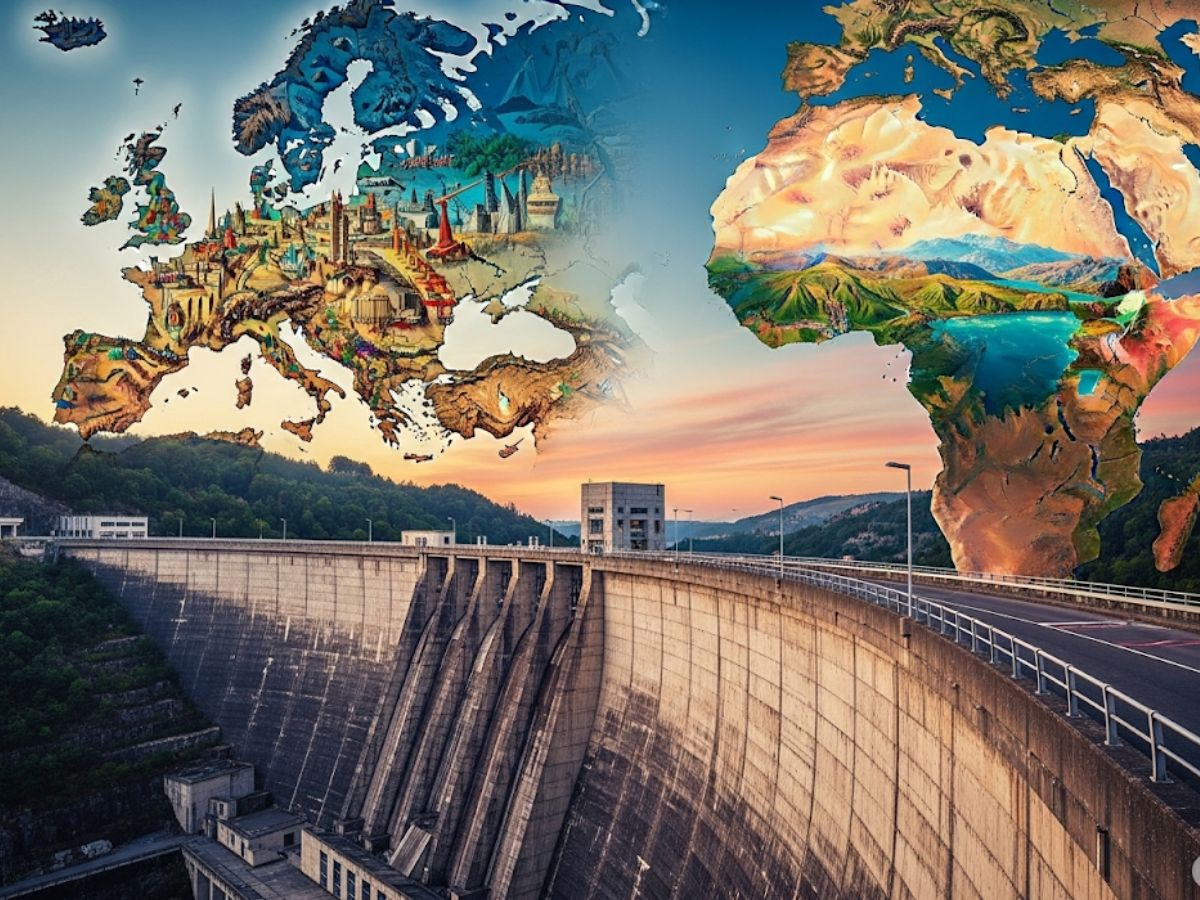
Discover Atlantropa, Herman Sörgel’s 1920s Project to Build a Mega Dam in Gibraltar, Lower the Mediterranean, and Create a New Supercontinent.
Atlantropa, conceived by German architect Herman Sörgel in the 1920s, remains one of the most ambitious megaprojects of the 20th century. The vision was to build a mega dam across the Strait of Gibraltar, lowering the level of the Mediterranean Sea by up to 200 meters. This monumental undertaking aimed to reclaim vast areas of land, generate hydroelectric power, and unite Europe and Africa.
Analyzing the technical plan, geopolitical ambitions, projected socioeconomic impacts, and the reasons why this geoengineering dream never materialized, it leaves a legacy of warning and fascination.
A Mega Dam for a New World Dreamed by Herman Sörgel
Herman Sörgel (1885-1952), a German architect, was the mind behind Atlantropa. Inspired by works that described the Mediterranean as a “lost valley” and a “sea of evaporation”, Sörgel proposed his mega dam in Gibraltar. His motivations, in the turbulent interwar period, included pacifying Europe with a common goal, solving the energy crisis, and creating “living space” (Lebensraum) through the colonization of new lands.
-
A megaproject worth R$ 89 billion is advancing in Iraq and promises to change the game in global trade by creating a new corridor between Asia and Europe, reducing traditional routes and repositioning the country as a logistics powerhouse.
-
Goodbye bedside table: floating shelves become a trend in 2026 by freeing up space in the bedroom, improving circulation, bringing visual lightness, and integrating technology without taking up floor space.

-
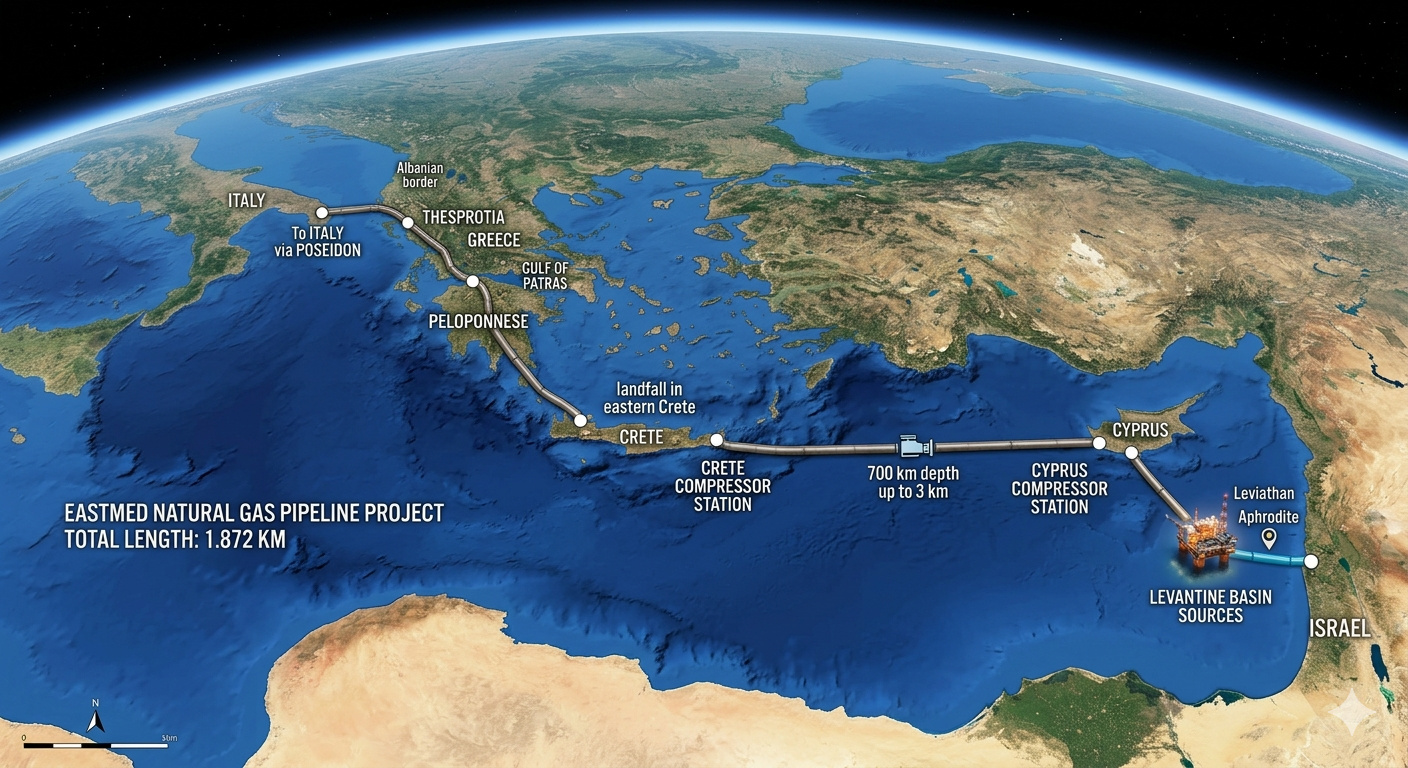
Israel, Greece, and Cyprus signed an agreement in 2020 to transport gas from the Mediterranean to Europe via a 1,872 km pipeline, but Turkey claimed sovereignty over part of the maritime route, and the project never materialized.
-
Israel, Greece, and Cyprus signed an agreement in 2020 to transport gas from the Mediterranean to Europe via a 1,872 km pipeline, but Turkey claimed sovereignty over part of the maritime route, and the project never materialized.

The primary objectives were clear: massive hydroelectric power generation, reclaiming about 600,000 km² of land in the Mediterranean, and the creation of the supercontinent “Eurafrica”. Sörgel even believed in climatic improvements, such as the irrigation of the Sahara.
The Technical Plan of the Mega Dam of Gibraltar and Its Projected Consequences
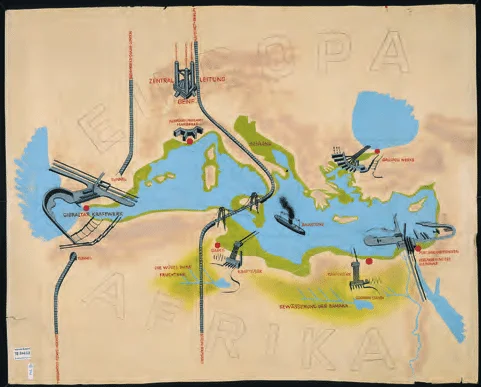
The technical plan of Atlantropa was colossal. The centerpiece would be the mega dam at the Strait of Gibraltar, with estimates of 13-14 km in length and up to 1000 meters in height at certain points. Its construction would take 10 years, employing 200,000 workers. Other significant dams would be constructed between Sicily and Tunisia (dividing the Mediterranean) and in the Dardanelles (controlling the Black Sea).
The level of the western Mediterranean would be lowered by 100 meters and the eastern by 200 meters, a process that would take over a century. The dam network promised a total production of 110,000 MW of power. However, challenges such as the geological instability of Gibraltar, the astronomical demand for concrete, and the salinity of the new lands (which would be unsuitable for agriculture) were critical obstacles.
Geopolitical Ambitions and Socioeconomic Impacts of the Mega Dam Project
Atlantropa was a deeply geopolitical project. Sörgel envisioned “Eurafrica” as a new continent, predominantly inhabited and managed by Europeans, to counter the rising power of America and Asia. Africa was seen as a source of raw materials and land for European colonization, reflecting a Eurocentric and colonial perspective.
Economically, the project promised new agricultural lands, relief from unemployment through public works, and industrial growth driven by abundant energy. However, the impacts on Mediterranean societies would be severe: historic coastal cities such as Venice and Marseille would become isolated inland, and economies based on fishing and maritime trade would be devastated.
The Reception and Failure of Atlantropa: Why Was the Mega Dam Never Built?
Atlantropa gained popularity in the late 1920s and early 1930s, with support from modernist architects like Peter Behrens. Sörgel founded the Atlantropa Institute to promote the idea. However, skepticism was significant due to the engineering infeasibility, astronomical costs, and lack of international cooperation, especially from Mediterranean countries.
The major political powers did not support the project. Nazi Germany rejected it, focusing on expansion to the east. After World War II, reconstruction costs, the rise of nuclear energy as a new “unlimited” source of energy, and the end of colonialism rendered Atlantropa obsolete and socially unacceptable. Herman Sörgel died in 1952, and the Atlantropa Institute was dissolved in 1960.
Lessons from a Mega Dam Dream for the 21st Century
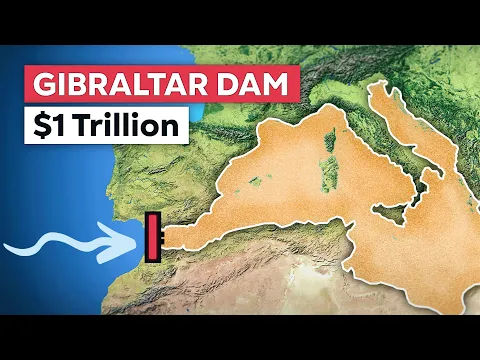

Despite not being realized, Atlantropa left a significant legacy. A modern analysis reveals that the project would have catastrophic environmental consequences, such as hypersalinity of the Mediterranean (similar to the Messinian Crisis), destruction of ecosystems, global climate changes (including a possible breakdown of the Gulf Stream), and geological instability.
Atlantropa serves as a crucial cautionary tale in debates on geoengineering and megaprojects. It underscores the dangers of unforeseen consequences, technological hubris, and the need for rigorous impact assessments, international cooperation, and deep ethical considerations. The value of the project lies precisely in its failure, teaching about the limits of human ambition and the wisdom of restraint.









-

-

-

3 pessoas reagiram a isso.