





 Portuguese
  English
  Spanish
 5 min of reading
  0 comments


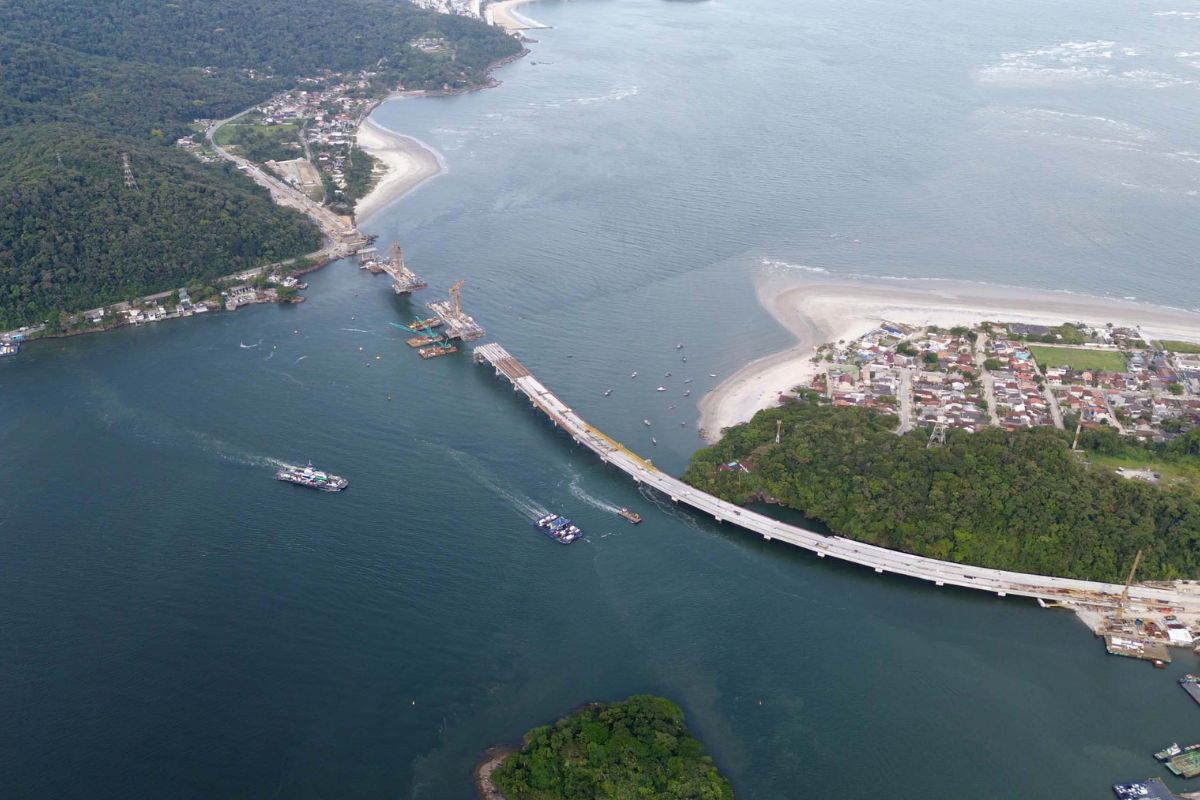
With 1.24 kilometers and 23 spans, the megabridge called Guaratuba Bridge is advancing on the coast of Paraná: 63 of the 64 piles are ready, 128 of 153 beams launched, and 16 of 20 pre-cast spans completed. The work on PR-412 with wide sidewalks is expected to replace the ferry and be completed in April 2026.
On January 2, 2026, the progress of the Guaratuba Bridge project became a regional highlight as a logistical turnaround on the coast of Paraná, with an investment exceeding R$ 400 million, a length of 1.24 km, and a promise to reduce historical crossing bottlenecks in the bay.
With delivery scheduled for April 2026, the megabridge was designed to end the daily dependence on the ferry, especially during holidays and peak seasons, by creating a continuous highway corridor on PR-412 between Guaratuba and Matinhos, with four lanes, bike lanes, and sidewalks for pedestrians.
What the Megabridge Changes in the Crossing and Why the Ferry Becomes Secondary

The main change is operational: the crossing will no longer depend on the loading and unloading of the ferry and will occur in a continuous flow.
-
New CCR concrete paving technology promises roads up to 3x more durable, less maintenance, and cost reduction in Brazil.

-
Made from recycled plastic, plastic wood is gaining space in the construction industry because it does not rot, resists moisture, and reduces maintenance costs over the years.

-
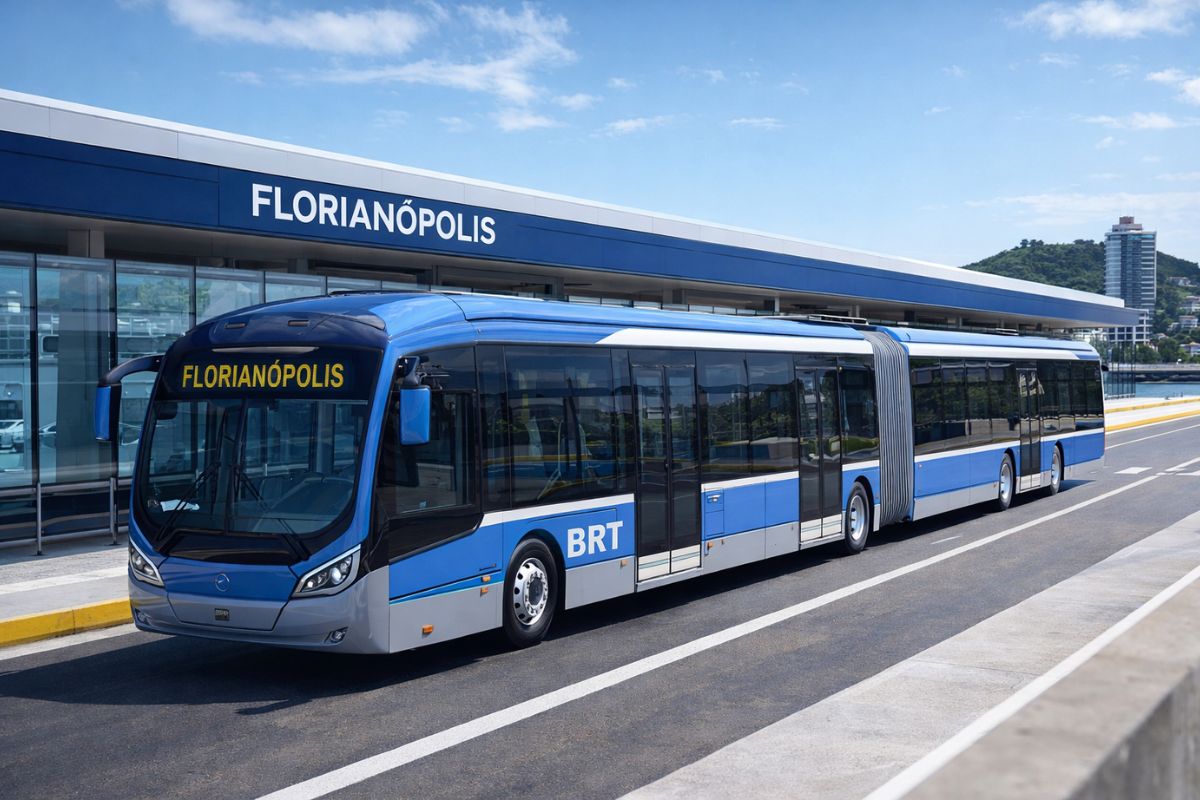
Florianópolis will receive a million-dollar BRT that will begin construction in 2026 with nearly 400 million in funding from the federal government and the Inter-American Development Bank, and the map already shows the routes for the exclusive bus corridors.
-
Without a blueprint, without an engineer, and using scrap from the dump, a father spends 15 years building an 18-room castle for his daughter, featuring tram tracks, 13 fireplaces, and over 700 m², which may now be demolished.

In practice, this reduces time uncertainty, as delays, which currently can vary depending on queues and demand, tend to be replaced by direct transit.
The megabridge will serve as a permanent axis for vehicles, pedestrians, and cyclists, with four traffic lanes, a bike lane, and sidewalks.
By eliminating the bottleneck of the ferry as a mandatory stage, the project targets the critical point that most appears during holidays and peak seasons: the formation of extended queues.
Dimensions, Structural Design, and What It Means to Have 23 Spans in 1.24 km
The project has 1.24 kilometers distributed over 23 spans, a fact that helps understand how the bridge supports itself at multiple points to cross the bay.
Spans are the sections between supports, and the quantity suggests a segmented deck, compatible with the gradual implementation of beams and pre-cast modules.
In addition to the roadway, the concept described is of a multimodal corridor. This matters because it prevents the megabridge from being just a solution for cars, incorporating bike lanes and sidewalks as continuous infrastructure, not as a later adaptation.
Work Progress: Piles, Cross-Beams, Beams, and the 680 Meters Already Formed
The reported execution numbers indicate a phase of consolidation.
Of the 64 expected piles, 63 have been completed, and 19 cross-beams have been finished, indicating that the heaviest foundation stage is nearing its end.
In the superstructure, progress is evident in the number of pieces positioned: of the 153 planned beams, 128 have already been launched.
There is also progress in the pre-cast spans: 16 of the 20 have added up to more than 680 meters ready, which provides an objective sense of the extension already realized on the deck.
This set of milestones shows why the timeline aims for April 2026.
When the foundation and beams reach this level, the bottleneck usually migrates to final assembly, finishes, and roadway integration, including signage and access adjustments.
Stressed Section: Why It Is the Most “Imposing” and Technical Part
The project includes a stressed section, described as the component that will give the most imposing look and will play a decisive role in load distribution.
In stressed bridges, cables support the deck from towers, which changes the structural behavior and can allow for larger spans in the main segment.
In the context of the megabridge, the stressed section is relevant for two reasons. First, it tends to attract attention in the final stage, being visually striking.
Second, it is a sensitive phase of engineering, as it involves precision in assembly, alignment, and structural performance of the whole.
PR-412, Guaratuba, and Matinhos: The Direct Effect on Local Mobility and Tourism
The direct link between Guaratuba and Matinhos via PR-412 is the functional point that gives everyday meaning to the megabridge.
The replacement of the ferry with a fixed bridge reorganizes residents’ movements, services, and logistics, impacting travel predictability and goods circulation.
In tourism, the expected effect is to reduce time wasted in queues, especially during holidays and peak seasons, when demand grows in a concentrated manner.
Less uncertainty in the crossing changes the visitor’s planning, which tends to redistribute flow throughout the day and expand the circulation window.
Operation Expected from April 2026 and What Needs to Be Adjusted in Accesses
The expectation is that, with delivery in April 2026, the megabridge will function as a high-volume corridor, with four lanes, bike lanes, sidewalks, and modern lighting, requiring adjustments in roadway access and signage currently linked to the ferry area.
This transition is not just physical.
When the crossing no longer depends on the ferry, services and routines concentrated around loading tend to be reorganized.
The center of mobility changes location, and the region needs to adapt flows of vehicles, pedestrians, and cyclists to the new axis.
What Is Not Yet Closed: Toll and Exact Clearance Over Water
There are points that are not detailed in the base. One of them is whether the crossing will have a specific toll, as the focus of the information presented is on execution and the timeline, not on the billing model.
Another point is the exact height of the deck in relation to the water level.
The project foresees sufficient height to allow navigation in the bay according to maritime safety regulations, but the exact clearance is not included in the snapshot of information about physical progress.
The Guaratuba Bridge concentrates, in a single package, cost, scale, and direct effect on daily life: an investment exceeding R$ 400 million, 1.24 km, four lanes, bike lanes, and sidewalks, with a promise to reduce queues and make the crossing predictable by replacing the ferry on PR-412.
With delivery expected in April 2026, the project enters the phase where the numbers of piles, beams, and spans already indicate advanced decking and a growing focus on final assembly, accesses, and operation.
If you live on the coast of Paraná or frequently travel through the region, a realistic step is to monitor the signage and accesses on PR-412 as the work approaches April 2026, to adjust routes and schedules already thinking about the end of the ferry.
Do you think the megabridge will really reduce holiday queues, or will the volume of cars in peak season continue to create bottlenecks even with the Guaratuba Bridge finished?









-

-

-

-

-

12 pessoas reagiram a isso.