





 Portuguese
  English
  Spanish
  5 min of reading
  0 comments


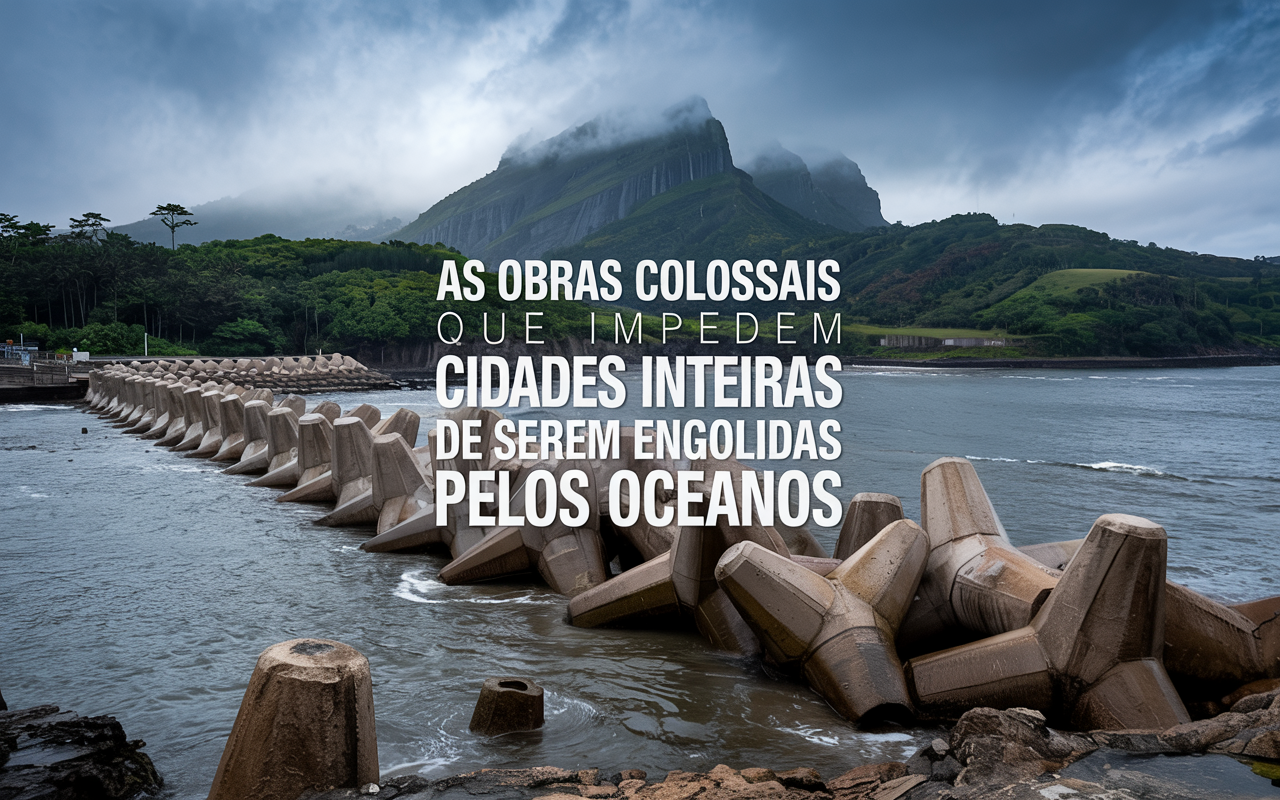
Maritime Barriers, Dykes, and Massive Coastal Engineering Works Protect Cities from the Advance of the Sea. Discover How These Flood Defenses Work and the Risks They Face.
With the rising ocean levels accelerated by climate change, various coastal regions of the planet face the same dilemma: how to prevent the sea from swallowing entire cities? The answer, in many cases, comes from engineering itself. These are sea containment works, such as dykes, movable barriers, sluice gates, and protective walls — true walls against the sea that redefine the concept of coexistence with nature.
Coastal engineering has taken on a central role in a scenario of increasingly frequent extreme events. From Rotterdam in the Netherlands to Tokyo in Japan, passing through Venice, New York, and Seoul, governments are investing billions in technologies and creative solutions to ensure their populations are protected from catastrophic floods, violent tides, and tsunamis.
Today, you will learn about the main maritime barriers built by humans, how these flood defenses work, their strengths, limitations, and the challenges they face amid the new global climate reality.
-
A couple buys an old chalet, breaks the kitchen floor for renovation, and finds over a thousand coins of gold and silver hidden since the English Civil War over 4 centuries ago.
-
Rigid bags with their days numbered: new trend prioritizes comfort in 2026.

-
Florianópolis will receive a million-dollar BRT that will begin construction in 2026 with nearly 400 million in funding from the federal government and the Inter-American Development Bank, and the map already shows the routes for the exclusive bus corridors.
-
YouTuber creates an excavator equipped with a giant 4.5-meter sword to challenge his brother to a rematch, and the invention quickly goes viral on social media.

Coastal Engineering as a Shield Against the Oceans
Coastal engineering is the field of civil engineering dedicated to the construction and maintenance of structures in maritime and coastal environments. It involves the planning of:
- Dykes (fixed containment walls);
- Movable barriers (gates that only rise when necessary);
- Beach and artificial dune reinforcement;
- Bypass channels and urban drainage systems integrated with the sea.
With rising sea levels, it is estimated that by 2050 more than 1 billion people will live in coastal areas at risk of flooding, according to the UN and the Intergovernmental Panel on Climate Change (IPCC).
Netherlands: A Global Reference in Sea Barriers
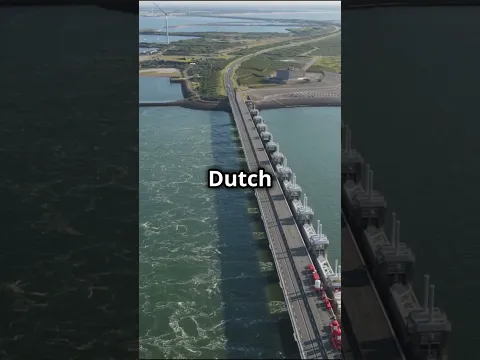

The Netherlands, where more than 60% of the territory is below sea level, is considered the most advanced example of flood defenses. The Delta Works is a complex of dams, movable sluices, dykes, and maritime barriers designed after the tragedy of 1953, when a flood killed more than 1,800 people. There are over 3,700 kilometers of structures that allow for controlling the inflow of water from the North Sea to the low-lying areas of the country.
The most impressive is the Oosterscheldekering barrier, featuring 62 giant sluices that can close in up to 75 minutes when extreme storms are forecasted.
Japan: Walls Against Tsunamis
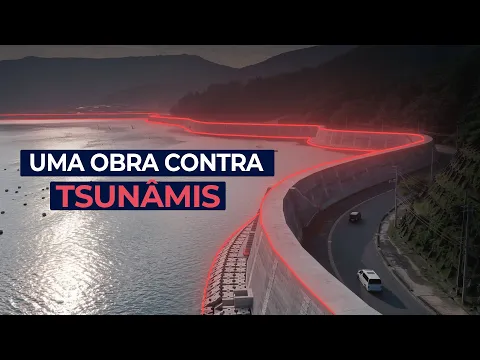
After the devastating tsunami of 2011, which killed more than 18,000 people, Japan intensified the construction of coastal walls throughout the Tohoku region.
Some of these concrete barriers reach a height of 15 meters and have been erected along hundreds of kilometers of coast. The idea is to reduce the force of tsunamis before they reach urban areas.
Despite criticism regarding their environmental and visual impact, they are seen as essential preventive measures in one of the countries most vulnerable to earthquakes and tsunamis.
South Korea: Urban Walls and Integrated Technology
In South Korea, the city of Busan — one of the largest coastal metropolises in the country — is already implementing maritime barriers and automated dykes, integrated with meteorological sensors and artificial intelligence.
The system provides for the automatic closing of sluices in the event of storms, as well as the diversion of rainwater to underground emergency drainage channels.
It is a modern model of adaptive coastal engineering, aimed at handling both high tides and intense urban rainfall.
Italy: The MOSE Project That Protects Venice
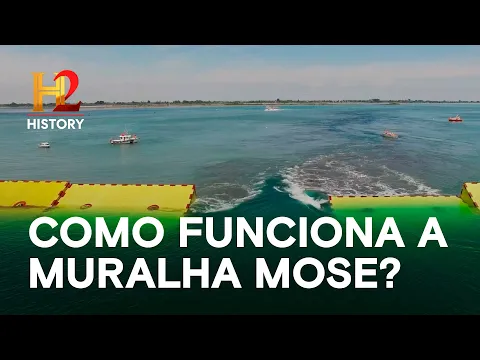
Venice, built on stilts in the middle of the Italian lagoon, faces increasingly severe historical flooding due to the rising Adriatic Sea.
To contain the advance of water, the MOSE Project was created — a system of 78 movable sluices that rise from the seabed to isolate the city when there is a high tide warning.
The work began in 2003 and cost more than US$ 6 billion, facing delays, corruption scandals, and complex testing. But since 2021, it has operated successfully, preventing dozens of floods in critical areas.
United States: Walls Against Hurricanes
Cities such as New York, New Orleans, and Miami face different threats: hurricanes and intense tropical storms.
After Hurricane Sandy (2012), New York initiated the “Big U” project, which aims to construct green walls, elevated parks, sluices, and floating barriers to protect Manhattan.
Meanwhile, New Orleans, devastated by Hurricane Katrina (2005), now has the Hurricane and Storm Damage Risk Reduction System (HSDRRS) — one of the largest coastal protection systems in the U.S., with 220 kilometers of barriers and state-of-the-art drainage pumps.
How Do Movable Maritime Barriers Work?
These sea containment works are designed to function only when necessary, preventing the marine ecosystem from being affected daily.
Stages of Operation:
- Weather and sea level monitoring;
- Detection of exceptional tide or storm;
- Automatic or manual activation of sluices;
- Raising barriers to block sea entry;
- Returning to resting state when the risk passes.
These systems require constant maintenance, technological updates, and integration with alert systems.
The Challenges of Flood Defenses
Despite the proven effectiveness of many structures, there are limitations and risks:
- Extremely high cost of construction and maintenance;
- Accelerated wear due to salt and marine action;
- Environmental impact on tides, sediments, and local ecosystems;
- Possibility of partial or total collapse, if the magnitude of the event exceeds designed limits.
Moreover, extreme weather events are becoming more intense and frequent, which pressures older designs to adapt.
With predictions that sea levels could rise between 0.6 m and 1.1 m by 2100, according to the IPCC, coastal cities will need to rethink their defense strategies.
Future solutions include:
- Autonomous floating barriers powered by renewable energy;
- Artificial intelligence to predict risks in real time;
- Green engineering, utilizing mangroves, artificial corals, and reefs to dissipate waves;
- Resilient urban planning, with elevated city construction and amphibious neighborhoods.
And Brazil? Are We Prepared?
Brazil has over 7,000 km of coast, with dozens of cities vulnerable to extreme events, such as Fortaleza, Recife, Santos, Florianópolis, and Rio de Janeiro.
However, according to the Brazilian Panel on Climate Change, the country still lacks national strategic planning for coastal defenses. There are specific projects for containment, such as:
- Retaining walls in erosion areas;
- Recomposing dunes and native vegetation;
- Dredging of coastal urban drainage channels.
The lack of resources, integration among municipalities, and permanent public policies hinder the implementation of large-scale works like those seen in developed countries.
The fight against the advance of the sea is one of the greatest challenges of contemporary engineering. The walls against the sea that rise in different continents are not just demonstrations of strength and technique — they are necessary to ensure the survival of millions of people in coastal areas.
As the climate changes and the sea advances, humanity will have to combine coastal engineering, climate science, and urban intelligence to prevent tragedies and preserve territories.
More than concrete works, these defenses represent the thin line between civilization and the ocean.








Seja o primeiro a reagir!