





 English
  Francês
  Alemão
  Italiano
  Japonês
  Norueguês
  Portuguese
  Spanish
  5 min of reading
  0 comments


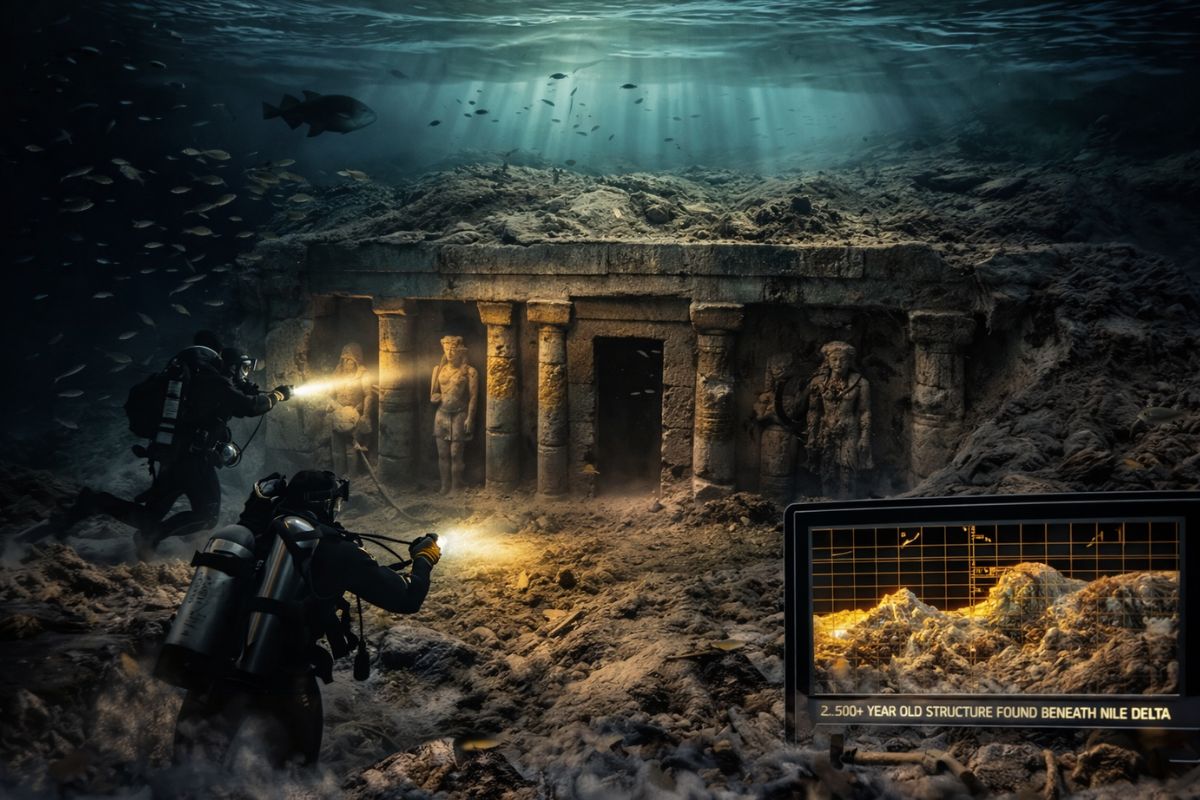
Scientists from Egypt and Germany discovered a mysterious structure of 20 by 24 meters beneath the archaeological site of Buto in the Nile River Delta using electrical resistivity tomography, and the excavations revealed religious amulets, a scarab with the name of Pharaoh Tutmosis III, and evidence of a temple from the 26th Dynasty of Egypt
A mysterious structure over 2,500 years old has just been found hidden beneath the Nile River Delta in Egypt. Researchers from Egypt and Germany identified the underground construction at the archaeological site of Buto (Tell el-Fara’in) using technology that sends electric currents through the ground to create a three-dimensional map of what is buried. The mysterious structure is approximately 20 by 24 meters and may be a secondary temple or a monumental tomb dating back about 2,600 years, according to a study published in the journal Applied Geophysics.
According to Popular Mechanics, targeted excavations at the site revealed robust walls set on a sand base and a large number of religious artifacts. Among the objects found are amulets depicting deities such as Isis, Horus, Hathor, and Bes, as well as a rare scarab with the name of Pharaoh Tutmosis III, considered one of the most significant items of the collection. The discovery is attracting the attention of the international scientific community due to the scale of the construction and the wealth of material found.
How scientists used electric currents to find the mysterious structure
The Nile River Delta has always posed a challenge for archaeological excavations. The region where the river splits before flowing into the Mediterranean accumulates layers of sediments, groundwater, and multiple overlapping human occupations over millennia.
-
The new fastest-growing profession in Brazil in 2026 pays up to 20,000 reais per month, does not require a diploma, and consists of writing precise instructions for artificial intelligences that entire companies depend on to operate.

-
The aircraft carrier USS Nimitz is coming to Brazil with F/A-18 Super Hornet fighters, Seahawk helicopters, and a guided missile destroyer in an operation that will circumnavigate the entire South American continent in 2026.

-
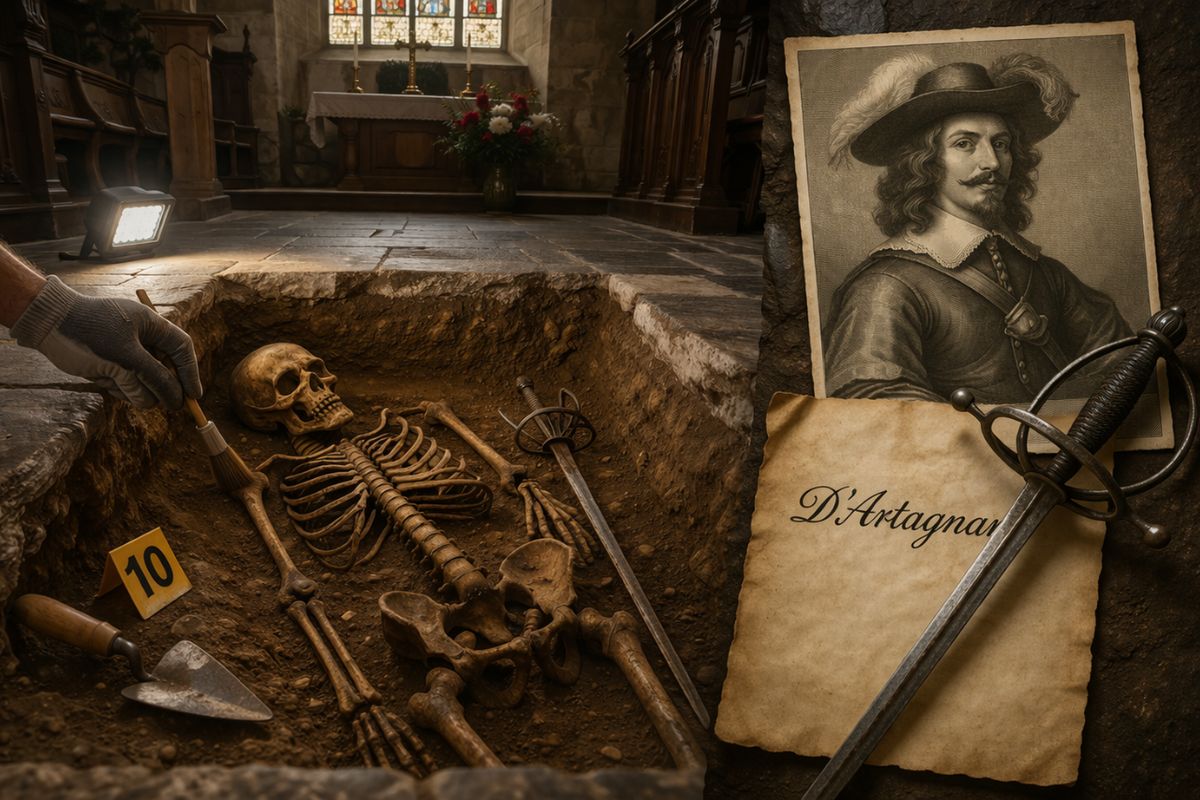
The skeleton of D’Artagnan, the legendary musketeer who inspired Alexandre Dumas, may have been found beneath the floor of a church in the Netherlands after workers discovered human bones and a French coin during a renovation.
-
The problem has never been the steel, never been the engineering, and never been the safety: the grain silo house that heats itself is blocked by aesthetic laws, banks that don’t know how to evaluate it, and insurers that can’t price it.

Blindly excavating in this unstable terrain is expensive, slow, and can damage what is buried. To overcome these difficulties, the team of scientists adopted an approach that combined satellite imagery with a technique called electrical resistivity tomography.
This technology works by sending electric currents through the ground and measuring how different materials resist the passage of electricity. Stones, brick walls, and cavities respond differently than the surrounding earth and water, allowing for the creation of a three-dimensional map of what is buried without the need to dig.
That is how the researchers located the mysterious structure beneath the site of Buto and were able to direct excavations to the exact points where the construction was located.
What the excavations revealed inside the mysterious structure of Buto
The excavations guided by electrical tomography revealed a construction with robust walls set on a prepared sand base. Inside the mysterious structure, archaeologists found a large number of religious artifacts indicating ceremonial or funerary use.
Amulets depicting the deities Isis, Horus, Hathor, and Bes were recovered, along with offering basins and sculpted reliefs that reinforce the hypothesis that the site served religious rituals.
The most significant item found at the site is a scarab with the name of Pharaoh Tutmosis III, ruler of the 18th dynasty who reigned around 1479 to 1425 BC.
Another artifact that caught the attention of specialists was an amulet featuring a hybrid creature combining characteristics of a baboon, hawk, and a dwarf deity, a piece that suggests a complex and rare religious symbolism.
The diversity and state of preservation of the objects indicate that the mysterious structure was a space of considerable importance in the region.
The 26th Dynasty of Egypt and the planning behind the construction
Researchers date the mysterious structure as belonging to the 26th Dynasty of Egypt, known as the Saite period, which lasted from approximately 664 to 525 BC.
Evidence indicates that the ground was artificially leveled before construction, pointing to sophisticated planning in a naturally unstable region. This intervention in the environment would have been essential to ensure that the walls and foundations could support the weight of the building on the soft soil of the Nile River Delta.
The Saite period marks a phase of reunification of Egypt under the rule of pharaohs originating from the city of Sais, located precisely in the Nile Delta. It was a time of intense construction activity, with restoration of ancient temples and the erection of new religious structures throughout the region.
The discovery in Buto fits into this context: a temple or monumental tomb built by order of an elite investing in sacred architecture as a form of political and religious legitimization.
The 1,500-year hiatus imposed by the Nile River on the occupation of Buto
In addition to the mysterious structure itself, the study provided information about the history of human occupation in the Buto region. Researchers identified a hiatus of approximately 1,500 years in the occupation of the area, possibly caused by changes in the course of the Nile River.
Changes in the river’s branches may have made the site uninhabitable for centuries, forcing the population to relocate to neighboring areas.
This pattern of abandonment and reoccupation is common in sites of the Nile Delta, where the fluvial dynamics determine where communities can settle.
The site of Buto has multiple layers of occupation ranging from the pre-dynastic period to more recent times, making each excavation a task of separating millennia of history overlapped in just a few meters of depth. The mysterious structure from the 26th Dynasty is just one of these layers.
Why the discovery in the Nile River Delta matters for modern archaeology
The identification of the mysterious structure of Buto is relevant for two reasons. The first is what it reveals about the 26th Dynasty and urban and religious organization in the Nile Delta during the Saite period.
The second is the demonstration that non-invasive techniques such as electrical resistivity tomography can locate entire constructions beneath the ground without destroying what is around.
This approach changes the way archaeology can be conducted in difficult regions like the Nile Delta, where excess water and sediments have always limited traditional excavations.
If the same technology is applied to other sites in the region, it is likely that similar structures yet to be discovered will come to light in the coming years. The subsoil of the Nile Delta may hold much more than archaeology currently knows.
What else lies beneath the surface of Egypt
The discovery of a mysterious structure 2,500 years old beneath the Nile River Delta is the kind of find that reminds us how much we still do not know about ancient civilizations.
Scientists sent electric currents through the ground, created a map of what was buried, and found walls, amulets of deities, and a scarab with the name of a pharaoh. All of this without knowing that the structure existed until a few months ago.
The question now is: how many other constructions like this are still silently awaiting beneath the Egyptian subsoil?
What do you think this structure was: a temple, a tomb, or something completely different? Leave your thoughts in the comments and share this article with anyone fascinated by archaeology and the history of ancient Egypt.







Seja o primeiro a reagir!