





 Portuguese
  English
  Spanish
  3 min of reading
  0 comments


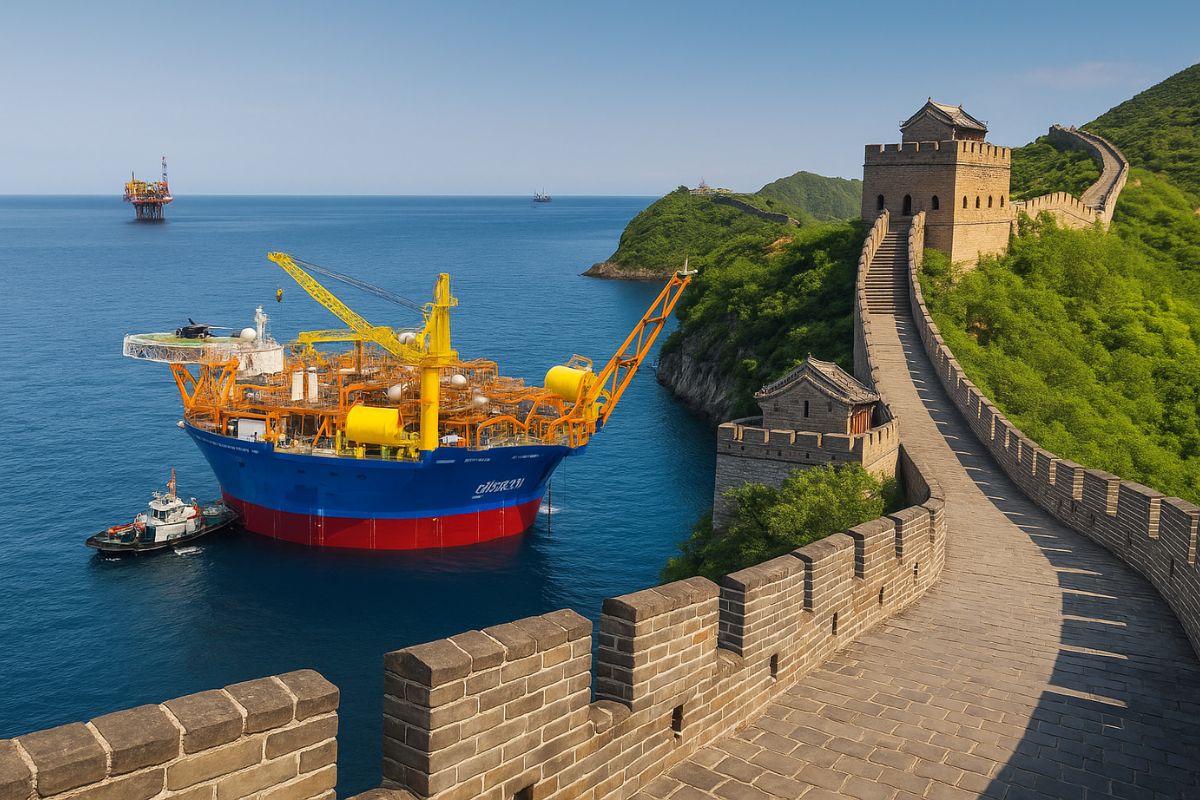
The Chinese State-Owned CNOOC Announced The Discovery Of A Giant Field With More Than 100 Million Tons Of Oil, A Crucial Step In The Country’s Search For Energy Security And Self-Sufficiency.
China announced a new oil field discovery of significant magnitude in the South China Sea, a move that reinforces its technological capacity and its pursuit of energy security. The China National Offshore Oil Corporation (CNOOC) confirmed the existence of a field with reserves exceeding 100 million tons of oil equivalent.
The discovery, named Huizhou 19-6, is not only a technical success but also a strategic victory for China. In a scenario of geopolitical tensions, increasing domestic production is a priority to reduce the country’s high dependence on imported oil.
The Announcement Of March 31, 2025: What Was Found?
In an official statement, CNOOC Limited, the state-owned subsidiary, announced on March 31, 2025, the discovery in the Huizhou 19-6 field. The reserve, classified as “proven in-place volume,” holds more than 100 million tons of oil equivalent.
-
Offshore industrial demand in Macaé skyrockets with the recovery of oil and gas and could grow by up to 396% by 2026 in the Campos Basin.
-
Offshore industrial demand in Macaé surges with the recovery of oil and gas and could grow by up to 396% by 2026 in the Campos Basin.
-
Brazilian giant expands borders in the Southeast: Petrobras confirms new oil discovery in ultra-deep waters in the pre-salt of the Campos Basin.

-
Alert in the global energy market: Severe tropical cyclone hits the coast and disrupts gas production at major plants in Australia, threatening global supply.


The well that confirmed the discovery, HZ19-6-3, was drilled about 170 km from the city of Shenzhen. In tests, it produced 413 barrels of crude oil and 68,000 cubic meters of natural gas per day.
The Engineering Behind The Discovery: The Challenge Of Deep Layers
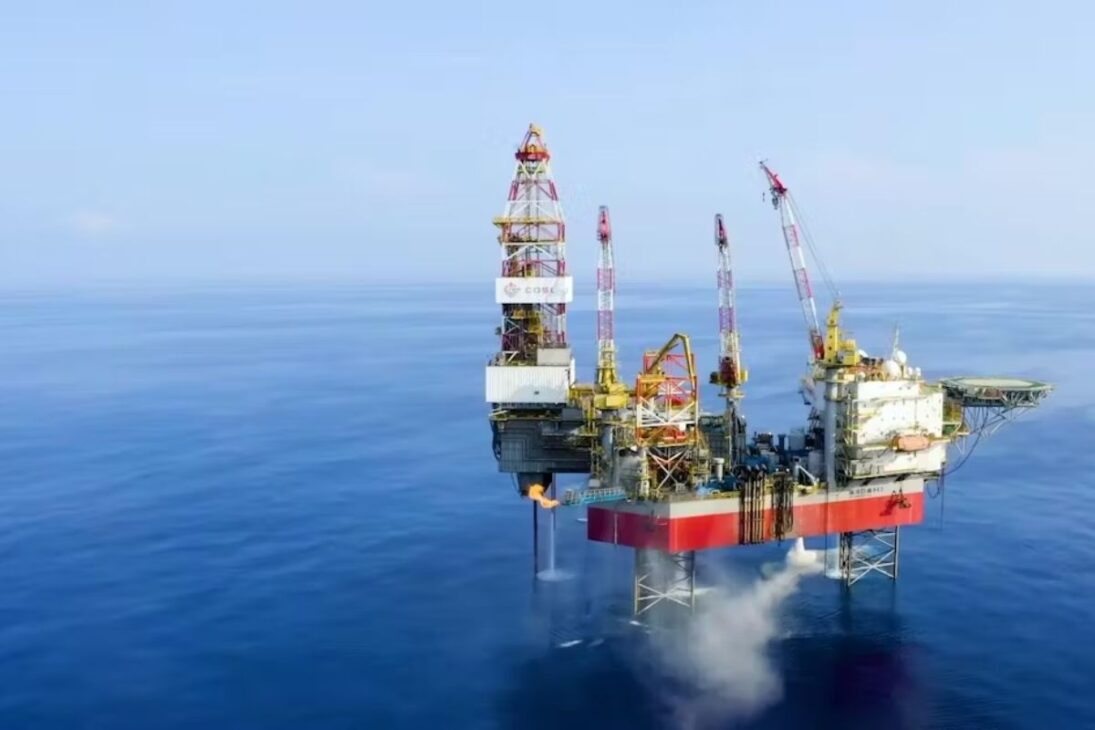
The new oil field discovery is also an engineering feat. The reservoir is located in deep and ultra-deep geological layers, and the well had to be drilled to a total depth of 5,415 meters below the seabed.
CNOOC classified the success as a “major advancement,” which “breaks traditional theoretical understanding” of the region’s potential. The ability to operate in high-temperature and high-pressure (HTHP) conditions demonstrates the technological advancement of the Chinese company.
A Pattern Of Success: CNOOC And The Search For New Reserves
The discovery of Huizhou 19-6 is not an isolated event. It is part of a series of recent successes for CNOOC, which has announced new and massive oil and gas reserves.
In recent years, the company has announced other major discoveries, such as Kaiping South, with 102 million tons, and Bozhong 26-6, with more than 130 million tons. This pattern of success is rapidly replenishing the company’s reserves.
The Strategic Importance For China
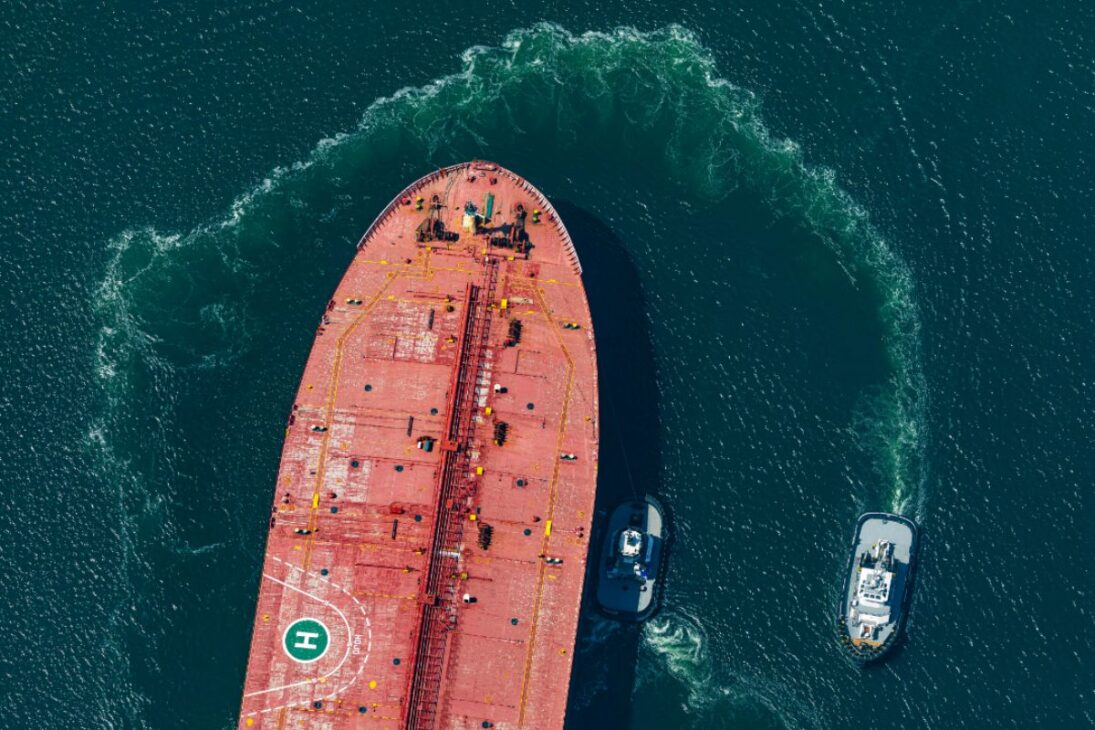
The primary reason for China’s heavy investment in exploration is its high dependence on the external market. The country is the largest oil importer in the world and, in 2024, imported about 74% of all the oil it consumed.
This dependence is a major strategic vulnerability. Each new oil field discovery within its own territory is an important step toward increasing internal production and ensuring an energy supply that is not affected by geopolitical crises in other parts of the world.
A Discovery In “Undisputed” Waters
The location of the discovery is a crucial geopolitical detail. The South China Sea is an area of intense territorial dispute between China and its neighbors, such as Vietnam and the Philippines.
However, CNOOC made a point to highlight that the Huizhou 19-6 field is located in a non-disputed area, well within China’s Exclusive Economic Zone. This was a maneuver to celebrate the discovery without escalating tensions in the region, separating the energy achievement from sovereignty disputes.










Seja o primeiro a reagir!