





 Portuguese
  English
  Spanish
  3 min of reading
  0 comments


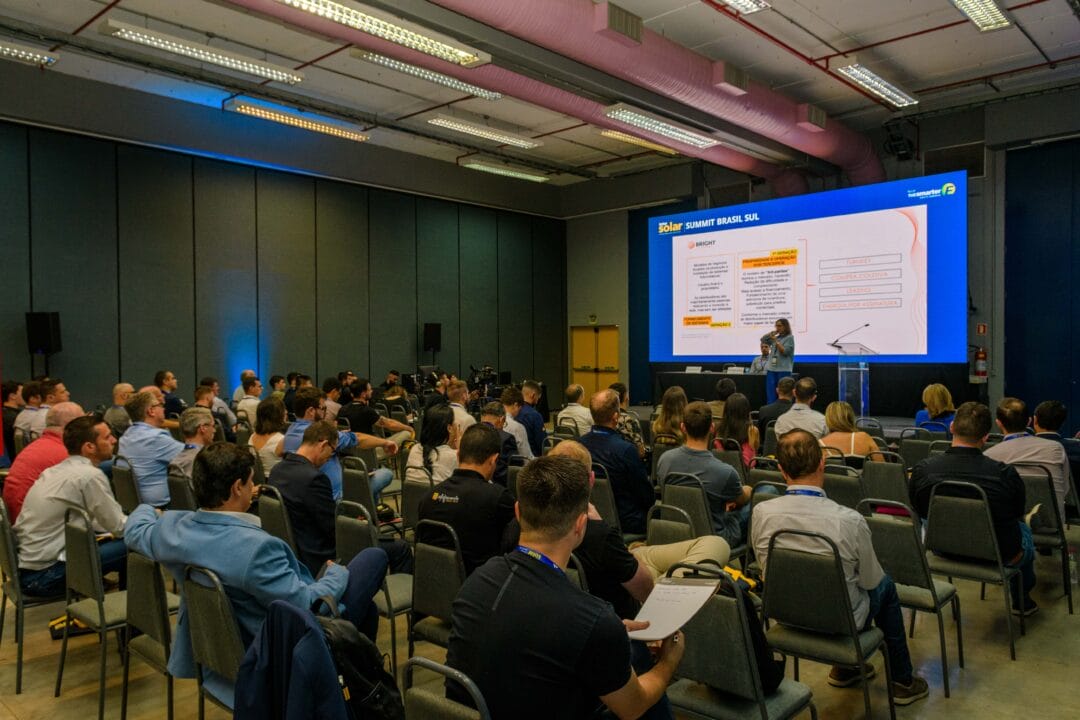
Intersolar Summit Brazil South: A Milestone for Renewable Energy
The first edition of the Intersolar Summit Brazil South, held in Porto Alegre, highlighted the significant change in Brazil’s energy matrix. The event, focused on solar energy, attracted over 2,000 visitors and solidified the growing importance of renewable sources, such as photovoltaic energy. This regional version of the leading Latin American solar energy event brought together experts and industry professionals, discussing the new challenges and opportunities that the energy transition presents for Brazil.
The consolidation of renewable sources, particularly photovoltaic solar energy, is defining a new profile for the country’s energy matrix. During the event, held on November 7 and 8 at the Fiergs Events Center, important data on the Brazilian energy situation and its business outlook were shared, along with the latest technological solutions and regulatory and tax challenges. The fair featured 51 exhibitors, including industries, distributors, integrators, services, and academic activities, all showcasing innovations and news.
The Growth of Renewable Energy and Its Challenges
The General Director of Solar Promotion International, Florian Wessendorf, in partnership with Aranda Eventos e Congressos, announced the next edition of the event for 2024, reaffirming the commitment to promoting solar and renewable energy in Latin America.
-
Renewable energy advances over protected areas in Brazil, and a survey by the Energy Transition Observatory reveals silent impacts that challenge environmental conservation and pressure sensitive traditional territories.

-
Rio Grande do Sul accelerates energy transition: State invests in renewable technologies and consolidates decarbonization strategies and pathways to attract billions in new industrial investments.

-
With 160,000 m² of collectors, an area larger than 20 football fields, Silkeborg, in Denmark, hosts a solar thermal plant that heats 19,500 homes and could become the largest solar heating plant in the world.

-
A study reveals the expansion of renewable energy procurement in Brazil and shows how companies are taking advantage of opportunities to reduce expenses, ensure energy efficiency, and strengthen strategic environmental commitments.


In the final panel of the congress, data on the growth of energy consumption in Brazil and the crucial role of renewable sources were presented. Marcio Takata, CEO of Greener, highlighted that the average annual electricity consumption in Brazil is expected to grow by 3.2% per year, with a projected increase of 37% over the next ten years. To meet this growing demand, it is essential to utilize renewable energy generation sources, which are becoming increasingly accessible.
Technical Challenges and Opportunities Post-Blackout
Solar and wind energy, characterized as non-dispatchable sources, are transforming the Brazilian energy matrix, shifting from a high inertia model to a low inertia one. This scenario was evidenced by the blackout on August 15, where the peak energy generated by these renewable sources caused a significant load interruption across the country.
Professor José Marangon, President Director of MC&E, highlighted the need for technological innovation to face these new challenges. He advocates for investment in grid-forming inverters and storage systems to ensure greater stability and control in the electrical system.
Designing a Sustainable Future
The Intersolar Summit Brazil South, with the support of various organizations, including the Brazilian Association of Photovoltaic Solar Energy (Absolar) and the Brazilian Association of Distributed Generation (ABGD), is leading the way toward a more sustainable energy future in Brazil. The transition to renewable energies not only represents an opportunity for innovation and economic growth but also a crucial step for the country to face global climate challenges.
This event signals a decisive era for the Brazilian energy matrix, where the potential of renewable energies is being recognized and harnessed, promoting a transformation in both energy generation and consumption in the country.
Source: Sheila Meyer – milim.









Seja o primeiro a reagir!