





 Portuguese
  English
  Spanish
  5 min of reading
  0 comments



Understand the Brazil New Industry (NIB), the ambitious Neoindustrialization policy of the federal government. We detail the central role of BNDES, the six priority missions for development, and the crucial connection with the future tax reform.
The federal government launched the Brazil New Industry (NIB), a comprehensive and multifaceted public policy aimed at revitalizing and modernizing the national industrial sector. The central objective is to boost technological development, increase competitiveness, and generate quality jobs in the country.
With a robust investment led by the National Bank for Economic and Social Development (BNDES), the Brazil New Industry is structured around strategic missions that encompass various sectors. This article analyzes the pillars of this policy, its challenges, and how it aims to transform the Brazilian industry by 2033.
What is the Brazil New Industry? Objectives and the 6 Key Missions
The Brazil New Industry (NIB) is a government strategy with a long-term vision, extending to 2033, and with an initial action plan focused on the period from 2024 to 2026. It was defined by Resolution No. 1 of the National Industrial Development Council (CNDI) in July 2023. Its principles include socioeconomic inclusion, productive and technological development, sustainability, and a qualified international insertion for Brazil.
-
With an investment of R$ 612 million, a capacity to process 1.2 million liters of milk per day, Piracanjuba inaugurates a mega cheese factory that increases national production, reduces dependence on imports, and repositions Brazil on the global dairy map.

-
Brazilian city gains industrial hub for 85 companies that is equivalent to 55 football fields.

-
Peugeot and Citroën factory in Argentina cuts production by half and opens a layoff program for more than 2,000 employees after Brazil drastically reduced purchases of Argentine vehicles.

-
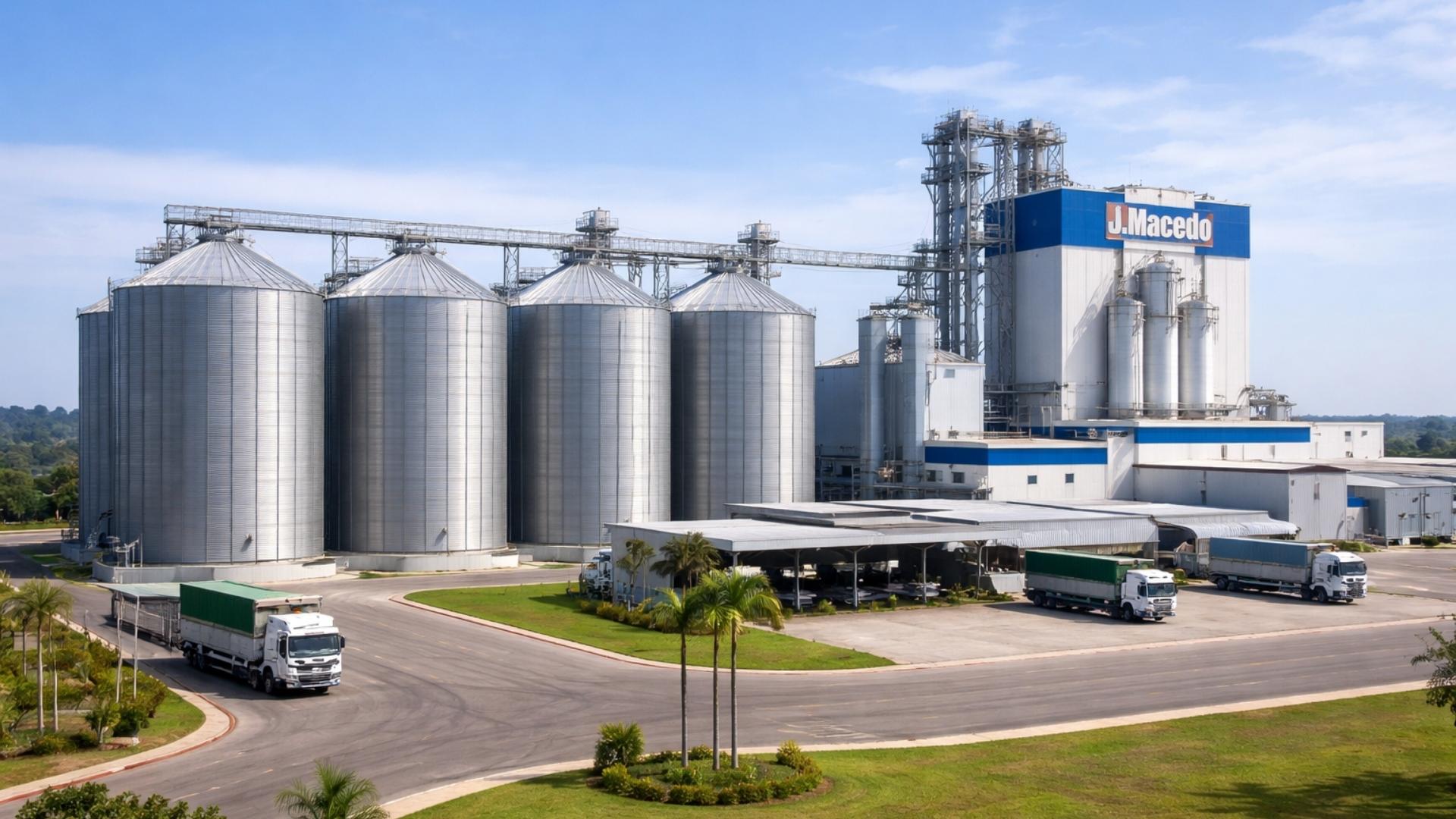
A Brazilian city gains a factory worth R$ 300 million with the capacity to process 200 thousand tons of wheat per year, a mill of 660 tons/day, silos for 42 thousand tons, and an industrial area of 276 thousand m².

The NIB is articulated around six priority missions, each with specific goals:
- Sustainable and digital agro-industrial chains for food, nutritional, and energy security.
- Resilient health industrial complex to reduce vulnerabilities in the Unified Health System (SUS).
- Sustainable infrastructure, sanitation, housing, and mobility.
- Digital transformation of the industry to enhance productivity.
- Bioeconomy, decarbonization, energy transition, and security.1
- Technologies of interest for national sovereignty and defense. These missions, as detailed in the plan, aim to direct neoindustrialization efforts to strategic areas.
BNDES as the Engine: R$ 300 Billion to Boost the Brazil New Industry
The National Bank for Economic and Social Development (BNDES) plays a central role as the main financial agent of the NIB, with a commitment to allocate R$ 300 billion for the policy by the end of 2026. This amount represents an increase from initial figures, signaling strong support. By May 2025, BNDES had already invested R$ 205 billion under the NIB.
The initial distribution of these resources focused on the Agropecuária missions (R$ 56.2 billion), Infrastructure (R$ 50.8 billion), and Digital (R$ 49.6 billion). The bank operates with various lines of credit and programs, such as the More Production Plan (P+P) and BNDES More Innovation, which is structured around axes like More Productivity, More Innovation, More Green, and More Exports.
NIB in Practice: Alignment with State-Owned Companies and Initial Advances in Missions
The participation of large state-owned companies is fundamental to the Brazil New Industry. Petrobras, for instance, demonstrates alignment with the NIB through its plans to contract new vessels with local content and make significant investments in energy transition. The state company expressed concern about the capacity of the national industry to meet these orders, highlighting the need for support for the sector.
Examples of initial projects and investments already show the NIB in action: BNDES financed the expansion of grain storage capacity (Agropecuária Mission); launched a Private Equity Fund for health startups in partnership with Finep and the Butantan Foundation (Health Mission); allocated resources for urban mobility in São Paulo (Infrastructure Mission); and supports the Brazil Semicon program (Digital Mission). Additionally, a green hydrogen project in Piauí (Decarbonization Mission) and financing for Embraer (Defense Mission) also fall within the policy context.
2027 Tax Reform: The Essential Pillar for the Success of the Brazil New Industry
The full effectiveness of the Brazil New Industry is intrinsically linked to the successful implementation of the tax reform, expected to come into effect more comprehensively starting in 2027. This reform is seen as essential for unlocking the potential of the national industry. According to the Minister of Finance, Fernando Haddad, the reform will promote a 100% exemption on investments and will also completely exempt exports.
The expectation is that this exemption will reduce the cost of capital and stimulate industrial modernization. The reform seeks to simplify the system with the unification of five taxes in the Value-Added Tax model (IBS and CBS) and the creation of a Selective Tax (IS). This can reduce compliance costs and end the “fiscal war” between states, creating a more favorable business environment for the objectives of the Brazil New Industry. However, the reform’s transition schedule extends until 2033.
Challenges and Perspectives: The Industry and Specialists’ View on the NIB
The Brazil New Industry is received with support by the National Confederation of Industry (CNI), which considers it a turning point. However, CNI points out significant challenges: the widespread lack of knowledge about the policy among companies, the perception of insufficient resources compared to other countries, the need for coherence in public policies (criticizing high interest rates and the MP of PIS/Cofins), the burden of the tax load, and the “Brazil Cost”, along with the costs of illegality that affect various industrial sectors.
Analysts like André Nassif also raise questions, criticizing the excessive horizontal nature of the missions (which may hinder focus), the incomplete definition of some instruments (such as external trade policy), and, crucially, the lack of a federal institution with central coordination power for the NIB, in addition to misalignment with the restrictive macroeconomic policy. Brazil’s historical track record of “industrialist voluntarism”, with policies that do not endure, also generates caution.
The Future of Reindustrialization with the Brazil New Industry

The Brazil New Industry is an ambitious initiative with the potential to redefine the country’s industrial development. Its success, however, is not guaranteed solely by the substantial financing from BNDES or the alignment of large state-owned companies. It critically depends on the ability to effectively coordinate among various actors and policies, a stable and stimulating macroeconomic environment, the successful and comprehensive implementation of the tax reform, and the effective engagement of the private sector, especially small and medium-sized enterprises.
For the Brazil New Industry to solidify as a lasting and transformative state policy, and not just another short-duration attempt, sustained commitment that transcends governmental cycles is fundamental. Building a political and social consensus around its objectives is, therefore, as important as the financial resources allocated.








Seja o primeiro a reagir!