





 Portuguese
  English
  Spanish
 5 min of reading
  2 comments


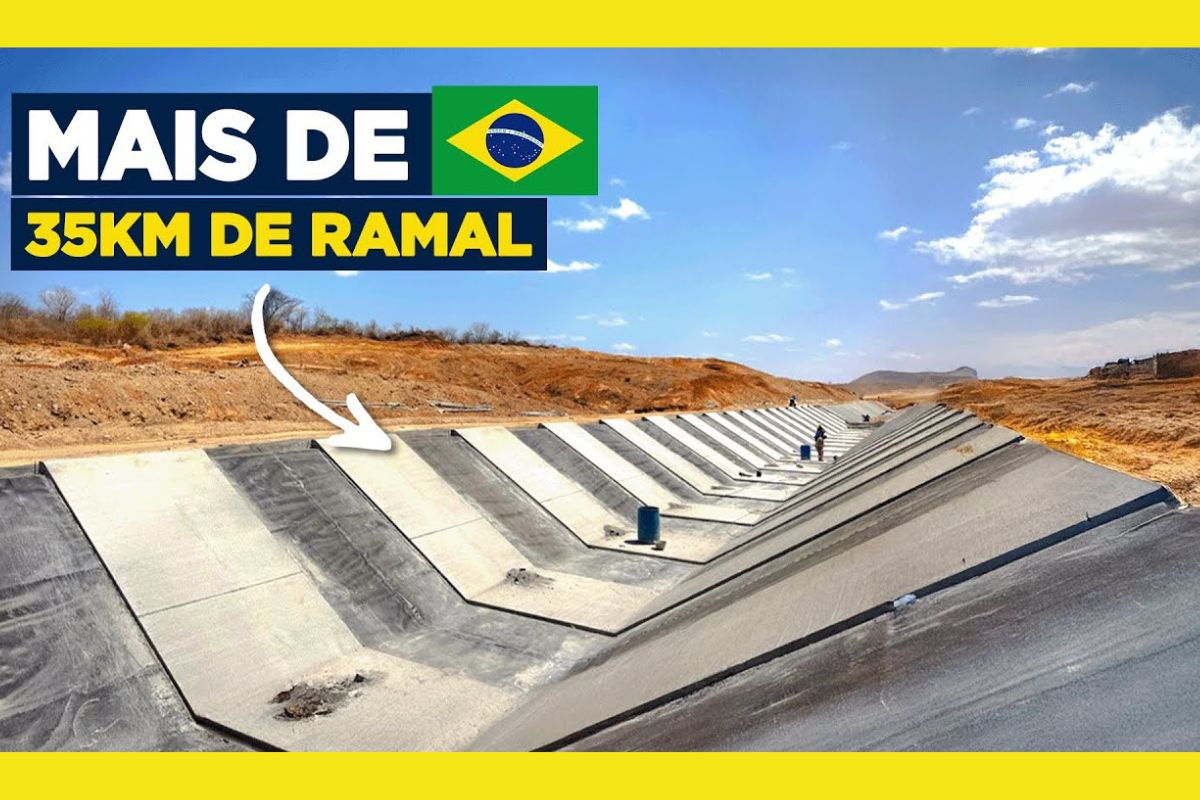


Strategic Work in Ceará Connects the São Francisco Project to Castanhão, with Automation Park, Tunnels, and Aqueducts Scheduled for Delivery in 2027 and Capacity to Serve Millions of People.
In the hinterland of Ceará, where each drought has its historical cost, the construction of the Ramal do Salgado advances, a large-scale water infrastructure that promises to bring water, security, and predictability to 54 municipalities. More than R$ 600 million are mobilized in a solution that combines channels, rock tunnels, elevated aqueducts, and real-time operational control.
The connection, derived from the Northern Axis of the São Francisco River Integration Project (PISF), aims to reinforce the water supply to the Castanhão reservoir and shorten the water’s journey compared to traditional derivations. If delivered on time, in 2027, the system could directly benefit up to 4.7 million people in Ceará, reducing the risk of water collapse in urban and rural areas.
What is the Ramal do Salgado and Where Does It Pass
The Ramal do Salgado is a branch of the PISF, designed to shorten the water route by about 150 km to the Castanhão, the state’s main reservoir.
-
Son of a seamstress from the rural area of Ceará who did not speak English wins a scholarship of over 2 million reais at Williams College, one of the top 10 universities in the United States, covering everything including dormitory, meals, and annual trips to Brazil.

-
Bill Gates revealed that the true secret behind every great achievement is not a brilliant leap but rather small improvements repeated over the years, and the data from his own career and the fight against climate change prove that he is right.

-
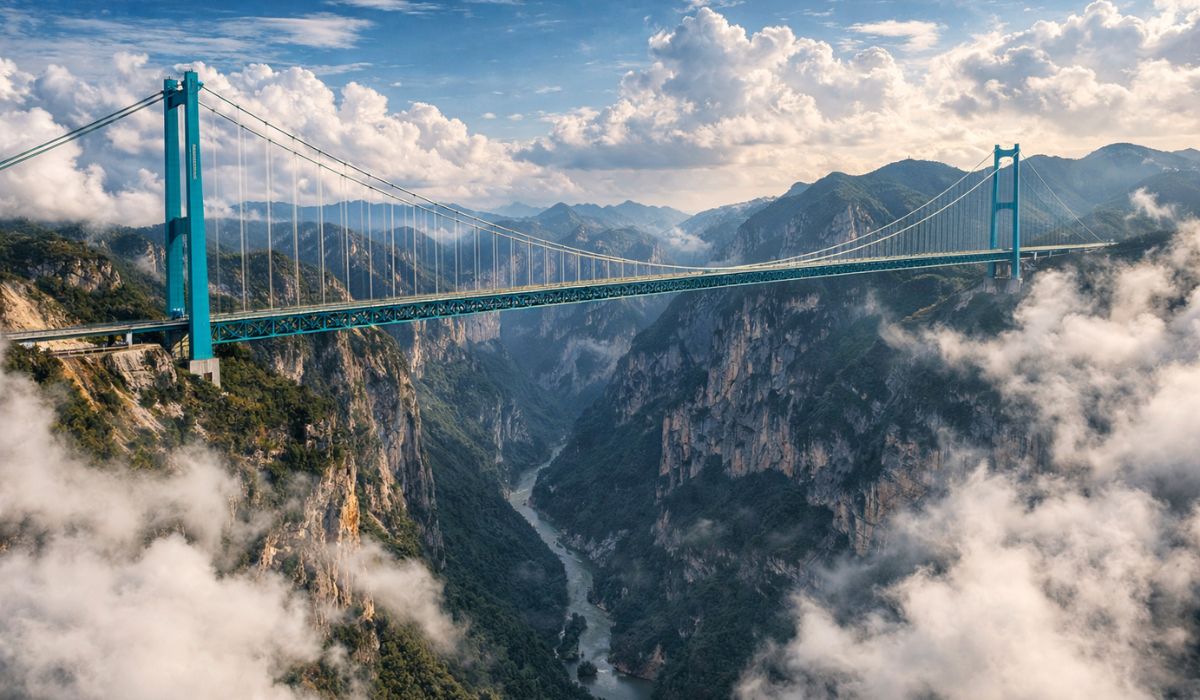
With 22 thousand tons of steel, a height nearly three times greater than the Eiffel Tower, and a cost of R$ 1.6 billion, China is building the highest bridge on the planet over a colossal canyon, reducing a crossing time of over 2 hours to just over 2 minutes.
-
With more than 635,000 doctors, Brazil sees competition increasing in large cities, and recent graduates are competing for shifts at an accelerated pace while the countryside still faces shortages.


It derives at the Jati reservoir (connection with the Northern Axis) and traverses critical areas in the southern part of the state, such as Lavras da Mangabeira and Ipueiras/Palmeirim*, until it integrates with Ceará’s Water Belt (CAC/CAQ), which redistributes volumes across the territory.
The work has a total length of approximately 36 km, with about 34 km of effective water route. Its function is structural: to create redundancy of water security for Ceará, reduce losses in transit and increase the reliability of the supply system during periods of severe drought.
How Much It Costs and Who Is behind It
With an estimated investment of over R$ 600 million, the project brings together federal resources (Novo PAC) and execution in partnership with state water resource structures.
The main construction site near Lavras da Mangabeira serves as a logistical hub for cement, steel, aggregates, and additives, ensuring constant supply to simultaneous fronts.
More than 1,000 workers and hundreds of pieces of equipment are working on the path. The oversight model is rigorous, with periodic audits and controls, standardization of methods, and performance clauses for the consortia, seeking quality of execution and transparency throughout the lifecycle of the work.
How Engineering Makes Water Reach
The solution combines open channels, tunnels excavated in crystalline rock, inverted siphons for crossing valleys and intermittent waterways, as well as elevated aqueducts that overcome elevation differences with trusses and pillars up to 20 m. It’s precision engineering: each segment requires fine compatibility between geology, hydraulics, and structures.
The operational control integrates metal gates, telemetry, and automation, allowing real-time monitoring of flows, levels, and pressures. Everything converges to SECOI, the integrated control center that orchestrates the operation in Ceará.
The goal is to provide quick response to climate events and flexibility in distribution, reducing the risks of supply shortages.
Schedule, Physical Advancement, and Already Delivered Milestones
So far, there is no consensus on the percentage of advancement: federal estimates talk about over 20%, while state metrics indicate about 10.45%, both converging to the diagnosis of initial phase. The delivery is scheduled for June 2027, dependent on climate, geology, and maintaining the pace of construction.
Among the milestones of execution, there are already significant tunnel excavations, aqueduct pillars mounted, and concretions in sections of open channels.
The segmented construction strategy, with independent fronts and unified construction standards, seeks to reduce delays in a terrain of low predictability and geotechnical variability.
The Expected Impact for Ceará
By shortening the water’s path and reinforcing Castanhão, the Ramal do Salgado tends to stabilize the supply in urban municipalities and rural areas of Ceará. Water security generates predictability for agroindustry, production chains, and essential services, opening the door to new investments and economic traction in the semi-arid region.
For the population, the most immediate effect is to reduce the risk of rationing and provide resilience to the system in years of severe drought.
In the medium term, continuous water can boost agricultural income, diversify local activities, and improve social indicators a qualitative leap when the water not only arrives but remains.
Technical and Governance Challenges
The sections in crystalline rock require drilling with explosives and high-durability coatings, while siphon crossings necessitate millimetric assemblies in reinforced concrete. Wind, temperature fluctuations, and occasional floods impose robust solutions in pillars, fixations, and joints of the aqueducts.
On the institutional level, contractual complexity and the volume of resources demand continuous oversight and schedule adjustments.
Clear goals, performance indicators, and transparent communication with the benefiting municipalities are essential to deliver full functionality by 2027 and operate the system efficiently in Ceará.
What Changes in Real Life
If the schedule is fulfilled with quality, Ceará gains a conduit of stability: fewer water trucks, less improvisation, more reliability.
For those living in the semi-arid region, this means planning harvests, avoiding losses, keeping schools and health posts running without setbacks the type of silent transformation that secures families and opportunities in the territory.
The work, due to its scale and design, begins to integrate into the national water map with high social impact per invested real. Engineering is just the beginning; operational and territorial management is what converts infrastructure into quality of life.
The Ramal do Salgado summarizes a water security policy designed for the long term in Ceará: shorter journey, automated control, and strategic redundancy for Castanhão. Delivering on time and with performance is what separates the promise of concrete change in the daily lives of millions.
Do you agree with this change? Do you think this impacts the market? Leave your opinion in the comments; we want to hear from those who live this in practice.






Vcs estao de sacanagem,isso nao vai pra lugar nenhum,um monte de promessas so vai ter corrupção como sempre .
não só o ramal do salgado… mas semiárido brasileiro precisa de uma malha hídrica completa. regiões ao redor do mundo com muito menores índices de pluviometria convivem com a escassez há muito tempo… se comparado aos desertos “férteis” por aí, o nordeste brasileiro é um paraíso.