





 Portuguese
  English
  Spanish
  4 min of reading
  0 comments


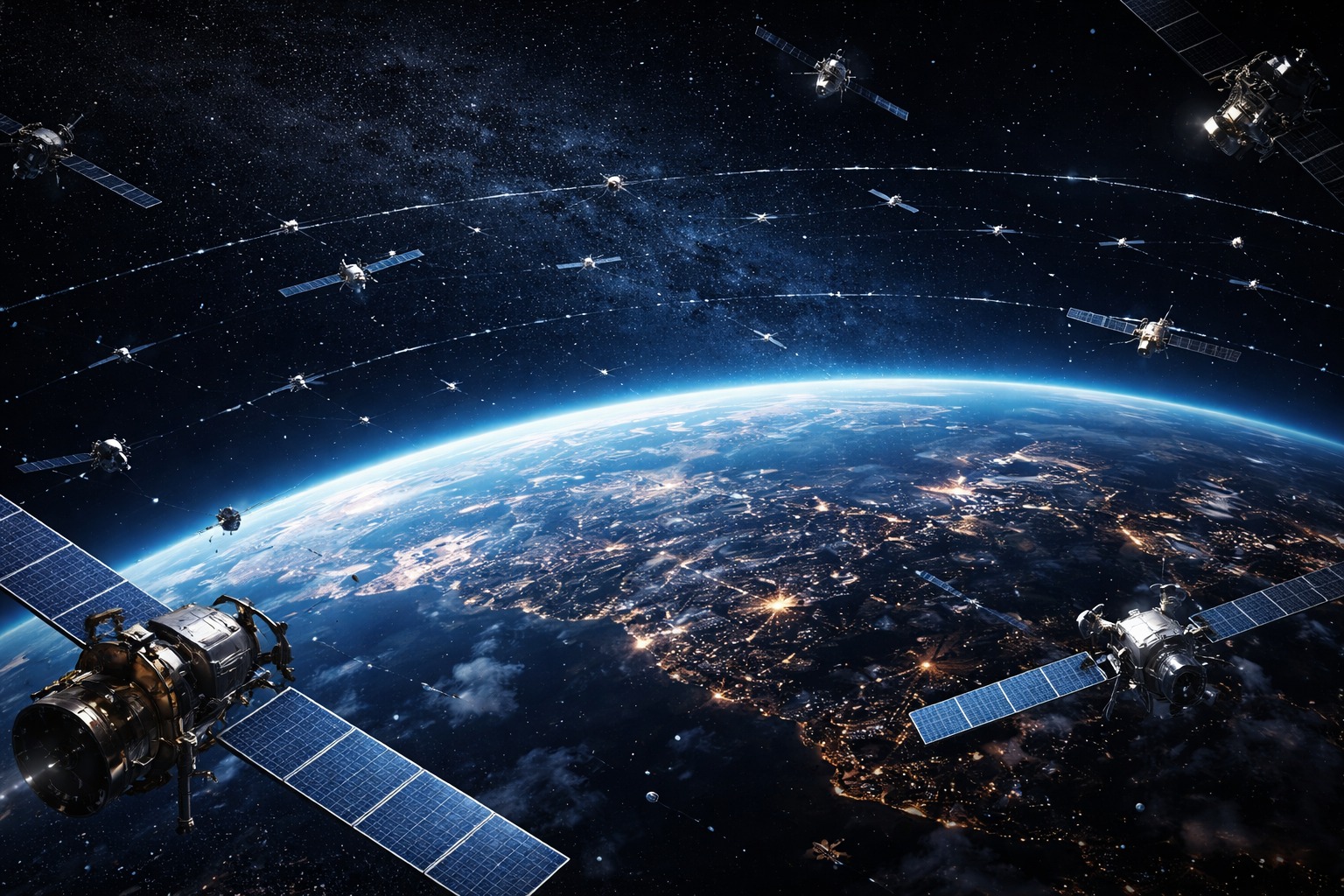
SpaceX Proposal to Launch Up to 1 Million Satellites Rekindles Debate on Impacts on the Night Sky, Space Risks, and Regulatory Gaps
On January 30, 2026, SpaceX submitted a request to the U.S. Federal Communications Commission to launch up to one million satellites, aimed at powering data centers in space, a proposal that could profoundly alter the global night sky.
The request envisions satellites operating between 500 and 2,000 kilometers in altitude in low Earth orbit. Part of these orbits is planned for near-constant exposure to sunlight.
The public can currently submit comments to the commission regarding the request. The proposal arises amid the rapid growth of similar projects involving large constellations of satellites in orbit.
-
Man builds functional 5-meter submarine in his garage using gas cylinders, PVC pipes, and a refrigerator motor, and navigates with the vessel on a lake in Colombia.

-
Millions of people have been eating yam for centuries without knowing that this humble tuber contains a compound called diosgenin, which scientists have now discovered can improve memory and help control blood sugar levels.

-
Scientists from an international project drill 1,800 meters of ice in Antarctica using hot water and discover details about one of the most intriguing places on planet Earth.
-
Seen from space, a colossal volcano nearly 5,000 meters high in Russia has released 1,600 km of smoke over the Pacific, forming “devil’s horns” of lava and revealing the brutal force of the Ring of Fire.

As of February 2026, there were approximately 14,000 active satellites in space. Additionally, another 1.23 million satellite projects were at various stages of development.
These devices typically operate with a single purpose and have relatively short life cycles. On average, each satellite remains active for about five years.
Expansion of Satellites and Change in the Night Sky
Experts warn that the accelerated increase in satellites could permanently transform the night sky as observed from Earth.
Low Earth orbit satellites reflect sunlight for approximately two hours after sunset and before sunrise.
Even with engineering attempts to reduce brightness, many appear as moving dots in the sky.
In various megaconstellations, the satellites are comparable in size to trucks. Projections indicate that new generations could significantly amplify light pollution.
In 2021, astronomers estimated that, in less than a decade, one in every 15 visible light points in the night sky could be a moving satellite.
At that time, this projection considered only about 65,000 proposed satellites from megaconstellations. The current scenario involves much higher numbers.
If constellations with millions of satellites are deployed, the effects on the night sky may become difficult to reverse.
Scientific Impacts and Risk of Space Collisions
Scientific concerns include intense reflections and radio emissions generated by satellites, factors that can directly interfere with astronomical observations.
Space industry experts also point to challenges related to orbital traffic management and logistics.
Currently, there is no unified system for space traffic control similar to that used in civil aviation.
Another point raised is the increased risk of the Kessler syndrome, characterized by a chain reaction of collisions between orbiting objects.
Today, there are already approximately 50,000 space debris with ten centimeters or more orbiting Earth.
If the satellites do not perform all necessary maneuvers to avoid collisions, estimates indicate that a significant collision could occur every 3.8 days.
Cultural and Environmental Effects Associated with Satellites
Besides technical issues, researchers point to cultural impacts linked to the increased visibility of satellites in the sky.
The light pollution caused by these structures can affect indigenous communities that use the night sky in traditional practices, navigation, hunting, and spiritual rituals.
Another discussed factor is the environmental impact related to the large number of launches needed to place thousands of satellites into orbit.
These launches consume large amounts of fossil fuels and can cause damage to the ozone layer.
When satellites reach the end of their useful life, the plan typically is for them to be burned up in the atmosphere.
This process results in the deposition of large amounts of metals in the stratosphere, potentially triggering harmful chemical reactions.
These concerns also raise legal questions. Under international space law, countries are responsible for damages caused by space objects launched under their jurisdiction.
Space lawyers discuss whether current international law can hold companies or private individuals accountable for damages related to satellites.
Regulatory Gaps and Proposal for Dark Sky Assessment
The current regulations for satellite projects primarily focus on technical aspects, such as the use of radio frequencies.
National regulators also evaluate launch safety, environmental impacts on Earth, and liability in case of failures.
However, these rules do not consider how hundreds of thousands of bright satellites may alter the observation of the night sky.
These changes affect scientific studies, navigation, education, and cultural traditions related to the sky.
Researchers state that these impacts do not fit into traditional categories of environmental damage or technical engineering issues.
Therefore, space lawyers like Gregory Radisic and Natalie Gillespie have proposed the creation of a Dark Sky Impact Assessment.
This assessment would be a systematic process to identify and document all effects of a constellation of satellites before its implementation.
The first step would involve gathering evidence from various stakeholders, including astronomers, atmospheric scientists, environmental researchers, cultural scholars, affected communities, and industry representatives.
It would also be necessary to model the cumulative effects of satellites, analyzing changes in sky visibility, nighttime brightness, orbital congestion, and accident risks.
The assessment would define clear criteria for situations where sky visibility is essential for science, navigation, education, and cultural heritage.
Another point would involve implementing mitigation measures, such as reducing the brightness of satellites, orbital adjustments, and modifications to the designs of constellations.
Finally, the results should be transparent, independently reviewable, and directly linked to licensing decisions.
According to experts, the assessment would not have a veto function but would help clarify advantages and disadvantages before approving new constellations.
The discussion is happening as the night sky is already beginning to transform with the continuous growth of the number of satellites in orbit.
With information from Super Interessante.







-

Uma pessoa reagiu a isso.