





 Portuguese
  English
  Spanish
  4 min of reading
  0 comments


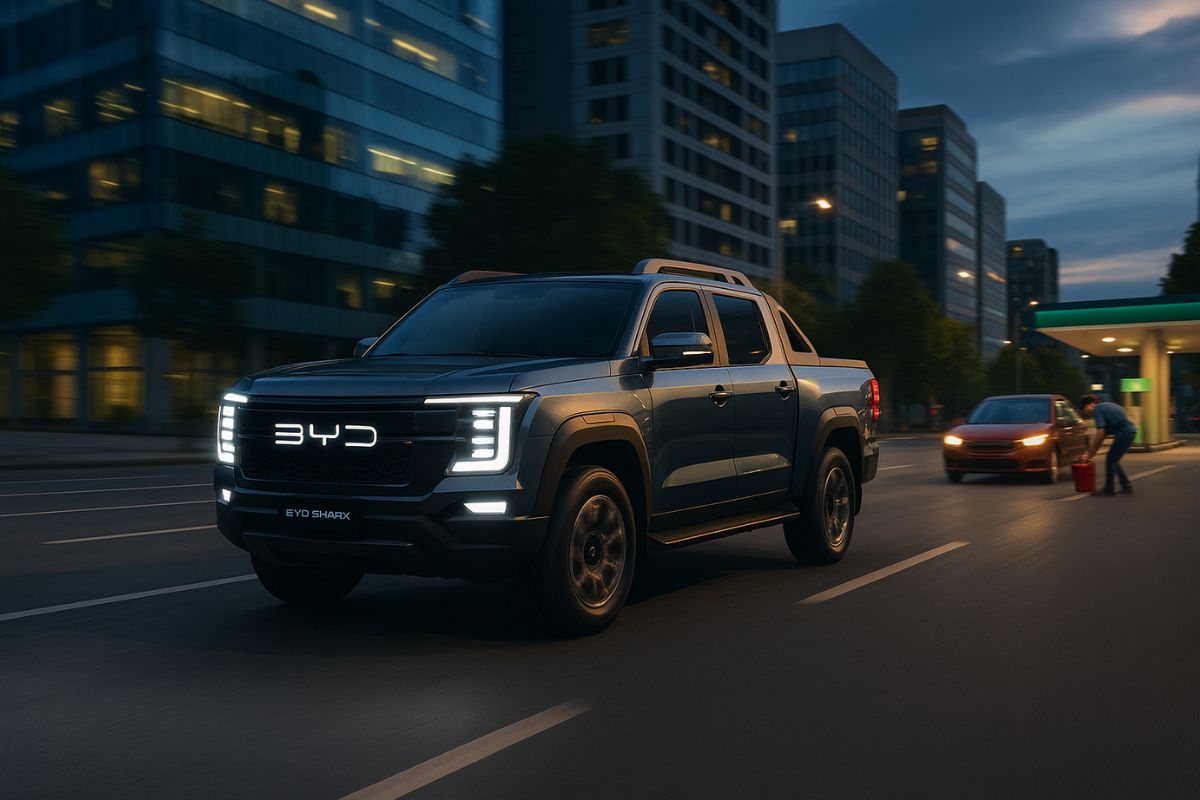
With the Arrival of the BYD Shark and the Imminent GWM Hybrid Poer, the Race for the Most Economical Hybrid Pickup in Brazil Heats Up. We Analyze Consumption Projections and the Factors That Will Define the Champion in 2026.
The Brazilian pickup market is experiencing a revolution with the arrival of plug-in hybrid (PHEV) models. The BYD Shark is already here, and the GWM Hybrid Poer is expected to launch in the second half of 2025, with national production in 2026. The big question for consumers is: which one will project as the most economical hybrid pickup by then?
The interest in pickups that combine robustness with greater fuel efficiency drives the arrival of plug-in hybrid models in Brazil. The BYD Shark is already a reality, and the GWM Hybrid Poer is highly anticipated. Determining which will be the most economical hybrid pickup by 2026 requires analyzing “real consumption,” which in PHEVs varies drastically with driving style and, crucially, the frequency of battery recharging.
BYD Shark: The Pioneering Plug-In Hybrid and Its Consumption and Electric Range Numbers in Brazil
The BYD Shark uses the DMO (Dual Mode Off-road) super hybrid system, consisting of a 1.5 turbo gasoline engine and two electric motors, delivering a combined power of 437 hp. Its Blade (LFP) battery has a capacity of 29.6 kWh, allowing AC charging of up to 6.6 kW and DC charging of up to 55 kW. The official electric range in the PBEV (INMETRO) cycle is 57 km.
-
Costing R$ 16,000, the new Yamaha features a 125 cc hybrid engine with electric assistance, delivers 8.3 hp, includes ABS, optimized fuel consumption, Y-Connect connectivity, 25 liters of storage space, and a surprising 4-year warranty in the urban segment.

-
OMODA & JAECOO grows in Europe in 2026 with an integrated strategy of sales, innovation, local production, and technological advancement in the United Kingdom, Italy, and Spain.

-
OMODA & JAECOO expands after-sales service in Brazil with competitive maintenance, a 7-year warranty, and high availability of parts for technological SUVs.

-
OMODA & JAECOO appoints Alessandra Souza as executive marketing director in Brazil and accelerates brand expansion with a focus on innovation, networking, and hybrid portfolio.


The official consumption figures from INMETRO, with ideal battery use, are 24.6 km/l in the city and 19.9 km/l on the highway. However, independent tests (Quatro Rodas) with a drained battery recorded 9.9 km/l in urban cycles and concerning 7.7 km/l on the highway, highlighting its dependency on recharging to be economical.
GWM Hybrid Poer: The Promise of Greater Electric Range and What to Expect for Its Arrival in 2026
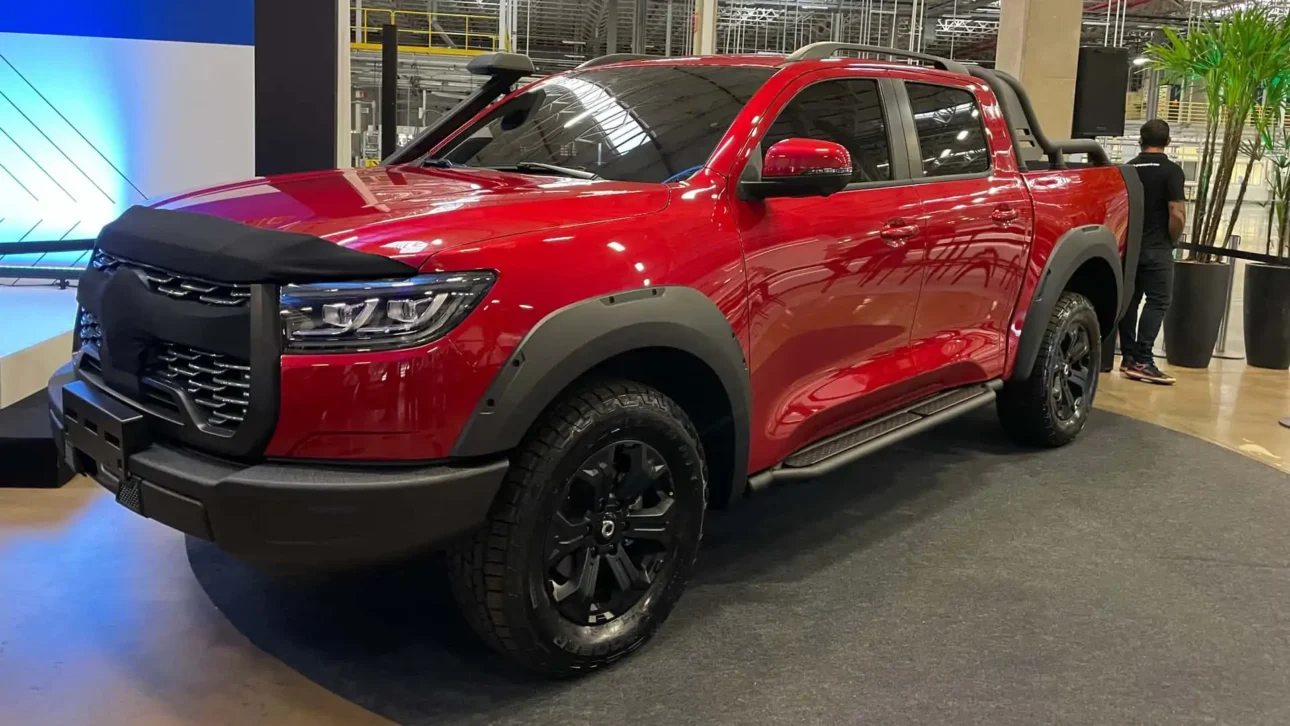
The GWM Hybrid Poer is expected to utilize the Hi4T system, with a 2.0 turbo gasoline engine and two electric motors, projecting 408 hp. Its main potential advantage is the battery with greater capacity, designed with 37.1 kWh, which could result in an estimated electric range in the PBEV cycle between 70 and 80 km (based on 100 km Chinese cycles). DC charging should be up to 50 kW.
With a launch expected in the second half of 2025 (imported) and national production in Iracemápolis (SP) starting in 2026, the real consumption of the Poer, especially with a drained battery, remains an unknown. The possibility of a flex (ethanol) version for Brazil could be an economic differentiator.
What Will Be the Most Economical Hybrid Pickup in Different Usage Scenarios?
Comparing the two, the GWM Hybrid Poer has an advantage in battery capacity and projected electric range (70-80 km estimated vs. 57 km of the Shark). In a predominantly urban electric use scenario with daily recharging, the Poer has the potential to be more economical, covering longer distances without activating the combustion engine.
For mixed use or long distances, with occasional recharges, the efficiency of the Poer’s combustion engine with a drained battery will be crucial. If its 2.0 turbo engine is more efficient than the Shark’s 1.5 turbo under these conditions, it may have an advantage. User recharging discipline and the possible flex option of the Poer will directly influence which will be the most economical hybrid pickup in practice.
Maintenance, Insurance, Incentives, and Resale Value
Beyond consumption, other factors will impact total savings. Scheduled maintenance costs for complex PHEV systems are a consideration (GWM offers fixed-price revisions for the Haval H6 PHEV, for example). The cost of insurance for high-tech vehicles and newer brands may initially be high, but it tends to adjust over time and with the claims history.
Tax incentives, such as the Mover program (reduced IPI) and exemptions/reductions of state IPVA for hybrids (especially flex), will be significant. The resale value of Chinese hybrid pickups until 2026 is still speculative, but crucial for the total cost of ownership and to define which will truly be the most economical hybrid pickup.
Projected Verdict for 2026: Which Has the Greatest Potential to Be the Most Economical Hybrid Pickup in Brazil?
Based on current information and projections, the GWM Hybrid Poer has greater theoretical potential to be the most economical hybrid pickup for a broader range of users in Brazil in 2026. This is primarily due to its larger capacity battery and, consequently, greater projected electric range. If this range is confirmed and its 2.0 turbo combustion engine is efficient when the battery is low, it may offer lower fuel costs.
The BYD Shark, already available, proves to be extremely economical for users with short urban routines that fit within its 57 km electric range and who have discipline for daily recharges. For this profile, the gasoline consumption may be minimal. However, its consumption rises significantly on long trips or without frequent recharging.










Seja o primeiro a reagir!