





 Portuguese
  English
  Spanish
  5 min of reading


Public Investment Drop, Consequences of Operation Lava Jato and Economic Crisis Reduce the Sector’s Share of GDP by Half in Ten Years
According to a study by Prospect Analytica, civil construction is expected to grow by 4.5% in 2023. The encouraging projection for companies and professionals in a sector that has undergone significant changes in the last decade — including the list of the largest construction companies in Brazil.
The survey, conducted by the magazine O Empreiteiro, indicates that 65% of the twenty leading companies in the sector did not make the list before 2021. Small and medium-sized companies have grown and gained recognition in the market. This is the case of U&M Mining and Construction, with 3,000 employees and the third-highest revenue in the segment: R$ 1.3 billion annually.
Maintaining the lead is OEC, currently with 9,300 employees and revenue of R$ 3 billion. After changing its name in 2019, Odebrecht experienced a 70% drop in revenue — in 2013, the construction company had revenue of R$ 10 billion. It is no surprise that it is central to explaining the sector’s changes over the past decade.
-
A megaproject worth R$ 89 billion is advancing in Iraq and promises to change the game in global trade by creating a new corridor between Asia and Europe, reducing traditional routes and repositioning the country as a logistics powerhouse.
-
Goodbye bedside table: floating shelves become a trend in 2026 by freeing up space in the bedroom, improving circulation, bringing visual lightness, and integrating technology without taking up floor space.

-
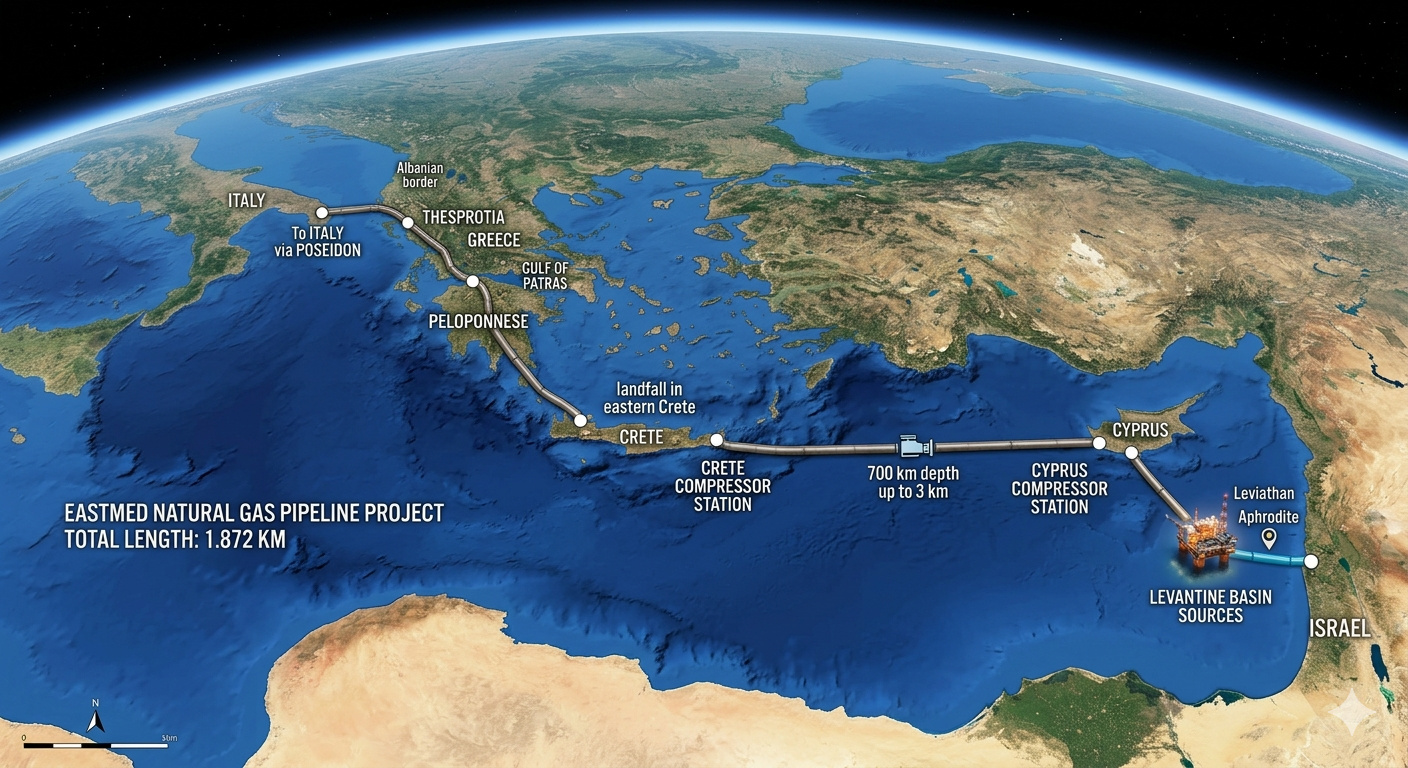
Israel, Greece, and Cyprus signed an agreement in 2020 to transport gas from the Mediterranean to Europe via a 1,872 km pipeline, but Turkey claimed sovereignty over part of the maritime route, and the project never materialized.
-
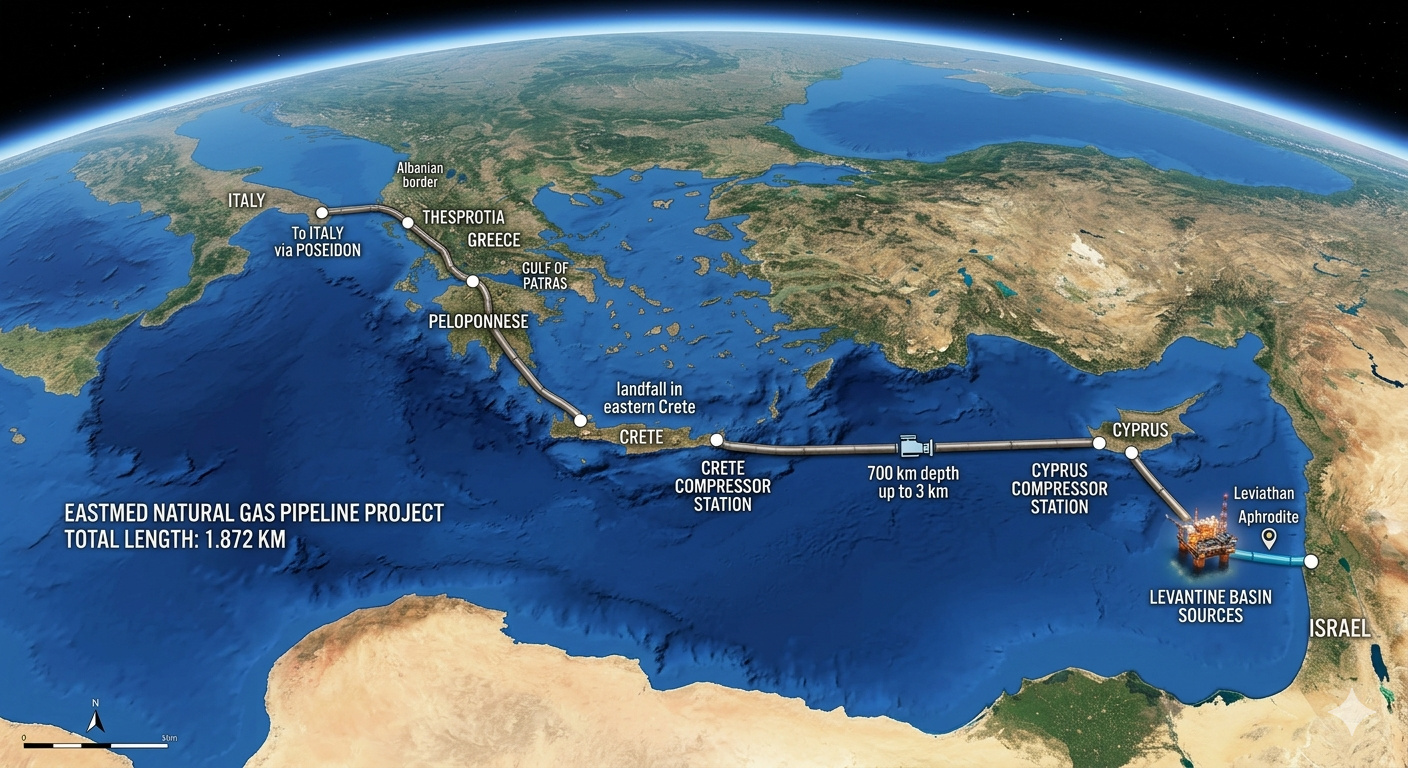
Israel, Greece, and Cyprus signed an agreement in 2020 to transport gas from the Mediterranean to Europe via a 1,872 km pipeline, but Turkey claimed sovereignty over part of the maritime route, and the project never materialized.
The Decade of Changes in Civil Construction
In the last ten years, Brazil has undergone drastic changes in the economic realm — and this has had a significant impact on civil construction. Not surprisingly, the sector’s share of GDP (Gross Domestic Product) fell from 6.5% to 3.3% during this period. The ideal rate is considered to be 7%, as seen in developed economies such as the United States and the United Kingdom.
With the need to carry out infrastructure works for the 2014 World Cup and the 2016 Olympics, the sector experienced a period of growth. R$ 130 billion was invested in urbanization, infrastructure, and stadium construction to host the two largest sports events in the world.
It is no surprise that civil construction recorded revenue of R$ 179.6 billion in 2013. However, starting in 2014, Brazil faced economic difficulties and underwent four challenging years.
“The fiscal issue combined with the drop in public investment reflected this drop in the sector’s share of the economy,” explained Ana Maria Castelo, Coordinator of Civil Construction Projects at FGV-Ibre, to Panorama da Construção Civil 2023, conducted by Obramax.
There was an annual decline in public investments in civil construction of R$ 101 billion. In the first term of Dilma Rousseff, it was R$ 179.8 billion, while during Jair Bolsonaro’s administration, the sector received R$ 78.4 billion annually.
Approved in December 2016, the Public Spending Ceiling Law limited the growth of public sector expenses to the rate of inflation. Additionally, the Ministries of Regional Development and Infrastructure reduced contracts for projects over R$ 500 million.
From 2017 onwards, the revenue of construction companies began to rise again. That year, they amounted to around R$ 49.6 billion and closed 2021 at about R$ 68.3 billion.
The Impact of Operation Lava Jato on Civil Construction
Another crucial factor for this reconfiguration of civil construction was Operation Lava Jato, which began in 2014. With more than 80 phases and over 100 people arrested, the investigation uncovered allegations of billion-dollar corruption and money laundering.
Construction Heavy Industries Union — arresting politicians such as former Rio de Janeiro governor Sérgio Cabral and former Minister of the Civil House José Dirceu.
In the construction sector, executives from construction companies like Odebrecht, Andrade Gutierrez, and Camargo Corrêa were arrested and made plea agreements. Among them was Marcelo Odebrecht, former president of Odebrecht.
In 2016, the construction company signed a leniency agreement with Brazil, Switzerland, and the United States to cooperate with the investigations — with 78 employees participating.
To distance itself from the developments of Lava Jato, the company changed its name to OEC in 2019. It remains the market leader in the country today, despite the drop in revenue.
Andrade Gutierrez and Camargo Corrêa also continue to be among the leading companies in the segment. Both impacted by the investigations, each has a revenue of R$ 1 billion currently.
According to a survey by Poder de 360, there was a 90% drop in the size of the investigated construction companies. Furthermore, each of the five largest companies in the segment had an annual revenue of R$ 4 billion — with leader OEC being the only one nearing that with its R$ 3 billion annually.
A study from the Heavy Construction Industries Union indicates a 60% drop in public spending — from R$ 114 billion in 2012 to R$ 43 billion in 2022. Additionally, there was the closure of 1.3 million jobs and the bankruptcy of 20% of companies, with R$ 105 billion in taxes not collected between 2015 and 2019.
What is the Landscape of Civil Construction in 2023?
A survey by the Brazilian Chamber of Industry of Construction (CBIC) shows that the civil construction sector registered about 430,000 formal job openings between March 2020 and May 2022.
“Looking at the activity, the sector is quite heated. Looking at the market, there is a productive cycle that always has a lag in relation to business. The trend is towards heated demand,” explains Castelo.
However, she warns about family demands. “There was a drop last year due to indebtedness and more expensive credit, which should persist in 2023.” Even so, this is not seen as a significant pressure on prices.
To measure the costs of civil construction, the National Construction Cost Index (INCC-M), measured by FGV (Fundação Getúlio Vargas), and Sinapi, used by IBGE, are utilized.
Based on these metrics, Panorama da Construção Civil 2023 shows that the favorable scenario of 2023 could already be seen in the comparison with the previous two years. While construction material costs in 2021 were 21.45%, those in 2022 dropped to 7.23%. Labor costs went from 11.76% in 2021 to 6.95% in the following period.
Thus, the trend is that the stability in material prices will stimulate consumer confidence in making renovations and constructions, even though there are still monetary limitations. Consequently, this ends up impacting the sale of properties and new financing.
The expectation for Brazil’s economic recovery and the post-pandemic breath of the market also point to decisive aspects for good results in 2023.










Seja o primeiro a reagir!