





 Português
  Inglês
  Espanhol
  3 min de leitura
  0 comentários


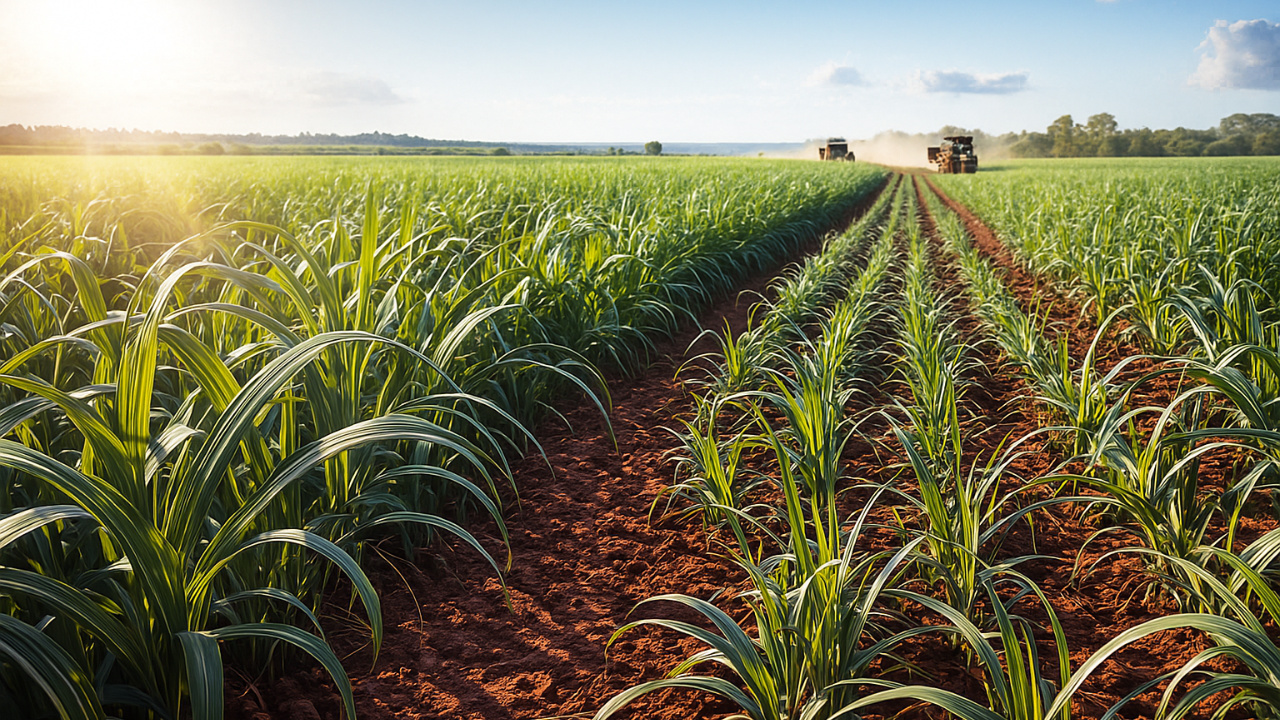
The Revenge of Sugarcane: Understand Why Sugarcane Remains Competitive and Surpasses Corn in Ethanol, According to a Market Specialist.
Amid the rapid advance of corn ethanol in Brazil, The Revenge of Sugarcane: Understand the Advantages Over Corn and Why Sugarcane Has Not Died, According to the Manager, gains relevance in light of an important alert.
The statement occurred in a context where corn ethanol already represents a quarter of national production and is expected to grow even more.
Trígono Capital, which manages over R$ 2.5 billion and invests in companies like São Martinho (SMTO3), Jalles (JALL3), 3tentos (TTEN3), and Kepler Weber (KEPL3)
-
Alone, the producer applies 7,400 hectares with the T100 drone in an optimized structure, replaces the generator with a silent battery, and demonstrates how technology reduces costs, increases productivity, and even challenges the uniport in the field.

-
China banned the export of 22 tons of meat from Argentina.
-
JBS, founded by the Batista brothers, continues to conquer the world: entrepreneurs built a ‘factory in the desert’ creating 3,000 jobs.
-
With only 1% of Brazil’s territory, Santa Catarina has built one of the most competitive industrial parks in the country, with 64,000 companies, nearly 1 million jobs, and a growth rate of 5.3% while the national industry is practically stagnant.


Vinasse and Biogas: The Trump Cards Supporting the Revenge of Sugarcane
For Roger, The Revenge of Sugarcane: Understand the Advantages Over Corn and Why Sugarcane Has Not Died, According to the Manager, begins with vinasse, a byproduct of sugarcane that offers enormous energy potential.
He highlights that the production of vinasse in sugarcane mills is greater than in corn ethanol projects, which increases the volume of biogas available.
Additionally, using biogas instead of diesel reduces operational costs and decreases greenhouse gas emissions.
The manager states:
“While biogas costs around R$ 3.60 per liter, diesel costs around R$ 6 per liter.”
Roger also mentions the example of Tupy (TUPY3), which already produces biogas from pig waste and achieves performance identical to that of diesel, but with advantages such as lower noise and greater comfort for the driver.
Carbon Credits Reinforce the Protagonism of Sugarcane
Another point that reinforces The Revenge of Sugarcane: Understand the Advantages Over Corn and Why Sugarcane Has Not Died, According to the Manager, lies in decarbonization credits (CBios).
As soon as the carbon market is fully regulated in Brazil, mills that use more biogas will be able to trade CBios on a large scale.
Roger explains:
“São Martinho (SMTO3) has 1.2 million CBios. Imagine if they were priced at US$ 50. That would represent an additional gain of over US$ 50 million.”
With the Future Fuel Law, Petrobras issued a tender for the purchase of biogas, and the mandatory blend of 1% into natural vehicle gas starting in 2026 is expected to broaden the market.
Integrated Mills Ensure Strategic Advantage Over Corn
The manager emphasizes that integrated sugarcane ethanol mills that grow their own raw materials have significant savings.
“These integrated sugar mills will have an advantage that corn ethanol does not have,” he asserts.
Meanwhile, corn ethanol plants need to purchase the grain, which reduces part of their competitiveness.
Agricultural Technology Drives The Revenge of Sugarcane
John Deere and Case have already developed machinery powered by ethanol. At scale, this technology can reach the internal trucks of the mills, creating self-sufficient energy cycles.
This movement reinforces The Revenge of Sugarcane: Understand the Advantages Over Corn and Why Sugarcane Has Not Died, According to the Manager, as it generates sustainability and reduces external dependencies.
Corn Ethanol Grows, But Does Not Eliminate the Role of Sugarcane
Corn ethanol already accounts for 25% of national production and could reach 40% by 2035, according to StoneX. Nonetheless, Plinio Nastari, consultant for Datagro, reminds us that no new sugarcane ethanol plants are under construction in the country.
The CEO of FS states that corn offers up to 40% savings due to the flexibility of the raw material. However, Roger warns of a “time bomb”: many projects ignore logistical costs, agricultural volatility, and total dependence on the grain market.
Therefore, he advocates that the most sustainable model is that of “flex” mills, which integrate sugar, sugarcane ethanol, and corn ethanol within the same complex.










-

-

-

-

10 pessoas reagiram a isso.