





 Português
  Inglês
  Espanhol
  3 min de leitura
  1 comentário


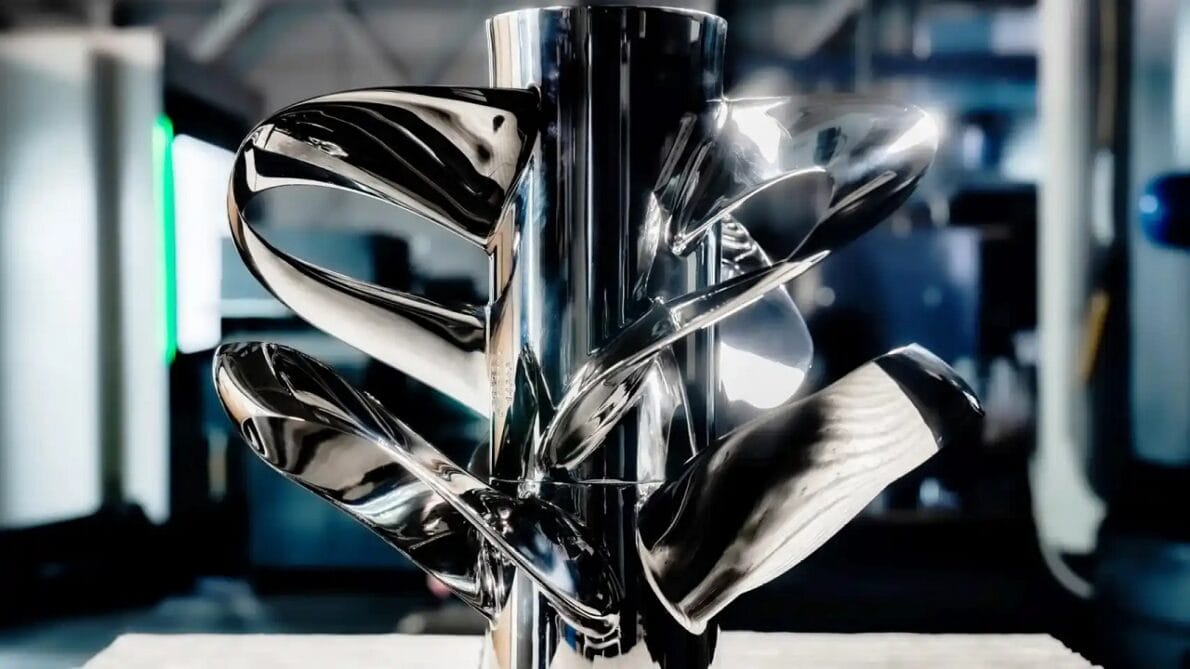

Discover the Sharrow CX Propeller: 50% Fuel Savings and Increased Speed for Boats. Check Out the Details!
The latest improvements in the nautical world are becoming evident in engine propellers. These systems are located at the end of the propulsion chain and are established as one of the most sensitive parts, determining whether the entire vessel performs well or poorly. Companies like the American Sharrow have managed to specialize in the design, development, and manufacturing of propellers, achieving unimaginable shapes.
The Sharrow CX is their latest creation and has just opened the purchase waitlist for its customers. The company plans to start shipping the first units in the spring of 2026 and will be compatible with a long list of engine manufacturers including Volvo, Mercury, and Suzuki; three of the most important players in the industry.
“Since the day we announced the Sharrow propeller in 2020, the response from the boating community to a counter-rotating version of the flagship design has been incredible, and many are anticipating our expansion in this sector of the market,” said Greg Sharrow, founder and CEO of the company, in a statement.
-
Historic bankruptcy of Centauro shocks the market, and the century-old company puts more than 500,000 products, machines, and complete infrastructure up for online auction.

-
New shoe factory in Ceará is expected to create 400 jobs and strengthen the local economy.

-
No one imagined it, but a mixture of sawdust with a mineral that fights fires surprises scientists with a result that changes the course of fire-resistant construction.

-
From empty land to a high-end house, wooden construction uses a lightweight system, metal structure for the foundation, ventilated ceramic cladding, and special windows to create an efficient and comfortable living space throughout the year.


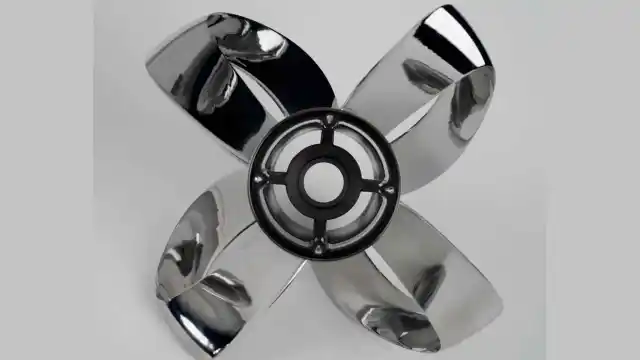
The counter-rotating systems consist of two propellers—one in front of the other—on the same axis, but rotating in opposite directions to save flow loss, as explained by Centramar. This type of arrangement is very common in some torpedoes, as it achieves high speed while simultaneously increasing efficiency.
Ultra-Efficient Propeller
The origin of counter-rotating propellers dates back to the aviation world, when, decades ago, most airplanes utilized this method to fly. One of the most representative models still in service is the Tupolev Tu-95, where each of the 4 engines is equipped with 2 sets of propellers that rotate in opposite directions.
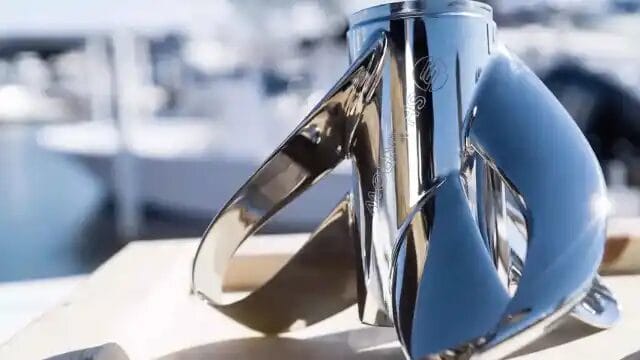
On the nautical side, they arrived in the early 1980s with Volvo Penta’s acquisition of the first related patent and after witnessing their good performance in torpedoes, aiming to improve stabilization. The counter-rotation of the propellers manages to better utilize the flow generated by the first propeller to generate a spin in the second, thus recycling part of the energy in the final phase of propulsion.
With these characteristics, it is possible to make the propulsion system more efficient compared to that of a single propeller. Additionally, it offers improved acceleration and increased top speed.
Information on the Sharrow CX propeller is sparse on the manufacturer’s page, only a note indicating availability for pre-order. However, there is abundant information about their other creations of single propellers, so the specifications promise to be even better.
Better Maneuverability and Efficiency
For instance, both the Sharrow MX and Sharrow XO provide better maneuverability when the vessel is fully engaged in attack, one of the most delicate moments of the entire journey. It also achieves a 30% improvement in engine efficiency at cruising speed, which translates to the same increase in range using the same amount of fuel.

The increase in propulsion capacity that Sharrow propellers also achieve is reflected in a reduction of between 500 and 1,000 revolutions per minute. The same situation occurs when the vessel is cruising, where it achieves greater speed at the same revolutions.
The specifications list is completed with a noticeable reduction in vibrations and noise generated by the propellers. It also achieves up to 50% more reverse power—braking and reversing—and better handling in tight curves at high speed.










Toda tecnologia é fundamental para o progresso da humanidade!