





 Portuguese
  English
  Spanish
  5 min of reading


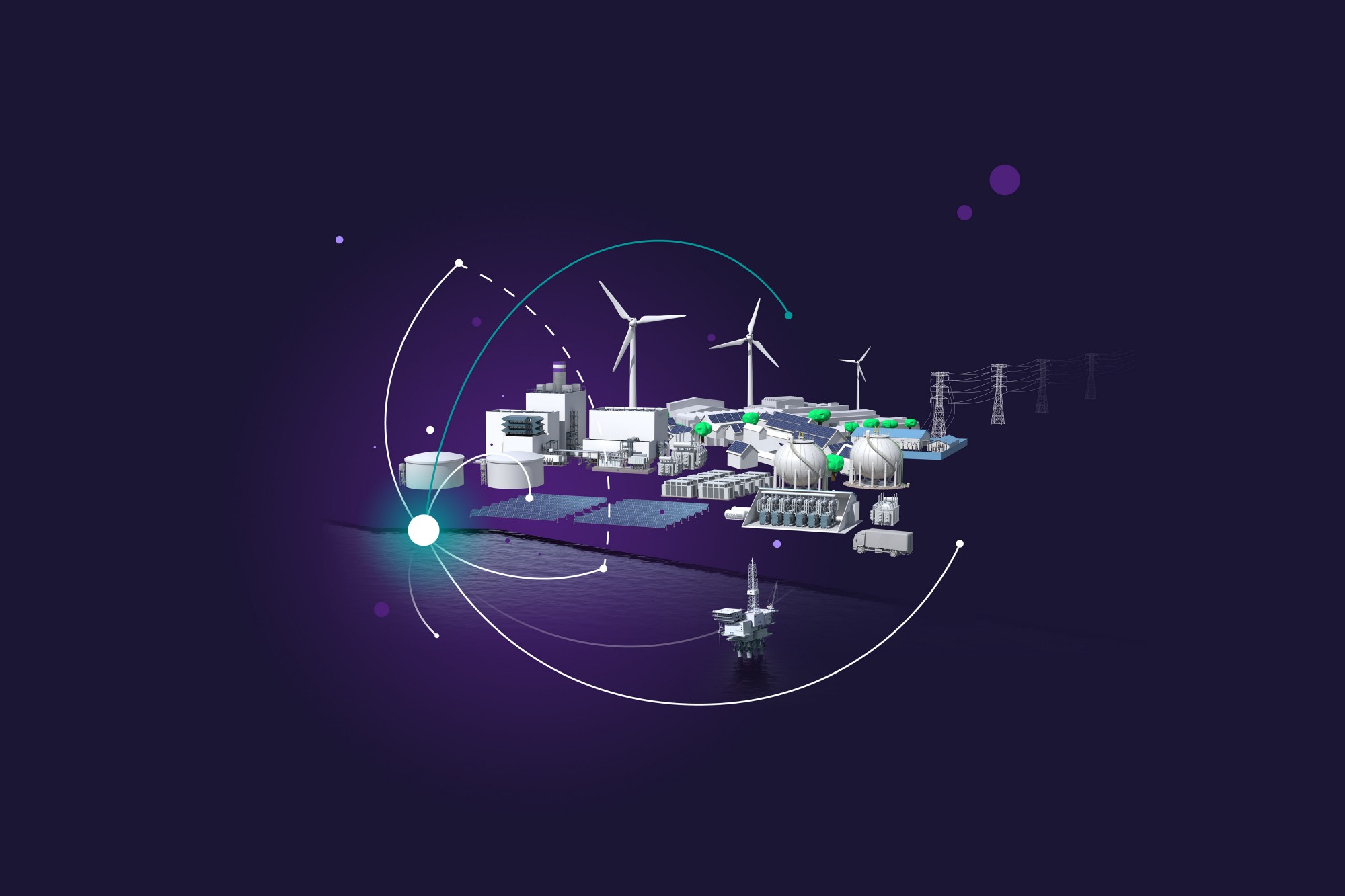
Accelerating The Expansion Of Renewable Energies, Where Technology Is Advanced And Costs Are Competitive, Is At The Top Of The Respondents’ Priority List
The Energy Transition Readiness Index highlights the opportunity for Latin America to become a global powerhouse. The study results from feedback from around 530 regional and global business leaders, policymakers, and government representatives from various sectors who participated in the Latin America Energy Week 2022, a series of conferences held by Siemens Energy to discuss regional challenges and opportunities for the energy transition.
The research grouped responses from experts in each of the 12 predetermined key energy priorities, combining progress on each priority (“readiness”) with an assessment of its respective importance (“system maturity”), measured by the average importance of all priorities.
The report, which describes readiness on a scale of 0 to 100%, indicated that the region currently stands at 22% on the Index. This suggests that while Latin America has a solid foundation to expand its influence in the global energy transition, the region will need to create the right conditions to do so, with greater regional integration making clean energy exports a strategic priority.
-
Oncorp wins auction and enables biodiesel and gas thermal plants in Brazil, with strategic projects in Suape and Xavantes Aruanã.

-
Raízen Recovery: Shell Cosan May Reduce Control After R$ 65 Billion Debt
-
Outback Montes Claros: Chain Confirms First Unit in Northern Minas in 2026

-
Inpasa Creates Advisory Council and Brings José Olympio to Strengthen Corporate Governance


“In a ‘Race To Zero’ scenario, Latin America has the potential to become a major global supplier of clean energy, as well as a strategic supplier of sustainably labeled food to other continents. Therefore, it is in the region’s interest to establish transnational alliances according to a systemic thinking that considers not only local value chains but also global demand,” said André Clark, Senior Vice President of Siemens Energy in Latin America.
The survey also revealed a gap between perceptions and reality regarding progress toward decarbonization: respondents estimated that emissions in the region had decreased by an average of 17% since 2005 to date, while only four out of ten participants correctly indicated that there had been no reduction in emissions. The reason for this discrepancy, according to the study, is a result of public discourse surrounding initial decarbonization measures already underway, when in reality, the current increase in these emissions negates any potential reductions achieved by those measures thus far.
This gap is also reflected in future ambition levels, where participants expect emissions to fall by 37% by 2030 compared to 2005 levels, a highly ambitious percentage. Globally, Latin America contributes little to climate change, accounting for only 5% of global CO₂ emissions in 2020. However, emissions grew by about 20% between 2005 and 2019, spurred by economic expansion and increased energy demand.
Priority Areas And Current Progress
Conference participants considered all energy priorities outlined in the report as very important to achieving climate goals. At the top of the list is accelerating the expansion of renewable energies, where technology is already advanced and costs are competitive, making implementation relatively straightforward.
Participants also viewed the integration of renewable energies into the electricity system, which also requires storage solutions, as a priority task. Additionally, they consider decarbonization of industry as an urgency: If done satisfactorily, it will allow economic growth without increasing emission levels.
According to interviewees, current progress in achieving energy priorities in Latin America has been slow. Despite advancements in power generation, installed capacity for solar and wind still leaves room for broader implementation in the future.
The research also reveals some blind spots for participants. High-impact areas with little progress made include the implementation of energy storage solutions and the development of new business models.
“Latin American countries must link energy transition initiatives with innovation. The solution, in this sense, is to narrow collaboration between traditional and new players in the sector, such as startups and universities. As energy is traditionally highly regulated and requires substantial capital investments, these partnerships require cultural efforts from both sides to be effective,” says Georges Almeida, Partner at Roland Berger.
Opportunities On The Horizon
The majority of Latin American countries benefit from abundant, high-quality wind and solar energy sources, allowing them to generate energy at highly competitive costs. Although the region has a golden opportunity to further develop its role as a reliable exporter of green energy, particularly hydrogen, any initiative in this direction requires regulatory support.
According to interviewees, to develop its full potential, Latin America needs to implement regulations to direct investments and ensure infrastructure improvements while making clean energy exports a strategic priority.
After policies, participants chose financing as a priority area. They see a significant need for action in financing for renewable energy sources. In this area, according to participants, the regulatory regime also needs to be adjusted to create more investment opportunities.
The Energy Transition Readiness Index is part of a global collaboration between Roland Berger and Siemens Energy, aimed at developing valuable data to enhance key strategies for the energy transition. A global version of the report, including insights from all regions, will be released later this year.
The Energy Transition Readiness Index for Latin America and its methodology are available at this link.
About Siemens Energy
is one of the world’s leading energy technology companies. The company works with its customers and partners on energy systems for the future, thereby supporting the transition to a more sustainable world. With its portfolio of products, solutions, and services, Siemens Energy covers almost the entire energy value chain — from generation and transmission to storage. The portfolio includes conventional and renewable energy technologies, such as gas and steam turbines, hybrid plants powered by hydrogen, and energy generators and transformers. More than 50% of the portfolio has already been decarbonized. A majority stake in the publicly listed Siemens Gamesa Renewable Energy (SGRE) makes Siemens Energy a global leader in the renewable energy market. It is estimated that one-sixth of the electricity generated worldwide is based on Siemens Energy technologies. Siemens Energy employs approximately 91,000 people worldwide in more than 90 countries and generated revenue of €28.5 billion in the fiscal year 2021.
About Roland Berger
Is the only European heritage management consultancy with a strong international presence. As an independent company, solely owned by our Partners, we operate 51 offices across all major markets. Our 2,700 employees offer a unique combination of analytical approach and empathetic attitude. Driven by our values of entrepreneurship, excellence, and empathy, we at Roland Berger are convinced that the world needs a new sustainable paradigm that takes the entire value cycle into account. Working in cross-functional teams across all relevant sectors and business functions, we provide the best experience to tackle today’s and tomorrow’s profound challenges.
Source: Jordan Fraiberg Via In Press Porter Novelli










Seja o primeiro a reagir!