





 Português
  Inglês
  Espanhol
  2 min de leitura
  0 comentários


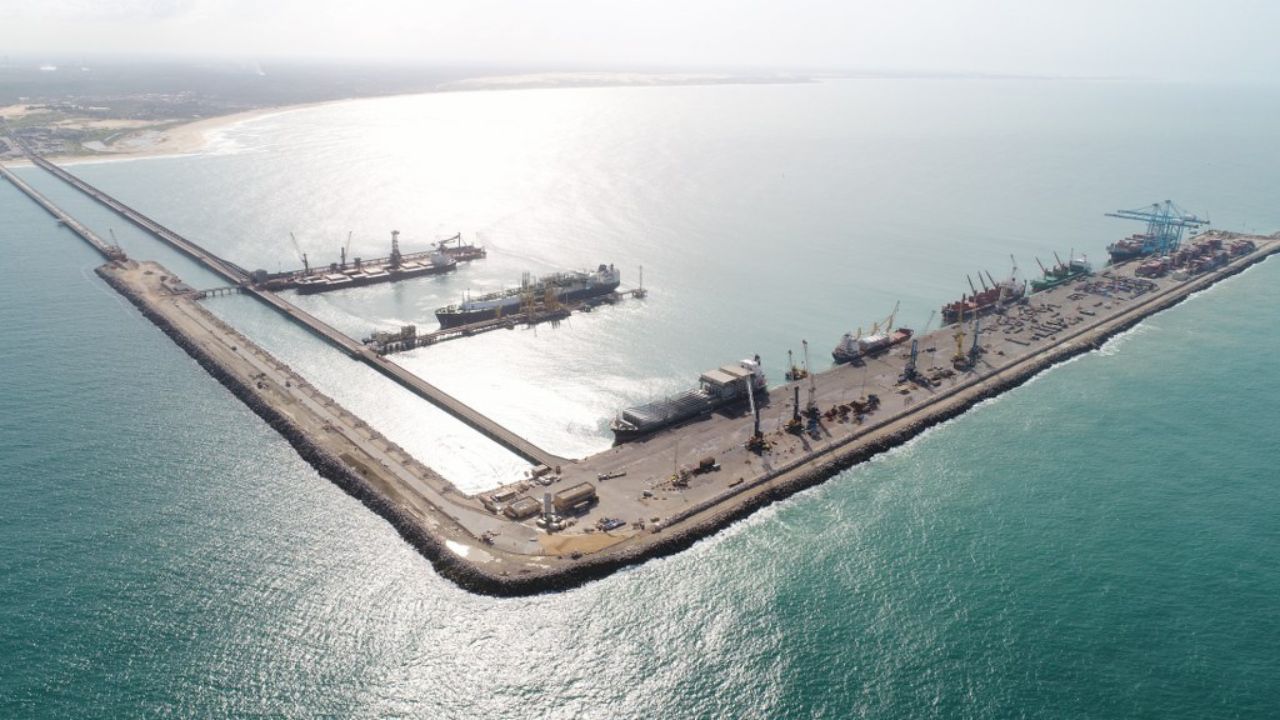
An Ambitious Project Funded by the World Bank Investigates How Water Can Be the Key to Establishing Ceará as a Global Leader in Clean Energy.
RINA, an Italian consulting firm, has been selected to lead a crucial water assessment study at the Pecém Industrial and Port Complex (CIPP). The aim is to ensure industrial water supply, an essential resource for green hydrogen production, strengthening the position of the Pecém Port as a low-carbon development center in Brazil.
Where Will the Water Come From? Study Evaluates Wastewater Reuse and Desalination
The study, funded by the World Bank, will be conducted by RINA in collaboration with the Brazilian company Krypton. The initiative focuses on ensuring water sustainability for the growing green hydrogen industry at the Pecém Port.
Two main water capture strategies will be explored. The first is the reuse of treated wastewater from sewage treatment plants located in the western region of Fortaleza. The second alternative under analysis is seawater desalination.
-
Renewable energy advances over protected areas in Brazil, and a survey by the Energy Transition Observatory reveals silent impacts that challenge environmental conservation and pressure sensitive traditional territories.

-
Rio Grande do Sul accelerates energy transition: State invests in renewable technologies and consolidates decarbonization strategies and pathways to attract billions in new industrial investments.

-
With 160,000 m² of collectors, an area larger than 20 football fields, Silkeborg, in Denmark, hosts a solar thermal plant that heats 19,500 homes and could become the largest solar heating plant in the world.

-
A study reveals the expansion of renewable energy procurement in Brazil and shows how companies are taking advantage of opportunities to reduce expenses, ensure energy efficiency, and strengthen strategic environmental commitments.


Both options will undergo a rigorous assessment of their technical and economic feasibility. Additionally, the study will analyze the environmental impact of each solution and its compatibility with existing infrastructure and Brazilian regulation.
The project will also provide a detailed analysis of the environmental impact related to water demand at the CIPP for the next 5 to 10 years. This projection aligns with the expected industrial growth in the region. A regulatory and infrastructure assessment will also be conducted to ensure compliance with national standards and the efficient use of water systems.
The Project That Defines the Energy Future of Pecém
An important aspect of the study is the evaluation of how the proposed infrastructure could benefit neighboring communities by improving access to water.
Andrea Pestarino, Director of RINA, emphasized the company’s commitment. “This contract with the World Bank reinforces our long-term commitment to the region and the future of clean energy in Brazil,” he stated.
The Pecém Port continues to attract significant investments in the clean energy sector. Recently, the Norwegian company Fuella signed an agreement to develop a large-scale green ammonia project. Additionally, the port selected Stolthaven Terminals, in partnership with Global Energy Storage (GES), to develop a new green ammonia terminal.









-

Uma pessoa reagiu a isso.