





 Portuguese
  English
  Spanish
  9 min of reading
  0 comments


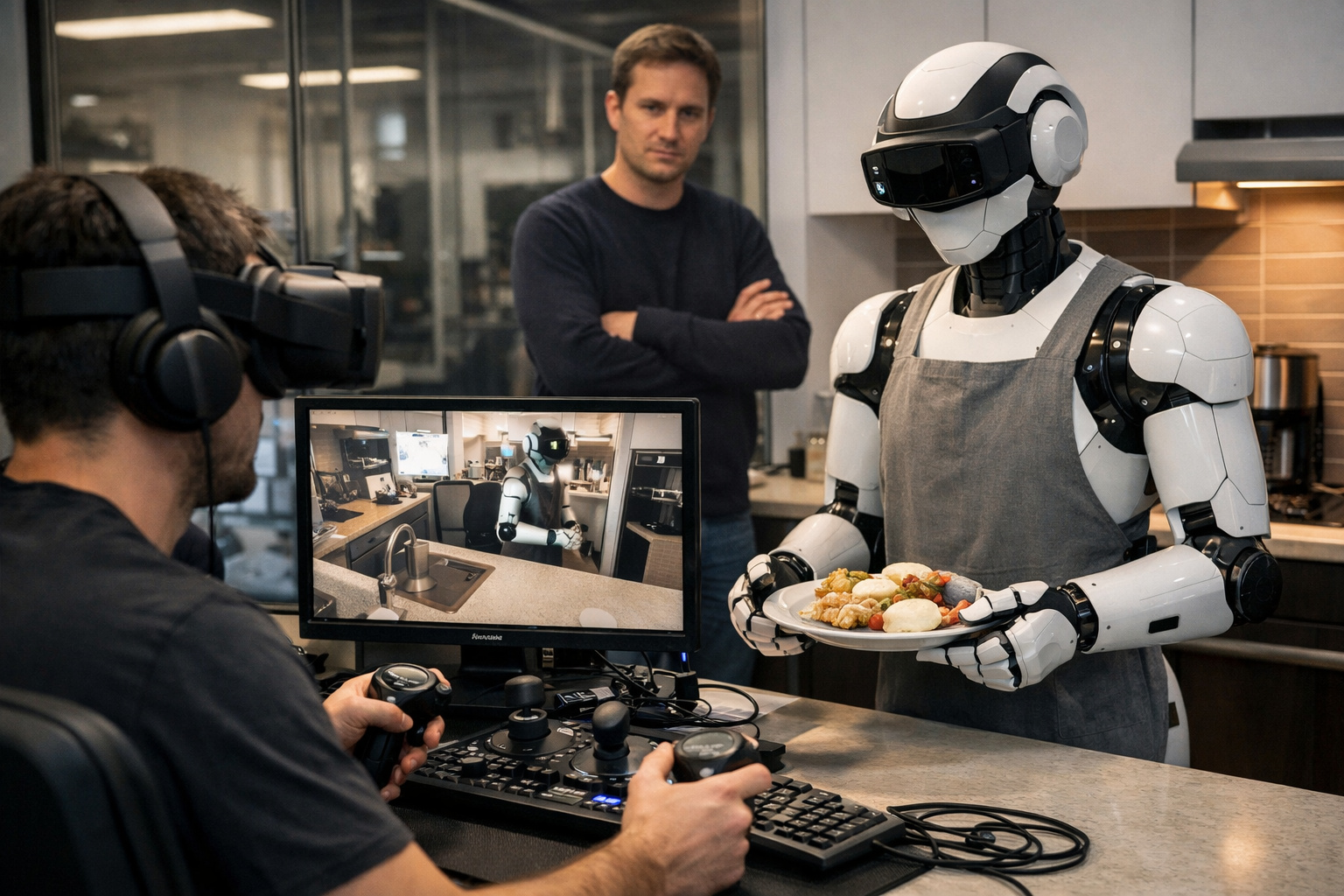
The $20,000 domestic robot promises autonomy, but depends on hidden humans operating through virtual reality, revealing the limits of artificial intelligence and a curious strategy to evolve modern technology.
On October 28, 2025, the Norwegian company 1X Technologies announced the NEO: the first humanoid robot designed for home use available for pre-order in the consumer market. It measures 1.68 meters, weighs 30 kilograms, can lift up to 69 kilograms, responds to voice commands, has a battery life of four hours, and comes in three colors — Beige, Gray, and Dark Brown. The price is $20,000, or $499 per month in subscription mode. The promise is that it will fold clothes, empty the dishwasher, organize shelves, fetch items from the fridge, and keep the house tidy while the owner is at work.
The reality revealed by the CEO to the Wall Street Journal is different. In a demonstration for journalist Joanna Stern, the NEO did not perform a single task autonomously. Every movement was remotely controlled by a human operator from the company — internally referred to as “Turing” — using a virtual reality headset and viewing the inside of the house through the robot’s cameras. Fetching a water bottle from the fridge took over a minute.
Carrying three cups and plates to the dishwasher took five minutes. Folding a piece of clothing required two minutes of careful handling. “If we don’t have your data, we can’t improve the product,” said CEO Bernt Børnich.
-
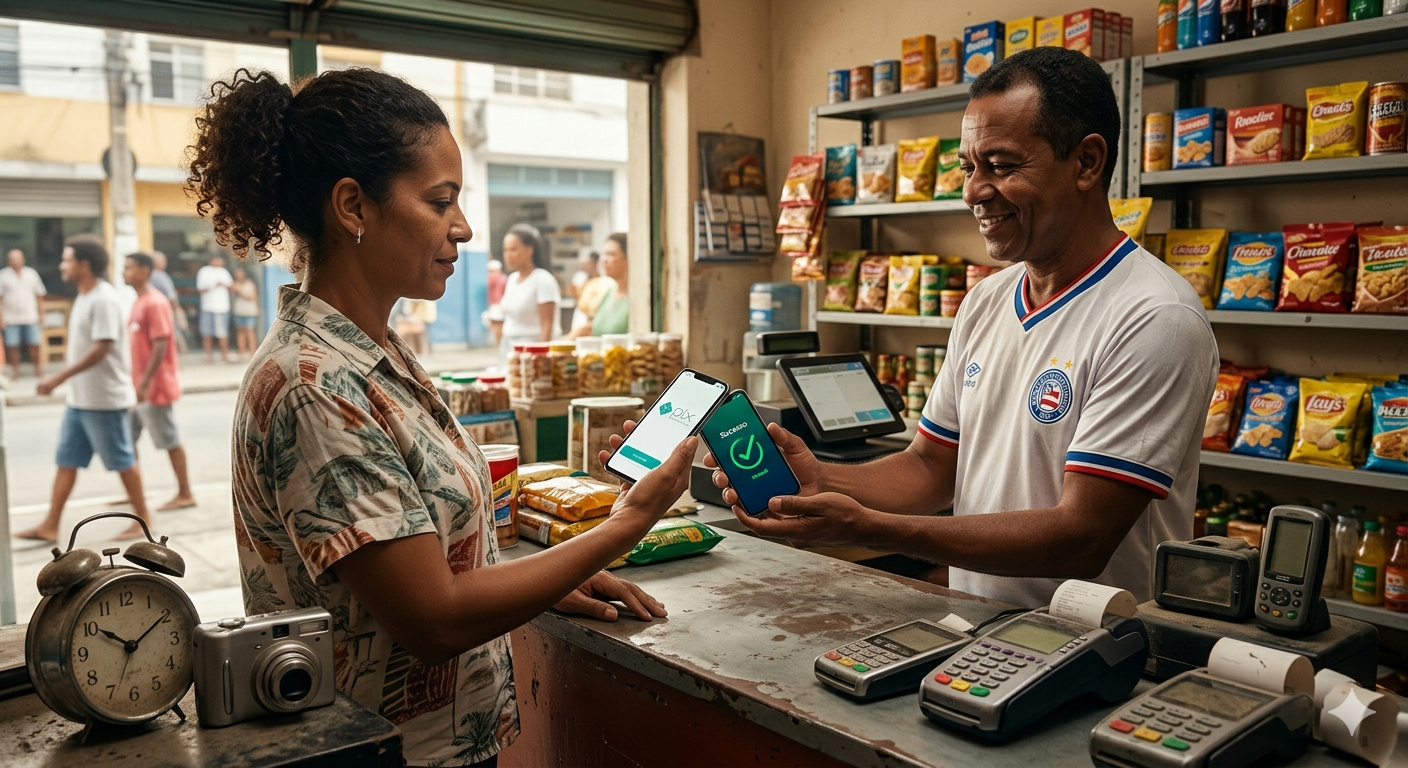
The cell phone is present in 99.5% of Brazilian households and has already replaced the alarm clock, the camera, and the GPS; now it is starting to threaten the last device that resisted: the card machine, which is present in 19 million points of sale in the country.
-
A caliphate city a thousand years old may be hidden under a pasture in Spain where anyone would walk by without noticing anything, but LiDAR technology has revealed terraces, walls, and a planned urban layout beneath the surface.

-
In 2028, Earth will cross debris that the Swift-Tuttle comet left in space in 1479, and the world’s most famous meteor shower could turn into a storm of hundreds of shooting stars per hour, a phenomenon that hasn’t occurred since before Columbus arrived in America.

-
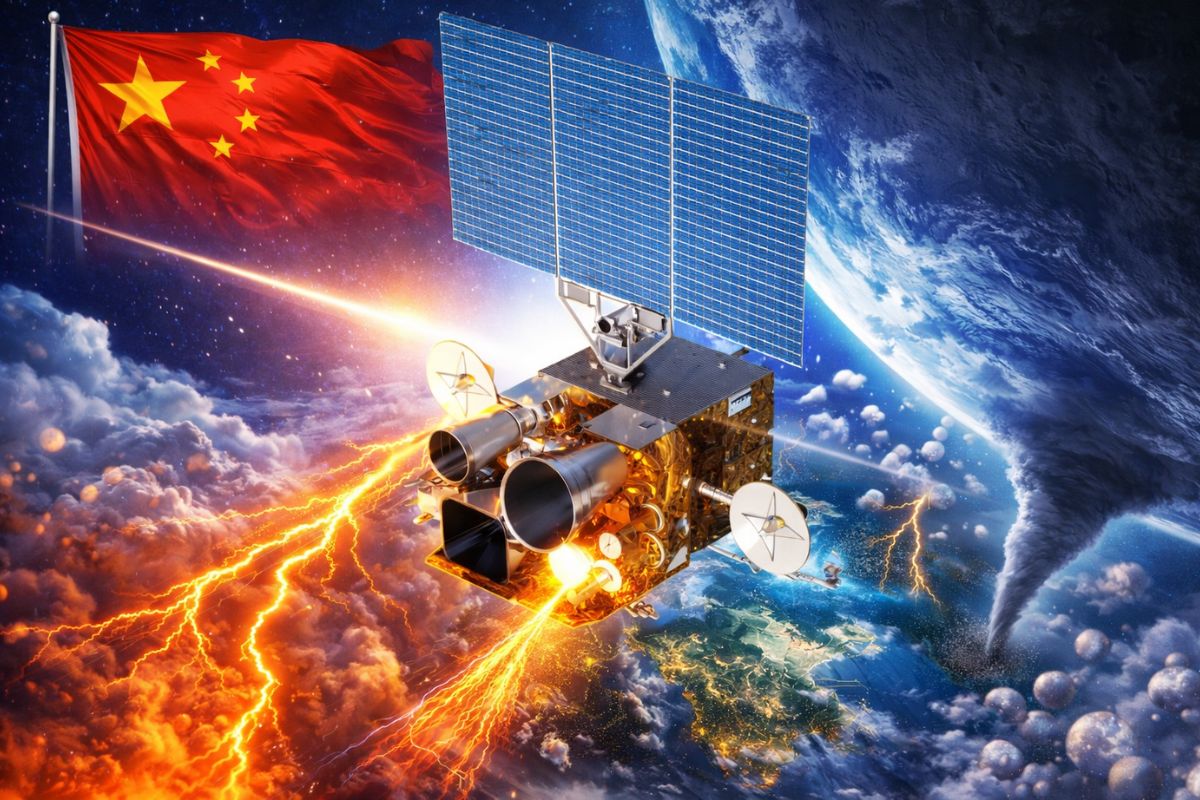
China launches the world’s most advanced weather satellite with 6 scientific instruments, a lightning detector, and artificial intelligence capable of predicting storms, tornadoes, and hail with unprecedented accuracy.

The robot you buy is not the robot that works
The NEO operates in two distinct modes. The first is the autonomous mode: the robot uses its embedded AI model, called Redwood, to attempt to perform tasks on its own. According to 1X itself, this mode works for simple actions — opening doors, turning off lights, navigating rooms, watering plants.


The second is Expert Mode: when the robot does not know how to do something, or makes mistakes, a 1X employee takes control remotely. They wear a Meta Quest 3 headset, see the inside of your house through the robot’s cameras, and operate each gesture with virtual reality controls. You schedule the times when operators can access the robot through a mobile app. The face of anyone in the camera is automatically blurred.
There are exclusion zones — bedrooms and bathrooms can be blocked. But the fundamental agreement remains: an employee you have never met will have visual access to your kitchen, your living room, your belongings, your routine. According to estimates from the company itself, the NEO will operate with 60% to 70% autonomy at launch in 2026. The rest — 30% to 40% of each more complex task — will depend on human teleoperation.
Why robots need humans to learn
The explanation for this dependence lies in the biggest bottleneck of modern robotics: the lack of physical data. When OpenAI trained ChatGPT, it had access to practically the entire written internet — trillions of words in dozens of languages, produced by billions of people over decades. Language models drew from an ocean of data that already existed.
Robots do not have this luxury. There is no physical equivalent of the internet. There is no database with billions of examples of how a human opens a cutlery drawer, folds a polo shirt, or places a wet glass on a shelf without knocking it over. These movements need to be created, captured, and labeled — one by one, in real environments, with real bodies.
The true engine behind the $20,000 robot
A professor at the University of California, Berkeley estimated that, at the current pace of manual data collection, it would take 100,000 years to accumulate physical data equivalent to what language models used to learn to write, according to a March 2025 NPR report.
It is exactly this bottleneck that the NEO’s Expert Mode was designed to solve. Each time a human teleoperator guides the robot in a new task — folding a specific t-shirt in that specific drawer of that specific house — the movement is recorded, labeled, and incorporated into the AI training. Over time, the robot learns to do on its own what the human did first. The customer paying $20,000 is essentially funding the data collection that will make the product better for all future users.
The same logic that Tesla uses — but in your living room
1X is not the only company using humans to teach robots. The dynamic is identical across the industry — but the context of the NEO makes it more exposed. Tesla has hired dozens of operators to train Optimus. According to a job posting published on LinkedIn and the company’s website in August 2024, Tesla was looking for “Data Collection Operators” — employees who wear motion capture suits and virtual reality headsets to simulate the movements and actions of the robots.
Pay ranges from $25.25 to $48 per hour. The physical requirement is intense: candidates need to be able to walk for more than seven hours a day, carry up to 14 kilograms of equipment, and be between 1.70 m and 1.80 m tall — close to the height of Optimus.

At the Toyota Research Institute, researchers use teleoperation to teach robots to make pancakes: a human uses robotic arms to repeat the motion about 300 times in an afternoon. The model processes the data overnight. The next morning, the robot often manages to perform the task on its own, according to a report from MIT Technology Review.
The central difference is the environment. Tesla trains its operators in controlled factories. Toyota trains in laboratories. The NEO trains inside your home.
The teleoperators that no one sees
Behind every robot is a chain of human labor that is rarely mentioned in product presentations. At 1X, the operators who guide the NEO through Expert Mode are employees directly hired by the company, with background checks and confidentiality agreements. The company ensures that connections are encrypted and occur only with the explicit approval of the robot’s owner.
But the model has less transparent variants. According to a report from MIT Technology Review published in February 2026, in Japan, Filipino workers already remotely supervise robots in convenience stores for a few hundred dollars a month. The report documents how roboticists describe this arrangement as “labor arbitrage” — the same physical service, performed from where labor is cheaper.
Expert warns of hidden limits and risks
Researcher Eduardo Sandoval, a specialist in social robotics, warned that products like the NEO are launched “with great fanfare and limited capabilities,” while masking both privacy issues and the invisible workers behind the machines.
The Tesla operators themselves reported physical problems: neck and back pain after seven-hour shifts in the motion capture suit, as well as severe nausea caused by prolonged use of the virtual reality headset — a documented side effect in the job posting published by the company.
The Amazon precedent and the repeating pattern
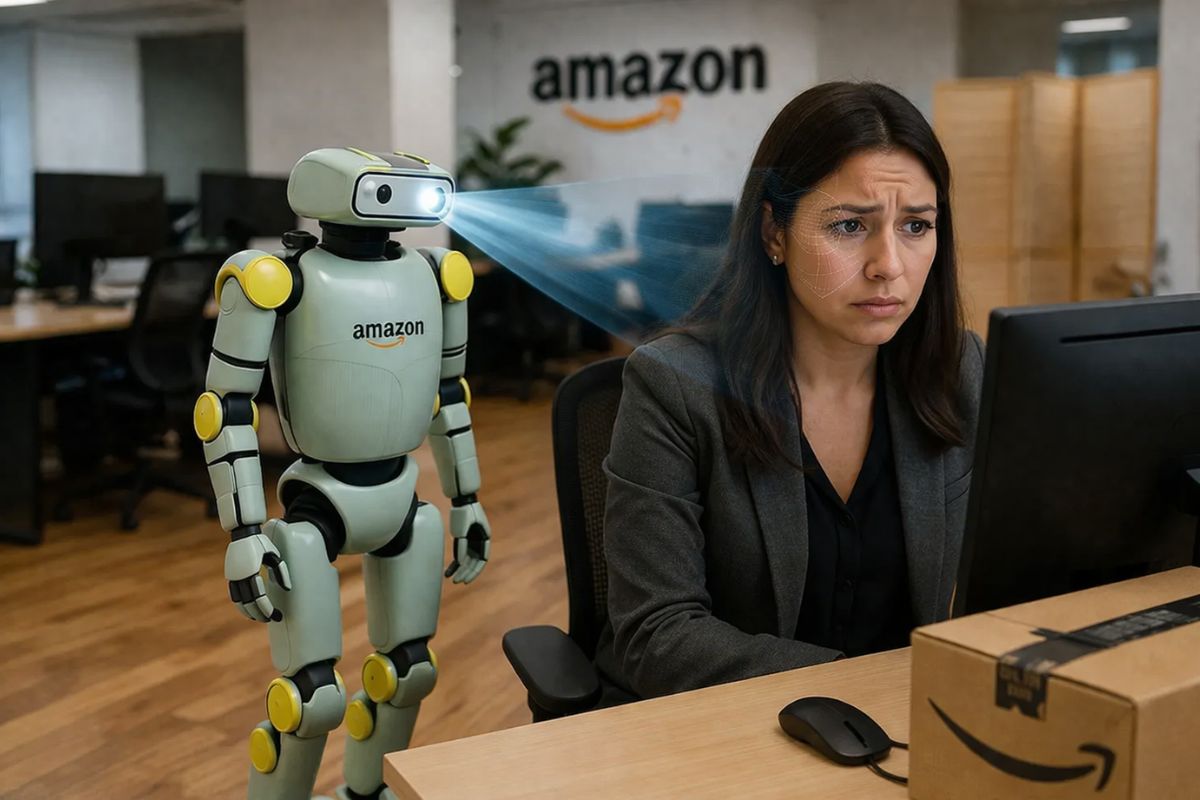
The story has a recent precedent that helps to understand the dynamics. In 2016, Amazon launched Just Walk Out: a supermarket technology without cashiers, powered by cameras and AI sensors that automatically tracked what each customer placed in their cart and charged the amount to their account when they exited the door. The company presented the system as a triumph of autonomous computer vision.
In 2024, a report from The Information revealed that the system relied on over 1,000 employees in India watching and labeling videos to ensure that checkouts were accurate. In 2022, 700 human reviews were needed for every 1,000 transactions — far above the internal target of fewer than 50 reviews per thousand sales. Amazon discontinued Just Walk Out in its supermarkets.

The pattern is identical: a technology presented as autonomous AI that, behind the scenes, depends on a significant volume of human labor to function. The difference between Just Walk Out and NEO is that 1X has been explicit about human dependence from the start — which represents an unusual transparency in the industry, but does not eliminate questions about privacy and the true state of the product’s autonomy.
What the robot can do alone — and what it cannot
According to independent tests and the company itself, the NEO can perform an increasing set of tasks with real autonomy in 2026: navigate rooms, open doors, turn on light switches, water plants, organize objects on flat surfaces, fetch specific items, and respond to voice questions using its embedded language model.
What it still cannot do reliably: identify and treat stains on fabrics, operate appliances with varied interfaces, handle fallen objects at unexpected angles, fold clothes of irregular shapes, and any task involving flames, sharp objects, or emergency situations.
The battery lasts about four hours and recharges in 24 minutes — but this means that in an eight-hour home shift, the robot would need at least one recharge break. For a household where the owner works outside all day and wants to return to an organized home, operation would require careful planning of schedules and tasks. More than 10,000 units have been reserved since the launch of pre-sales, according to 1X itself.
The market that is being built
The NEO is not an isolated product. It is the first visible sign of a market that analysts project will grow from $3.14 billion in 2025 to $81.55 billion by 2035 — an annual growth of 38.5%, according to Research Nester. Goldman Sachs projects between 50,000 and 100,000 units of humanoid robots to be embedded by 2026, with a unit price between $15,000 and $20,000.
The NEO’s direct competitors are still focused on factories. The Tesla Optimus has been deployed in the company’s own plants and is expected to be sold to other companies starting in 2026. The Figure 02 performs sheet assembly tasks at BMW with millimeter precision. The robot from Agility Robotics has been operating in Amazon warehouses longer than any other humanoid in the real world.
1X has bet on being the first to enter the most complex and unpredictable environment of all: a real family’s home, with its cats, its children, its crooked glasses, its messy clothing drawers, and its cameras pointed inside the home.
The question that no one knows how to answer yet
The business model of 1X presupposes an exchange: you pay $20,000, allow operators to see your home, and in return receive a robot that becomes progressively more capable as it learns from your specific routine.
This raises questions that regulation has not yet answered. Who owns the behavioral data collected inside your home? How long is it stored? Can it be used to train other robots in other homes? What happens to this data if 1X is acquired or ceases operations?

The European Union is advancing on the AI Act, with rules for high-risk systems coming into effect in August 2026. The US still operates without a specific federal framework for domestic robotics with surveillance capabilities. Brazil has no legislation that directly covers this scenario.
Bernt Børnich is direct about what is being built: “Humanoids have long been a thing of science fiction. Then they were a research thing. But today — with the launch of NEO — humanoid robots become a product.” What he does not say is that this product, for now, still works because there is a human inside.
The numbers that define the moment
The global market for humanoid robots was estimated at $3.14 billion in 2025 and is expected to reach $81.55 billion in 2035. 1X opened pre-sales for the NEO in October 2025 for $20,000, with over 10,000 reservations.
The initial autonomy is 60% to 70% — the rest depends on human teleoperation. Tesla pays up to $48 per hour for operators to wear motion capture suits and train Optimus. A robotics expert from UC Berkeley estimates that it would take 100,000 years of manual collection to accumulate physical data equivalent to what language models used to learn to write.
The robot that will fold your clothes exists. The human who will teach it to do so also exists — and for now, when you are not looking, it is they who do it.







Seja o primeiro a reagir!